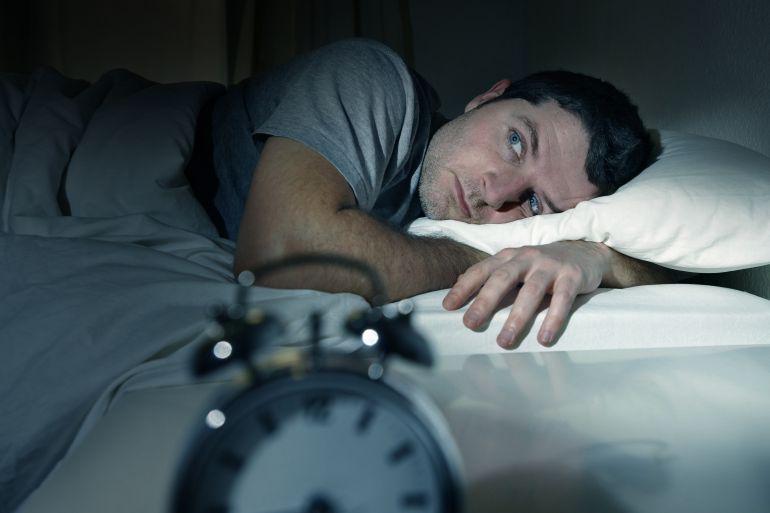
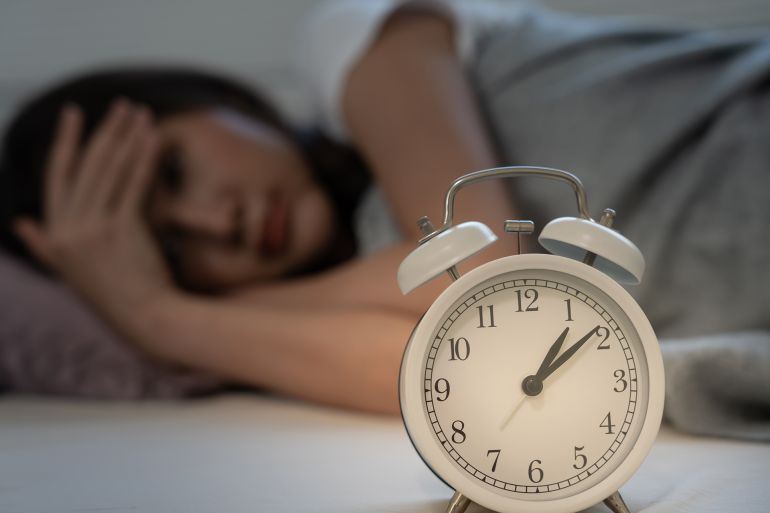
Many people believe that sleeping 7 or 8 hours a day is enough to recharge their energy, but reality often contradicts this notion. How many people wake up exhausted, with a heavy head and poor concentration, despite adhering to a number of sleep hours considered “ideal” according to common standards.
This contradiction raises a fundamental question: Is the number of sleep hours alone enough to explain how rested we feel? Or are there other, less obvious factors that control sleep quality and energy levels during the day?
Number of Sleep Hours Does Not Mean Good Sleep
It is explained that focusing solely on the number of sleep hours can be misleading. Sleep is a complex biological process that goes through different stages, the most important being deep sleep and rapid eye movement (REM) sleep, which are responsible for restoring the body and brain.
According to research, frequent awakenings during the night or not reaching deep sleep stages for sufficient periods leads to a feeling of exhaustion even after relatively long sleep. It is noted that interrupted sleep can sometimes be more exhausting than lack of sleep itself, a view supported by a study published in 2025.
The study, which investigated the relationship between sleep quality and mental resilience, concluded that daily fatigue is closely linked to sleep quality more than its duration. The results showed that people who experience shallow or unstable sleep face greater difficulty concentrating and making decisions, even when they sleep for a sufficient number of hours from a quantitative perspective.
Researchers indicate that the brain needs continuous, deep sleep to reorganize cognitive functions, and any disruption in this process manifests as mental fatigue the next day.
Stress.. The Silent Enemy of Restful Sleep
Psychological state plays a central role in sleep quality. Chronic stress leads to elevated levels of the hormone cortisol, a hormone that hinders entering deep sleep stages.
It is clarified that work pressures, excessive thinking before sleep, constant anxiety, and even intensive exposure to negative news can keep the body in a state of “alertness” that prevents true relaxation during sleep. The result is sleep that is long in duration, but not restful.
Phone Before Bed: A Small Habit with a Big Impact
Among the daily habits whose impact is often underestimated is using a phone or watching screens before bed. Warnings are issued that the blue light emitted from screens suppresses the secretion of melatonin, the hormone responsible for regulating the biological clock.
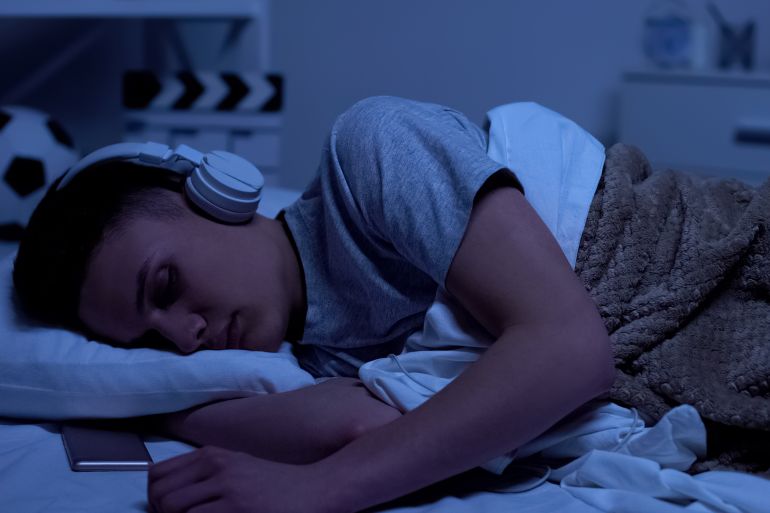
According to reports, this effect is not limited to delaying sleep, but extends to reducing its depth, which explains frequent awakenings and feeling unrested in the morning, even after sleeping for long hours.
Lifestyle and Its Impact on Daily Energy
Sleep cannot be separated from the general lifestyle. Lack of movement, insufficient exposure to daylight, and poor nutrition directly affect daily energy levels.
It is pointed out that relying on sugars and stimulants to compensate for fatigue can lead to sharp fluctuations in energy levels, exacerbating the feeling of exhaustion in the long term. It is also confirmed that good sleep is part of an integrated system that includes physical activity, nutrition, and psychological balance.
Sleep specialists believe that persistent fatigue despite adequate sleep may be a message from the body about an imbalance in lifestyle, psychological pressure, or sleep habits. The body does not measure rest by the number of hours, but by how much it recovers its internal balance.