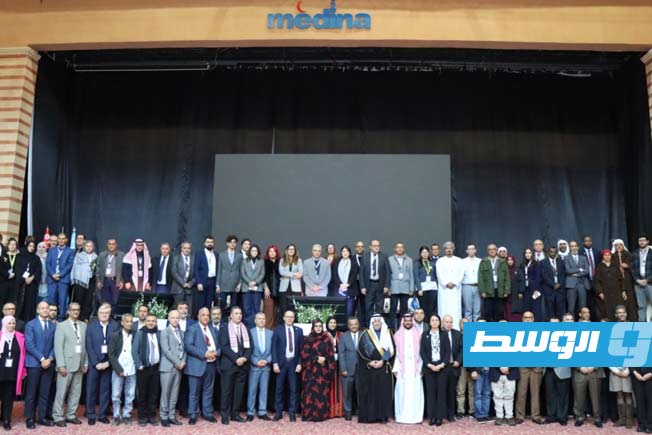
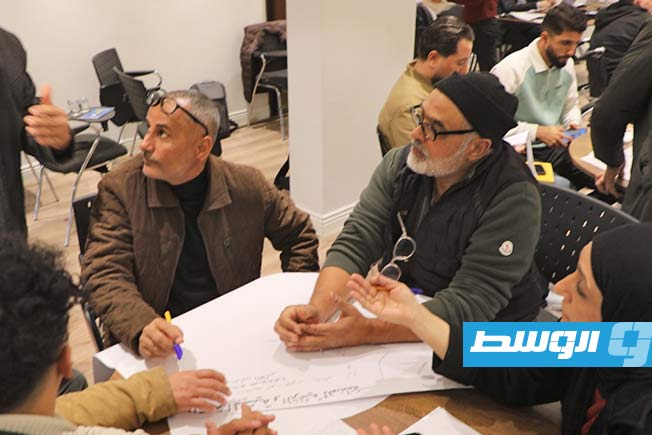
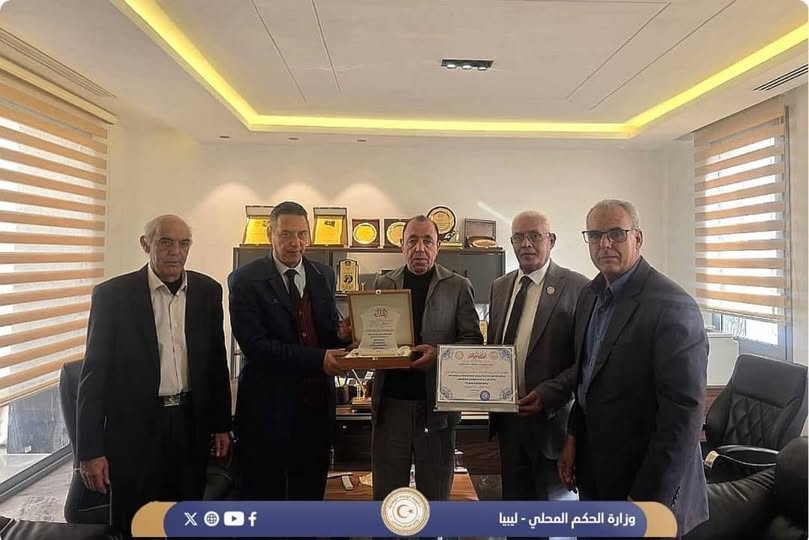
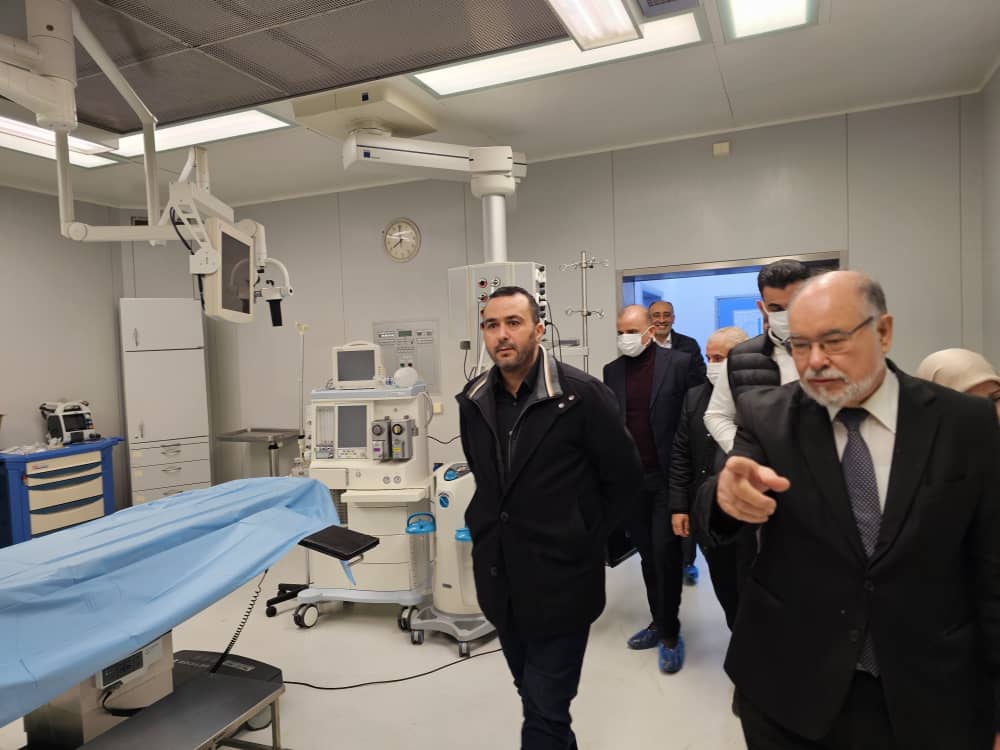
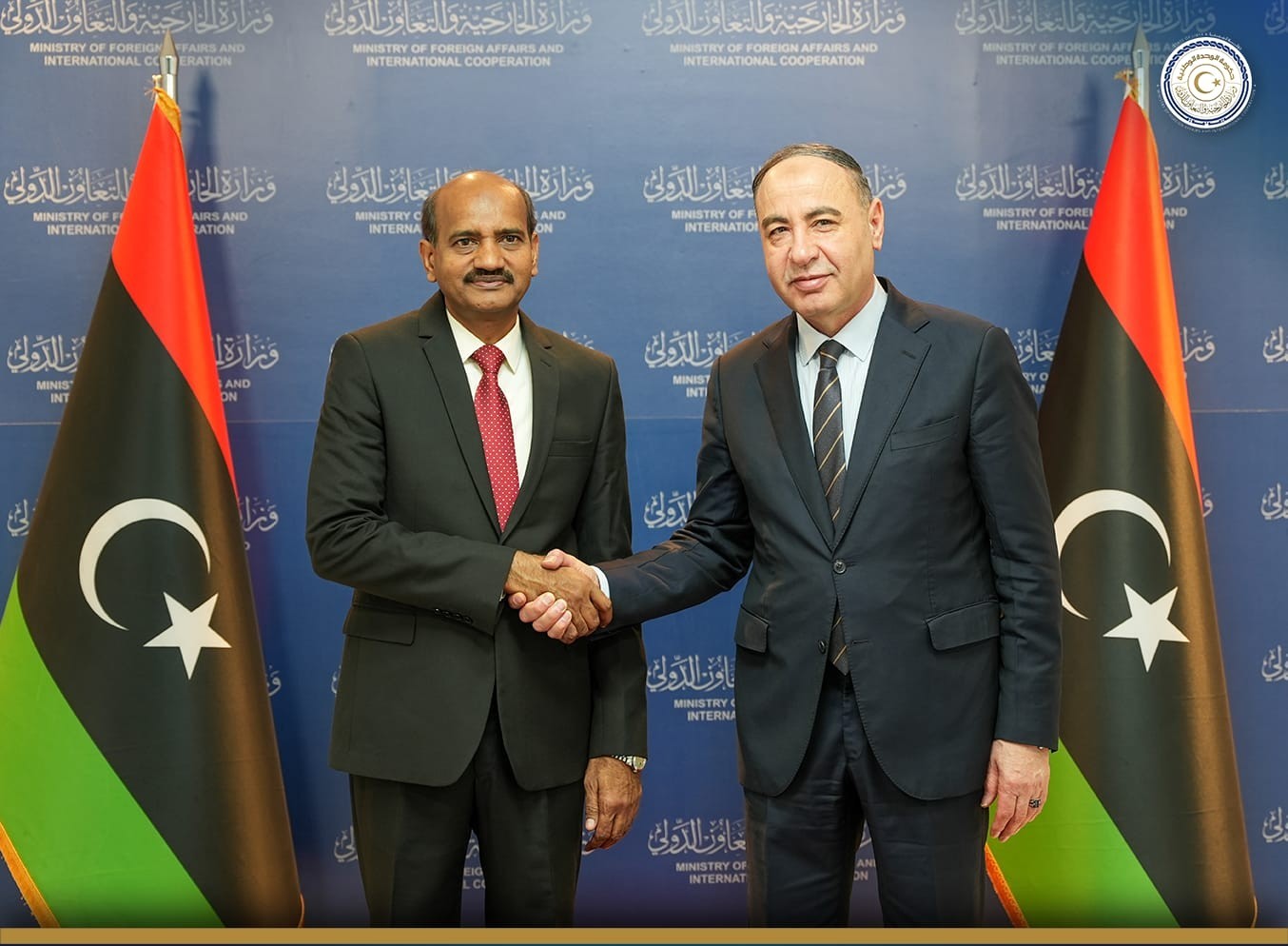
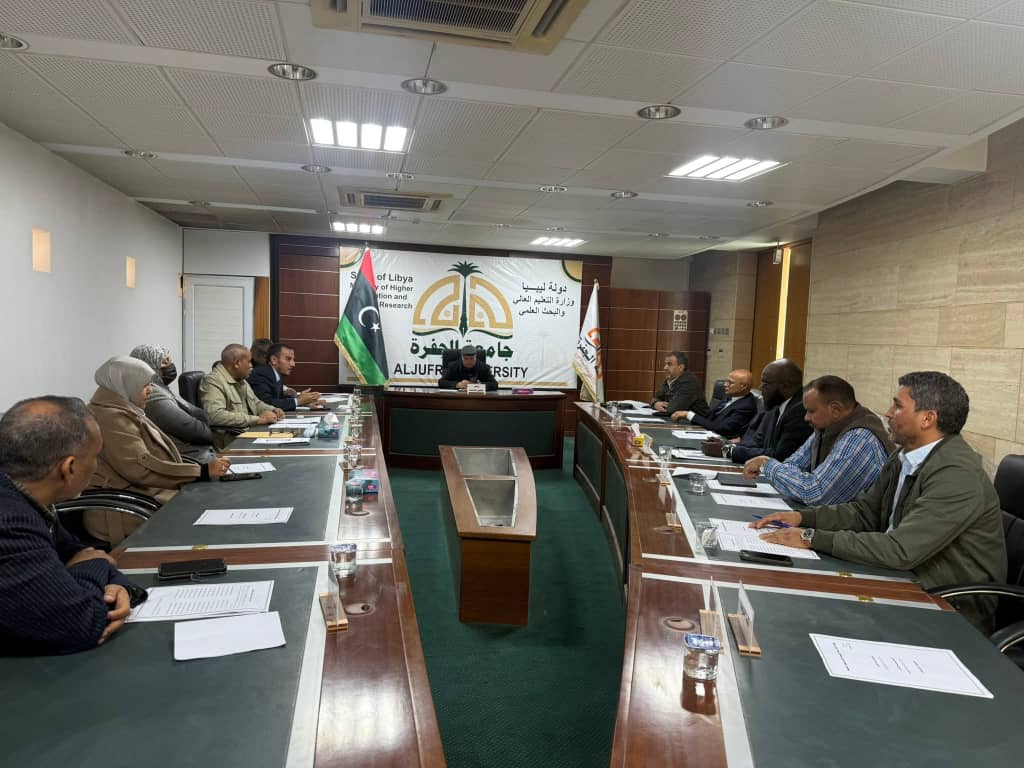
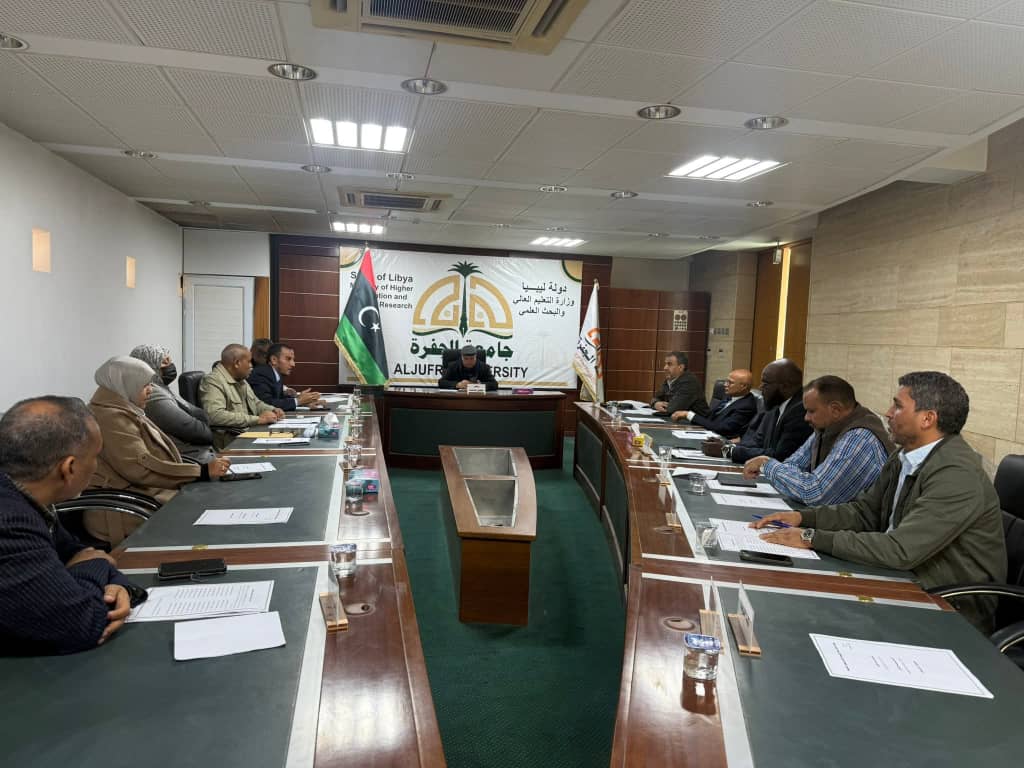
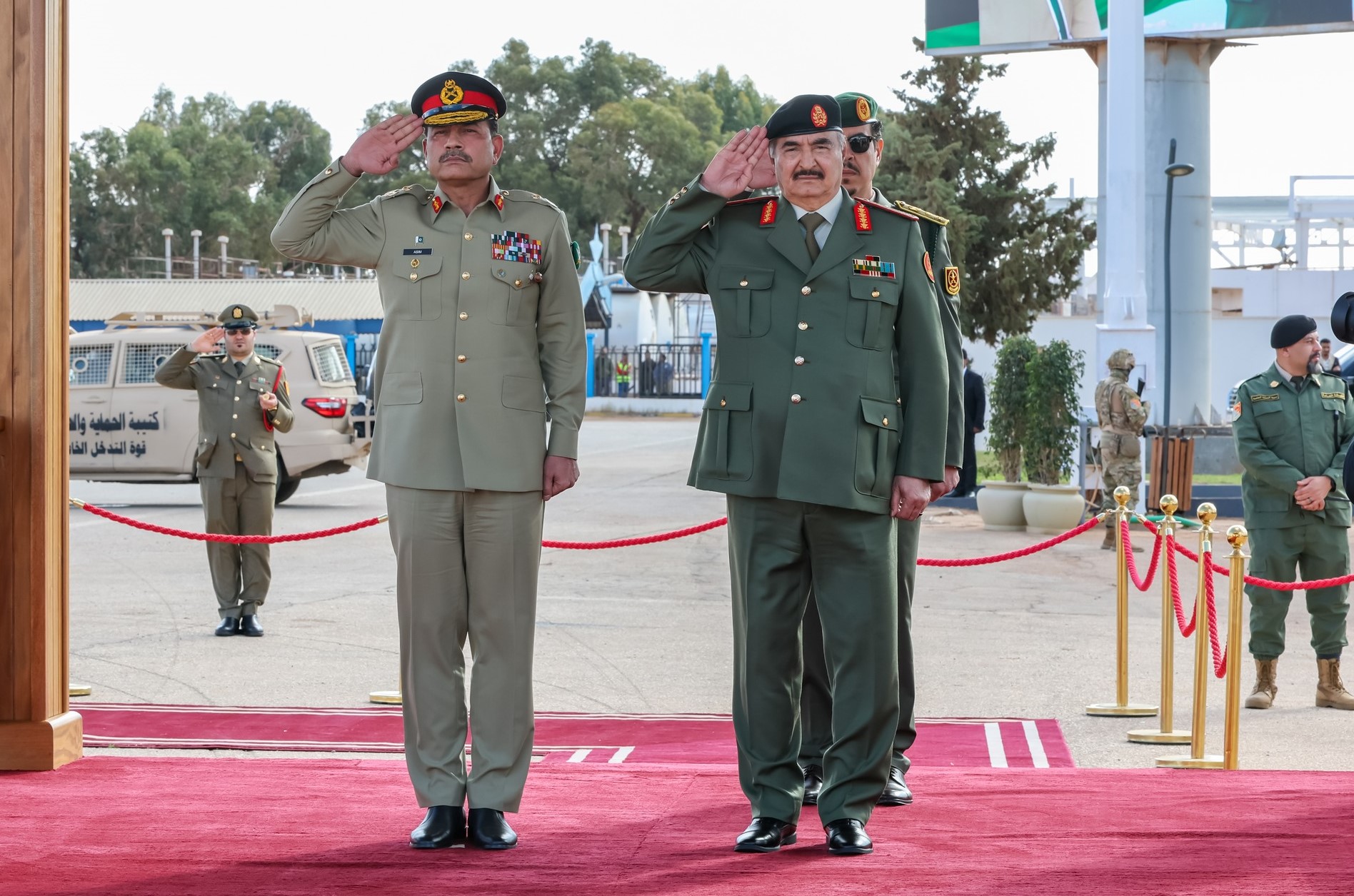
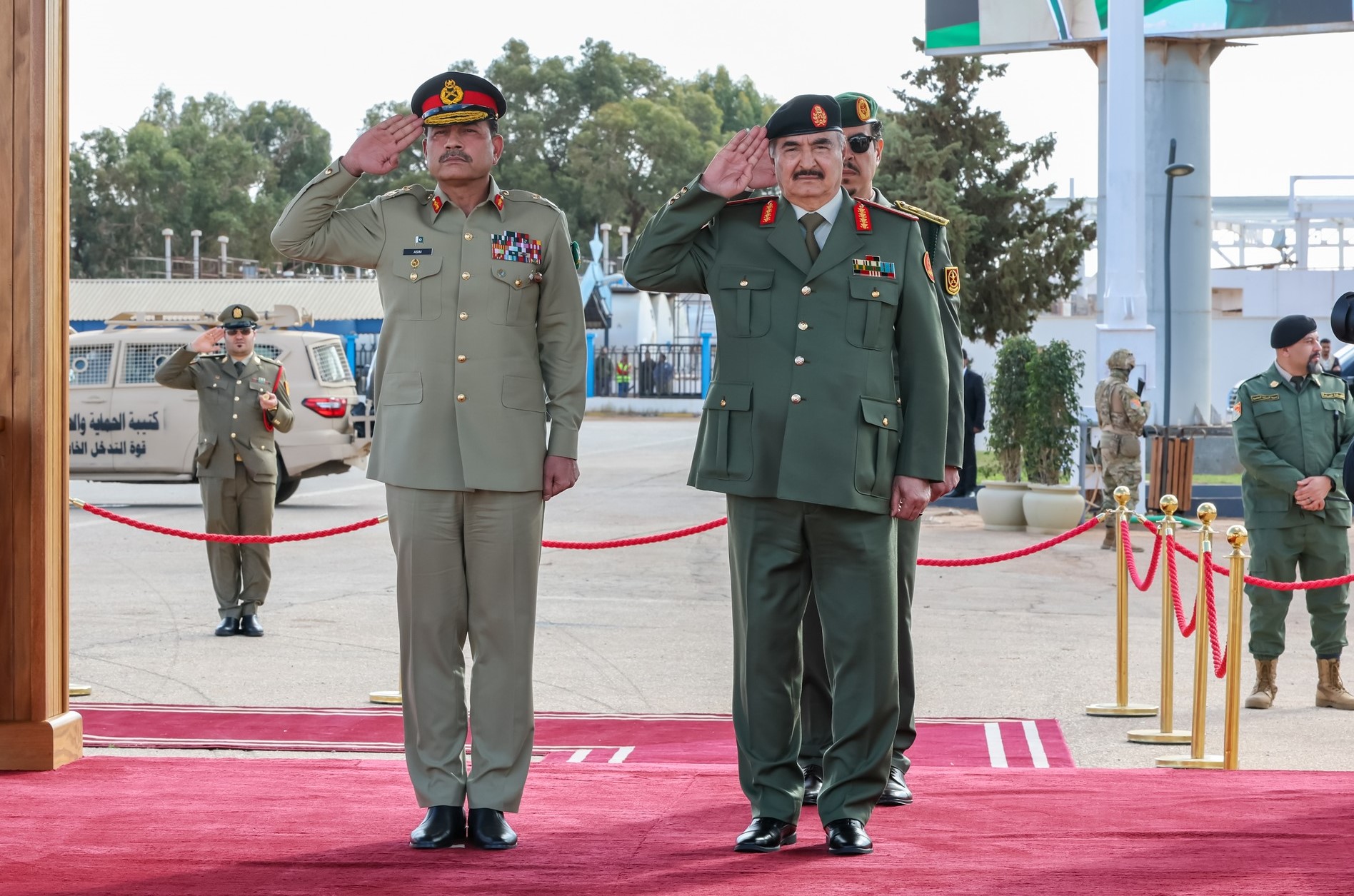
Group photo of representatives from participating countries and universities at the launch of the International Year of Rangelands and Pastoralists in Tunisia, on January 26, 2026.
Benghazi University participated on Monday in the conference launching the International Year of Rangelands and Pastoralists for the Near East and North Africa region. The event commenced in Hammamet, Republic of Tunisia, with the attendance of a select group of experts, scientists, decision-makers, and representatives from member states in the region.
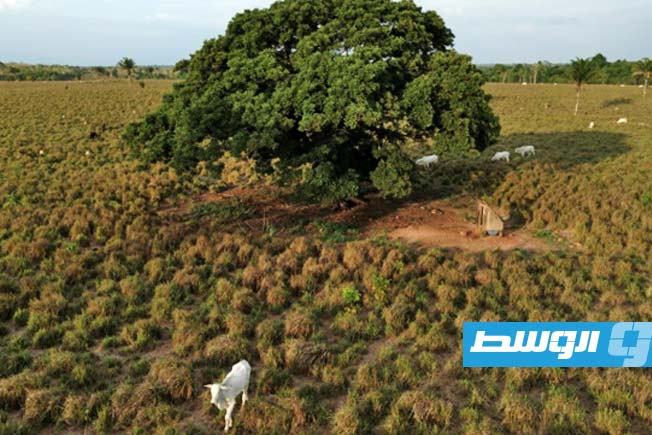
This event is based on a United Nations General Assembly resolution issued in March 2022, recognizing the vital importance of rangelands, which cover 54% of the world’s land area and support the livelihoods of approximately 500 million people.
The Libyan state was represented at this international forum by a participant from the Faculty of Arts and Sciences in Al-Abyar, affiliated with Benghazi University.
The representative delivered a scientific lecture and presented a research poster showcasing the Libyan experience in rangeland management, highlighting the pressures facing pastoral systems amidst increasing environmental fragility.
–
–
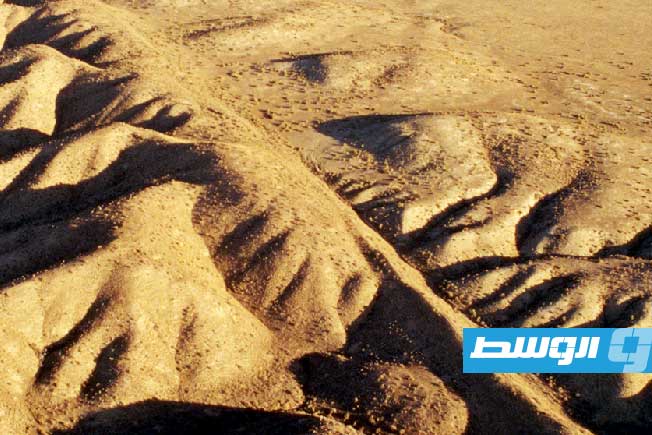
The presentation reviewed human impacts on natural vegetation cover in Libya’s dry and semi-arid regions, concluding with insights on opportunities for the protection and sustainable management of natural resources to ensure the preservation of biodiversity.
Regional Framework and UN Goals
The conference was organized through joint cooperation between the Tunisian Ministry of Agriculture, the Food and Agriculture Organization of the United Nations (FAO), and the International Center for Agricultural Research in the Dry Areas (ICARDA). The event aims to formulate a regional statement defining priorities for joint action to combat land degradation, droughts, and floods that threaten pastoral communities.
Opening remarks emphasized that pastoralism is not merely a traditional activity, but an integrated productive and knowledge-based system capable of offering practical solutions to confront climate change.
Benghazi University
Benghazi University, originally founded in 1955 as the University of Libya, is a major public university located in Benghazi, Libya. It was established as the country’s first university and has since played a central role in higher education, though its operations have been significantly disrupted by the conflicts following the 2011 Libyan Civil War.
Tunisia
Tunisia is a North African country with a rich history shaped by numerous civilizations, including the ancient Phoenicians, Romans, Arabs, and Ottomans. Its cultural landscape is famously marked by sites like the ruins of Carthage and the well-preserved Roman amphitheater at El Jem. Today, it is known as the birthplace of the Arab Spring and for its Mediterranean coastline and historic medinas.
Hammamet
Hammamet is a coastal town in Tunisia known for its historic medina and expansive sandy beaches. Its history includes periods under Roman, Arab, and Ottoman rule, with its iconic Kasbah fortress dating back to the 9th century. In the 20th century, it became a popular destination for artists and tourists, contributing to its reputation as a Mediterranean resort.
Republic of Tunisia
The Republic of Tunisia is a North African nation whose history is deeply marked by ancient Carthage, Roman rule, and later Arab-Islamic influence following the 7th-century conquest. It became a French protectorate in 1881 before gaining independence in 1956, establishing itself as a modern republic with a rich cultural heritage.
United Nations General Assembly
The United Nations General Assembly is the main deliberative body of the UN, established in 1945 following World War II. It serves as a forum where all 193 member states have equal representation to discuss and coordinate on international issues covered by the UN Charter.
Libyan state
The Libyan state, officially known as the State of Libya, is a North African country that gained independence in 1951 following periods of Italian colonization and a British-French administration after World War II. Its modern history has been marked by the long rule of Muammar Gaddafi from 1969 until his overthrow in 2011, leading to ongoing political instability and conflict.
Faculty of Arts and Sciences in Al-Abyar
The Faculty of Arts and Sciences in Al-Abyar is a public higher education institution located in the town of Al-Abyar, Libya. It was established to serve as a key academic and cultural center for the region, providing education in the humanities and sciences to local students. Its founding was part of broader national efforts to expand university education beyond Libya’s major urban centers.
Benghazi University
Benghazi University is a major public university in Libya, originally founded in 1955 as the University of Libya with campuses in Benghazi and Tripoli. It was later renamed the University of Benghazi and has served as a key center for higher education and research in the country, though its operations have been significantly disrupted by conflict since the 2011 civil war.
Tunisian Ministry of Agriculture
The Tunisian Ministry of Agriculture is the government body responsible for managing the nation’s agricultural policies, water resources, and fisheries. Its history is intertwined with Tunisia’s post-independence development, focusing on modernizing the sector and ensuring food security since the country’s founding in 1956.
Food and Agriculture Organization of the United Nations
The Food and Agriculture Organization (FAO) is a specialized agency of the United Nations, founded in 1945 to lead international efforts to defeat hunger and improve nutrition and food security. Its work involves providing policy advice, supporting sustainable agricultural practices, and offering technical assistance to member countries worldwide.
FAO
The Food and Agriculture Organization (FAO) is a specialized agency of the United Nations, founded in 1945 in Quebec City, Canada. Its headquarters are in Rome, and its primary mission is to lead international efforts to defeat hunger and improve nutrition and food security worldwide.
International Center for Agricultural Research in the Dry Areas
The International Center for Agricultural Research in the Dry Areas (ICARDA) is a global research-for-development organization established in 1977, originally headquartered in Aleppo, Syria. It focuses on improving farming systems and livelihoods in the world’s dry regions by developing resilient crops, sustainable water management, and integrated agro-ecosystems. Due to the Syrian conflict, its headquarters were relocated to Beirut, Lebanon, in 2012, but it continues its vital work across the Middle East, North Africa, and beyond.
ICARDA
ICARDA, the International Center for Agricultural Research in the Dry Areas, is a global research organization founded in 1977 to improve food security and livelihoods in arid regions. It focuses on developing resilient crops and sustainable farming practices, with its original headquarters located in Tel Hadya, Syria, before relocating due to the Syrian civil war.