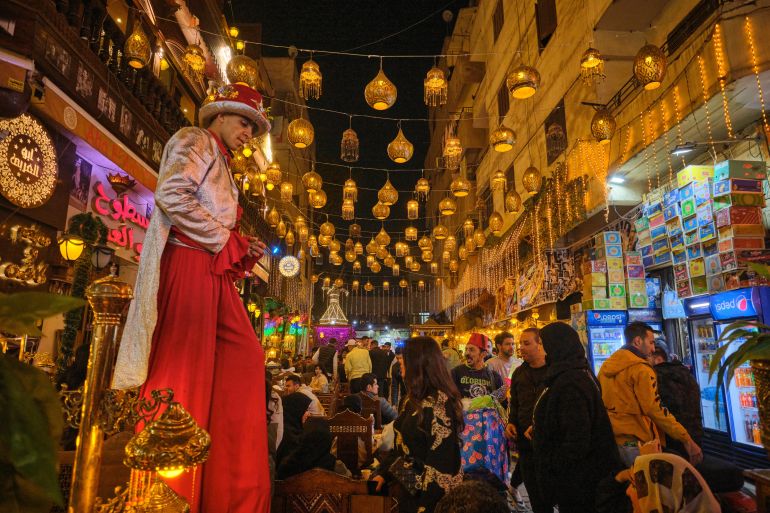
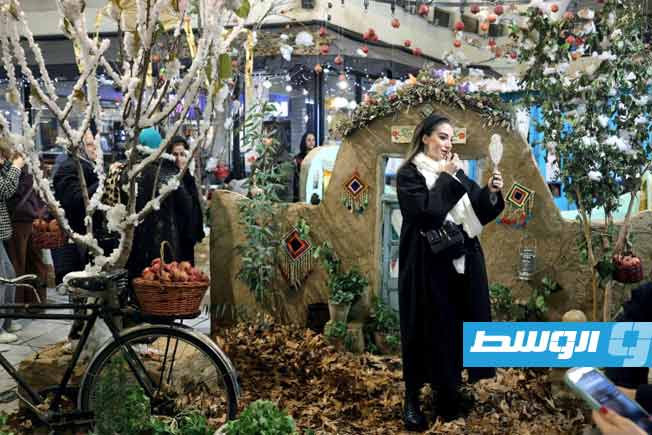
Despite the unity of religious rites that bring Muslims around the world together, the ways of welcoming the holy month of Ramadan differ from one country to another. Religious practices intertwine with inherited social and cultural habits, reflecting the uniqueness of each society and its view of the blessed month as a season for spiritual renewal and social closeness.
In several Islamic countries, the first days of Ramadan are welcomed with rituals that may seem strange or unfamiliar, but they carry symbolic meanings deeply rooted in popular memory.
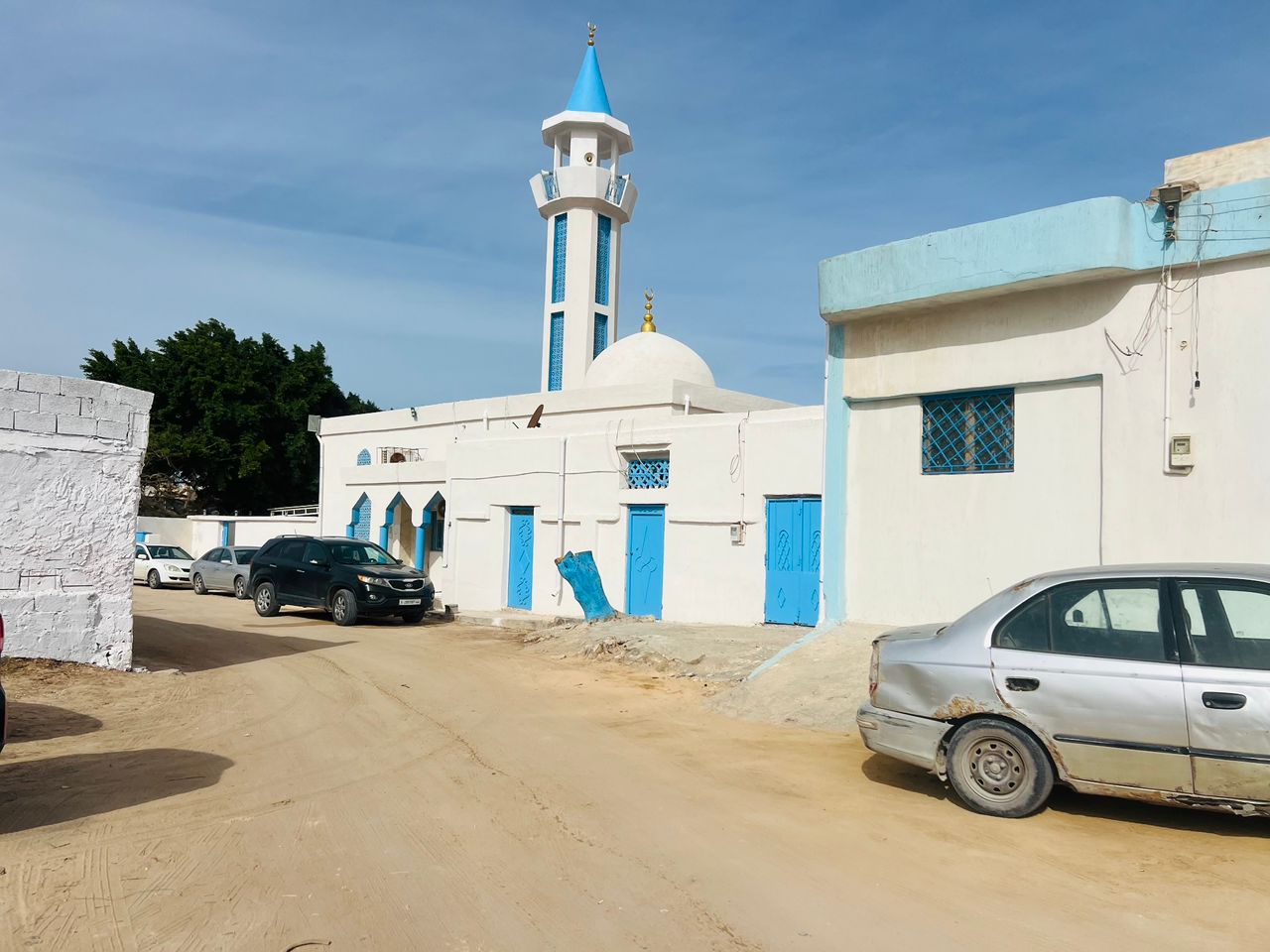
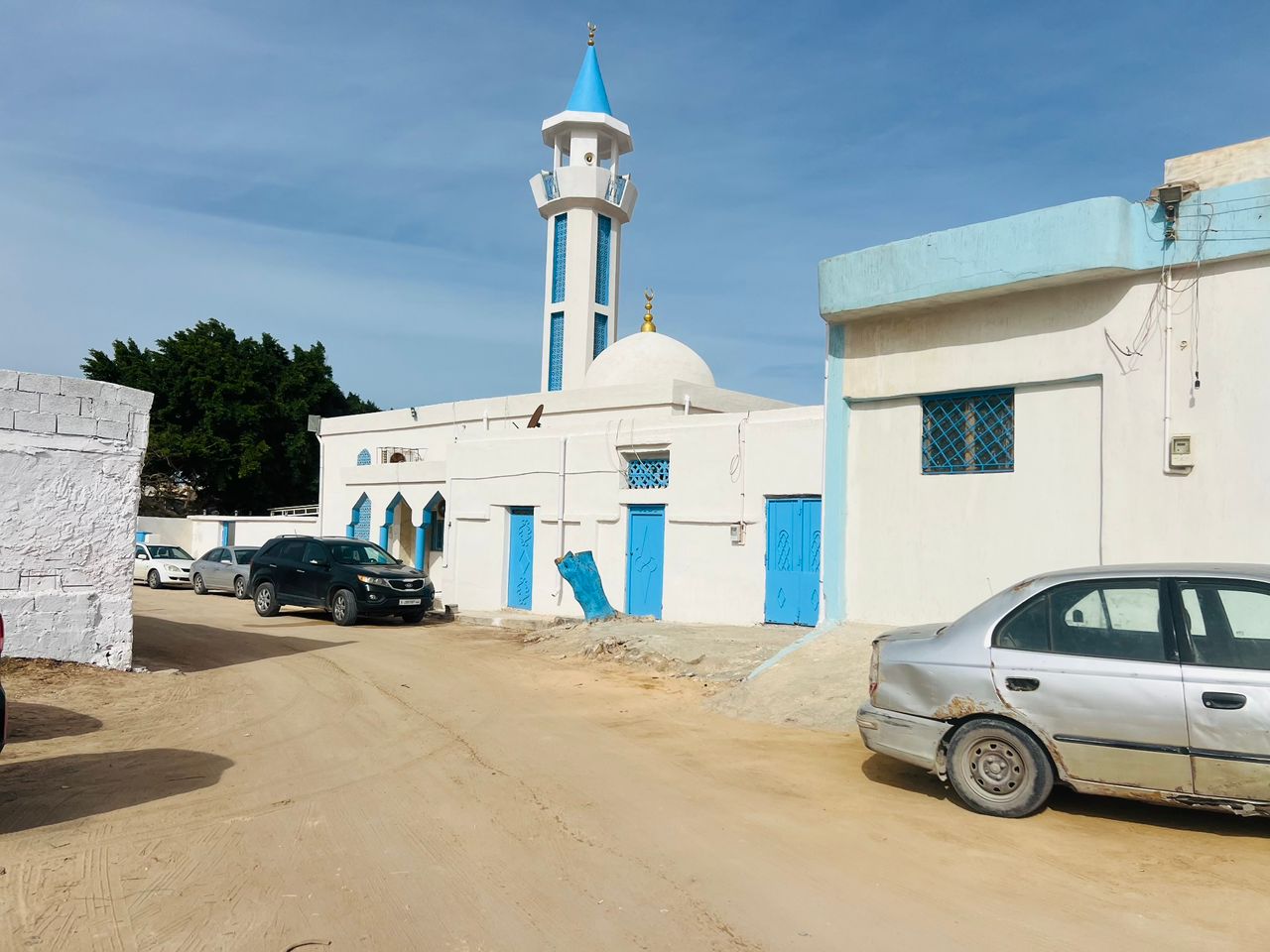
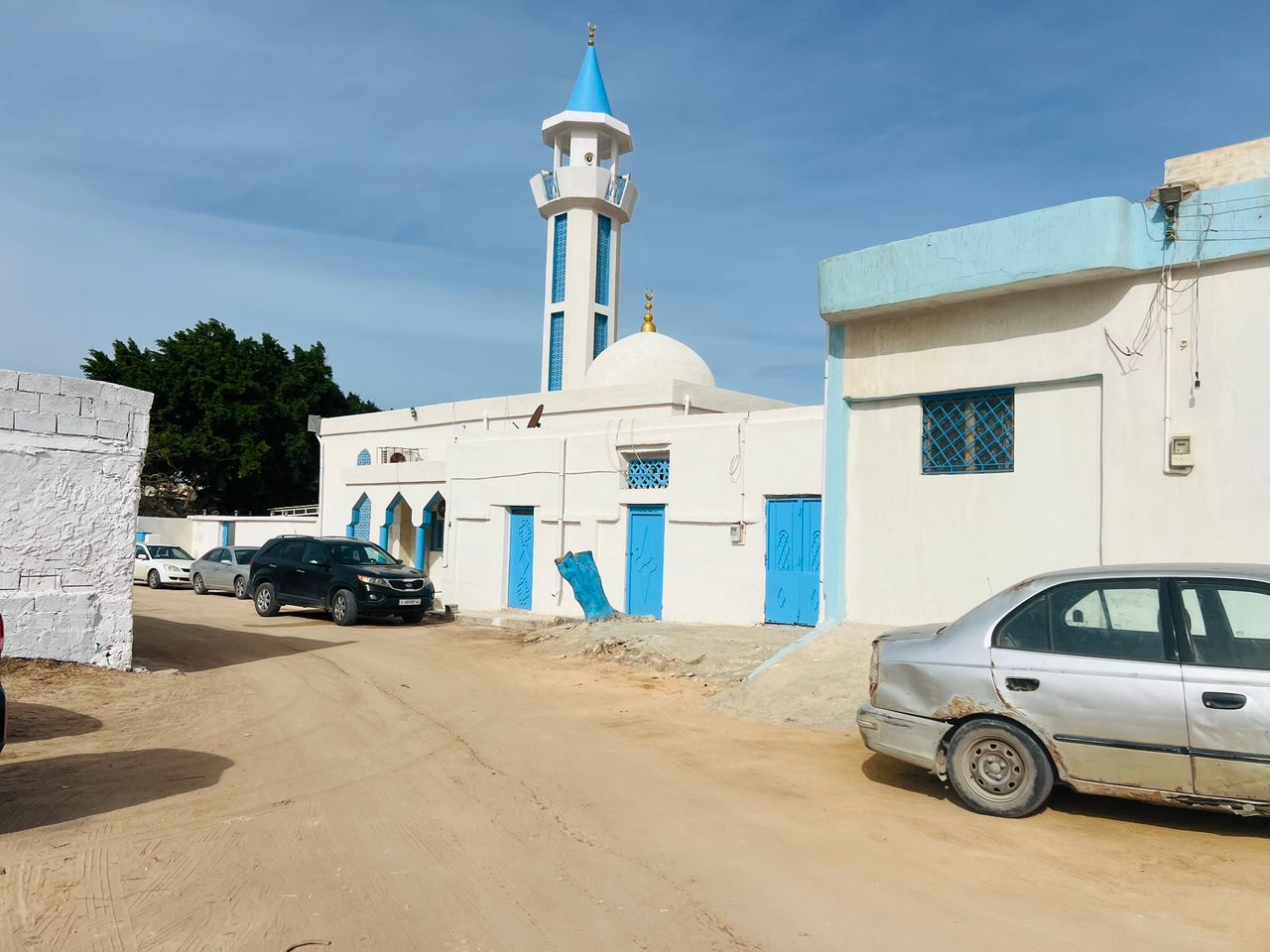
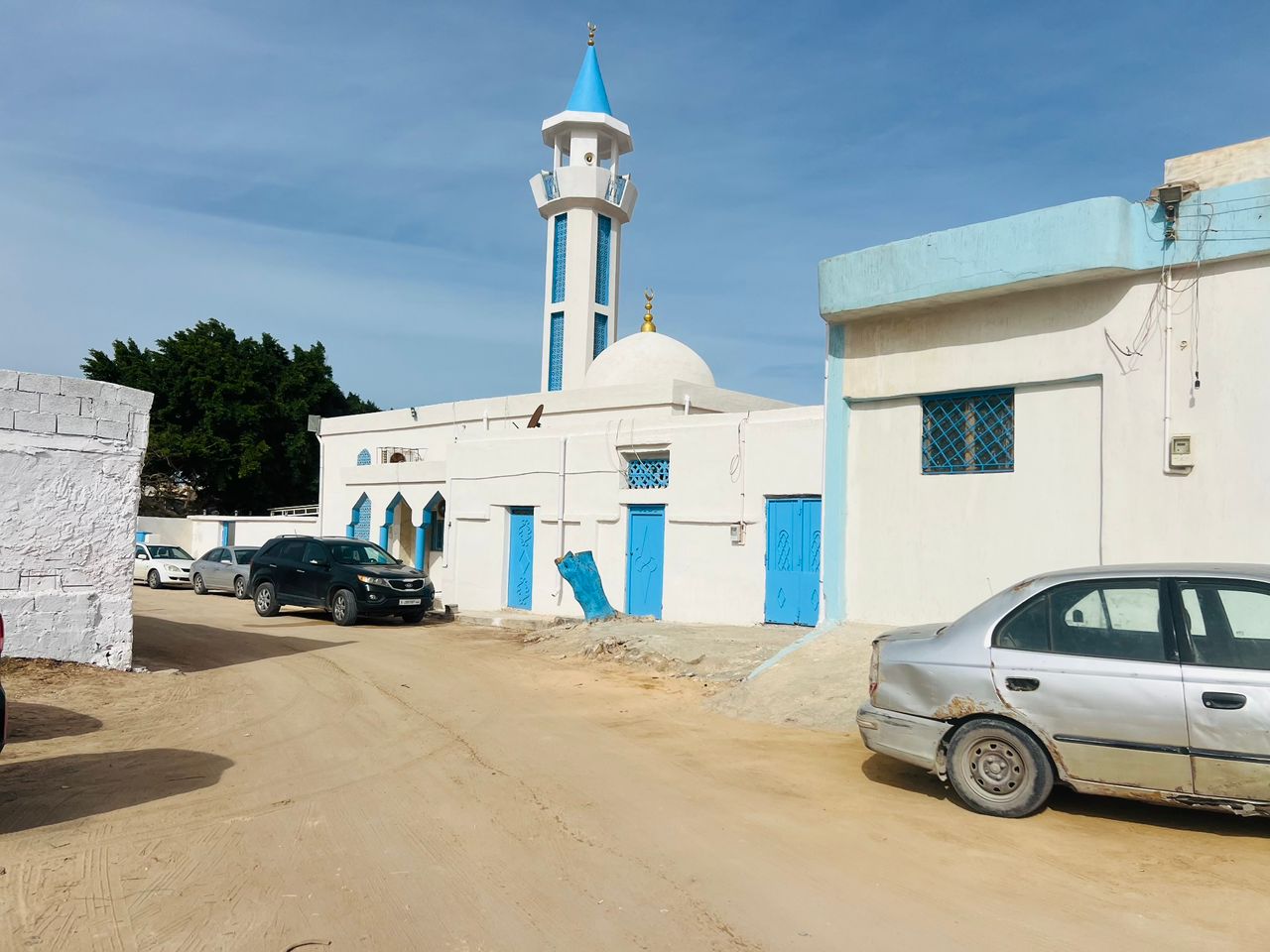
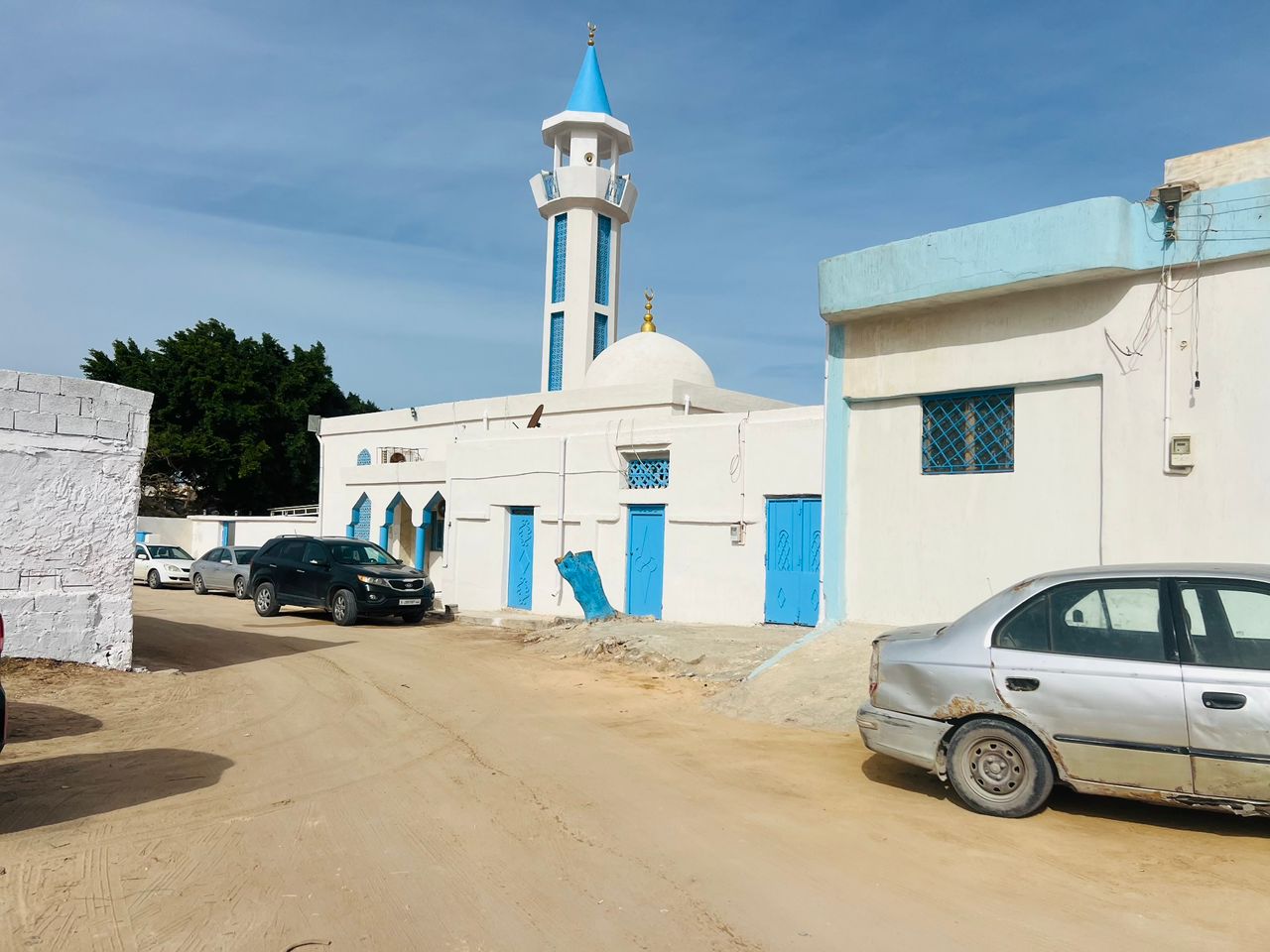
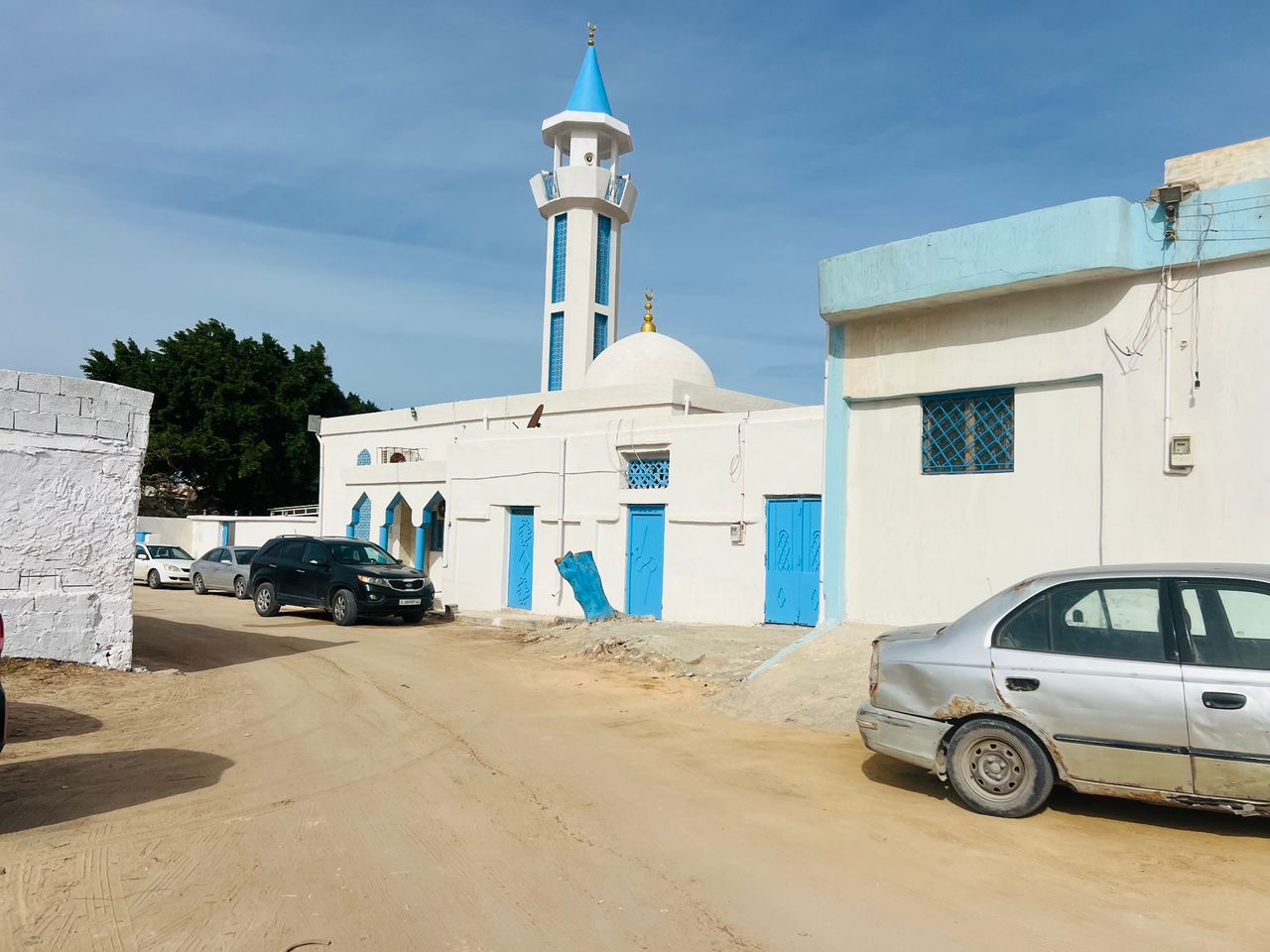
Painting Houses in Yemen
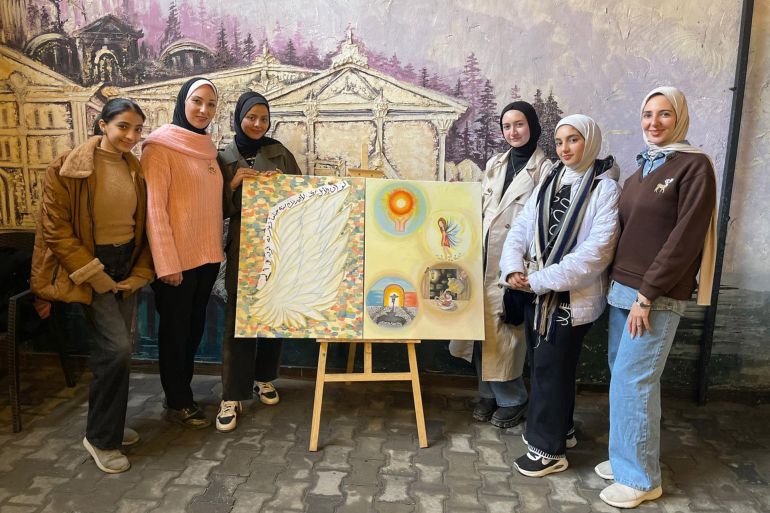
As the month of Ramadan approaches, many Yemeni families begin painting and decorating the walls of their homes, a tradition aimed at creating an atmosphere of joy and celebration. It is believed that this change in the home’s appearance brings blessings and success throughout the holy month.
New Utensils in Sudan
In Sudan, women are keen to renew their kitchen utensils as Ramadan approaches, a tradition viewed as a psychological and celebratory preparation for the holy month.
The first day of Ramadan is marked by a communal Iftar, where families of the neighborhood gather in one square and lay out shared tables reflecting the spirit of solidarity and social cohesion.
“Ramadan Hair” in Mauritania
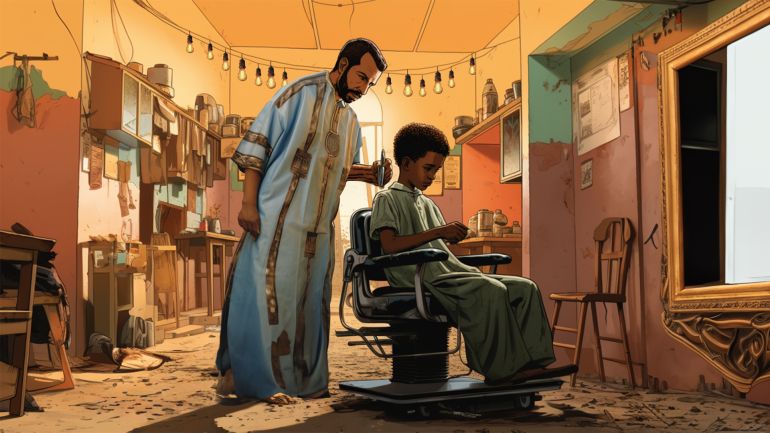
A few days before the arrival of Ramadan, men in Mauritania completely shave their heads, so that the growth of new hair coincides with the end of the holy month. This custom, known as “Ramadan Hair,” is associated with the idea of renewal and new beginnings. Many families also postpone wedding celebrations until the month of Ramadan, hoping for its blessings.
School Holiday in Indonesia
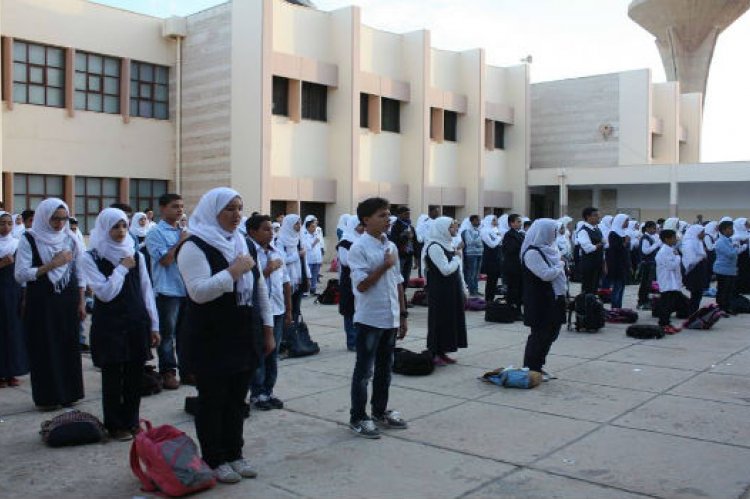
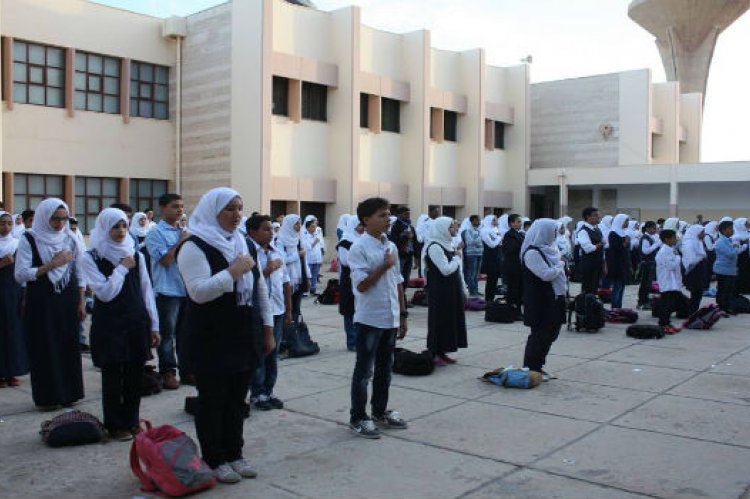
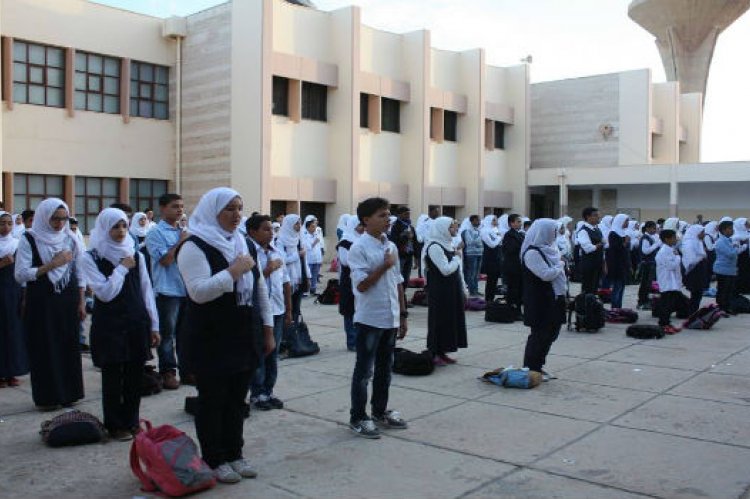
The Indonesian government grants students a holiday during the first week of Ramadan to help them adjust to fasting. In the streets, traditional drums known as “Bedug” are beaten, a popular celebratory scene considered one of the most prominent signs of welcoming the holy month in the country.
“Egg War” in Pakistan
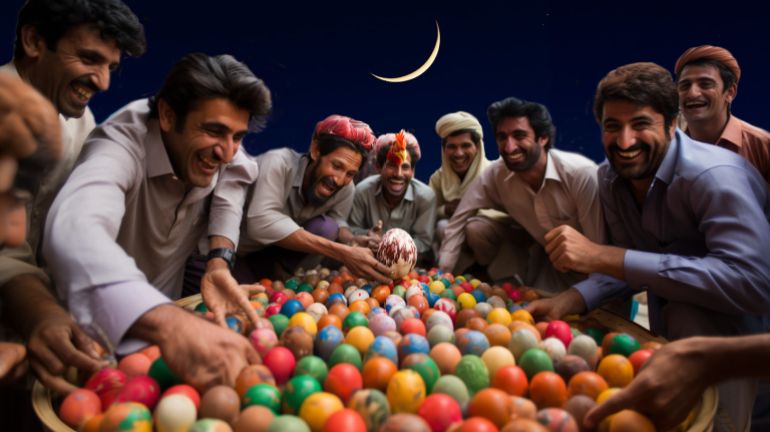
In Pakistan, as soon as the Ramadan crescent moon is sighted, young men engage in an unusual competition where they pelt each other with boiled eggs until the Suhoor time. Special celebrations are also held at the beginning of the month to honor children fasting for Ramadan for the first time, encouraging them to adhere to the rite.
Egg War is a Ramadan tradition held in Pakistan upon the sighting of the crescent moon.
Hosting the Poor in Nigeria
In some Nigerian regions, well-off families are keen to host a poor person at their Iftar table, a tradition that reflects the presence of social solidarity values. Food is collected from homes in the neighborhood to one place to set up communal Iftar tables, with men separated from women.
Ramadan Lamb in Uzbekistan
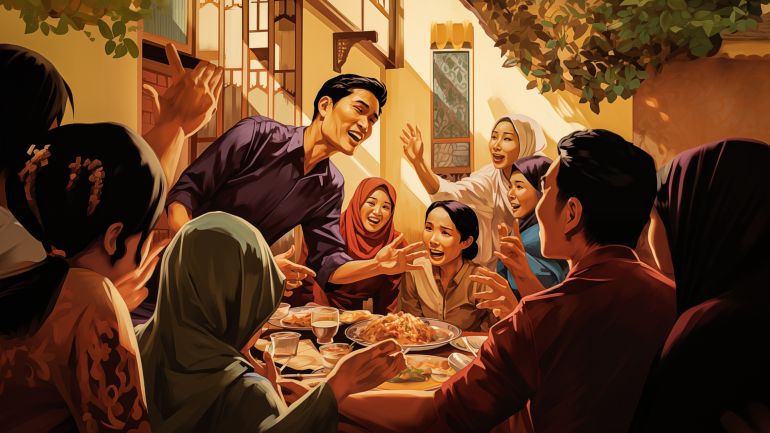
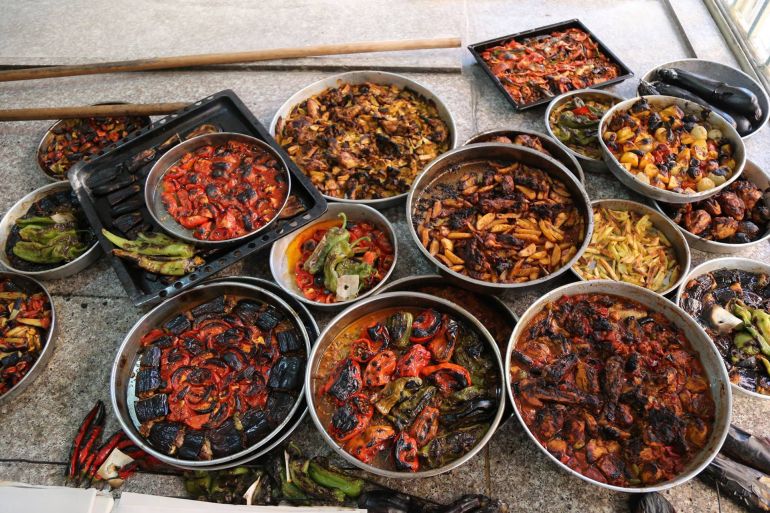
The Iftar of the first day of Ramadan in Uzbekistan is not complete without slaughtering a lamb, which is served as a communal meal for relatives and neighbors. The table is accompanied by large homemade bread loaves prepared with oil and milk, alongside black tea, which is an essential element of Ramadan hospitality.
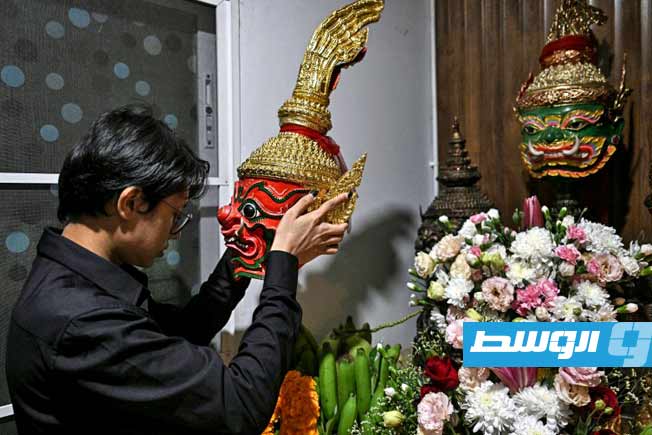
Abstaining from eating food prepared by one’s wife in Thailand during Ramadan.
Abstaining from Eating Food Prepared by One’s Wife in Thailand
At the beginning of the holy month in Thailand, some men abst
Cairo
Cairo is the sprawling capital of Egypt, founded in 969 CE by the Fatimid dynasty. It is renowned for its rich history, serving as a center of the Islamic world and home to iconic landmarks like the Pyramids of Giza on its outskirts and the historic Islamic Cairo district with its ancient mosques and bazaars.
Egypt
Egypt is home to one of the world’s oldest civilizations, with a history spanning over 5,000 years and famed for its pharaohs, pyramids, and monuments along the Nile River. Its cultural legacy includes iconic sites like the Giza pyramid complex, the Valley of the Kings, and numerous temples, which reflect its ancient religious beliefs and architectural achievements. Modern Egypt remains a historically rich nation where these ancient wonders continue to be central to its cultural identity.
Yemen
Yemen is a country on the Arabian Peninsula with a rich history as a center of ancient civilizations and trade, notably the Kingdom of Saba (Sheba). It is home to significant cultural sites like the Old City of Sana’a, with its distinctive multi-story tower houses, and the historic port of Aden.
Sudan
Sudan, located in Northeast Africa, is home to ancient civilizations, most notably the Kingdom of Kush, which ruled from the city of Meroë and was a major rival to ancient Egypt. The country’s modern history is marked by its independence from Anglo-Egyptian rule in 1956 and a complex legacy of civil conflict. Its cultural landscape is deeply shaped by the confluence of Arab and African influences, visible in its archaeological sites, such as the pyramids at Meroë, and diverse ethnic traditions.
Mauritania
Mauritania, officially the Islamic Republic of Mauritania, is a country in Northwest Africa with a history shaped by ancient Berber kingdoms, trans-Saharan trade routes, and later French colonial rule, from which it gained independence in 1960. Its cultural landscape is deeply influenced by its Moorish heritage, with significant sites including the ancient trading centers of Chinguetti and Ouadane, which are UNESCO World Heritage Sites.
Indonesia
Indonesia is a Southeast Asian archipelago of over 17,000 islands, with a history shaped by Hindu-Buddhist kingdoms, Islamic sultanates, and European colonialism, notably by the Dutch. It gained independence in 1945 and is now the world’s largest Muslim-majority nation, renowned for its diverse cultures, languages, and natural landscapes like Bali and Komodo Island.
Pakistan
Pakistan is a modern nation-state established in 1947 following the partition of British India, founded as a homeland for Muslims of the subcontinent. Its territory encompasses ancient Indus Valley Civilization sites like Mohenjo-daro and has been influenced by a succession of empires, including the Mughals and the British Raj.
Nigeria
Nigeria is a West African country with a rich history shaped by ancient kingdoms like the Nok, Benin, and Oyo, followed by British colonization until its independence in 1960. It is Africa’s most populous nation and a major cultural hub, renowned globally for its influential music, film (Nollywood), and literary traditions.
Uzbekistan
Uzbekistan, located in Central Asia, is historically renowned as the heart of the Silk Road, home to ancient cities like Samarkand, Bukhara, and Khiva. These cities feature stunning Islamic architecture, including madrasas and mosques, which flourished under empires such as the Timurid. The region was a major center for trade, science, and culture for centuries before becoming a Soviet republic and gaining independence in 1991.
Thailand
Thailand, officially the Kingdom of Thailand, is a Southeast Asian country with a rich history dating back to ancient kingdoms like Sukhothai and Ayutthaya. It is renowned for its ornate Buddhist temples, vibrant street life, and tropical beaches, and it is unique in the region for never having been colonized by a European power.