The miniatures of the Afghan artist “Behzad,” preserved in the world’s oldest and most famous libraries, have been included in the UNESCO World Heritage list, becoming a source of joy, freedom, and hope in his hometown of Herat.
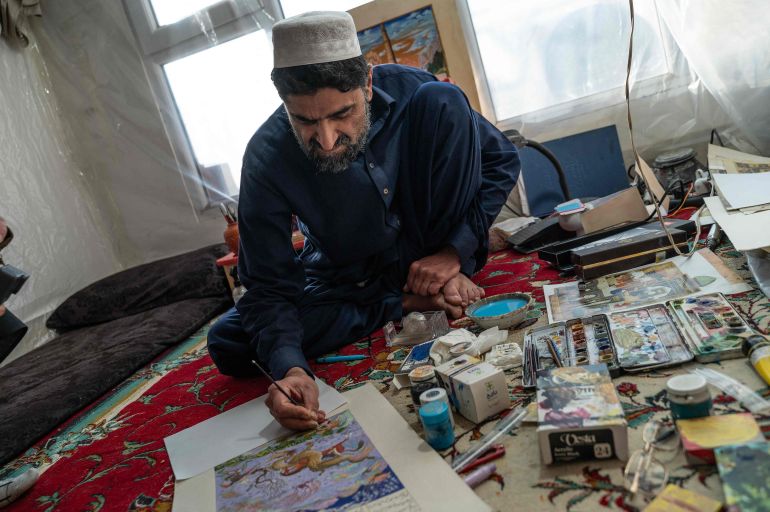
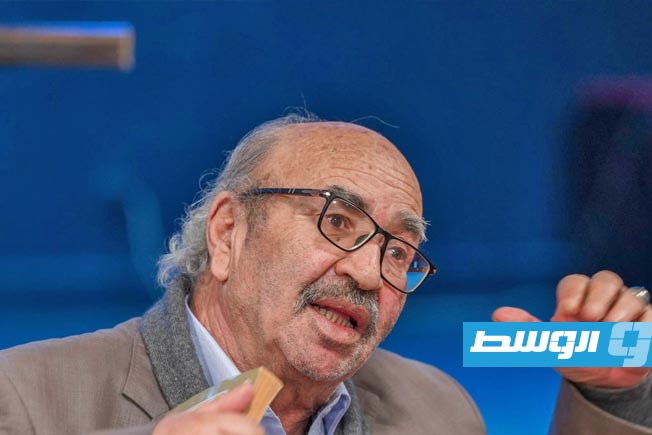
Mohammad Yunus Qaneh, 45, sits cross-legged on a red carpet, surrounded by delicate brushes and paint palettes, as he paints a horse’s mane and a string of pearls.
Fascinated since the age of fourteen by the art of miniatures of Kamal al-Din Behzad (1450-1535), he has become one of the inheritors of this ancient art in Afghanistan.
He says with a smile: “When I paint, I go back five hundred years, to the streets of Herat in that era,” when the Timurid sultans supported artists like Behzad or the poet and religious mystic Abdul Rahman Jami.
It is noted that at the crossroads of trade routes between China, Europe, and the Middle East, Herat in western Afghanistan was “the Florence of the Islamic world and a global capital of painting, music, and philosophy between 1404 and 1507.”
Ordinary People
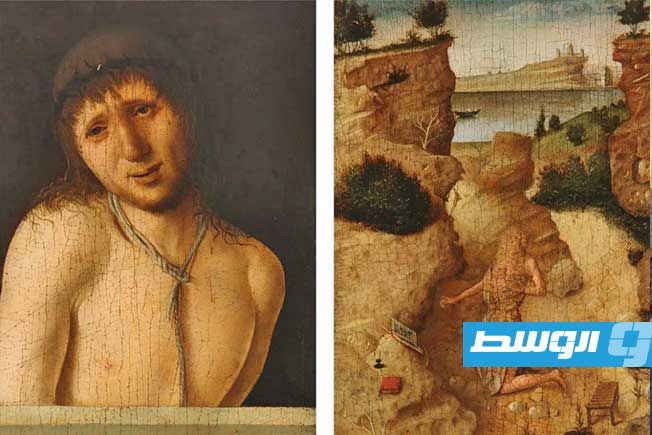
Behzad, a contemporary of famous Italian artists like Leonardo da Vinci and Sandro Botticelli, breathed new life into this art before working in the Tabriz region of Iran.
It is explained: “Before him, faces were rigid, and paintings lacked soul.”
It continues: “Behzad introduced scenes from the daily life of ordinary people, where we see girls and boys studying, construction workers,” not just kings or religious figures.
Five centuries have passed since Behzad’s death. After experiencing the rule of various dynasties, and facing the ambitions and occupations of the British, Soviets, and Americans, Afghanistan has endured decades of war in which millions were killed.
Miniatures in the style of Behzad remain an art that is “practiced, recognized, and transmitted,” as confirmed by UNESCO in December by including this “living cultural expression” in the list of Intangible Cultural Heritage of Humanity.
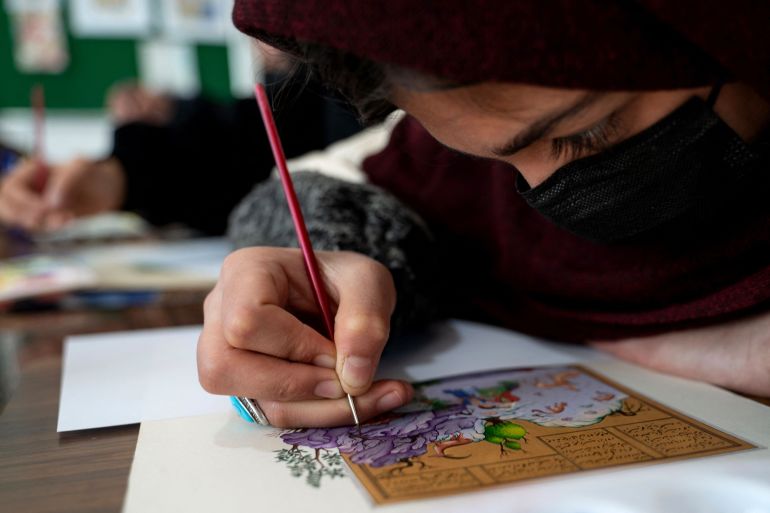
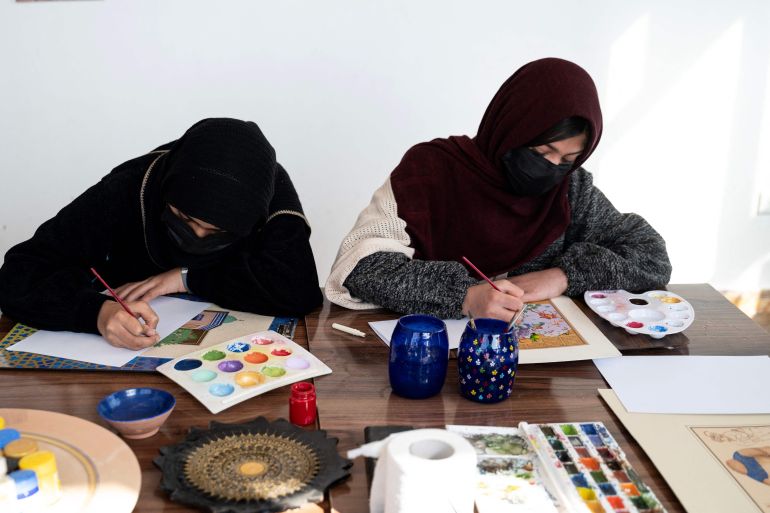
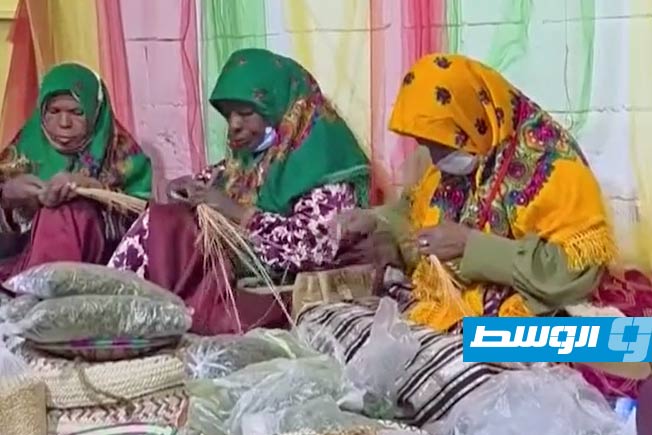
Afghan women paint miniature art in a workshop in the city of Herat.
Hope
Qaneh states: “In these dark times, this is news that brings joy and hope.”
Since 2021, this man has been forced to close his gallery and now works only from his home. Customers are rare, exhibitions are non-existent, and artists are “stripped of their value.”
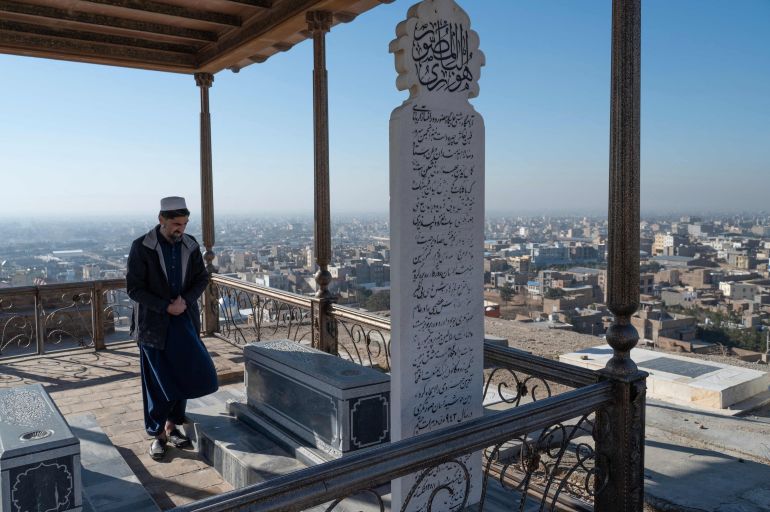
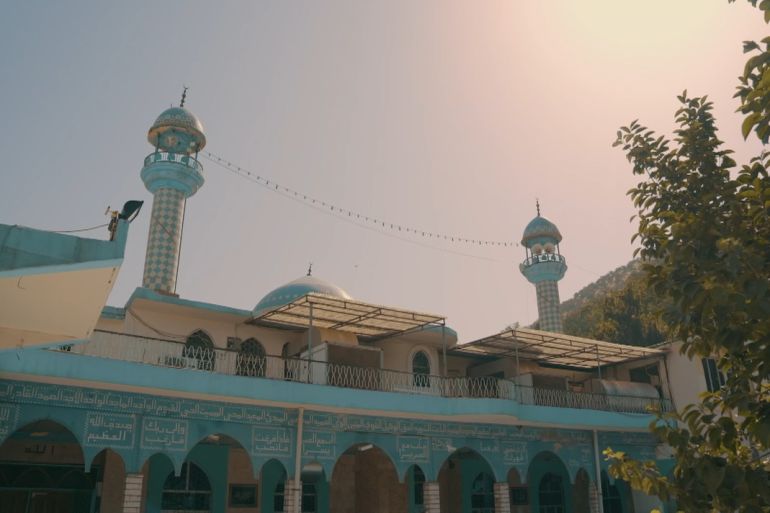
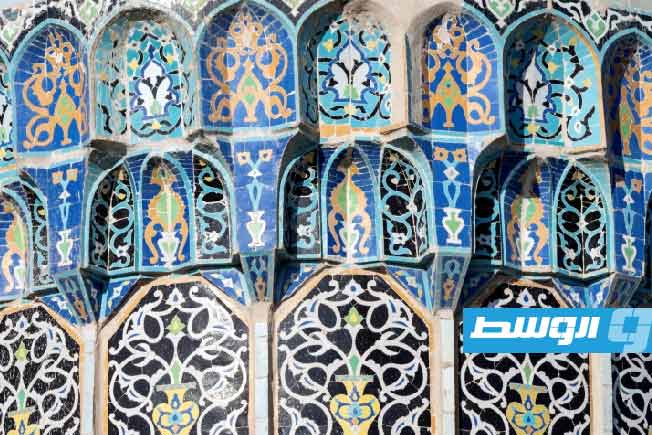
He sometimes climbs the hill near his house. He finds peace near a white tomb identified as Behzad’s tomb, overlooking the city of Herat and its grand mosque adorned with blue tiles.
This religious monument is decorated with intricate floral and geometric patterns created by Behzad, and the people of Herat love to come and contemplate them.
As for the manuscripts illuminated by the master, they are all abroad, in libraries or museums in Istanbul, London, and New York.
Afghan artist Mohammad Yunus Qaneh, a specialist in miniature art, in front of the tomb of painter Kamal al-Din Behzad.
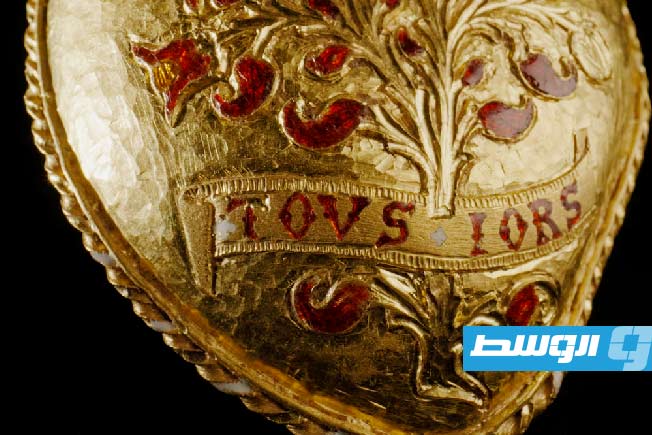
Out of regret that the Afghan people cannot access their cultural heritage, in 2017, enlarged reproductions of Behzad’s miniatures were created and displayed in the Dome Hall of Herat’s citadel.
The public there could contemplate the Tree of Life with the vibrant autumn
Afghanistan
Afghanistan is a landlocked country in Central and South Asia with a history spanning over 5,000 years, having been a crossroads for numerous empires and cultures along the Silk Road. It is home to significant cultural heritage sites, including the Buddhas of Bamiyan and the ancient city of Herat, though many have suffered from decades of conflict.
Herat
Herat is a historic city in western Afghanistan, known for its rich cultural heritage and as a key center of the Timurid Renaissance during the 15th century. It is famed for architectural marvels like the Herat Citadel and the Friday Mosque, which showcase intricate tilework reflecting its past significance on the Silk Road.
UNESCO World Heritage
UNESCO World Heritage refers to the list of cultural and natural sites deemed to be of outstanding universal value to humanity, maintained by the United Nations Educational, Scientific and Cultural Organization. The program was established by the 1972 World Heritage Convention to identify, protect, and preserve such sites for future generations. Notable examples include the Great Wall of China, the Pyramids of Egypt, and the Galápagos Islands.
Kamal al-Din Behzad
Kamal al-Din Behzad was a master painter and the most famous figure of the Persian miniature tradition, active in the late 15th and early 16th centuries in Herat and Tabriz. He revolutionized the art form with his innovative compositions, expressive figures, and vibrant color palette, serving as the director of the royal libraries under the Timurid and Safavid dynasties.
Timurid
The Timurid Empire was a powerful Central Asian state founded in the 14th century by the Turco-Mongol conqueror Timur (Tamerlane), with its heartland in modern-day Uzbekistan and Iran. It is renowned for a cultural and artistic golden age, particularly under rulers like Shah Rukh and Husayn Bayqara, who patronized magnificent architecture, Persian miniature painting, and science in cities like Samarkand and Herat.
Florence
Florence is a historic city in central Italy, renowned as the birthplace of the Renaissance. Its cultural significance stems from its wealth of art and architecture from the 14th to 17th centuries, largely funded by its powerful Medici family. Key landmarks include the Duomo, the Uffizi Gallery, and Michelangelo’s David.
Islamic world
The Islamic world broadly refers to the diverse regions and societies where Islam is a major cultural, religious, or political influence, spanning from West Africa to Southeast Asia. Its history began with the 7th-century revelations to the Prophet Muhammad in Arabia, leading to the rapid expansion of Islamic empires and the development of a rich, shared civilization marked by advances in science, art, and philosophy. Today, it encompasses over 1.8 billion Muslims living in numerous nations with a wide variety of traditions and interpretations of the faith.
China
China is one of the world’s oldest continuous civilizations, with a recorded history spanning over four millennia. It is home to numerous UNESCO World Heritage sites, such as the Great Wall and the Forbidden City, which reflect its long imperial past and profound cultural achievements.
Europe
Europe is a continent with a rich and complex history, shaped by ancient civilizations like Greece and Rome, the Middle Ages, the Renaissance, and periods of both conflict and cooperation. It is home to a vast array of cultural sites, from prehistoric cave paintings to grand cathedrals and castles, reflecting its diverse peoples and historical developments. This shared, though often tumultuous, history has led to the modern political and economic union of the European Union.
Middle East
The Middle East is a transcontinental region centered on Western Asia and Egypt, historically home to some of the world’s earliest civilizations, including Mesopotamia and Ancient Egypt. It is the birthplace of major Abrahamic religions—Judaism, Christianity, and Islam—and has been a central crossroads of trade, culture, and empires for millennia. In the modern era, the discovery of vast petroleum reserves in the 20th century significantly reshaped its geopolitical and economic importance.
Leonardo da Vinci
Leonardo da Vinci was an Italian polymath of the High Renaissance, renowned as a painter, sculptor, architect, engineer, and scientist. His most famous artworks include the “Mona Lisa” and “The Last Supper,” and his extensive notebooks reveal groundbreaking studies in anatomy, flight, and hydraulics.
Sandro Botticelli
Sandro Botticelli was a renowned Italian painter of the Early Renaissance, active in 15th-century Florence. He is best known for iconic mythological works like *The Birth of Venus* and *Primavera*, commissioned by the powerful Medici family, as well as significant religious frescoes in the Sistine Chapel. His style is celebrated for its elegant linearity, ethereal figures, and poetic symbolism.
Tabriz
Tabriz is a historic city in northwestern Iran, renowned as a major cultural and commercial hub along the Silk Road. It served as the capital of several Iranian empires, including the Safavid dynasty in the 16th century, and is home to UNESCO World Heritage Sites like the Tabriz Historic Bazaar Complex.
Iran
Iran, historically known as Persia, is home to one of the world’s oldest continuous major civilizations, with a history spanning thousands of years and influential empires such as the Achaemenid and Sassanian. Its rich cultural heritage is evident in iconic sites like the ancient ruins of Persepolis, the intricate architecture of Isfahan’s Naqsh-e Jahan Square, and its profound contributions to art, literature, and science.
British
The term “British” refers to the culture and people of the United Kingdom, a nation with a long history shaped by Celtic, Roman, Anglo-Saxon, and Norman influences. Its global cultural impact is significant, notably through the British Empire, the English language, and institutions like the parliamentary system.
Soviets
The term “Soviets” refers to the system of workers’ councils that first emerged during the 1905 Russian Revolution and became the primary governing bodies of the Russian Republic after the 1917 Bolshevik Revolution. These councils, composed of workers, soldiers, and peasants, formed the foundational political structure of the Soviet Union until its dissolution in 1991.
Americans
The term “Americans” broadly refers to the citizens and national community of the United States of America, a country founded in 1776 through a revolution against British rule. Its culture is a complex blend of indigenous influences and traditions brought by immigrants from around the world, shaped by a history of expansion, industrialization, and global engagement.
UNESCO
UNESCO (United Nations Educational, Scientific and Cultural Organization) is a specialized agency of the United Nations, founded in 1945 to promote world peace and security through international cooperation in education, the sciences, and culture. It is perhaps best known for its World Heritage program, which identifies, protects, and preserves cultural and natural heritage sites around the globe considered to be of outstanding value to humanity.
Intangible Cultural Heritage of Humanity
“Intangible Cultural Heritage of Humanity” refers to living traditions, practices, expressions, and knowledge that UNESCO safeguards under an international convention established in 2003. This designation protects non-physical cultural elements, such as performing arts, rituals, and craftsmanship, recognizing their importance to cultural diversity and human creativity. Examples include flamenco from Spain, the Mediterranean diet, and traditional Chinese shadow puppetry.
Behzad’s tomb
Behzad’s Tomb is the burial site of Kamal al-Din Behzad, a renowned Persian miniature painter of the late Timurid and early Safavid periods. Located in Herat, Afghanistan, the tomb was built in the 1970s to honor the artist, who died around 1535 and is celebrated as a master of Islamic art.
grand mosque
The Grand Mosque, also known as the Great Mosque of Mecca or Masjid al-Haram, is the largest mosque in the world and Islam’s holiest site. It surrounds the Kaaba, the most sacred structure in Islam, and its history dates back to the era of the Prophet Ibrahim (Abraham), with major expansions undertaken throughout Islamic history to accommodate millions of pilgrims.
Istanbul
Istanbul is a major city in Turkey that straddles the Bosporus Strait, historically serving as the capital of the Byzantine and Ottoman Empires under the names Constantinople and Byzantium. Its rich history is visible in iconic sites like the Hagia Sophia, a former cathedral and mosque, and the Topkapı Palace, the former residence of Ottoman sultans.
London
London is the capital city of England and the United Kingdom, with a history dating back to Roman times when it was founded as Londinium. It has since grown into a major global financial and cultural centre, historically shaped by events like the Great Fire of 1666, the Blitz during WWII, and its role as the heart of the British Empire.
New York
New York City, originally settled by the Dutch as New Amsterdam in the early 17th century, was later taken by the English and renamed. It grew into a major global port and financial center, becoming a primary gateway for immigration into the United States through Ellis Island in the late 19th and early 20th centuries. Today, it is one of the world’s most influential cities, known for its cultural diversity and iconic landmarks like the Statue of Liberty and Times Square.
Dome Hall
The Dome Hall, also known as the “Kuppelhalle,” is a prominent architectural feature of the German Historical Museum in Berlin, originally built as an arsenal in the early 18th century. Its most distinctive element is the modern glass and steel dome, designed by architect I. M. Pei and added in 2003, which now serves as the museum’s main entrance and a symbol of Berlin’s reunification.
Herat’s citadel
Herat’s citadel, also known as the Citadel of Alexander, is a historic fortress in western Afghanistan believed to have foundations dating back to the time of Alexander the Great. It has been destroyed and rebuilt multiple times throughout its history, serving as a key military and governmental center for various empires, including the Timurids who significantly renovated it in the 15th century.
Tree of Life
The Tree of Life is a prominent and solitary 400-year-old mesquite tree located in Bahrain’s desert, approximately 2 kilometers from Jebel Dukhan. It is famous for surviving in an arid environment with no apparent water source, leading to various local legends and theories about its longevity. The site has become a significant tourist attraction and a symbol of natural wonder in the region.