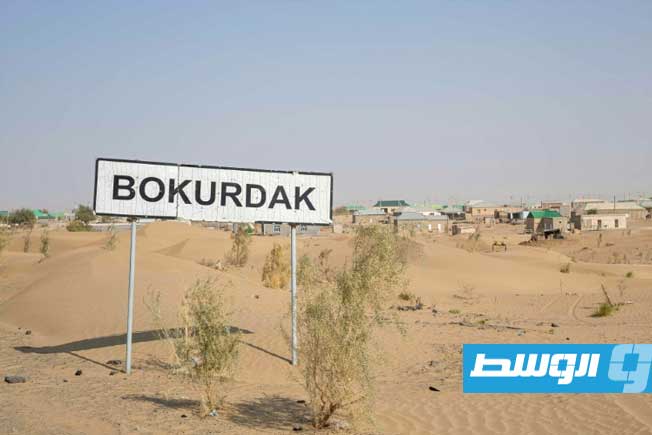
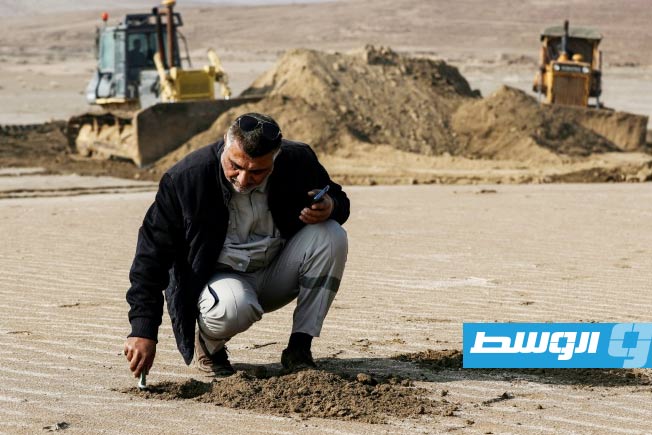
The residents of the remote village of “Bokurdak” in Turkmenistan have traditionally relied on the “Karakum” desert for their livelihood, utilizing every inch of arable land in a constant battle with nature against desertification. However, some fear they may lose this battle.
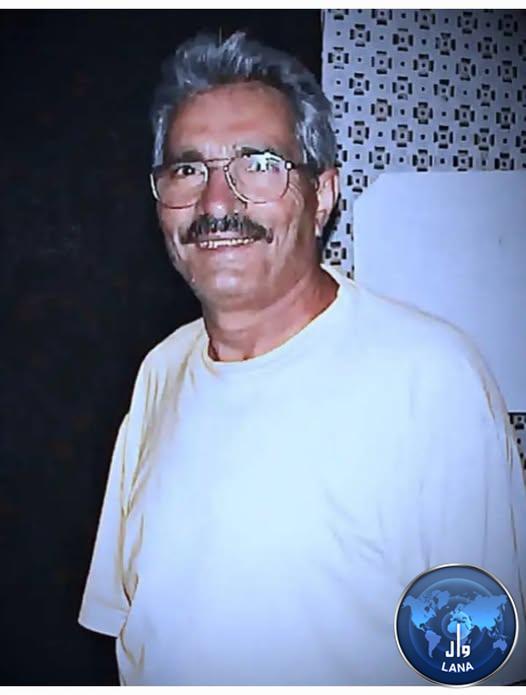
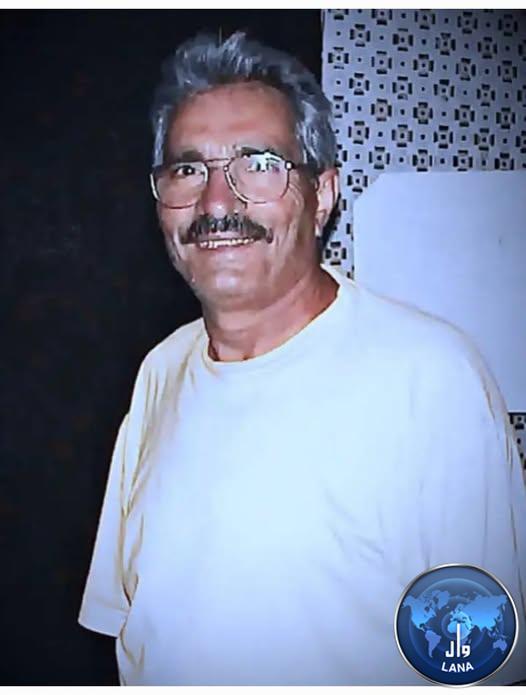
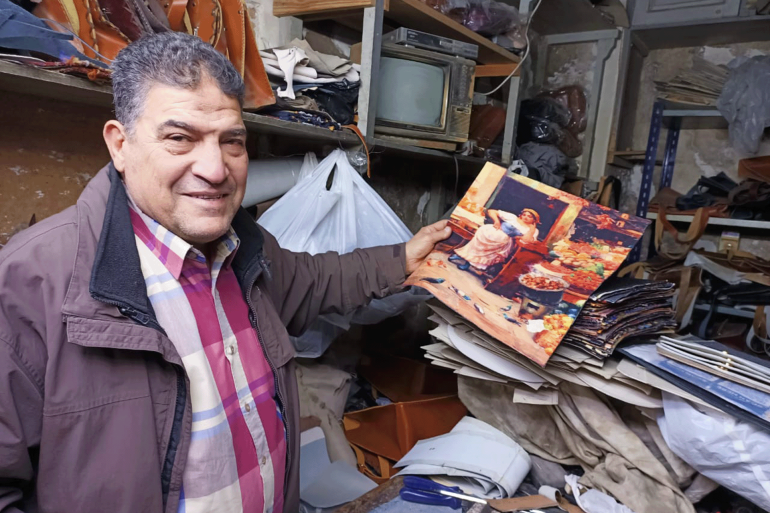
A retiree from the area stated that in recent years, large sand dunes have begun expanding towards the village’s lands, while the advancing desert sands have forced residents to relocate to other areas. He noted that the situation is “extremely difficult” for those living in areas within the reach of this desert, known locally as “Gumli.”
He said: “The village of Bokurdak used to be located on a hill north of this spot. Then, due to the desert’s encroachment, we had to move to lower-lying areas.”
Although sand and steppes have always been part of life in Central Asia, scientists warn that climate change and other human activities are accelerating the pace of desertification and land degradation. Beyond being an environmental and social problem, desertification also poses an economic burden; World Bank estimates suggest it costs Central Asia roughly 6% of its annual GDP.
The “Karakum” desert covers more than 80% of Turkmenistan, a former Soviet republic bordering Iran and Afghanistan. A Turkmen scientist explained: “If vegetation and soil are not managed properly, the earth’s surface becomes easily susceptible to erosion, leading to the degradation of agricultural land and the formation of sand dunes.” He pointed out that deforestation is another major cause of this phenomenon, while severe droughts and dry winds fueled by climate change exacerbate the problem.
Afforestation Campaign
Central Asia is particularly vulnerable to the risks of climate change, with the region’s average temperature rising at nearly double the global rate since 1991, according to UN data. Facing this reality, the authorities in Turkmenistan—a politically isolated country with a population of seven million—are seeking to curb desertification through a large-scale afforestation campaign. The government announced last summer that 162 million trees had been planted over the past twenty years.
An official from the Ministry of Environment stated that “the President himself actively participates in the fight against desertification.”
The same source explained that the ministry and local officials are responsible for monitoring the situation at tree-planting sites and overseeing their planting and care. It was not possible to immediately verify these government claims, as the Caspian Sea state imposes restrictions on independent media coverage and largely keeps information related to government activities confidential.
The leaders of Turkmenistan, former President Gurbanguly Berdimuhamedow and his son, current President Serdar Berdimuhamedow, have emphasized their efforts to combat desertification; state media regularly shows Serdar planting trees.
A member of Turkmenistan’s Nature Protection Society noted: “In the past, the trees planted in the country were of the fir or cedar type, but today we find more local species that are better adapted to the climate.”
Preserving Soil Moisture
In “Bokurdak,” scientists have primarily planted “saxaul” trees, a hardy desert shrub whose roots can extend up to 15 meters underground to store water, according to the society member. Saxaul, which is also planted in Uzbekistan and Kazakhstan, helps to hold sand in place, improve soil moisture, and forms a natural barrier for homes.
A botany enthusiast cares for about 15,000 saplings with the aim of creating a green wall to repel the sand. Pointing to an eight-meter-tall saxaul tree, he said: “It takes 15 to 20 years for a tree like this to grow.” Saxaul trees are also used to protect the capital, Ashgabat; the member stated that “environmental activists have planted more than 50 hectares of saxaul trees on the edge of the desert.” He added: “Now, the road to the capital is no longer covered in sand, traffic flows smoothly, and the number of accidents has decreased.”
But for the enthusiast, who considers tree planting his main weapon against the desert, the battle has become more difficult due to climate change. He said: “In the past, it
Turkmenistan
Turkmenistan, located in Central Asia, is known for its ancient history as part of the Silk Road and the Parthian Empire. Its modern cultural identity is heavily shaped by its vast natural gas reserves and the legacy of its first president, Saparmurat Niyazov, whose influence is visible in monuments like the Arch of Neutrality in the capital, Ashgabat.
Bokurdak
Bokurdak is a mountain peak in the Chatkal Range of Uzbekistan, known for its scenic beauty and significance in local folklore. Historically, the area has been part of ancient trade routes and is associated with traditional pastoral life in the region.
Karakum
The Karakum is a vast desert covering much of Turkmenistan, known for its arid landscape and extreme temperatures. Historically, it has been inhabited by nomadic tribes and lies along ancient Silk Road trade routes, with notable features including the Darvaza gas crater, often called the “Door to Hell,” which was created by a Soviet drilling accident in 1971.
Gumli
Gumli is a historic village located in the Kachchh district of Gujarat, India, known for its traditional mud-brick (bhunga) houses and rich Kutchi craftsmanship. It was originally settled by the Halepotra clan and serves as a living example of the region’s vernacular architecture and resilient community life adapted to the desert environment.
Central Asia
Central Asia is a vast historical region at the crossroads of Eurasia, traditionally encompassing the modern nations of Kazakhstan, Kyrgyzstan, Tajikistan, Turkmenistan, and Uzbekistan. It has a rich history as the heart of the ancient Silk Road, fostering trade and cultural exchange between China, the Middle East, and Europe. The area has been home to nomadic empires, Persian-influenced city-states, and later became part of the Russian Empire and the Soviet Union before the five countries gained independence in 1991.
World Bank
The World Bank is an international financial institution founded in 1944 at the Bretton Woods Conference to help rebuild nations after World War II. Its primary mission has since evolved to focus on providing loans and grants to the governments of low- and middle-income countries for the purpose of pursuing capital projects and reducing poverty.
Ajdabiya
Ajdabiya is a city in northeastern Libya, historically significant as a strategic crossroads for trade and military movements across the Sahara. It gained modern prominence during the 2011 Libyan Civil War, when it was a key battleground between anti-Gaddafi forces and government troops.
COP16
COP16 refers to the 16th Conference of the Parties to the United Nations Convention on Biological Diversity, held in 2024 in Cali, Colombia. This major international summit focused on negotiating a new global framework to halt and reverse biodiversity loss, building upon decades of previous agreements.
Riyadh
Riyadh is the capital and largest city of Saudi Arabia, historically a walled oasis town and the historic seat of the Al Saud dynasty. Its modern transformation began after the discovery of oil in the 1930s, accelerating dramatically in the latter half of the 20th century into a major global financial and administrative hub. The city preserves its heritage in sites like the Masmak Fortress, which symbolizes the 1902 recapture that led to the founding of the modern Saudi state.
Saudi Arabia
Saudi Arabia is a Middle Eastern nation founded in 1932 by King Abdulaziz Al Saud, unifying the regions of Najd and Hejaz. It is the birthplace of Islam, home to the religion’s two holiest cities, Mecca and Medina, which have been central to Islamic history for over 1,400 years. The country’s modern economy and global influence are largely derived from its vast reserves of petroleum, discovered in the 1930s.
Iran
Iran, historically known as Persia, is home to one of the world’s oldest continuous civilizations, with a rich cultural history spanning thousands of years. It features numerous UNESCO World Heritage sites, including the ancient ruins of Persepolis, the magnificent architecture of Isfahan’s Naqsh-e Jahan Square, and the sophisticated engineering of its historic Persian gardens and qanats.
Afghanistan
Afghanistan is a landlocked country in Central and South Asia with a history spanning over 5,000 years, having been a crossroads for empires and a key location on the ancient Silk Road. Its rich cultural heritage includes sites like the Buddhas of Bamiyan and the Minaret of Jam, though decades of conflict have profoundly impacted its people and historical preservation.
Caspian Sea
The Caspian Sea is the world’s largest inland body of water, bordered by five countries: Russia, Kazakhstan, Turkmenistan, Iran, and Azerbaijan. Historically a hub of trade and cultural exchange, its legal status as either a sea or a lake has been a complex geopolitical issue since the dissolution of the Soviet Union, affecting the management of its vast oil and gas resources.
Gurbanguly Berdimuhamedow
Gurbanguly Berdimuhamedow is not a place or cultural site, but the name of a Turkmen politician who served as the President of Turkmenistan from 2006 to 2022. He succeeded the country’s first president, Saparmurat Niyazov, and his tenure was marked by the continuation of a highly centralized and authoritarian political system.
Serdar Berdimuhamedow
Serdar Berdimuhamedow is the current President of Turkmenistan, who assumed office in March 2022. He is the son of the previous long-serving president, Gurbanguly Berdimuhamedow, and his rise to power continues the family’s political dominance in the country’s post-Soviet era.
Turkmenistan’s Nature Protection Society
The Turkmenistan’s Nature Protection Society is a public environmental organization established to promote conservation and ecological awareness in the country. It has historically been involved in initiatives to protect Turkmenistan’s unique natural landscapes and biodiversity, such as those in the Karakum Desert and the Caspian Sea region.
Uzbekistan
Uzbekistan, located in Central Asia, is a historic crossroads of the Silk Road, home to ancient cities like Samarkand, Bukhara, and Khiva. Its rich cultural heritage is deeply tied to the Timurid Empire and centuries of trade, which left a legacy of stunning Islamic architecture, including madrasas, mosques, and mausoleums. Today, it is an independent nation that preserves these UNESCO World Heritage sites as central to its national identity.
Kazakhstan
Kazakhstan is a Central Asian nation with a rich nomadic history, historically inhabited by Turkic tribes and later part of the Mongol Empire and the Russian Empire before becoming a Soviet republic. It gained independence in 1991 following the dissolution of the USSR. Culturally significant sites include the Mausoleum of Khoja Ahmed Yasawi, a UNESCO World Heritage Site from the Timurid period, and the modern capital, Nur-Sultan (Astana), known for its futuristic architecture.
Ashgabat
Ashgabat is the capital city of Turkmenistan, founded in 1881 as a Russian imperial fort. It was largely rebuilt after a devastating earthquake in 1948 and is now known for its extensive, lavish marble-clad government buildings and monuments, a legacy of the post-Soviet era under President Saparmurat Niyazov.