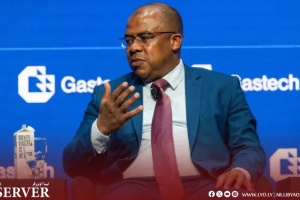
The Minister of Oil and Gas stated that Turkey is well positioned to play a key role in the oil and gas bidding rounds launched by Libya for the first time in nearly 17 years. These remarks were made during participation in the Libya Energy and Economy Summit in Tripoli.
The minister explained that Turkey has shown strong interest in offshore fields in particular, given its technical expertise and its specialized fleet for seismic surveys and offshore drilling. Close cooperation with the Turkish Petroleum Corporation (TPAO) was noted, alongside ongoing work to implement a memorandum of understanding signed between the two sides, as well as plans to sign a second MoU covering surveys in promising areas.
An ambitious target was revealed to raise production to 1.6 million barrels per day by the end of 2026, with the aim of reaching two million barrels per day thereafter. It was stressed that the participation of Turkey and other countries would support the economy. The summit was described as reflecting an open investment environment, with a focus on natural gas and renewable energy projects.
It was added that Ankara has shown considerable interest in the oil and gas fields offered by Libya in the current bidding round, particularly offshore blocks. It was affirmed that Turkey has strong chances of winning several of these areas due to its experience and its specialized vessels for seismic surveys and offshore drilling operations.
The memorandum of understanding signed in June 2025 between Libya’s National Oil Corporation and the Turkish Petroleum Corporation was described as representing a “major commitment” between the two parties.
It was also confirmed that the door is open to Turkish companies to participate in oil and gas facilities projects, pipelines, and midstream and downstream segments of the petroleum industry, in addition to petrochemical and refinery projects, as well as the execution, construction, and operation of these projects.
Turkey
Turkey, officially the Republic of Turkey, is a transcontinental country located mainly on the Anatolian Peninsula in Western Asia, with a smaller portion on the Balkan Peninsula in Southeastern Europe. It is historically renowned as the heartland of the Byzantine and Ottoman Empires, with its modern republic founded in 1923 following the Turkish War of Independence. The country is a cultural crossroads, home to numerous UNESCO World Heritage sites like the historic areas of Istanbul and the rock sites of Cappadocia.
Libya
Libya is a North African country with a rich history that includes ancient Phoenician and Greek settlements, most notably at Cyrene, and later Roman rule. It was part of the Ottoman Empire before Italian colonization in the early 20th century, gaining independence as a kingdom in 1951 and later becoming a republic under Muammar Gaddafi from 1969 until the 2011 revolution. The country is home to five UNESCO World Heritage Sites, including the extensive Roman ruins of Leptis Magna.
Tripoli
Tripoli is the capital and largest city of Libya, with a history dating back to the 7th century BC when it was founded by the Phoenicians. It later became a significant part of the Roman Empire, the Ottoman Empire, and an Italian colony, which is reflected in its diverse architecture in the old medina. The city remains a major Mediterranean port and the political and economic center of modern Libya.
Ankara
Ankara is the capital city of Turkey, strategically located in the central Anatolia region. It was declared the capital in 1923 by Mustafa Kemal Atatürk, replacing Istanbul to symbolize the new, modern Turkish Republic. The city’s history dates back to ancient times, having been an important cultural and commercial center for civilizations including the Hittites, Phrygians, and Romans.
Turkish Petroleum Corporation
The Turkish Petroleum Corporation, known today as TPAO, was founded in 1954 by the Turkish government to manage the country’s hydrocarbon resources. It grew from the earlier Turkish Petroleum Company, which traces its origins to the Ottoman era and played a central role in developing Turkey’s domestic oil exploration and production industry.
TPAO
TPAO, or Türkiye Petrolleri Anadolu Ortaklığı, is the state-owned crude oil and natural gas company of Turkey, founded in 1954. Its establishment marked a significant step in Turkey’s efforts to develop its domestic energy resources and reduce dependence on foreign oil. Today, it is a major integrated energy company involved in exploration, production, refining, and marketing both within Turkey and internationally.
National Oil Corporation
The National Oil Corporation (NOC) is the state-owned oil company of Libya, established in 1970 to manage the country’s petroleum resources. It oversees all aspects of Libya’s oil and gas sector, from exploration to export, and has been a central pillar of the national economy since its founding.