The U.S. President stated he would increase tariffs on imports from South Korea related to automobiles, timber, and pharmaceuticals to 25%, criticizing the legislative body in Seoul for not implementing a trade agreement reached with the U.S.
Trump wrote on social media on Monday, “The South Korean legislature is not adhering to the agreement with the U.S.”
He added, “Because the Korean legislature has not ratified our historic trade agreement… I will raise tariffs on South Korea for automobiles, timber, pharmaceuticals, and all other counter-tariffs from 15% to 25%.”
It is not yet clear when the tariff increase will take effect or what prompted Trump to make this decision now.
South Korea’s Response
South Korea announced it had not been notified in advance of the U.S. decision, indicating it wants urgent talks with Washington on this matter.
A statement from the presidential office in Seoul on Tuesday said, “No official notice has been issued by the U.S. government, nor any clarification of details up to this point.”
The South Korean presidential office (the Blue House) stated that Industry Minister Kim Jong-kwan, currently in Davos, will soon visit the United States and meet with Commerce Secretary Howard Lutnick.
A statement from the ministry noted the visit will take place from January 28 to 31 of this month.
South Korea’s National Assembly typically approves bills only when regular or extraordinary sessions are scheduled.
The next session for reviewing bills begins on February 3.
Framework Agreement
Washington and Seoul reached a framework agreement last year that set tariffs on U.S. imports of Korean automobiles and auto parts at 15%, down from 25%, putting them on equal footing with Japanese competitors.
The 15% tariffs took effect at the beginning of November.
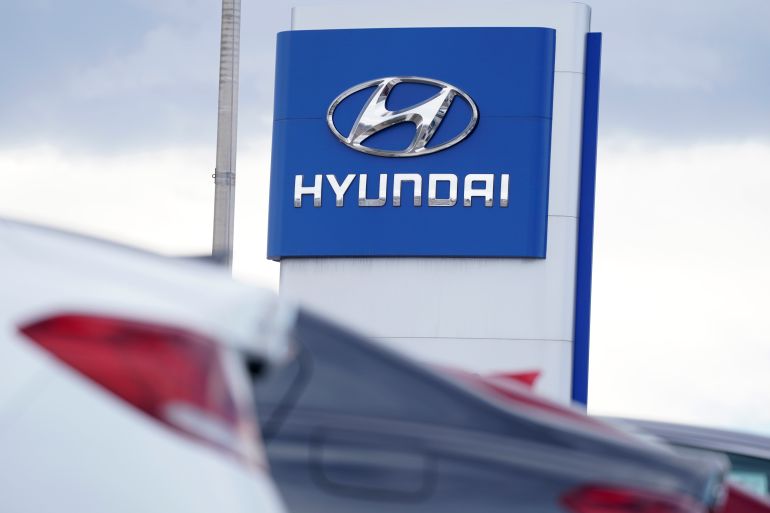
The tariff increase will particularly affect the South Korean automaker Hyundai Motor and its affiliate Kia, due to their large exports to the United States.
Shares of Hyundai and Kia fell 3.5% and 4.8% respectively in early trading on Tuesday.
Davos
Davos is a Swiss Alpine town in the canton of Graubünden, historically known as a health resort and for its development as a winter sports destination. It is now internationally famous for hosting the annual World Economic Forum meeting, where global political and business leaders gather to discuss major economic and social issues.
Switzerland
Switzerland is a landlocked country in Central Europe known for its long history of neutrality, which was formally established by the Congress of Vienna in 1815. It is a federal republic comprised of 26 cantons and is globally recognized for its political stability, direct democracy, and its cultural diversity stemming from four official languages: German, French, Italian, and Romansh.
World Economic Forum
The World Economic Forum (WEF) is an international non-governmental organization founded in 1971 by German economist Klaus Schwab. It is best known for its annual meeting in Davos, Switzerland, which brings together political, business, and cultural leaders to discuss global economic and social issues.
Greenland
Greenland is the world’s largest island, located between the Arctic and Atlantic Oceans, with a history of human habitation dating back over 4,500 years by Paleo-Inuit peoples. It was later settled by Norse Vikings in the 10th century before coming under Danish colonial rule in the 18th century, and it is now an autonomous territory within the Kingdom of Denmark.
Denmark
Denmark is a Scandinavian country in Northern Europe with a rich history dating back to the Viking Age, when it was a major seafaring power. Its cultural sites include numerous well-preserved medieval castles, such as Kronborg Castle (the setting of Shakespeare’s *Hamlet*), and the historic city center of its capital, Copenhagen.
South Korea
South Korea, officially the Republic of Korea, is a country in East Asia that emerged from the division of the Korean Peninsula after World War II and the Korean War (1950-1953). It has since transformed from a war-torn nation into a major global economy and cultural exporter, known for its advanced technology, vibrant pop culture (K-pop and K-dramas), and rich historical heritage including palaces like Gyeongbokgung and traditions such as Confucianism.
Seoul
Seoul is the capital of South Korea, a bustling metropolis with a history stretching back over 2,000 years. It served as the capital of the Joseon Dynasty from 1394, and historic sites like Gyeongbokgung Palace and the city gates stand alongside its modern skyscrapers.
United States
The United States is a federal republic founded in 1776 after declaring independence from Great Britain, with its modern government established by the Constitution in 1789. Its history encompasses westward expansion, a civil war over slavery, and its emergence as a global superpower in the 20th century. The nation is defined by its diverse population, democratic ideals, and significant cultural and economic influence worldwide.
Washington
Washington, D.C., the capital of the United States, was founded in 1790 following the ratification of the U.S. Constitution and named after the nation’s first president, George Washington. It is a planned city, distinct from any state, and is home to iconic landmarks such as the White House, the U.S. Capitol, and the Washington Monument, which symbolize the federal government and American history.
Blue House
The Blue House is the executive office and official residence of the President of South Korea, located in Seoul. Its name derives from the blue tiles of its main building, and it has served as the center of the country’s political power since the establishment of the Republic of Korea in 1948, built upon the site of the former royal garden of the Joseon Dynasty.
Hyundai Motor
Hyundai Motor is a South Korean automotive manufacturer founded in 1967 by Chung Ju-yung. It has grown from a local car assembler into one of the world’s largest vehicle manufacturers, known for its significant role in South Korea’s industrial development and its global brands like Genesis.
Kia
“Kia” is not a specific place or cultural site but a major South Korean automobile manufacturer founded in 1944. Originally producing steel tubing and bicycle parts, it began manufacturing vehicles in the 1970s and has grown into a global automotive brand.
Genesis
Genesis is the first book of the Hebrew Bible and Christian Old Testament, traditionally attributed to Moses. It recounts the origins of the world, humanity, and the Israelite people through foundational narratives like the Creation, the Fall, and the stories of the patriarchs Abraham, Isaac, and Jacob. Its composition is believed by many scholars to have occurred over centuries, drawing from several ancient oral and written sources.
Centennial
Centennial is a public park in Buenos Aires, Argentina, created in 1910 to commemorate the centenary of the May Revolution, which initiated the country’s independence process. The park is historically significant as the site where Argentina’s first public football match was played and where massive public gatherings, including those for the 1978 FIFA World Cup, have been held.
Colorado
Colorado is a U.S. state known for its diverse landscape of mountains, high plains, and deserts, originally inhabited by numerous Native American tribes. It became a U.S. territory following the 1803 Louisiana Purchase and later the 1848 Mexican Cession, achieving statehood in 1876. The state’s history is deeply tied to the 19th-century Pike’s Peak Gold Rush, which spurred rapid settlement and development.
Japan
Japan is an island nation in East Asia with a rich cultural heritage shaped by its long history, including ancient imperial rule, the feudal shogunate era, and its rapid modernization following the Meiji Restoration of 1868. It is renowned for its unique traditions, such as Shinto and Buddhist practices, tea ceremonies, and samurai culture, alongside its global influence in technology and pop culture.