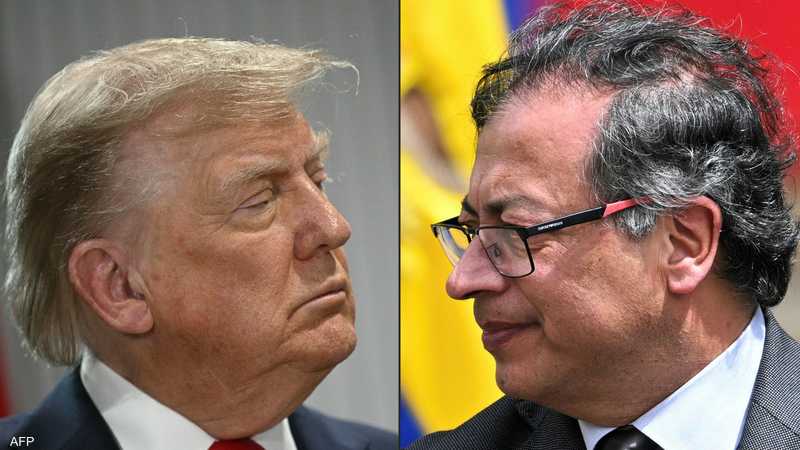
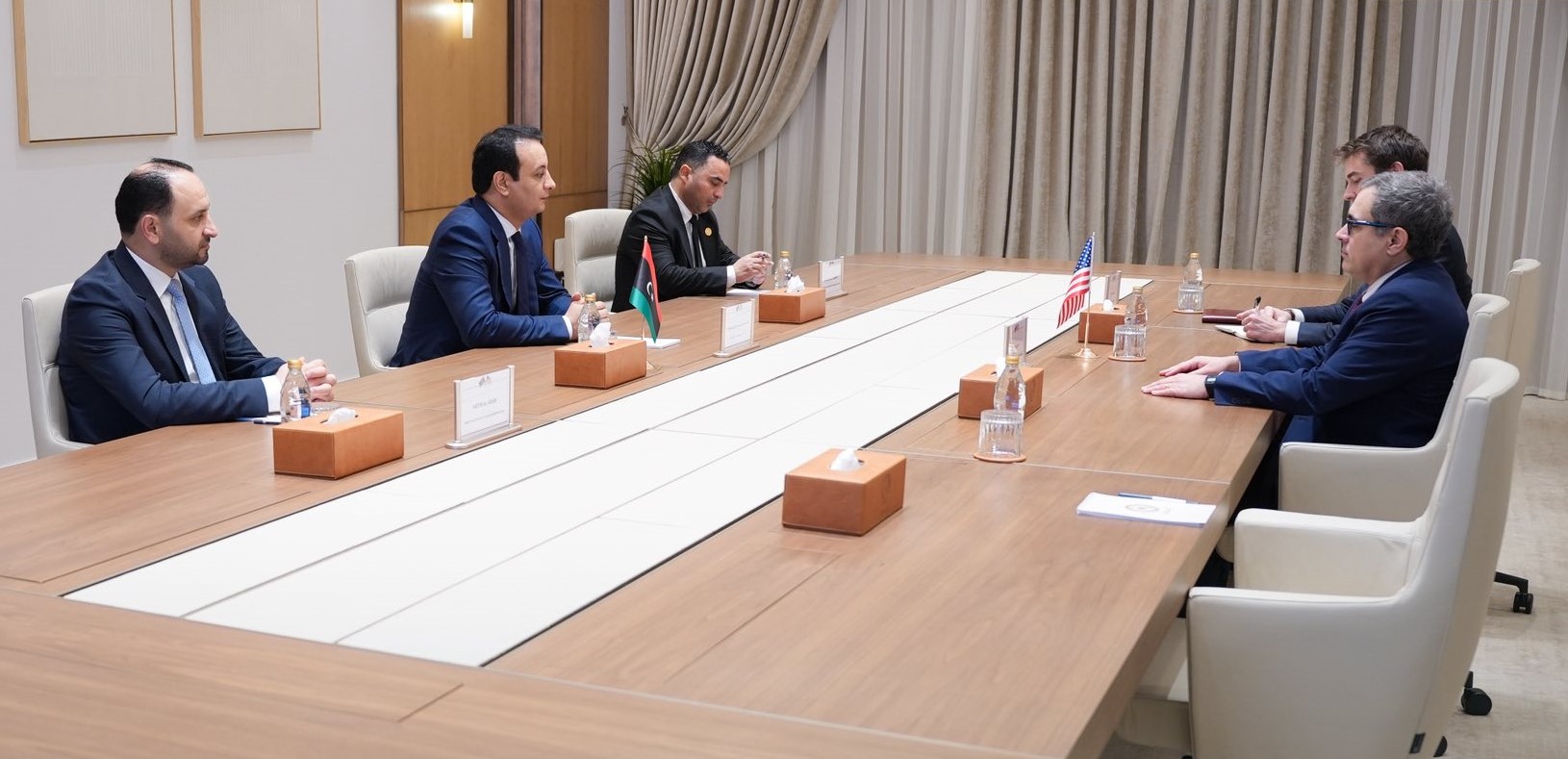
On Wednesday, U.S. President Donald Trump announced that a phone call brought him together with Colombian President Gustavo Petro to discuss a number of contentious issues, indicating that a meeting at the White House between the two countries’ foreign ministers is expected to be held soon.
He wrote on the “Truth Social” platform: “I spoke with Colombian President Gustavo Petro, who called to explain the drug situation and other disagreements that were between us. I appreciated his call and his tone, and I look forward to meeting him in the near future.”
Trump added: “Arrangements are being made between the Secretary of State and Colombia’s Foreign Minister, and the meeting will be held at the White House in Washington, D.C.”
Last Monday, Trump had stated that “the operation on is a good idea for me.”
Trump also attacked the Colombian President, saying that “Colombia is run by a sick man, and he won’t last long in that,” in an unprecedented escalation in his rhetoric towards Bogotá.
In response, Petro denounced, on Sunday, the operation that led to the arrest of Venezuelan President Nicolás Maduro, describing it as “a kidnapping with no legal basis.”
Petro wrote on the “X” platform: “Without any legal basis for taking action against Venezuela’s sovereignty, the arrest becomes a kidnapping,” expressing his rejection of what happened and emphasizing the principle of respecting the sovereignty of nations.
Donald Trump
Donald Trump is a businessman and media personality who served as the 45th President of the United States from 2017 to 2021. His presidency was marked by a populist and unconventional political style, significant tax reforms, and a focus on immigration restriction and “America First” foreign policy.
Gustavo Petro
Gustavo Petro is the current president of Colombia, having taken office in August 2022 as the country’s first leftist head of state. A former guerrilla member, economist, and long-serving senator, his election marked a significant political shift in Colombia’s modern history.
White House
The White House is the official residence and workplace of the President of the United States, located in Washington, D.C. It was designed by James Hoban and its construction was completed in 1800, with President John Adams being the first to occupy it. The building has been expanded and renovated over the centuries, including after being burned by British forces in 1814.
Washington, D.C.
Washington, D.C., is the capital city of the United States, founded in 1790 following the ratification of the U.S. Constitution. It was established as a federal district through the Residence Act, with its design heavily influenced by Pierre Charles L’Enfant, and serves as the seat of the U.S. federal government and its iconic branches.
Colombia
Colombia is a South American country with a rich cultural history shaped by indigenous civilizations, Spanish colonization, and its role as a major producer of commodities like coffee and emeralds. Its cultural sites range from the pre-Columbian archaeological park of San Agustín to the historic walled city of Cartagena, a UNESCO World Heritage site.
Bogotá
Bogotá is the capital and largest city of Colombia, founded in 1538 by Spanish conquistador Gonzalo Jiménez de Quesada on the site of the indigenous Muisca settlement of Bacatá. It serves as the country’s political, economic, and cultural heart, known for its historic La Candelaria district, the Gold Museum, and its location on a high plateau in the Andes Mountains.
Nicolás Maduro
Nicolás Maduro is the current president of Venezuela, having assumed the office in 2013 following the death of his predecessor, Hugo Chávez. His presidency has been marked by a severe economic crisis, political turmoil, and significant international controversy over the legitimacy of his government and elections.
Venezuela
Venezuela is a South American country known for its diverse landscapes, including the Andes Mountains, Amazon rainforest, and the world’s highest waterfall, Angel Falls. Historically, it was a Spanish colony until achieving independence in the early 19th century under leaders like Simón Bolívar, and its modern economy has been heavily shaped by its vast petroleum reserves.