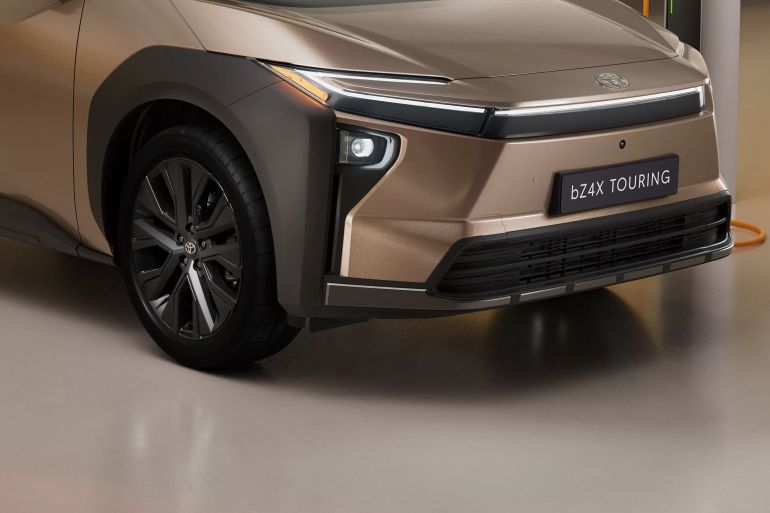
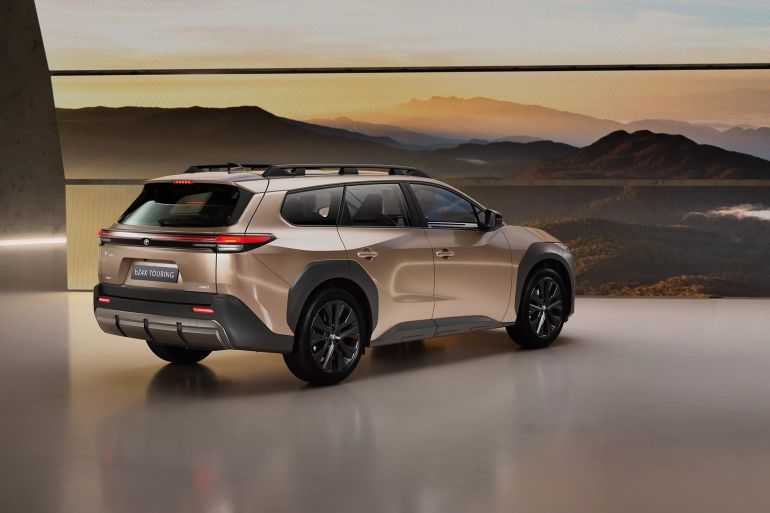
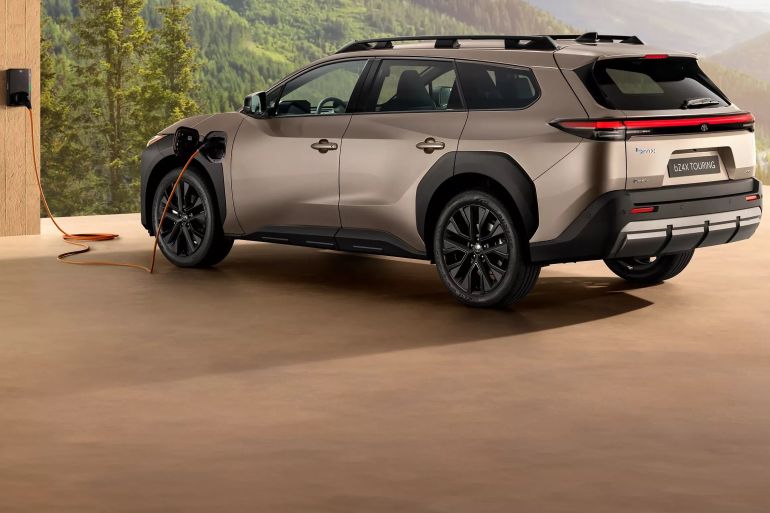
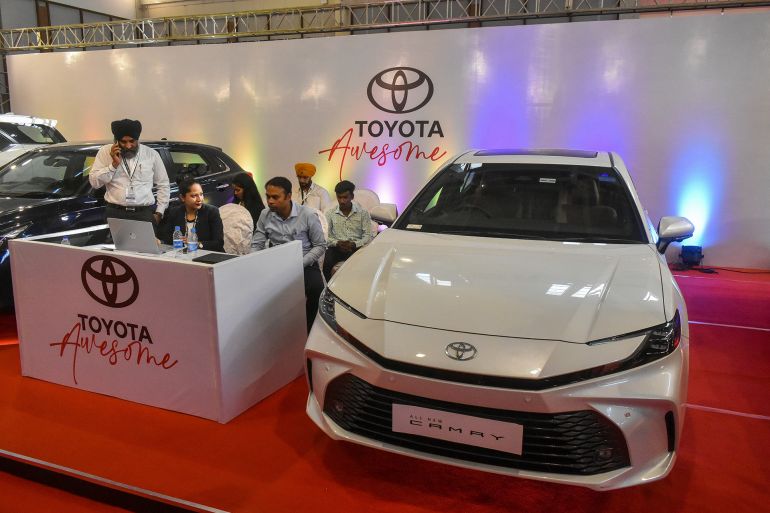
The Japanese company Toyota has unveiled its new electric model, the “bZ4X Touring,” which the company describes as the most powerful electric vehicle it has produced to date. This move reflects the intensifying competition in the global electric vehicle market, particularly in the Sports Utility Vehicle (SUV) segment.
The new vehicle belongs to the family SUV category, with a length of approximately 4.83 meters and a luggage compartment capacity of nearly 670 liters, making it suitable for families, long-distance travel enthusiasts, and active lifestyles.
Unprecedented Power
Regarding the powertrain, Toyota offers two main options: a version with a single 165-kilowatt (224 horsepower) electric motor with front-wheel drive, and a version with dual electric motors delivering a total output of 280 kilowatts (380 horsepower) with all-wheel drive. This makes it the most powerful electric vehicle Toyota has produced so far.
This development reflects the company’s attempt to bridge the technological gap with key competitors like Tesla, Hyundai, and Volkswagen in the high-performance electric vehicle sector.
Long Range and Charging Improvements
The vehicle operates on a 74.7-kilowatt-hour lithium-ion battery, providing a driving range of up to 591 kilometers for the front-wheel-drive version, and between 479 and 528 kilometers for the all-wheel-drive version, according to company estimates and European driving standards.
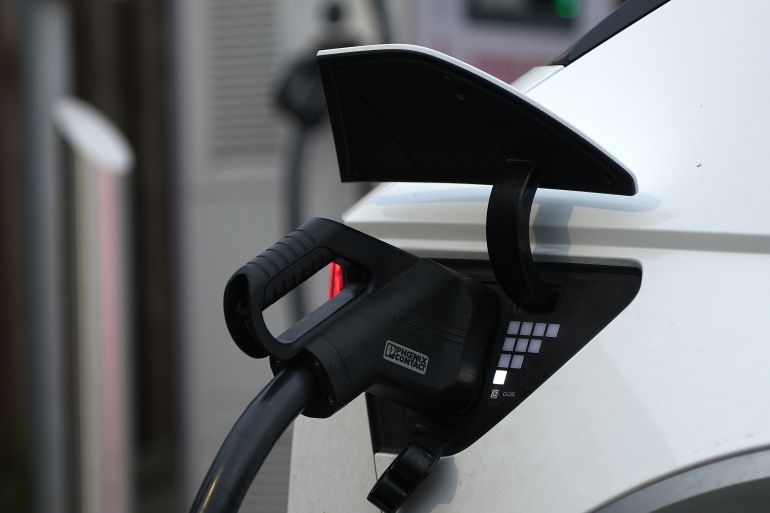
The vehicle is also equipped with a battery pre-conditioning system and a heat pump to improve performance in cold weather, in addition to a smart navigation system that automatically identifies optimal charging points. These technologies aim to address one of the most significant challenges for electric vehicles related to charging efficiency and cold weather.
Towing and Off-Road Driving Capabilities
The all-wheel-drive version offers a towing capacity of up to 1500 kilograms, with two dedicated off-road driving modes. The Grip-Control system automatically adjusts speed according to road conditions, enhancing the vehicle’s practicality outside of urban areas.
The vehicle operates on a 74.7-kilowatt-hour lithium-ion battery, providing a driving range of up to 591 kilometers.
Muscular Design and Advanced Features
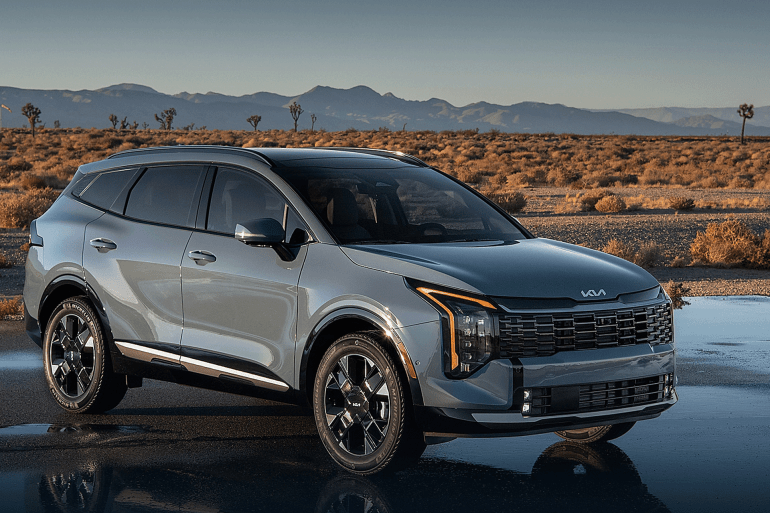
The vehicle features a muscular exterior design with black accents on the wheel arches and roof, and is available in a glossy bronze color named Brilliant Bronze.
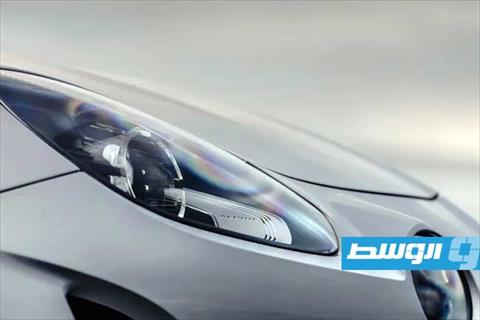
Standard equipment includes Matrix LED headlights, a 14-inch touchscreen, the Toyota Smart Connect navigation system, a rearview camera and ambient lighting, heated front seats and steering wheel, a smart entry and start system, 18-inch lightweight alloy wheels, and the Toyota Safety Sense suite of safety systems.
Broader Electric Strategy
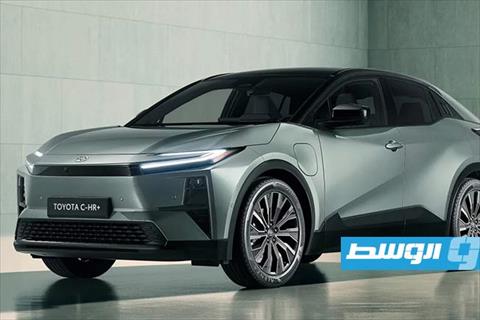
The launch of the bZ4X Touring is part of Toyota’s plan to expand its electric vehicle portfolio. The company is developing new electric models like the electric C-HR and larger SUVs as part of its strategy to transition towards carbon neutrality and compete with leading companies in the electric vehicle sector.
The new model represents an attempt to strengthen Toyota’s presence in the electric SUV category, which is one of the fastest-growing segments in the global automotive market, amid fierce competition from companies like Tesla, BYD, and Volkswagen.
Toyota
Toyota is a Japanese city in Aichi Prefecture best known as the headquarters of the Toyota Motor Corporation, which was founded there in 1937. The city’s modern identity and economy are deeply intertwined with the automotive giant, having originally been a company town named Koromo before being renamed Toyota in 1959.
bZ4X Touring
“bZ4X Touring” refers to a specific trim level of the Toyota bZ4X, an all-electric compact SUV introduced in 2022. It represents Toyota’s entry into the mass-market electric vehicle segment, with the “Touring” variant typically offering enhanced comfort and technology features. The model is part of Toyota’s broader “bZ” (beyond Zero) sub-brand, which was launched as part of the company’s strategy to achieve carbon neutrality.
Sports Utility Vehicle
A Sports Utility Vehicle (SUV) is a category of motor vehicle that combines features of road-going passenger cars with traits from off-road vehicles, such as raised ground clearance and often four-wheel drive. The concept originated from rugged, truck-based vehicles like the Jeep from the 1940s, but evolved significantly in the late 20th century with more car-like unibody constructions, leading to its massive popularity for family and personal transportation.
SUV
SUV is an acronym for Sports Utility Vehicle, a category of passenger vehicles that combine features of road-going passenger cars with off-road capabilities. The concept originated with models like the 1935 Chevrolet Suburban, but the modern SUV market expanded significantly in the 1990s with a focus on four-wheel drive and higher ground clearance. These vehicles have become a dominant segment in the global automotive industry, reflecting a cultural preference for versatile and spacious transportation.
Tesla
Tesla is an American electric vehicle and clean energy company founded in 2003 by engineers Martin Eberhard and Marc Tarpenning, though it is most famously led by CEO Elon Musk. The company is named after the inventor and electrical engineer Nikola Tesla and has played a pivotal role in popularizing electric cars globally.
Hyundai
Hyundai is a major South Korean conglomerate founded in 1947 by Chung Ju-yung, initially as a construction company before expanding into automobiles, shipbuilding, and numerous other industries. It is historically significant for playing a central role in South Korea’s rapid industrialization and economic development, known globally for its automotive division, Hyundai Motor Company.
Volkswagen
Volkswagen is a German automotive manufacturer founded in 1937 by the German Labour Front under the Nazi regime, with its iconic Beetle model originally conceived as an affordable “people’s car.” Today, it is one of the world’s largest automakers, headquartered in Wolfsburg, Germany, and encompasses a wide portfolio of brands including Audi, Porsche, and Škoda.
European
“European” is not a specific place or cultural site, but a broad geographical and cultural designation for the continent of Europe. Its history is vast, encompassing ancient civilizations like Greece and Rome, the Middle Ages, the Renaissance, the Age of Exploration, and the formation of the modern European Union.
Grip-Control
“Grip-Control” does not refer to a known historical place or cultural site. It is a term commonly associated with technology or sports equipment, often describing a feature for managing stability or handling. Therefore, it lacks a historical background as a cultural or geographical location.
Brilliant Bronze
“Brilliant Bronze” is a cultural site in China’s Sanxingdui archaeological complex, renowned for its stunning bronze artifacts from the ancient Shu civilization dating back over 3,000 years. The discovery of these advanced and stylistically unique bronzes, including masks and sculptures, dramatically expanded historical understanding of early Chinese regional cultures.
Matrix LED
Matrix LED is a type of automotive lighting technology developed by Audi, first introduced in 2013. It uses an array of individually controlled LEDs that can automatically dim specific segments to avoid dazzling other drivers while maintaining maximum illumination. This innovation marked a significant advancement in adaptive headlight systems, improving both safety and visibility.
Toyota Smart Connect
Toyota Smart Connect is a digital platform and service introduced by Toyota Motor Corporation to enhance vehicle connectivity and user experience through integrated telematics and data services. It represents the company’s ongoing development in connected car technology, evolving from earlier systems like Toyota’s G-Book to incorporate real-time navigation, remote vehicle control, and AI-powered personal assistance.
Toyota Safety Sense
Toyota Safety Sense is a suite of advanced driver-assistance systems (ADAS) introduced by Toyota in 2015 to help prevent or mitigate collisions. The integrated features, such as pre-collision braking and lane departure alert, have evolved through several generations to incorporate more sophisticated sensors and expanded functionality.
C-HR
The Toyota C-HR is a compact crossover SUV first introduced in 2016, designed with a bold, coupe-like aesthetic to appeal to a younger market. Its history is rooted in Toyota’s strategy to create a more dynamic and stylish urban vehicle, with the name standing for “Compact High Rider” or “Coupe High-Rider.”
BYD
BYD is a Chinese multinational company founded in 1995, originally as a battery manufacturer, which has grown into a global leader in electric vehicles and rechargeable batteries. Its history reflects a strategic expansion from its core battery technology into automobiles in the early 2000s, positioning it as a key player in sustainable transportation.