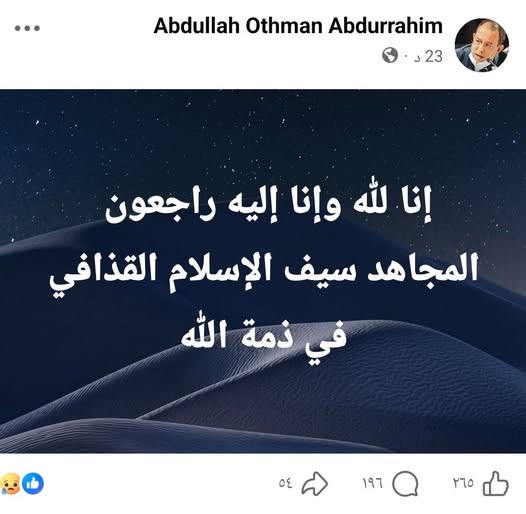
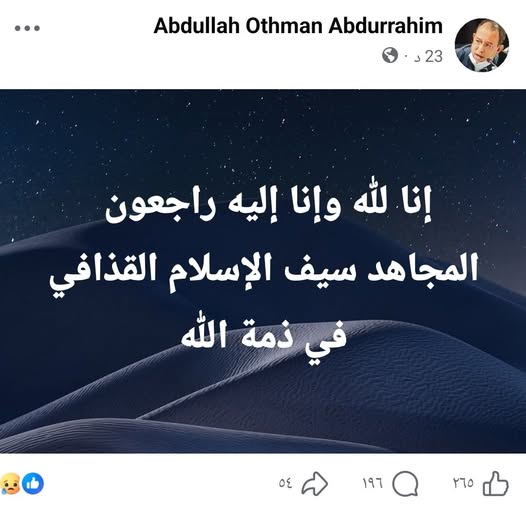
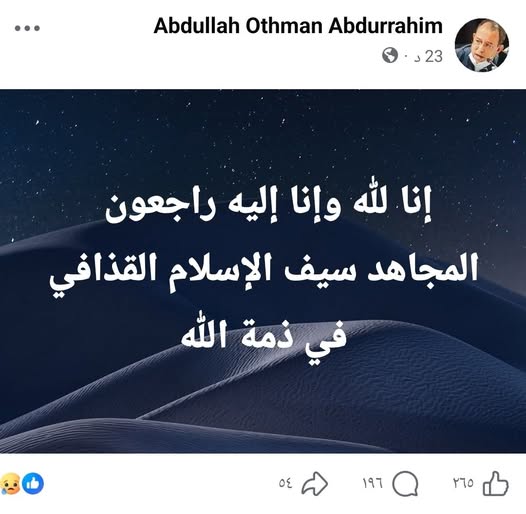
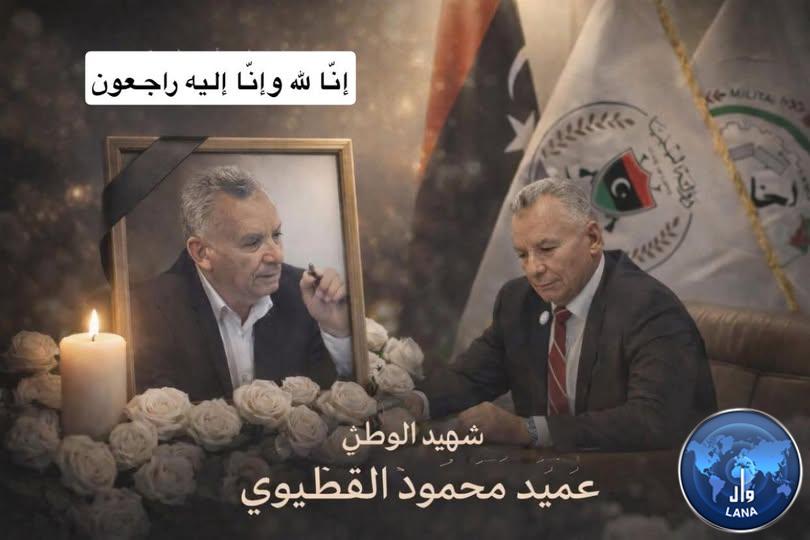
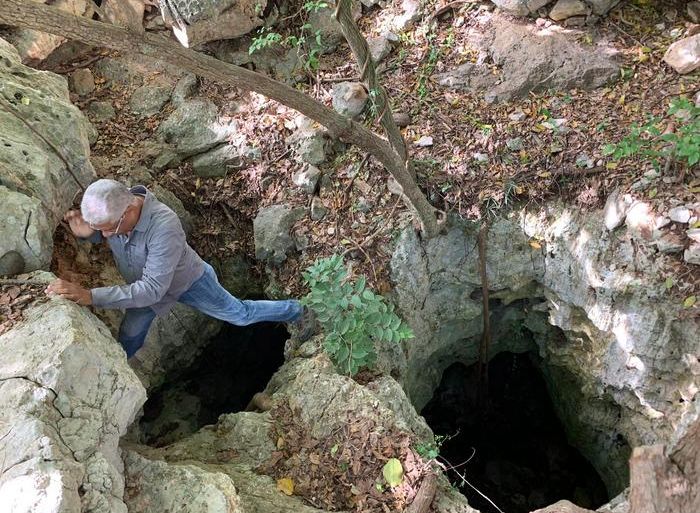
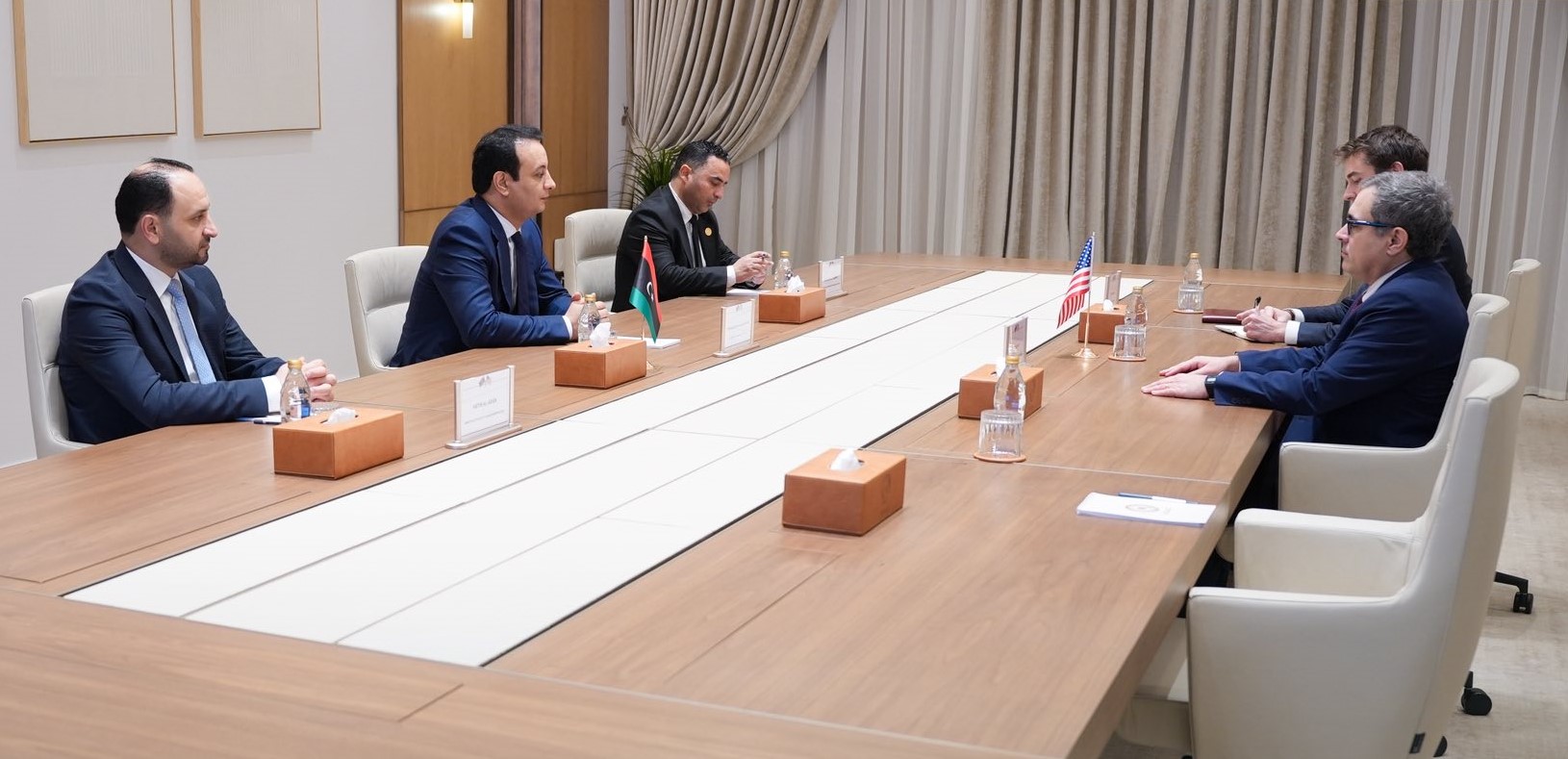
Tripoli, February 4, 2026 – The United Nations Support Mission in Libya expressed its deep dismay over the killing of “Saif al-Islam Gaddafi” on February 3 in the Al-Hamadah area, near Zintan.
In a statement issued today, Wednesday, the Mission condemned the targeted acts and all similar acts of violence that undermine the rule of law, violate the sanctity of human life, and threaten peace and stability in Libya.
The Mission urgently called on the relevant Libyan authorities to conduct a swift and transparent investigation into this crime to identify those responsible, bring the perpetrators to justice, and take decisive measures to put an end to this pattern of violence.
The Mission also urged all parties to exercise restraint and avoid any behaviors that could increase tensions or jeopardize security and stability throughout the country, emphasizing the necessity of reaching a political solution for Libya as a means to achieve long-term stability and development.
…
Tripoli
Tripoli is the capital and largest city of Libya, located on the country’s Mediterranean coast. Historically, it was founded by the Phoenicians in the 7th century BC and later became a significant Roman city, with its old town, the medina, showcasing a rich history of subsequent Arab, Ottoman, and Italian colonial rule.
United Nations Support Mission in Libya
The United Nations Support Mission in Libya (UNSMIL) is a political mission established in 2011 by the UN Security Council following the Libyan Civil War. Its mandate is to assist Libyan national authorities in restoring public security, promoting political dialogue, and supporting key governance and human rights efforts.
Libya
Libya is a North African country with a rich history rooted in ancient civilizations like the Phoenicians and Romans, followed by centuries of Arab and Ottoman influence. In the modern era, it was an Italian colony before gaining independence in 1951, later becoming known for Muammar Gaddafi’s lengthy rule from 1969 until the 2011 revolution. Its cultural sites include the well-preserved Roman ruins of Leptis Magna, a UNESCO World Heritage site.
Al-Hamadah
Al-Hamadah is a vast desert plateau located in central Saudi Arabia, historically significant as a major geographical feature and traditional crossroads for Bedouin tribes and trade routes. Its arid, rocky landscape has shaped the nomadic culture and movements of the region’s inhabitants for centuries.
Zintan
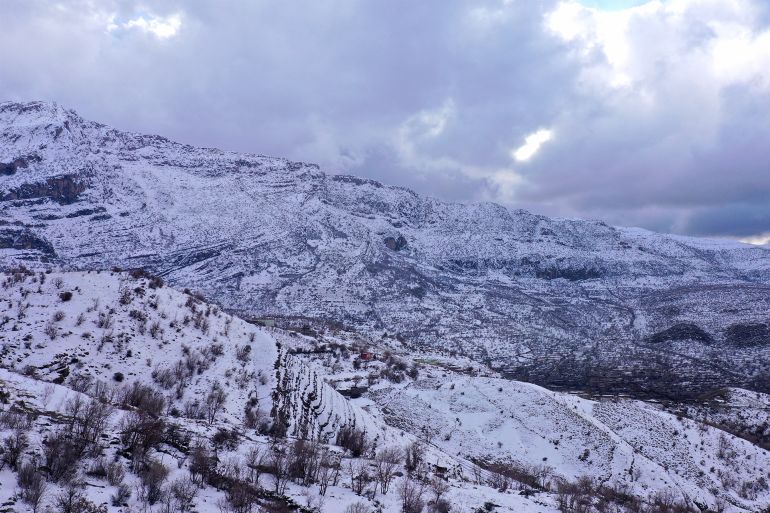
Zintan is a city in northwestern Libya known for its strategic location in the Nafusa Mountains. Historically, it served as a key stronghold during the 2011 Libyan Civil War and is home to the Zintan Museum, which holds artifacts from the region’s Berber heritage.