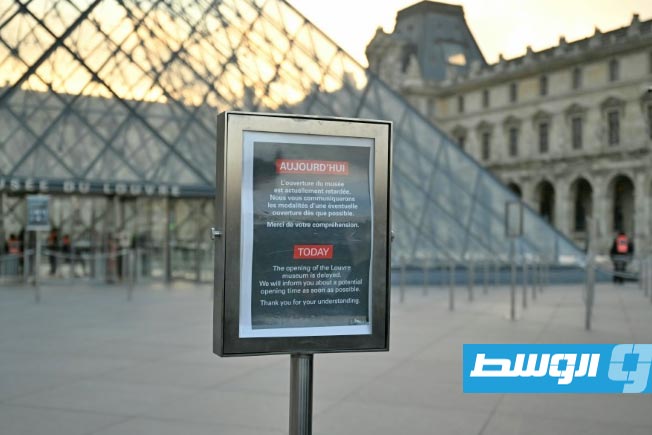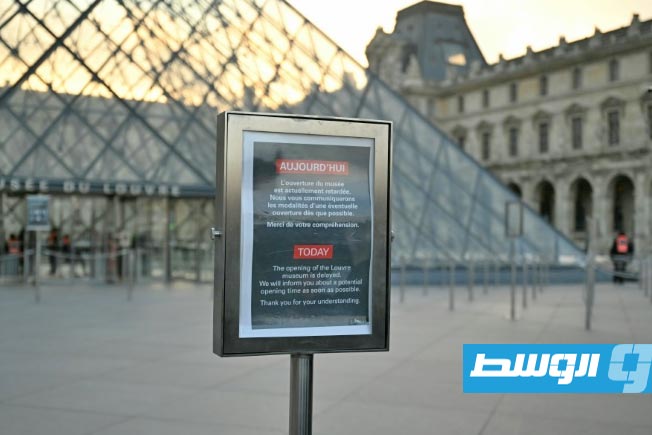
Three months after the theft of historic jewels from the Louvre Museum in Paris, the four suspected thieves remain behind bars while the stolen items are still missing, amid an unprecedented crisis facing the world’s largest museum.
The fate of the French crown jewels, valued at 88 million euros, which were stolen in front of the eyes of the entire world, remains shrouded in mystery. One hypothesis suggests the jewels may have been sold shortly after the theft.
The four suspects have been behind bars since the end of November, while the partner of one of them, considered an accomplice in the operation, was released under judicial supervision. Investigative judges have been questioning them since mid-January.
When formal charges were brought against them, it was stated that their profiles did not match those of “individuals usually involved at the highest levels of organized crime.”
“They are not that stupid”
It was explained that “the theft incident was preceded by actual preparations,” from renting and preparing a crane to choosing the early morning to carry out the operation because “the museum is fully active at that time.”
It was added, “During the thieves’ escape, there is undoubtedly a moment when they feel a kind of tension, leading them to drop the jewels and leave DNA traces. All of that helps investigators.”
The identities of two of the suspects were determined through DNA found in the Louvre Museum or on the crane, the third through a motorcycle spotted by surveillance cameras, which also had DNA traces. As for the fourth man, suspected of placing the crane under the windows of the Apollo Hall, his identity was determined through “matching information and investigations.”
While some observers described the thieves as “incompetent” due to the leftover DNA or the Empress Eugenie’s tiara that fell from them during their escape, a source familiar with the case confirms they are “not that incompetent.”
The source says, “They placed their small electric bikes and equipment inside boxes and dismantled the surveillance camera system.”
The operation they carried out, disguised as construction workers with yellow vests and operating a crane, was completed within eight minutes.
– The Louvre Museum closes again after staff renew their strike
– 5 new arrests in the theft at the Louvre Museum
– Source: ‘Empress Eugenie’s tiara’ found damaged near the ‘Louvre’
After the robbery, the car they used headed towards the suburbs “to mislead investigators by entering an area not covered by cameras,” and “they did not contact each other again and resumed their activities as if nothing had happened,” according to the source.
The defense team did not wish to comment.
“Within thirty seconds”
The robbery that occurred on October 19 plunged the Louvre Museum into a major crisis, which worsened after audit reports were revealed that had warned of security vulnerabilities since 2017, but which largely remained unaddressed.
Under pressure, the head of the Louvre Museum was forced to acknowledge “organizational shortcomings” in the museum’s security matters and announce emergency measures.
According to the administrative investigation, the thieves could have been caught “within thirty seconds.” An external camera “clearly filmed their arrival, the preparation of the crane, two of them climbing onto the balcony, and then their hurried departure after a few minutes,” as stated by the investigators during a session before the Senate.
However, security guards did not watch this recording live.
The theft sparked great dissatisfaction among employees, who went on strike in mid-December, prompting the museum to close its doors for two full days or partially open some wings due to staff shortages.