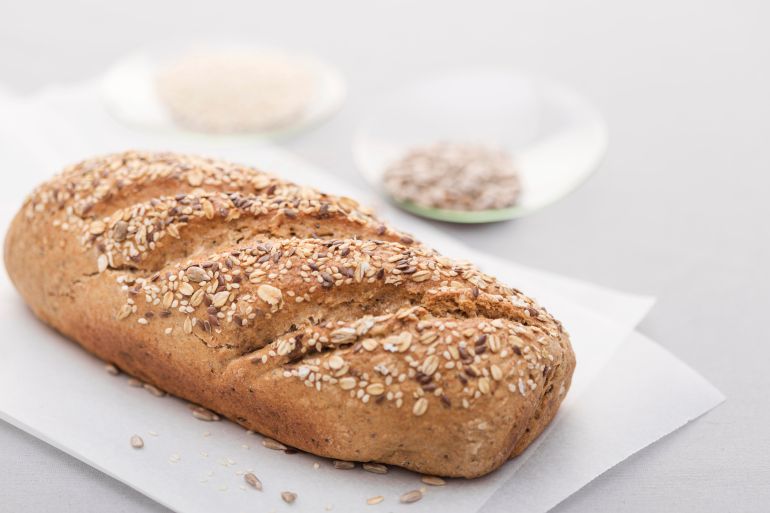
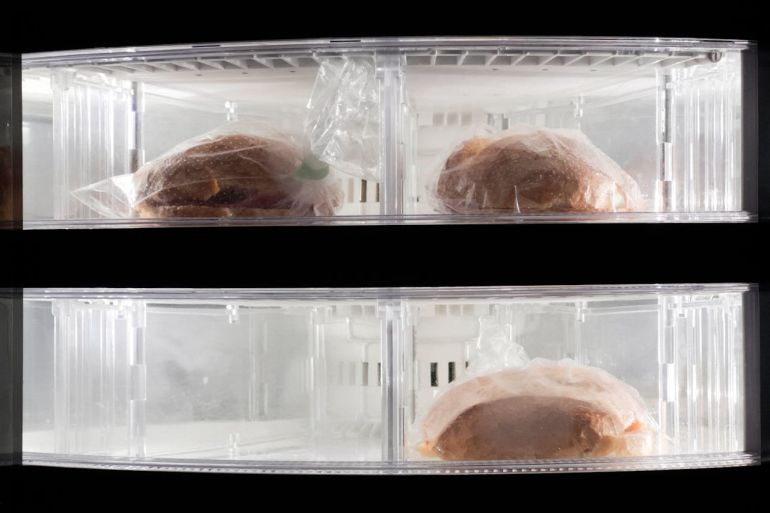
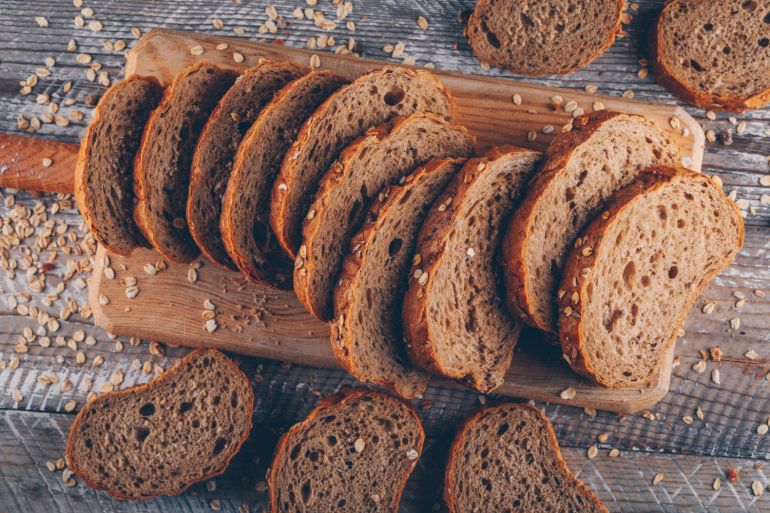
In many kitchens around the world, freezing bread is seen as a practical solution to reduce waste and extend the life of a loaf. But in recent years, this daily habit has begun to move beyond the framework of “smart storage” into a broader space related to health and the body, particularly concerning blood sugar levels and the feeling of fullness.
So what happens to bread when it is frozen? And why do specialized studies suggest that frozen bread may, in some cases, be more beneficial than its stale or even fresh counterpart?
Cold Changes the Structure of Bread
At its core, bread is a mixture of starches, primarily starch, which is the element responsible for raising blood sugar levels after consumption.
When dough is baked, the starch transforms into a form that the body can digest quickly, which explains the rapid rise in blood sugar after eating fresh bread, especially that made from white flour.
However, according to studies focused on food and health, exposing bread to low temperatures, as happens during freezing, causes a change in the structure of this starch. Part of it converts into what is known as “resistant starch,” a type that is not easily digested in the small intestine and passes to the colon to play a role closer to that of dietary fiber.
This transformation does not radically change the taste of the bread, but it alters how the body interacts with it.
The Key: The Glycemic Index
The Glycemic Index is a measure that indicates how quickly a food raises blood sugar. The lower the number, the slower and more stable the rise.
According to scientific reports, bread after freezing, especially if toasted after removal, may cause a lower glycemic response compared to fresh bread.
This practically means that the body processes frozen bread more calmly and steadily, without the rapid spikes in sugar and insulin that can later lead to quick hunger or fatigue.
This is not only about dieting or weight loss, but also about managing energy and the feeling of fullness throughout the day, as well as controlling blood sugar, especially for patients.
Why Might Frozen Bread Be More Satiating?
When part of the starch converts to resistant starch, it works in a way similar to fiber. This type of starch slows down the digestion process and prolongs the time food stays in the digestive system, which is reflected in the feeling of satiety.
This effect may be beneficial for people who suffer from appetite fluctuations or frequent hunger pangs after eating bread. Instead of the loaf being a source of quickly vanishing energy, it becomes a more balanced element within the meal.
Fresh, Frozen, and Stale
Stale bread is often advised against, not only because of its hardness, but also because the change in its starch structure is irregular and may be accompanied by a loss of taste and sensory value without clear benefits.
As for fresh bread, it is naturally the best in terms of taste and smell, but it is digested more quickly, especially if made from refined white flour.
Frozen bread, on the other hand, stands in a middle ground between them. It retains its sensory quality if frozen correctly, while simultaneously gaining different nutritional properties that make it a practical choice for those seeking a balance between taste enjoyment and nutritional benefit, with the greatest benefit coming when it is made from whole grains.
Some research indicates that the benefit lies not only in freezing but also in the process that follows. Taking bread out of the freezer and then toasting it may enhance the formation of resistant starch compared to thawing it at room temperature and consuming it in that state. Therefore, this does not mean that every frozen slice of bread automatically becomes “healthy food,” but the way that slice is consumed later plays an important role in the final effect on the body.
Sprouted grain bread is a type of bread made from whole grains that have been allowed to germinate before being milled into flour and baked. This ancient preparation method, which dates back thousands of years, is believed to make the nutrients in the grains more digestible and available.
bread
Bread is a staple food made from flour and water, with a history dating back over 30,000 years to some of the earliest known human agriculture. Its production and varieties have evolved significantly across cultures, from ancient Egyptian sourdoughs to the industrialized loaves of the modern era.
loaf
“Loaf” is not a recognized place or cultural site. The term may refer to a type of bread or be a misspelling or shorthand for another location. Please verify the intended name for an accurate summary.
dough
“Dougga” is an exceptionally well-preserved Roman archaeological site in Tunisia, originally a Berber settlement before becoming a Roman colony. Its ruins, including a Capitol, theater, and temples, showcase a blend of Numidian and Roman cultures from the 2nd century BCE onward.
white flour
“White flour” is not a specific place or cultural site, but a food ingredient. Historically, the widespread production of refined white flour became common in the late 19th century with the advent of industrial roller mills, which efficiently separated the bran and germ from the wheat kernel. This process created a shelf-stable product but removed many of the grain’s original nutrients.
starch
“Starch” is not a specific place or cultural site, but a carbohydrate commonly found in foods like potatoes, rice, and wheat. Historically, its extraction and use have been culturally significant in many regions, such as in the ancient processing of maize in the Americas or in the traditional production of laundry starch in Europe.
resistant starch
Resistant starch is not a place or cultural site, but a type of dietary fiber found in foods like green bananas, cooked and cooled potatoes, and legumes. It resists digestion in the small intestine and ferments in the large intestine, which has been studied for potential health benefits since the late 20th century.
dietary fiber
Dietary fiber is not a place or cultural site, but a nutritional component found in plant foods. Its importance in human health has been recognized throughout history, with ancient civilizations like the Egyptians using high-fiber grains for dietary and medicinal purposes. Modern scientific study, particularly in the 20th century, has solidified our understanding of its crucial role in digestion and disease prevention.
colon
The Colon Theatre, located in Buenos Aires, Argentina, is one of the world’s leading opera houses, renowned for its exceptional acoustics and opulent architecture. It opened in 1908, replacing an earlier theater from 1857, and has hosted countless premieres and performances by the most celebrated international artists.
small intestine
The small intestine is a vital organ in the human digestive system, responsible for absorbing nutrients from food. While not a cultural site, its study has a long history in medicine, with significant early descriptions provided by ancient Greek physicians like Herophilus.
digestive system
The digestive system is a complex network of organs responsible for breaking down food, absorbing nutrients, and expelling waste from the body. Its study has evolved from ancient theories, like the Greek concept of the four humors, to modern understandings of physiology and biochemistry developed over centuries.
Glycemic Index
The Glycemic Index is not a place or cultural site, but a scientific concept. It is a scale from 0 to 100 that ranks carbohydrate-containing foods by how quickly they raise blood glucose levels. It was developed in the early 1980s by Dr. David J. Jenkins and his colleagues at the University of Toronto as a tool for managing blood sugar, particularly for people with diabetes.
insulin
Insulin is not a place or cultural site, but a hormone discovered in 1921 by Frederick Banting and Charles Best at the University of Toronto. Its isolation and therapeutic use transformed diabetes from a fatal disease into a manageable condition.
blood sugar
“Blood sugar” is not a place or cultural site; it is a medical term referring to the concentration of glucose in the bloodstream. It has no historical significance as a location, but the monitoring and understanding of blood sugar levels have played a crucial role in the history of medicine, particularly in the diagnosis and management of diabetes.
whole grains
“Whole grains” are not a specific place or cultural site, but a category of food. Historically, grains like wheat, rice, and corn have been dietary staples for civilizations worldwide for thousands of years, with whole grains being consumed in their most complete and unprocessed form.
freezer
A freezer is a household or commercial appliance designed to preserve food by maintaining sub-zero temperatures, typically around -18°C (0°F). Its modern history began in the 1930s with the invention of the first freestanding electric freezer, revolutionizing food storage and safety by allowing long-term preservation.
toaster
A toaster is a common household appliance designed to brown slices of bread by exposing them to radiant heat. Its modern electric form was developed in the early 20th century, with the first commercially successful automatic pop-up toaster introduced by Charles Strite in 1921.