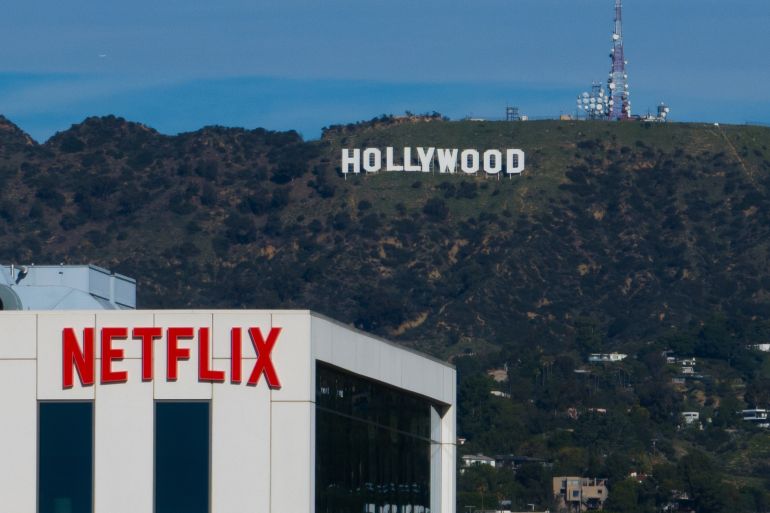
Hollywood was not only the capital of the world’s film industry but also a factory of legends, a land of dreams and nightmares. Over the past hundred years, through its films and stories, it shaped the world’s perceptions of itself and created its symbols and heroes.
Its films were a primary partner in raising generations and also promoted the Western model through its symbols. It did not merely tell stories but gave them rhythm, heroism, hope, and beautiful illusions.
But the lights that illuminate the green hills of Hollywood have begun to dim, and it is no longer the sole destination for imagination. Technological, political, social, and economic transformations have reshaped the tastes of new generations.
Senior figures in the city of lights admit that it is facing an unprecedented moment of decline and is stepping down from its throne of uniqueness.
Hollywood’s status has been affected by the decreasing cost of film production and the use of digital technology. The industry has spread to different regions where its voice is rising and its lights sometimes appear brighter than Hollywood’s. Could the world’s film capital become a thing of the past, with the industry’s throne moving to another capital?
Shocking Statistics
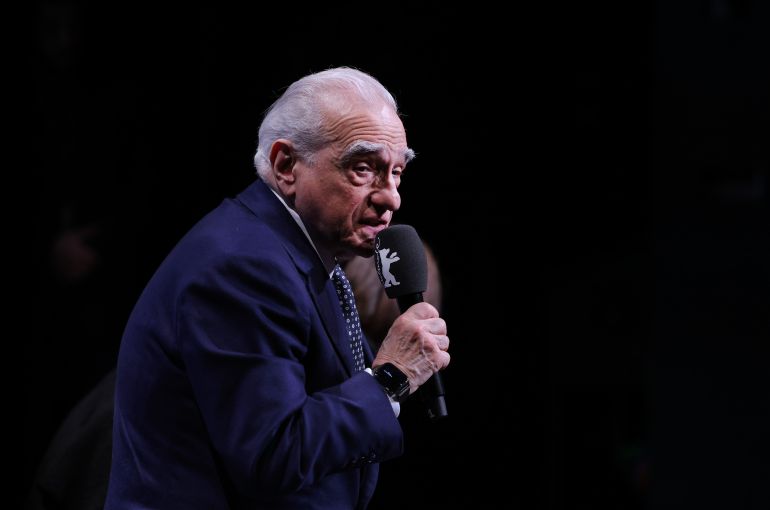
A prominent American director acknowledges that Hollywood’s historical centrality no longer exists, stating in an interview with a film magazine that world cinema today “no longer revolves around a single center.”
He pointed out that cinematic waves coming from Asia, Europe, and Latin America are now influencing global taste outside the traditional Hollywood model, whether in terms of style, subject matter, or methods of production and distribution.
Statistics on production, work patterns, funding models, and the geographical shifts of major projects collected by a specialized firm tracking global film and TV series production show that film and television program production in the United States declined sharply following the 2023 writers’ and actors’ strikes.
Los Angeles experienced one of its weakest production years in over a decade. This decline was not limited to independent projects; major studios postponed or relocated their big-budget productions due to rising costs, labor market instability, and increasing competitive incentives abroad.
Many major productions originally slated to be filmed in California were shot in Canada, the United Kingdom, or Eastern Europe, including the 2024 film “Deadpool & Wolverine” produced by Disney in the UK and Canada.
The producing studio has increasingly relied on studios outside London for its franchise films. These decisions were not creative choices but economic ones.
A California film commission acknowledged that competing regions worldwide offer tax incentives that exceed what the state can currently provide.
According to a 2024 report, more than 120 competitors globally offer incentives for film and television, creating a competitive environment where production follows financial logic first.
Canada provides one of the clearest examples of this structural shift. A 2024 report documented that foreign studios and digital streaming platforms now account for more than half of the total spending on audiovisual production in the country.
The report showed that international productions generate billions of dollars annually as direct investments and support significantly higher employment levels than domestic projects alone.
The South Korean series “Squid Game” achieved great global
Netflix
Netflix is an American subscription-based streaming service founded in 1997, originally as a DVD-by-mail rental company. It revolutionized the entertainment industry by pioneering a streaming model in 2007, leading to its current status as a major global producer and distributor of films and television series.
Los Angeles
Los Angeles is a major city in Southern California, founded in 1781 by Spanish settlers. It grew from a small pueblo into a global metropolis, largely driven by the arrival of railroads, the discovery of oil, and the establishment of the Hollywood film industry in the early 20th century.
Hollywood
Hollywood is a district in Los Angeles, California, that became the global center of the American film industry in the early 20th century. Its iconic status is symbolized by the Hollywood Sign, originally erected in 1923 as an advertisement for a local real estate development. The area remains synonymous with movie studios, celebrity culture, and the entertainment business.
Asia
Asia is the world’s largest and most populous continent, home to ancient civilizations such as those in Mesopotamia, the Indus Valley, and China. Its history spans millennia, featuring the rise and fall of vast empires, the spread of major world religions, and profound advancements in science, art, and governance. Today, it is a region of immense cultural, economic, and political diversity, encompassing countless distinct nations and traditions.
Europe
Europe is a continent with a rich and complex history, shaped by ancient civilizations like Greece and Rome, the Middle Ages, the Renaissance, and periods of both conflict and cooperation. Culturally, it is home to a vast array of languages, artistic movements, and architectural landmarks, from medieval castles to modern institutions. Its modern identity is significantly defined by the political and economic integration of the European Union.
Latin America
Latin America is a diverse cultural and geographic region encompassing countries in the Americas where Romance languages—primarily Spanish and Portuguese—are predominantly spoken. Its history is deeply marked by pre-Columbian civilizations, European colonization beginning in the late 15th century, and a series of independence movements in the 19th century. Today, it is known for its rich blend of indigenous, European, and African cultural influences.
BERLIN
Berlin is the capital of Germany, founded in the 13th century and historically significant as the capital of Prussia and later a divided city during the Cold War, symbolized by the Berlin Wall. Today, it is a major European hub known for its museums, art scene, and landmarks like the Brandenburg Gate and Reichstag building.
GERMANY
Germany is a country in Central Europe with a complex history, notably shaped by the Holy Roman Empire, the division and reunification of East and West Germany during the Cold War, and its role in both World Wars. It is renowned for its diverse cultural heritage, including historic castles, classical music composers, and influential contributions to philosophy, science, and art. Today, it is a leading economic and political power within the European Union.
HAU Hebbel am Ufer
HAU Hebbel am Ufer is a prominent theatre complex in Berlin, formed in 2003 through the merger of three distinct venues. It is known for its contemporary and experimental performing arts program, building upon a history that includes the original Hebbel-Theater, which opened in 1908.
United States
The United States is a federal republic founded in 1776 after declaring independence from Great Britain, with its modern government established by the Constitution in 1789. Its history is marked by westward expansion, industrialization, and its emergence as a global superpower in the 20th century. The nation is defined by its diverse cultural heritage, shaped by immigration and its foundational principles of democracy and individual liberty.
California
California is a state on the West Coast of the United States, originally inhabited by numerous Native American tribes before becoming a Spanish colony in the 16th century. It was part of Mexico after its independence until the 1848 Treaty of Guadalupe Hidalgo ceded it to the United States, with its subsequent Gold Rush rapidly accelerating its development and population growth. Today, it is the most populous U.S. state and a global center for technology, entertainment, and agriculture.
Canada
Canada is a North American country formed in 1867 through Confederation, evolving from Indigenous homelands and earlier French and British colonies. It is known for its vast natural landscapes, multicultural society, and a parliamentary democracy under a constitutional monarchy. Key cultural sites include historic locations like the Quebec City Historic District and natural wonders such as Banff National Park.
United Kingdom
The United Kingdom is a sovereign state comprising England, Scotland, Wales, and Northern Ireland, with a history shaped by the Acts of Union in 1707 and 1800. It emerged as a major global power during the British Empire and is a constitutional monarchy with a parliamentary democracy, playing a significant role in world history, culture, and politics.
Eastern Europe
Eastern Europe is a broad geographic and cultural region encompassing numerous countries, each with a distinct history often marked by shifting borders, foreign empires, and the legacy of the Cold War division. Historically, it has been a crossroads and often a battleground between major powers, including the Ottoman, Austro-Hungarian, Russian, and Soviet empires. This complex past has shaped its diverse languages, religions, and national identities.
London
London is the capital of the United Kingdom, a historic city founded by the Romans as Londinium nearly two millennia ago. It has since evolved into a major global financial and cultural centre, with landmarks like the Tower of London and Westminster Abbey reflecting its long and layered history.
SEOUL
Seoul is the capital of South Korea, with a history spanning over 2,000 years since its foundation in 18 BCE as the capital of the Baekje kingdom. It later served as the capital of the Joseon Dynasty from 1394, and today is a major global metropolis known for its blend of ancient palaces, like Gyeongbokgung, and modern technological advancements.
SOUTH KOREA
South Korea, officially the Republic of Korea, is a country in East Asia that emerged from the division of the Korean Peninsula after World War II and the Korean War (1950-1953). It has since transformed from a war-torn nation into a major global economy and technological powerhouse, while maintaining rich cultural traditions such as those associated with the Joseon Dynasty and Korean Confucianism.