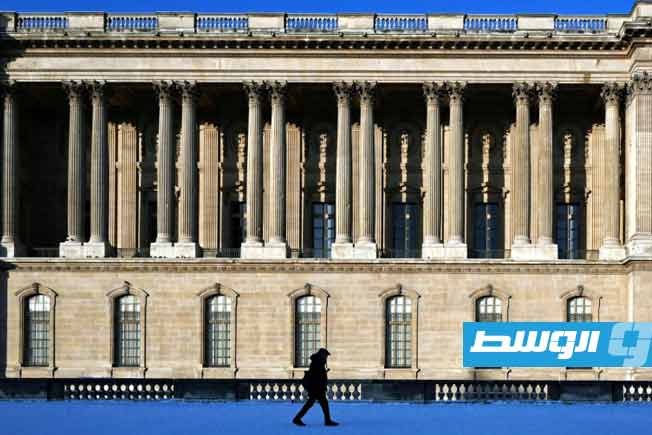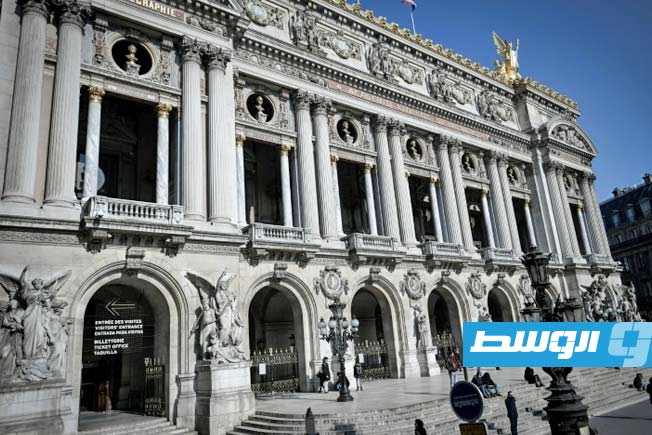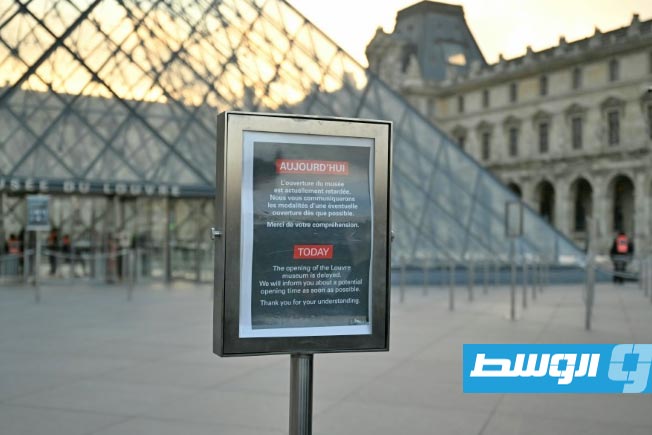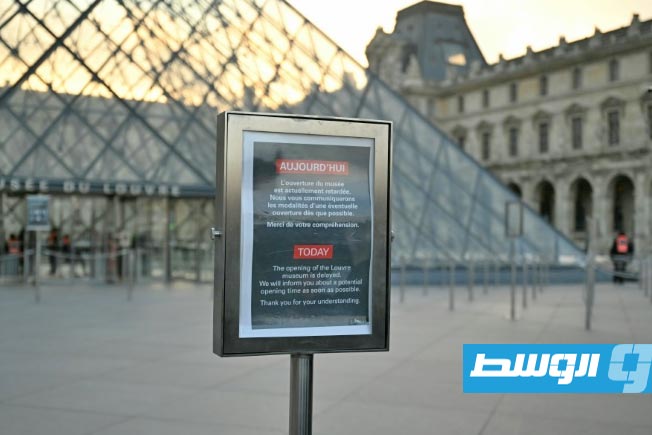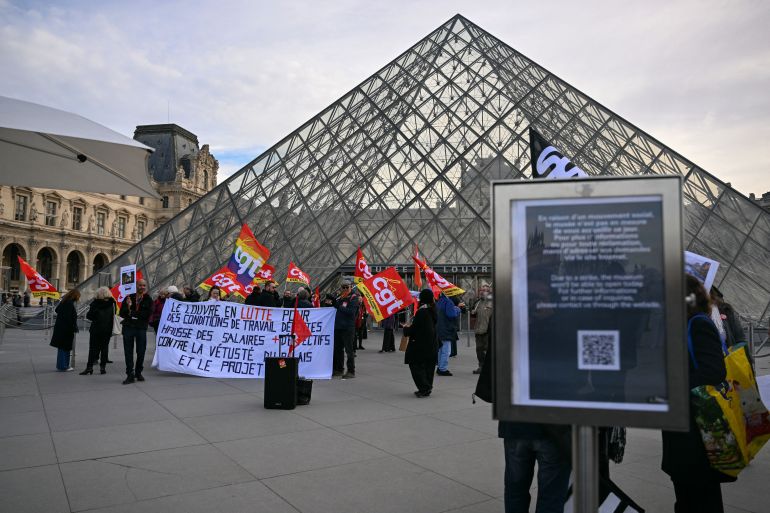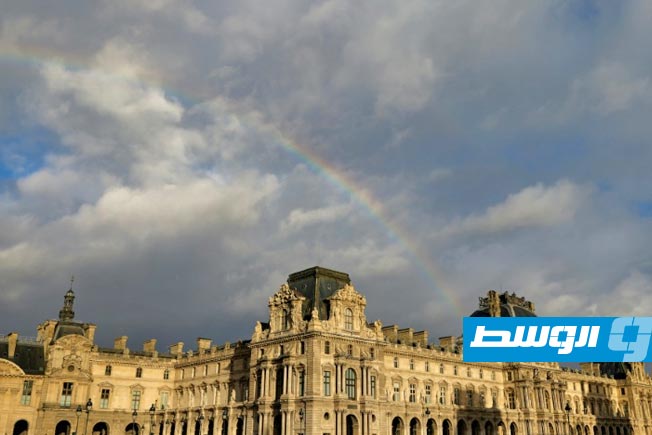
The Louvre partially reopened in Paris on Wednesday after being closed on Monday due to a strike, despite staff unanimously voting to continue their protest. This comes amidst ongoing turmoil at the world’s most-visited museum following a major heist in October.
According to union representatives, around 300 staff members voted unanimously during a general meeting on Wednesday morning to continue their strike. They are protesting staff shortages, the deteriorating state of the building, and increased entry fees for non-Europeans.
The French Ministry of Culture presented proposals to ease tensions, but staff rejected them. A representative from the museum’s largest union stated, “These proposals are unacceptable.” The Louvre was closed on Tuesday, its usual weekly closing day.
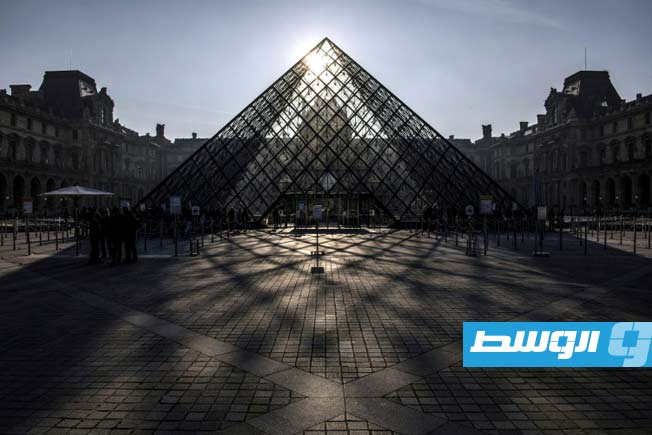
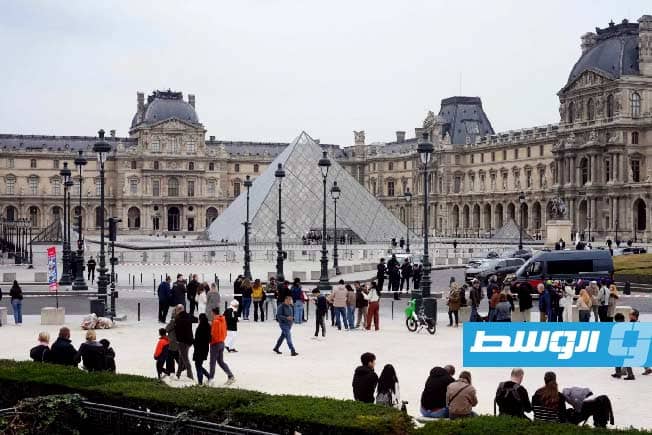
Despite the ongoing protests, the museum partially reopened on Wednesday, with visitors beginning to arrive before noon. An Australian tourist expressed surprise, saying, “This is an unexpected French cultural experience!” while looking at union flags placed in front of the Louvre Pyramid.
The number of sections available to the public was not immediately known. The institution only stated in a post on a social media platform that “some rooms at the Louvre are temporarily closed.”
– Louvre staff in Paris vote ‘unanimously’ to continue strike
– Louvre Museum in Paris closes due to strike
– Official in Louvre administrative investigation: Preventing thieves’ escape was possible
The Ministry of Culture held an emergency meeting on Monday with unions to calm staff anger, which has also been fueled by a series of setbacks since the major heist on October 19th, during which precious jewels were stolen.
In addition to canceling a planned €5.7 million budget cut for the Louvre in 2026, the ministry proposed redistributing staff and launching special recruitment campaigns for visitor services and museum security. The ministry also committed to a one-time bonus, while unions are demanding a permanent wage increase.
Developing the Main Security Plan
Amid the weak position it faces due to this labor dispute, the President of the Louvre Museum will appear again before the Senate to highlight security shortcomings at the museum. The museum’s president had acknowledged on October 22nd that there was a “shortcoming,” but defended her actions, stating she had “accelerated the development” of the main security plan.
However, since then, embarrassing scandals have weakened the museum director, who has held the position since the end of 2021. She was forced to admit that she only learned of the concerning results of a 2019 security audit after the break-in.
A recent audit report also highlighted “persistent delays” affecting the main security plan, which has not yet begun implementation. The museum’s security management was also sharply criticized in an administrative investigation conducted after the heist.
Louvre Museum
### **History & Architecture**
– Originally built as a fortress in the late 12th century under King Philip II, it was later transformed into a royal palace.
– The iconic glass pyramid entrance (designed by I. M. Pei) was added in 1989 and serves as the main lobby.
– The museum opened to the public in 1793 during the French Revolution.
### **Collections & Highlights**
– Houses around **38,000 objects** displayed across 782,910 square feet of exhibition space.
– Divided into eight departments: Near Eastern Antiquities, Egyptian Antiquities, Greek/Roman Antiquities, Islamic Art, Sculptures, Decorative Arts, Paintings, and Prints/Drawings.
– **Famous works include:**
– *Mona Lisa* (Leonardo da Vinci)
– *Venus de Milo* (ancient Greek statue)
– *Winged Victory of Samothrace* (Hellenistic sculpture)
– *Liberty Leading the People* (Eugène Delacroix)
– *The Raft of the Medusa* (Théodore Géricault)
### **Visiting Information**
– **Location:** Right Bank of the Seine, in the 1st arrondissement.
– **Annual visitors:** Approximately 10 million (pre-pandemic).
– **Notable fact:** It would take roughly **100 days** to spend 30 seconds viewing each artwork if you saw them all.
### **Cultural Impact**
– Featured in films like *The Da Vinci Code* and *Wonder Woman 1984*.
– Serves as a historic monument and symbol of French art and culture.
Would you like details on tickets, best times to visit, or specific collections?
French Ministry of Culture
### Key Responsibilities:
1. **Heritage Preservation** – Protecting and restoring historical monuments, museums, archives, and archaeological sites.
2. **Support for the Arts** – Funding and promoting contemporary creation in visual arts, performing arts (theater, dance, music), cinema, and literature.
3. **Cultural Policy & Accessibility** – Ensuring broad public access to culture, including through libraries, media, and digital initiatives.
4. **Cultural Industries** – Regulating and supporting publishing, broadcasting, cinema, video games, and other creative sectors.
5. **Cultural Education** – Integrating arts and culture into national education.
### Notable Institutions Under Its Authority:
– **Louvre Museum**
– **Versailles Palace**
– **National Library of France (BnF)**
– **National Monuments Centre (Centre des monuments nationaux)**
– **Regional Cultural Affairs (DRAC)** – decentralized offices across France.
### Recent Ministers & Priorities:
– **Rima Abdul Malak** (2022–2024) focused on cultural democratization and restitution of cultural property.
– **Rachida Dati** (appointed January 2024) has emphasized heritage, artistic education, and France’s cultural influence worldwide.
### Interesting Facts:
– The ministry’s motto, inherited from Malraux, is *”Rendre accessibles les œuvres capitales de l’humanité, et d’abord de la France, au plus grand nombre possible de Français”* (“Make the major works of humanity, and first of all of France, accessible to the largest possible number of French people”).
– It organizes major national events like the **Fête de la Musique** (June 21) and **European Heritage Days**.
– France spends a higher percentage of its national budget on culture than most other countries, reflecting its strong commitment to cultural policy.
The ministry remains a central pillar of France’s **soft power** and national identity, balancing preservation of a rich historical legacy with support for contemporary creativity.
President of the Louvre Museum
### **Current President (as of 2024):**
– **Laurence des Cars** – Appointed in September 2021, she is the first woman to hold this position in the Louvre’s history. Her term runs until 2025.
### **Role and Responsibilities:**
1. **Strategic Leadership:** Oversees the museum’s artistic, cultural, and scientific projects.
2. **Administration:** Manages the Louvre’s budget, staff, and operations (including the main museum in Paris, the Louvre-Lens satellite, and the Louvre Abu Dhabi partnership).
3. **Cultural Diplomacy:** Represents the Louvre nationally and internationally.
4. **Collections and Exhibitions:** Guides acquisition policies and major exhibition programs.
5. **Modernization:** Drives digital initiatives, accessibility, and contemporary relevance.
### **Historical Context:**
– The position was created in 2001, replacing the former role of “Director of the Louvre Museum.” This change reflected the museum’s evolution into a large public institution with complex global partnerships.
– Previous presidents include:
– **Henri Loyrette** (2001–2013) – Oversaw the Louvre Abu Dhabi agreement and major renovations.
– **Jean-Luc Martinez** (2013–2021) – Focused on visitor experience, digital outreach, and the Louvre’s role in global heritage.
### **Interesting Facts:**
– The Louvre is the world’s most-visited museum (pre-pandemic, welcoming ~10 million annually).
– The president works under the supervision of the French Ministry of Culture and the Louvre’s Board of Trustees.
– Laurence des Cars has emphasized inclusivity, contemporary art dialogues, and the museum’s social role during her tenure.
Would you like more details about a specific aspect of the role or the Louvre’s current initiatives?