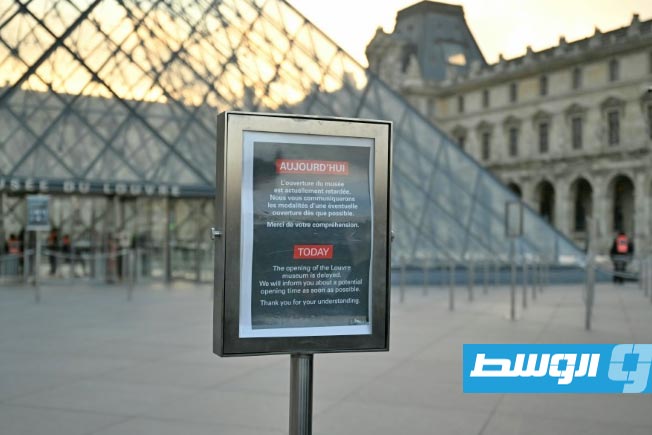
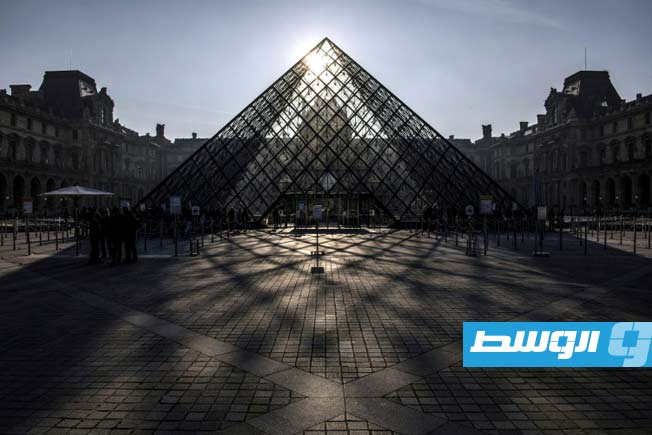
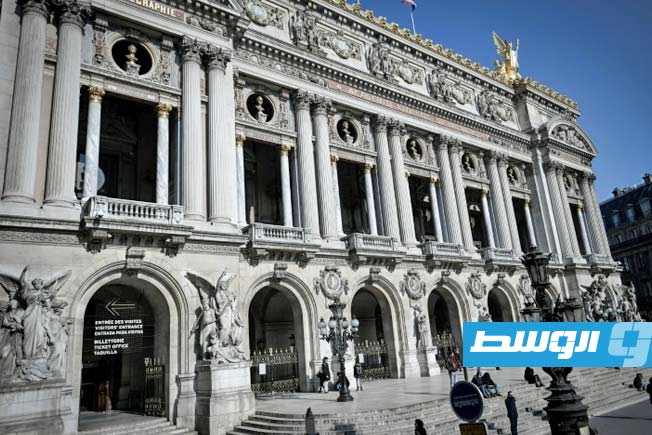
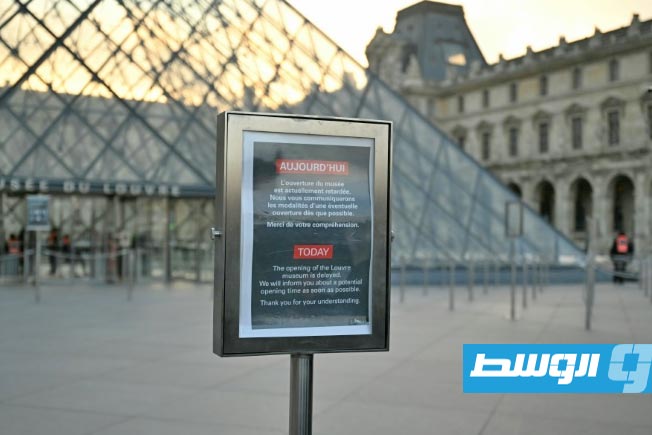
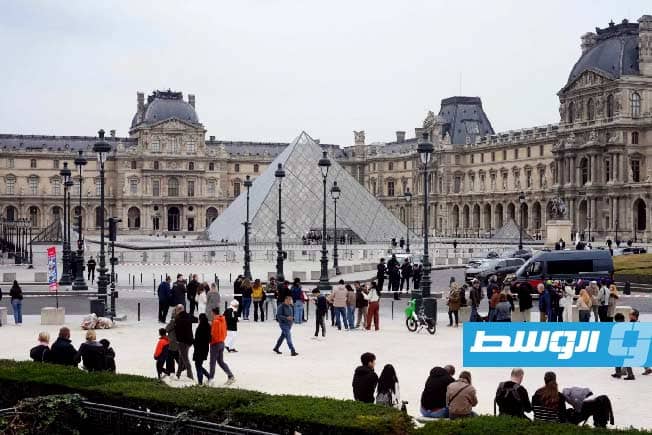
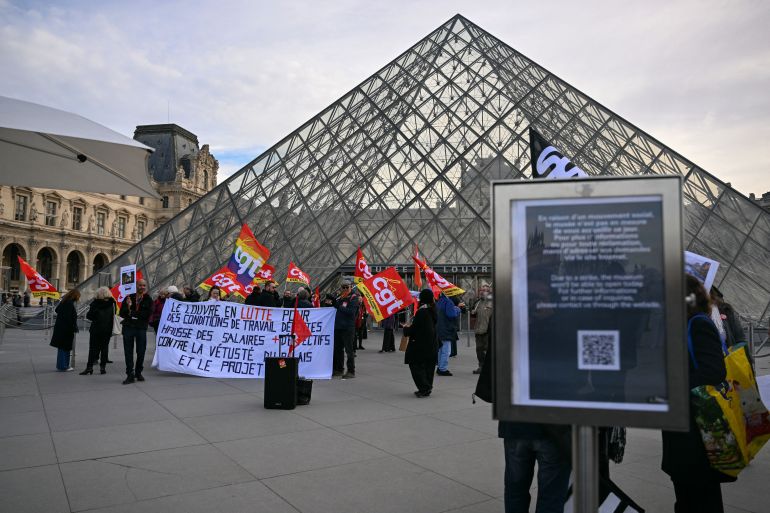
The Louvre Museum fully reopened its doors on Wednesday after its staff decided to suspend the strike they had been carrying out to demand improved working conditions, according to consistent sources.
A union representative stated that between 200 and 300 employees at a general assembly meeting on Wednesday voted not to continue their strike, which began in mid-December, paused during the year-end holidays, and then resumed on Monday. However, she warned that “the movement is not over yet.”
Due to insufficient progress in negotiations with the Ministry of Culture, the strike notice submitted by the joint union group in early December has not been withdrawn, and a new general assembly meeting is scheduled for Thursday morning.
The Wednesday meeting delayed the opening of the world’s most visited museum, but the Louvre management was later able to open its doors fully to the public, according to the museum’s administration.
The “Masterpieces” Section
Following the strike vote on Monday, the Louvre Museum was only able to open its “Masterpieces” section to the public, which houses some of the most famous works, including the Mona Lisa, the Venus de Milo statue, and the Winged Victory of Samothrace.
– Louvre staff cancel strike, decision to reopen museum “as usual”
– The Louvre Museum opens its doors “partially” as staff insist on continuing the strike
The staff strike was in protest of staff shortages, particularly in the museum’s security department, the increase in ticket prices for non-European tourists—a measure set to take effect on January 14—as well as the deteriorating condition of the building, which was clearly demonstrated by the theft of eight jewels from the French Crown on October 19.
Louvre Museum
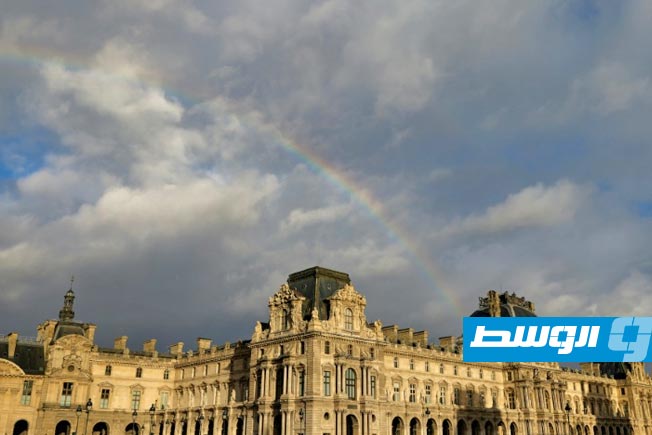
The Louvre Museum in Paris is one of the world’s largest and most visited art museums, housed in a historic palace that dates back to the late 12th century as a fortress. Its collection spans from antiquity to the 19th century and is famously anchored by Leonardo da Vinci’s *Mona Lisa*.
Mona Lisa
The Mona Lisa is a renowned 16th-century portrait painted by Leonardo da Vinci, celebrated for its subject’s enigmatic expression and innovative artistic techniques. It is housed in the Louvre Museum in Paris and is widely considered one of the most famous and valuable paintings in the world.
Venus de Milo
The Venus de Milo is an ancient Greek marble statue depicting Aphrodite, the goddess of love and beauty, created between 130 and 100 BCE. It was discovered on the island of Milos in 1820 and has been prominently displayed at the Louvre Museum in Paris since 1821, celebrated for its classical beauty despite its missing arms.
Winged Victory of Samothrace
The Winged Victory of Samothrace is a renowned Hellenistic marble sculpture depicting the goddess Nike, created around the 2nd century BCE. It was discovered in 1863 on the island of Samothrace, where it originally stood within a sanctuary complex, likely commemorating a naval victory. The statue is celebrated for its dramatic composition and masterful depiction of movement and drapery.
French Crown
The French Crown refers to the monarchy of France, which existed from the early Middle Ages until the French Revolution in 1792, and was briefly restored in the 19th century. Its history is marked by the consolidation of royal power under dynasties like the Capetians and Bourbons, and its regalia, including the crown of Louis XV, became potent symbols of the kingdom’s authority and divine right to rule.