Rabat – The Moroccan capital is witnessing unprecedented economic activity with the influx of African crowds for over two weeks to follow the matches of the Africa Cup of Nations football tournament.
This activity reflects the blend of sports and tourism to boost the local economy, especially in historical sites and traditional markets in Morocco.
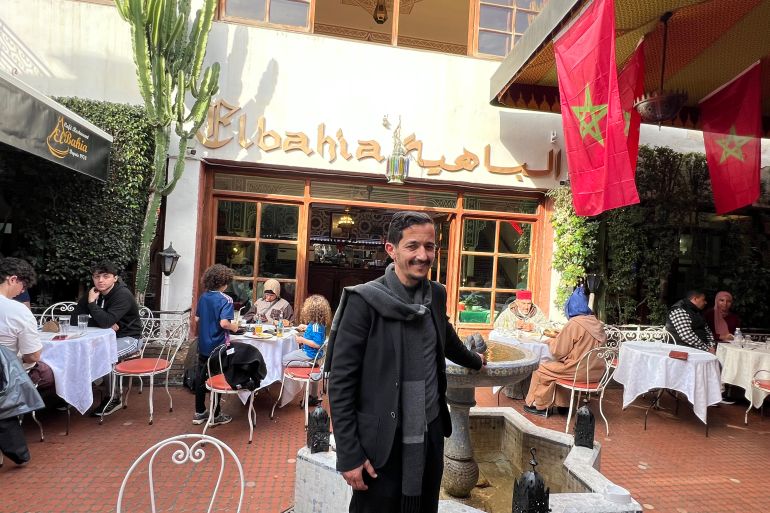
Among those benefiting from this movement is the owner of the “Al Bahia” restaurant in the old city of Rabat, which was transformed from a family home into a popular restaurant in 1970.
He says, “We did not record such turnout last year, and we did not expect to experience it this year,” pointing out that rain and cold usually limit commercial activity, but the presence of African crowds has reversed the equation.
The famous restaurant in Rabat is witnessing high demand for traditional Moroccan dishes such as meat tagine with prunes, chicken tagine with vegetables, couscous, and charcoal-grilled meats.
This commercial boom has prompted local authorities to extend the closing times of restaurants and cafes until 2 a.m., to ensure professionals benefit from the crowds after matches end, while monitoring quality and safety through regular inspection visits and sampling of the food served.
Rabat as the Hub of the Boom
Rabat is hosting nearly 48% of the tournament’s matches (18 matches) across 4 main stadiums, which has revitalized its historic alleys and popular restaurants.
Economic activity extends even to areas far from the stadiums, especially on days when the Moroccan national team and Arab teams like Tunisia, Egypt, and Algeria play.
Profits achieved during the continental tournament period are unprecedented, especially in popular restaurants serving traditional meals, confirming that the event provides a strong boost to the restaurant sector.
The tourist momentum has impacted all links of the economic chain in the economic capital
Tournament Cities Experience a Boom
In addition to Rabat, other cities are hosting Africa Cup of Nations matches: Casablanca (8 matches), Agadir (8), Marrakech (8), Tangier (6), and Fez (4).
Estimates indicate that the number of crowds arriving from outside Morocco may range between half a million and one million fans during the period from December 21, 2025, to January 18, 2026.
The Africa Cup represents an opportunity to enhance the city’s image and its economic dynamism. Hotel occupancy rates in Agadir have risen noticeably, ranging between 60% and 100% depending on the hotel classification. The tourist momentum has also impacted restaurants, cafes, transportation, and traditional industries in the coastal city.
In Casablanca, Morocco’s largest city, hotels have clearly benefited from the influx of African football crowds. The hotel and tourism sector prepared early for the tournament through training and awareness courses to ensure service quality.
The Africa Cup represents an opportunity to assess the sector’s readiness for larger future events, most notably the 2030 World Cup, which Morocco will co-host with Spain and Portugal.
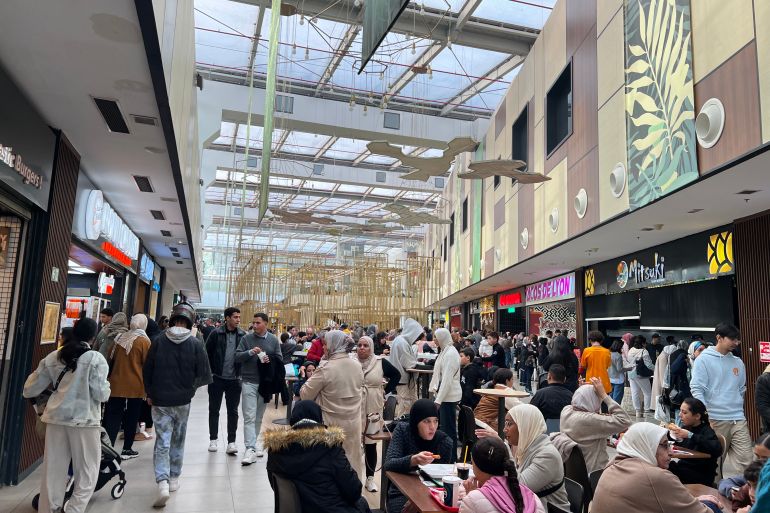
A view of one of the major commercial centers in the Moroccan capital
An Opportunity for Tourism Promotion
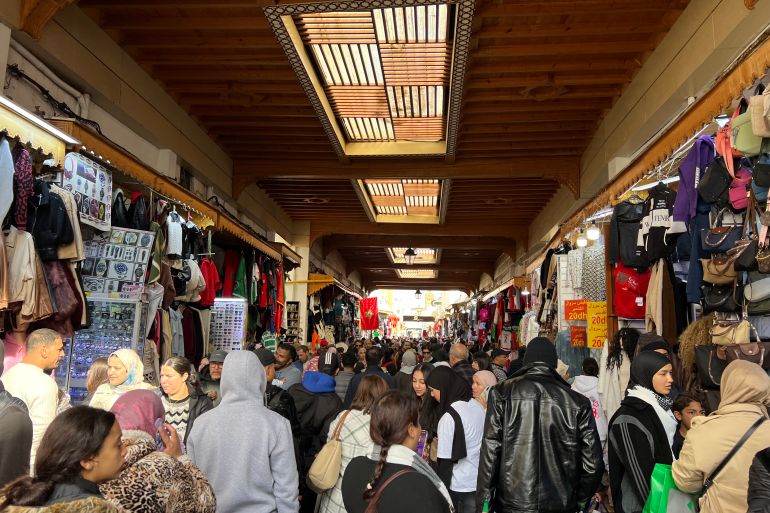
The economic recovery resulting from Morocco hosting the Africa Cup of Nations football tournament has also included shops, souvenir stores, transportation and tourist guide services, and entertainment activities.
Indicators up until last November recorded the arrival of nearly 18 million tourists to Morocco, with expectations for
Rabat
Rabat is the capital city of Morocco, founded in the 12th century by the Almohad Caliphate. It is a UNESCO World Heritage Site known for its well-preserved historic quarters, such as the Kasbah of the Udayas and the Hassan Tower, which is the minaret of an incomplete 12th-century mosque.
Moroccan capital
Rabat is the political and administrative capital of Morocco, designated as such by the French protectorate in 1912. It is a UNESCO World Heritage Site known for its well-preserved historic quarters, such as the Kasbah of the Udayas and the Hassan Tower, a 12th-century minaret.
Africa Cup of Nations
The Africa Cup of Nations (AFCON) is the premier international men’s football competition in Africa, first held in 1957. It was founded to unite African nations through sport and has grown from three initial participants to a major tournament featuring 24 national teams.
Al Bahia restaurant
Al Bahia is a traditional Moroccan restaurant located in Marrakech, known for its authentic cuisine and ornate, palace-like decor that reflects the city’s architectural heritage. It was established to offer a fine dining experience within a setting that evokes the grandeur of Moroccan riads and historical mansions.
old city of Rabat
The Old City of Rabat, also known as the Medina, is a historic walled quarter founded in the 12th century during the Almohad Caliphate. It features traditional markets, narrow streets, and residential areas, and was later expanded in the 17th century with the addition of the Andalusian Quarter by Muslim refugees from Spain.
Andalusian wall
The Andalusian Wall refers to the defensive fortifications built during the Muslim rule of Al-Andalus in the Iberian Peninsula, primarily between the 8th and 15th centuries. These walls, often featuring robust stonework and towers, were constructed to protect cities like Seville, Córdoba, and Granada, with many sections still visible today as historic landmarks.
Casablanca
Casablanca is Morocco’s largest city and a major economic hub, originally settled by Berbers and later developed under French colonial rule in the 20th century. It is renowned for its iconic Art Deco architecture and the Hassan II Mosque, one of the world’s largest mosques, which features a minaret that is the tallest in the world.
Agadir
Agadir is a major coastal city in Morocco, known today for its modern beach resorts. The city was largely destroyed by an earthquake in 1960 and was subsequently rebuilt with a focus on contemporary architecture, leaving few historical monuments from its past as a 16th-century Portuguese trading post.
Marrakech
Marrakech is a historic city in Morocco, founded in 1062 by the Almoravid dynasty. It served as a key political, economic, and cultural center of the western Muslim world, renowned for its ancient medina, bustling souks, and iconic landmarks like the Koutoubia Mosque and Jemaa el-Fnaa square.
Tangier
Tangier is a historic port city in northern Morocco, strategically located at the entrance to the Mediterranean Sea. It has a rich and layered history, having been influenced by Berber, Phoenician, Roman, Arab, Portuguese, Spanish, British, and French rule, and it served as an international zone from 1924 to 1956. Today, it is known for its vibrant cultural mix, historic medina, and as a literary and artistic hub that attracted many Western writers in the 20th century.
Fez
Fez is a historic city in northern Morocco, founded in the late 8th century and home to the University of Al Quaraouiyine, established in 859 and considered the oldest continuously operating university in the world. Its UNESCO-listed medina, Fes el-Bali, is a well-preserved medieval urban center renowned for its labyrinthine streets, traditional tanneries, and rich Islamic art and architecture.
Morocco
Morocco is a North African country with a rich history shaped by indigenous Amazigh (Berber) cultures, Arab influence from the 7th century, and successive dynasties like the Almoravids and Almohads. Its cultural sites, such as the ancient city of Fez and the Koutoubia Mosque in Marrakech, reflect this blend of Arab, Islamic, and Amazigh heritage. The country is also known for its historic medinas, kasbahs, and the vibrant traditions of its souks and crafts.
Tunisia
Tunisia is a North African country with a rich history shaped by a succession of influential civilizations, including the ancient Phoenicians (who founded Carthage), Romans, Arabs, and Ottomans. Its cultural sites, such as the ruins of Carthage and the well-preserved Roman amphitheater at El Jem, reflect this layered past. Today, it is known for its Mediterranean coastline, historic medinas, and as the birthplace of the Arab Spring pro-democracy movement in 2011.
Egypt
Egypt is home to one of the world’s oldest civilizations, with a recorded history spanning over 5,000 years and iconic monuments like the Pyramids of Giza and the Sphinx from the Old Kingdom era. Its rich cultural legacy was further shaped by subsequent Pharaonic dynasties, as well as Greek, Roman, and Islamic influences. Modern Egypt centers on the Nile River and is renowned as a historic crossroads between Africa, the Middle East, and the Mediterranean.
Algeria
Algeria is a North African country with a rich history shaped by ancient Berber kingdoms, Roman rule, and centuries of Ottoman influence. It was a French colony from 1830 until achieving independence in 1962 after a prolonged war of liberation. Today, it is the largest country in Africa and the Arab world, known for its diverse landscapes ranging from the Mediterranean coast to the Sahara Desert.
Spain
Spain is a country in southwestern Europe with a rich and layered history, shaped by Roman rule, the medieval Moorish period of Al-Andalus, and its later role as a global empire following the voyages of Christopher Columbus. Its diverse cultural heritage is reflected in iconic sites like the Alhambra palace, Gaudí’s Sagrada Família basilica, and numerous historic cathedrals and plazas.
Portugal
Portugal is a country in southwestern Europe on the Iberian Peninsula, with a rich history as a global maritime power during the Age of Discoveries in the 15th and 16th centuries. Its cultural heritage is reflected in landmarks like the Jerónimos Monastery in Lisbon and the historic centre of Porto, both UNESCO World Heritage sites.
2030 World Cup
The 2030 FIFA World Cup will be a unique edition, as it is planned to be hosted across three continents to mark the tournament’s 100th anniversary. The opening matches are scheduled to be held in Uruguay, Argentina, and Paraguay to honor the first World Cup in 1930, before the event moves to its primary hosts in Spain, Portugal, and Morocco.