Amid the hustle and bustle of modern life, there is a growing interest in simple exercises that can be done anywhere without the need for equipment or large spaces. Among these, the “Elephant Walk” exercise stands out as a popular trend in the fitness world, known for its ease of execution and effectiveness if you’re looking for an exercise that supports balance, hip strength, and motor coordination.
The “Elephant Walk” Exercise
Contrary to what its name might suggest, the “Elephant Walk” exercise does not involve actual walking. Instead, it falls under dynamic stretching exercises inspired by the slow, steady movement of an elephant. The exercise aims to lengthen and activate the muscles of the body’s posterior chain, including the hamstrings, lower back, glutes, and calves, through low-impact dynamic movements.
These characteristics make the “Elephant Walk” a suitable choice for warming up before any physical activity. It is also appropriate for various fitness levels, including beginners and older adults, as it can be practiced daily without excessive strain on the body.
It is noted that the “Elephant Walk” exercise focuses on lengthening and activating the body through lateral movements and forward bends, which helps expand the range of motion, improve endurance, and aid in injury prevention.
In the same context, a study published in 2017 showed that dynamic stretching exercises, such as the “Elephant Walk,” help reduce muscle stiffness and improve knee range of motion. These are key factors in reducing the risk of injury during sports activities while promoting a sense of flexibility with minimal effort.
How to Perform the “Elephant Walk” Exercise?
You can perform the exercise with simple steps:
Stand straight with your feet shoulder-width apart.
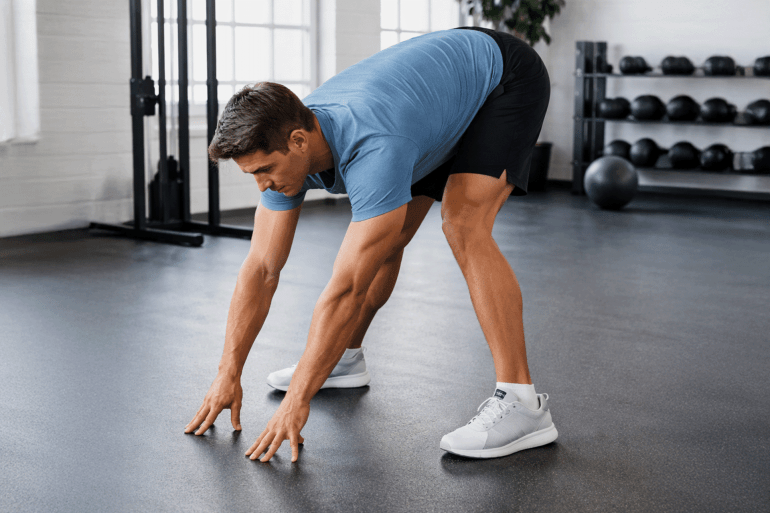
Bend forward, placing your hands on the floor in front of your toes, or lower them as far as your flexibility allows. You can use a chair or box to support your hands if you cannot touch the floor.
Engage your abdominal muscles slightly, then fully extend one leg while keeping the heel on the floor, while the other leg remains slightly bent at the knee.
Alternate between extending and bending your legs in a slow, rhythmic motion as if you are walking in place with your knees, while keeping your heels stable and your hands in contact with the floor throughout the exercise.
Repeat the exercise 15 times per leg initially. After 4 or 5 sessions over a few days, you will notice a clear improvement in hamstring flexibility, reduced pain, and overall better movement, including in performing squats or sitting cross-legged without stiffness.
Multiple Health Benefits
The “Elephant Walk” exercise offers a range of benefits, particularly in the areas of mobility, flexibility, and strength. The most prominent include:
-
Improving Posture
Practicing the Elephant Walk is recommended for muscle flexibility, relieving leg stiffness, and improving overall body posture, especially for those who sit for long hours in front of a computer or desk, as well as for those who carry weights, even if it’s groceries or children.
-
Relieving Lower Back Pain
It helps relax the muscles in the back of the body and reduce pressure on the lower back. Over time, it works to improve spinal flexibility and make forward bending more relaxed.
-
Improving Blood Circulation
The dynamic movements in the “Elephant Walk” exercise improve blood flow in the lower body, which enhances post-exercise recovery and reduces the sensation of pain.
-
Strengthening Hips and Knees
The gentle pressure on the hips and knees resulting from the exercise helps strengthen their muscles, which in turn can help slim the waist and reduce belly fat.
-
Enhancing Mobility and Flexibility
The “Elephant Walk” exercise integrates lateral, forward, and backward movements, which helps improve the flexibility of the spine, shoulders, and hips. This, in turn, helps prevent injuries and