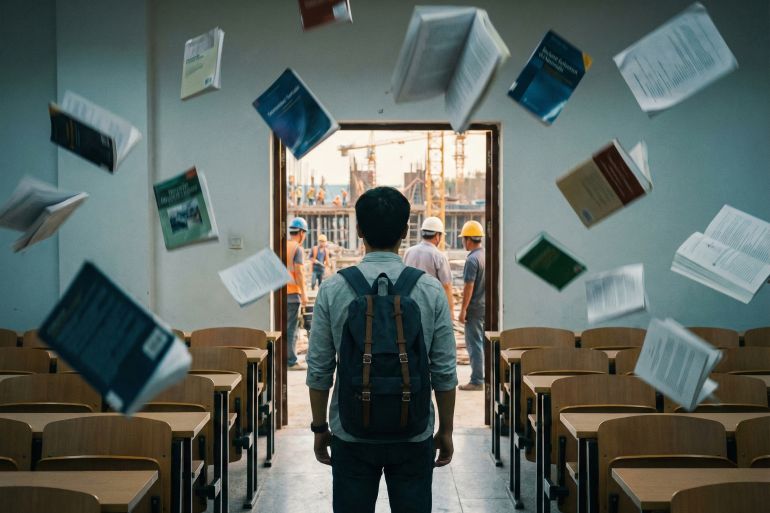
Despite rapid global changes, many curricula in our region still repeat themselves with different wording, rigid content, and concepts that are far removed from the student’s real life. The result? A learner who memorizes without understanding, succeeds without changing, and enters life with certificates but no tools.
This article addresses the manifestations of the disconnect between curricula and reality, its effects, and how to reconnect education with life.
First: How Do Curricula Become Disconnected from Reality?
This happens for several reasons:
- Theoretical content distant from the student’s daily life.
- Lack of practical skills, such as problem-solving and critical thinking.
- Weak connection between academic subjects and the local community or national issues.
- Absence of practical and field training.
- Failure to incorporate contemporary challenges, such as technology, digital values, and changes in the job market.
- Focus on exams rather than understanding and comprehension.
If we want an education that creates change, we must bridge this gap between what the student learns and what they experience outside the school walls.
Second: The Effects of This Disconnect on Students and Society
- Emergence of a knowledge gap between “what is known” and “what is needed.”
- Loss of motivation and boredom with studying.
- Weakened ability of the student to make decisions or manage their life.
- Shortage of qualified competencies for the job market.
- Production of a generation unprepared to contribute to building its society.
Third: Why Does This Disconnection Persist?
- Educational bureaucracy that delays curriculum development.
- Weak communication between ministries of education and the job market.
- Fear of change and adherence to old methods.
- Lack of a comprehensive vision in curriculum building.
- Insufficient involvement of teachers and students in evaluating educational materials.
Fourth: How Can We Reconnect Education with Life?
- Continuously develop curricula according to social and economic transformations.
- Integrate concepts of life skills and citizenship.
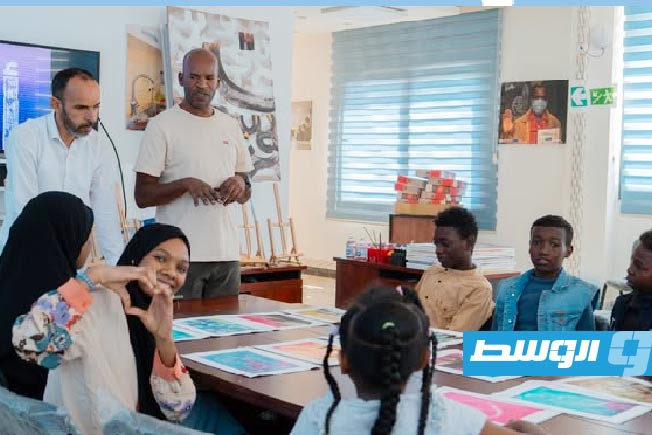
- Enhance project-based learning and practical applications.
- Open channels of communication between the school and the community (institutions, families, local environment).
- Train teachers to adapt lessons and connect them to students’ daily context.
- Encourage research and inquiry instead of rote learning.
- Include real-world problems in the study content for students to analyze.
- Review the assessment system to measure understanding and skill, not memorization.
Knowledge that does not materialize in reality fades over time, while knowledge that is lived and practiced shapes the individual and the future.
Fifth: Positive Models in the Arab Region and the World
- “STEAM” programs that integrate science, art, and technology.
- Experiences of pioneering schools that employ community projects in teaching.
- Flexible curricula that allow content to be tailored to the needs of each region.
- Education for Sustainable Development (ESD) initiatives under UNESCO supervision.
If we want an education that creates change, we must bridge this gap between what the student learns and what they experience outside the school walls. For knowledge that does not materialize in reality fades over time, while knowledge that is lived and practiced shapes the individual and the future.