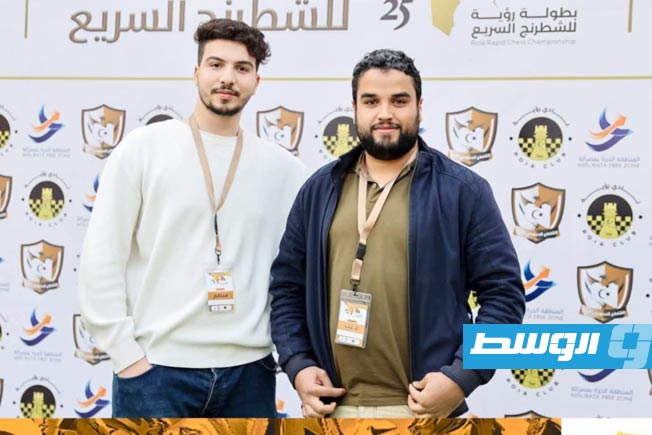
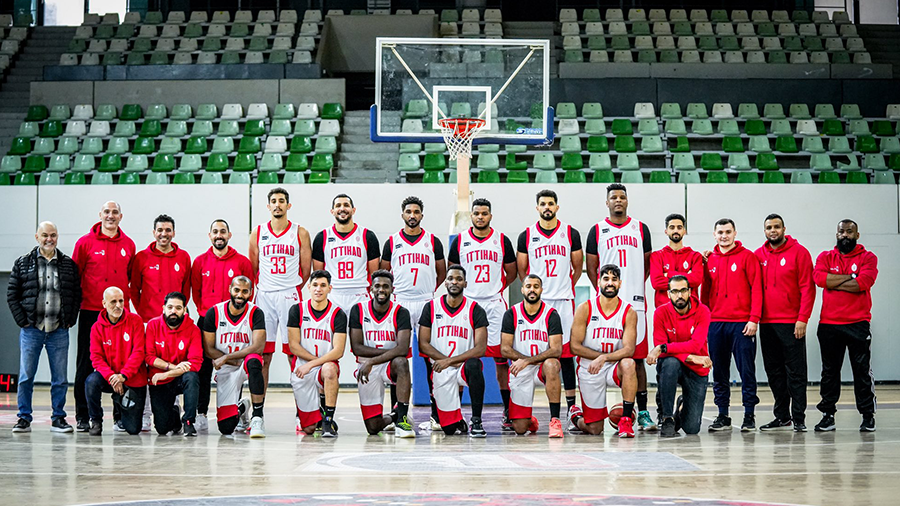
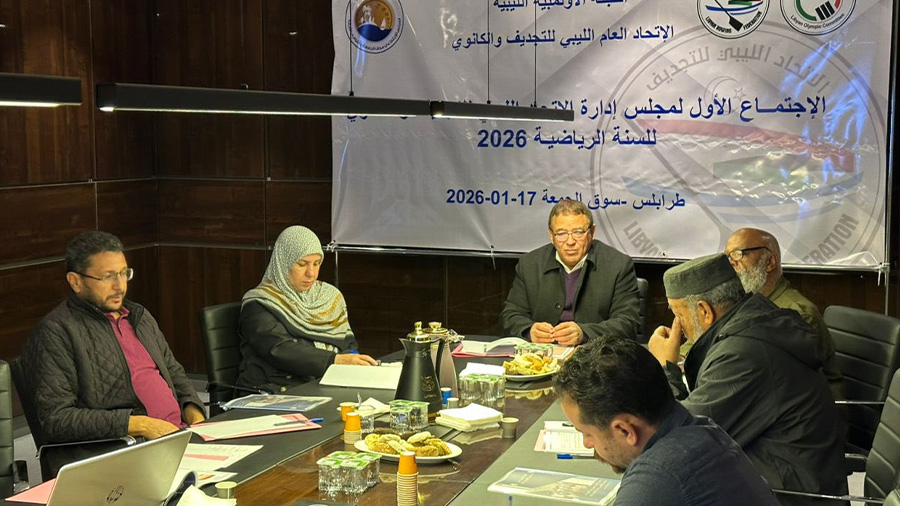
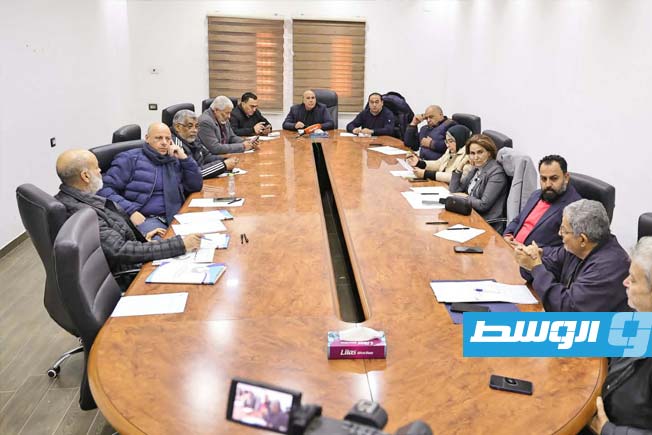
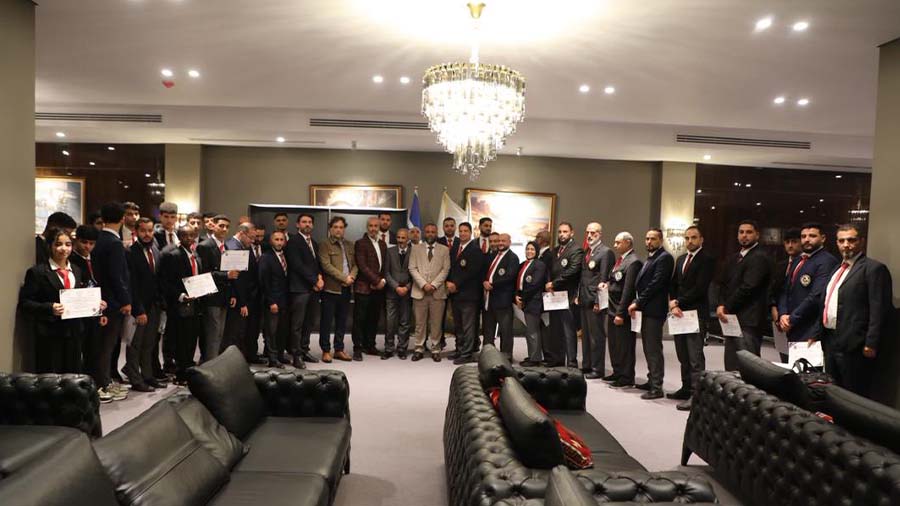
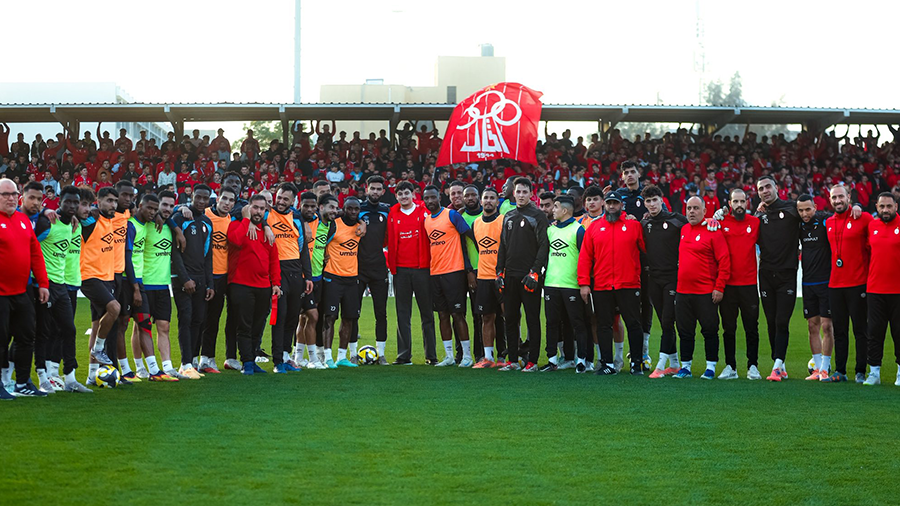
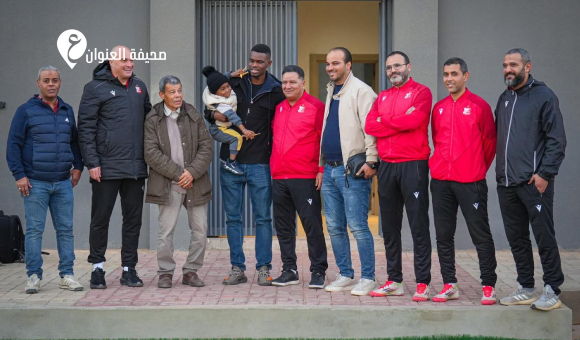
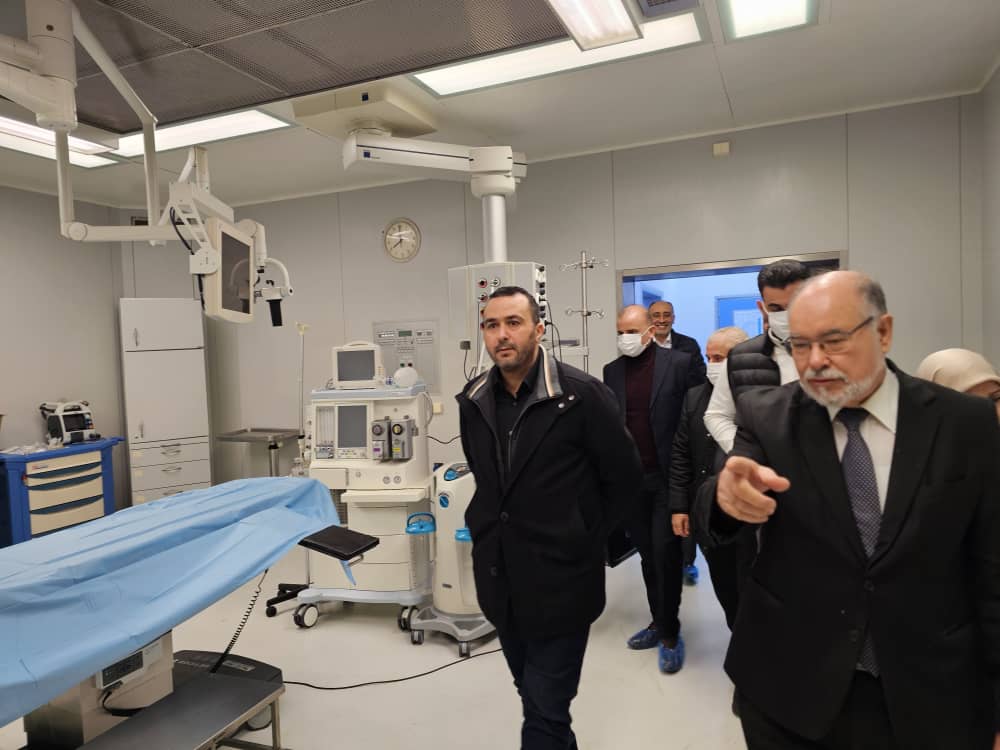
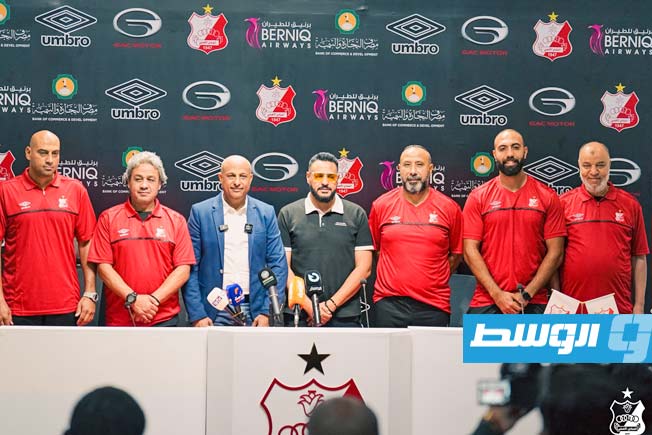
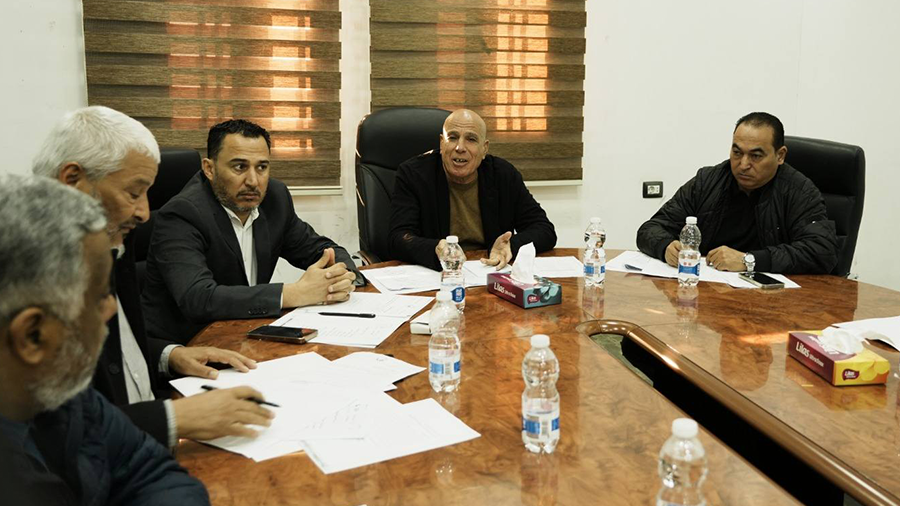
The ‘Roya Rapid Chess Championship’ concluded yesterday evening. Hosted by the Al-Ittihad Misrata Club, the tournament featured 39 players competing in a highly competitive atmosphere with a remarkable technical level.
Syrian player Mohammed Al-Harari managed to win the title after an exciting struggle with player Amr Fattis. Each player won five matches and drew two, giving them both six points. However, the tie-break favored Mohammed Al-Harari, securing him first place, while Amr Fattis came in second.
Mohammed Fathi came in third with 5.5 points, followed in fourth place by Abubakr Al-Arabi with the same score. Fifth place went to Mohammed Al-Baraki with five points, then sixth to Mohammed Abdeiri with five points, and seventh to Mahmoud Bakhir with five points. Eighth place was claimed by Iraqi player Abdul Sattar with 4.5 points, ninth place went to Al-Mu’tasim Badi with 4.5 points, and tenth to Ezz El-Din Rahouma with the same score.
Roya Rapid Chess Championship
The Roya Rapid Chess Championship is an annual chess tournament held in Iran, typically in the city of Mashhad. It was established to promote rapid chess in the region and has grown to attract both national and international grandmasters since its inception. The competition is known for its fast-paced format and has become a significant event in the Iranian and Asian chess calendars.
Al-Ittihad Misrata Club
Al-Ittihad Misrata Club is a professional Libyan football club based in the city of Misrata, founded in 1944. It is one of the oldest and most successful clubs in Libya, with a passionate fan base and a history of winning domestic league and cup titles. The club has served as a significant cultural and social institution in the city throughout Libya’s modern history.
Syrian
Syria is a country in the Middle East with a rich cultural history, being home to ancient civilizations like the Ebla and Ugarit, and later part of the Roman and Ottoman empires. Its historical sites, such as the ancient city of Palmyra and the old city of Damascus, are UNESCO World Heritage Sites, though many have suffered damage during the recent conflict.
Mohammed Al-Harari
Mohammed Al-Harari is not a widely recognized place or cultural site. The name appears to refer to an individual, possibly a religious scholar or local figure, rather than a specific location. Therefore, providing a historical summary of a site by this name is not possible.
Amr Fattis
Amr Fattis is a contemporary Syrian artist known for his distinctive, often large-scale, calligraphic paintings that blend traditional Arabic script with modern abstract expressionism. His work, which emerged prominently in the late 20th and early 21st centuries, explores themes of identity, memory, and the aesthetics of written language, contributing to a global dialogue on Islamic art forms.
Mohammed Fathi
Mohammed Fathi is a contemporary Egyptian poet and writer, born in 1978, known for his contributions to modern Arabic literature. His work often explores themes of identity, love, and social commentary, reflecting his academic background in Arabic language and literature.
Abubakr Al-Arabi
Abubakr Al-Arabi is a prominent mosque and Islamic cultural center located in Mogadishu, Somalia. It was constructed in 1987 and named after a 12th-century Andalusian scholar and traveler of Somali descent. The site serves as a major place of worship and a landmark in the city.
Mohammed Al-Baraki
Mohammed Al-Baraki is a mosque and Islamic cultural center located in the city of Oran, Algeria. It was inaugurated in 2015 and is named after a prominent 16th-century Algerian Islamic scholar and judge from Tlemcen, Sidi Mohammed Al-Baraki, who is known for his religious teachings and jurisprudence.
Mohammed Abdeiri
Mohammed Abdeiri is not a widely recognized place or cultural site. It appears to be a personal name, likely referring to an individual. Therefore, no historical summary for a location can be provided.
Mahmoud Bakhir
Mahmoud Bakhir is a prominent mosque and religious complex located in the city of Sfax, Tunisia. It was constructed in the 19th century and is named after the local saint Sidi Mahmoud Bakhir, serving as an important center for Islamic learning and community gatherings in the region.
Iraqi
The term “Iraqi” refers to the people, culture, and items originating from Iraq, a country with a profound history as the cradle of the ancient Mesopotamian civilizations, including Sumer, Akkad, and Babylon. This heritage, one of the world’s oldest, is central to Iraqi identity, which has been shaped over millennia by successive empires and the modern establishment of the state of Iraq in the 20th century.
Abdul Sattar
Abdul Sattar is a common personal name in the Muslim world and does not refer to a specific place or cultural site. Therefore, it is not possible to provide a historical summary of a location by this name.
Al-Mu’tasim Badi
Al-Mu’tasim Badi is a historic palace located in Khartoum, Sudan, built in the early 20th century for Sultan Ali Dinar, the last ruler of the Darfur Sultanate. It served as his residence and administrative center until the sultanate’s fall to British forces in 1916. Today, the palace stands as a museum and a symbol of Sudanese resistance and cultural heritage.
Ezz El-Din Rahouma
Ezz El-Din Rahouma is a prominent cultural center and public library located in Gaza City, Palestine. It was established in 1999 and named after the Palestinian writer and historian Ezz El-Din Rahouma, serving as a key institution for education and cultural preservation in the region.