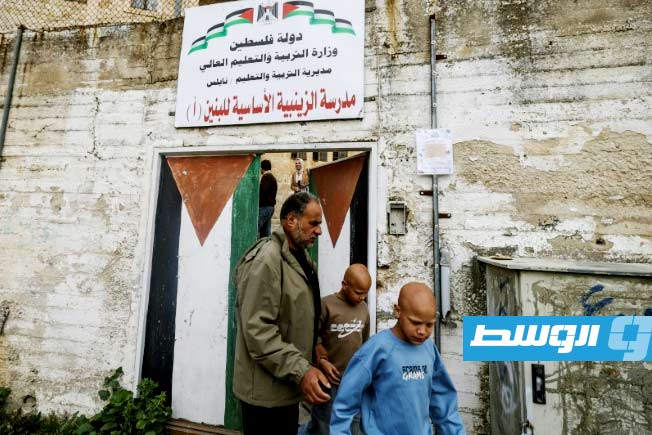
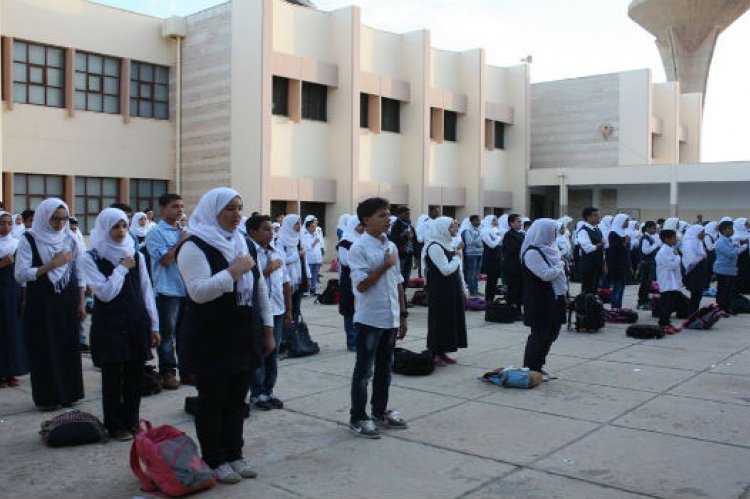
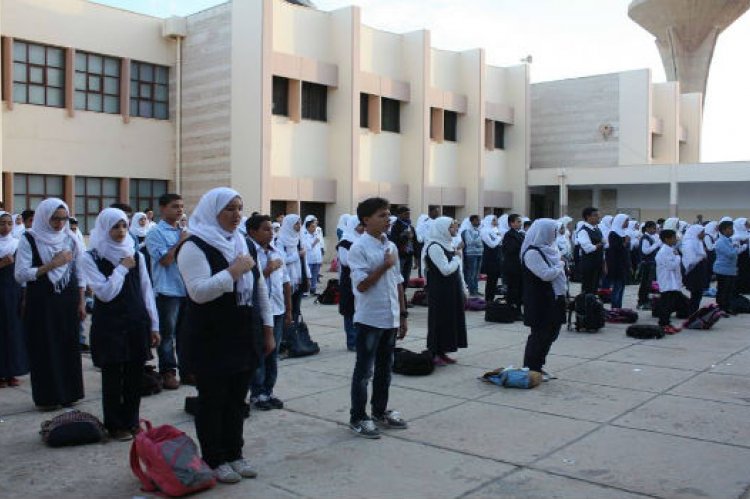
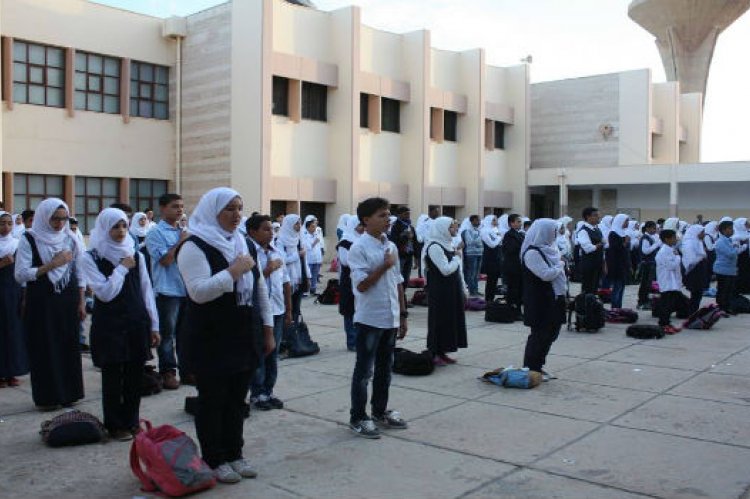
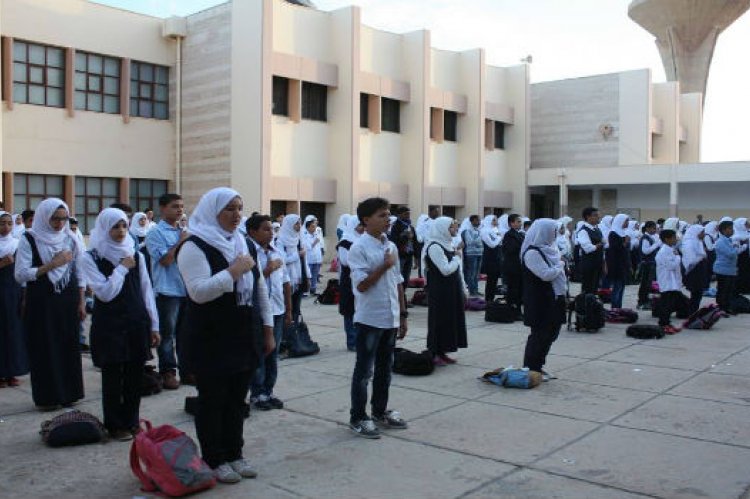
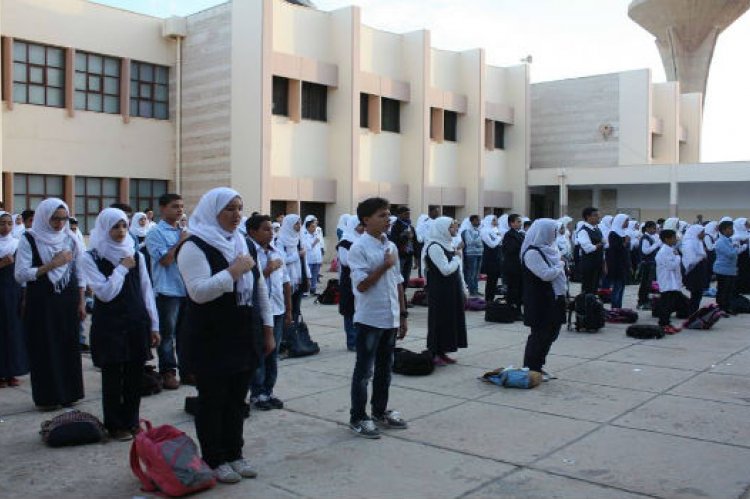
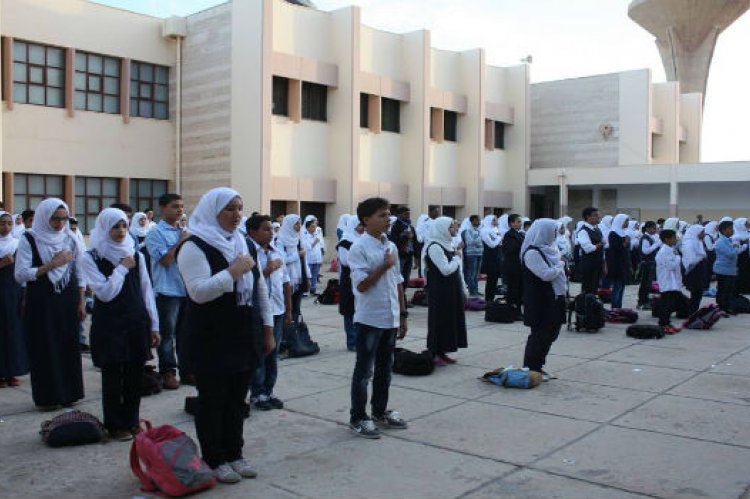
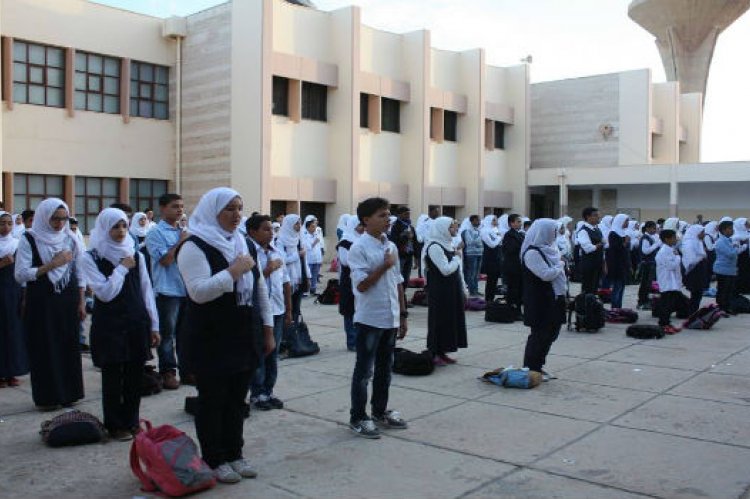
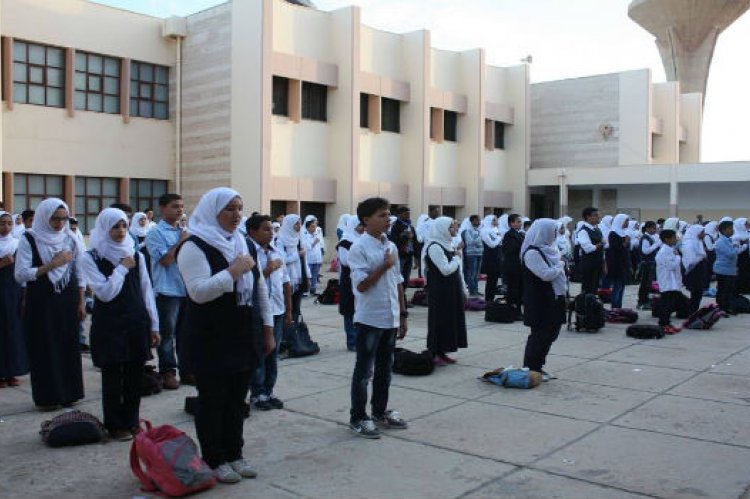
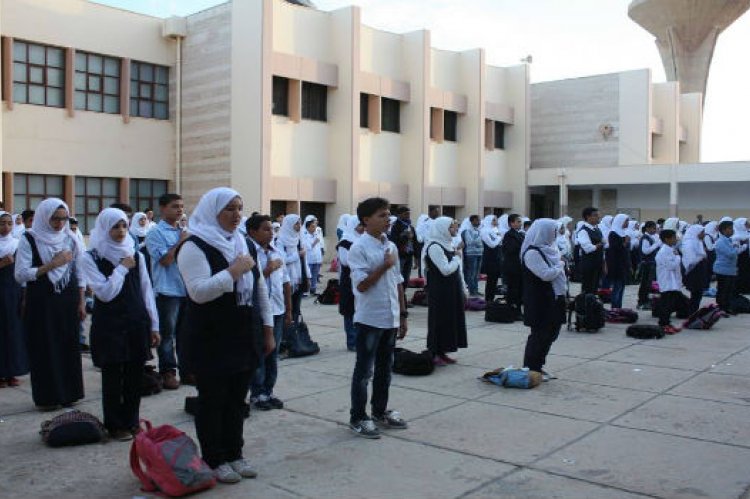
The twins Ahmed and Mohammed Al-Hajj (10 years old) and their generation of students have been affected by the decision to reduce school days in the West Bank from five days a week to three, amid a worsening budget deficit for the Palestinian Authority in Ramallah and the resulting repercussions affecting various aspects of life.
At a time when the twins should be in their classrooms, they remained at their home in the city of Nablus in the northern occupied West Bank, like thousands of Palestinian students impacted by the stifling financial crisis facing the Palestinian Authority.
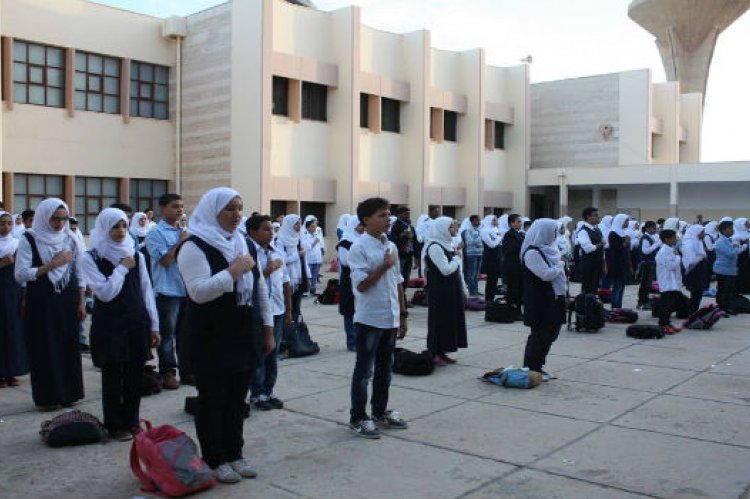
The effects of the crisis are clearly visible in the education sector, especially with teachers not receiving their full salaries and school days being reduced amid a state of uncertainty, raising concerns for the future of approximately 630,000 Palestinian pupils.
The father of the twins says: “Without proper education, there is no university, and that means their future could be lost.”
– <a>From Rubble and Clay.. Gaza Revives ‘Mud Houses’ to Confront the Siege and Winter Cold
– <a>A Palestinian Professor Residing in Canada Provides Remote Lessons for His Students in Gaza
– <a>From Gaza to Lebanon: The Unending Suffering of Children and the Dream of Returning to a Normal Life
Part of the budget deficit stems from Israel’s decision to withhold the clearance revenues it collects on behalf of the Palestinian Authority, a measure used as leverage, particularly after the war in Gaza broke out in October 2023.
The economy of the West Bank has also been severely damaged due to the halt of work permits for Palestinians inside Israel, in addition to severe movement restrictions and the proliferation of military checkpoints.
“No Sound Educational Foundation”
The principal of the school attended by the twins in Nablus says: “The educational opportunities available to us were much better than what today’s generation has.” She adds: “Salaries are reduced, workdays are cut, and students are not receiving sufficient education.”
The principal points out that a number of teachers have left the profession in search of other sources of income, while some students have resorted to work to help their families during the long school closures.
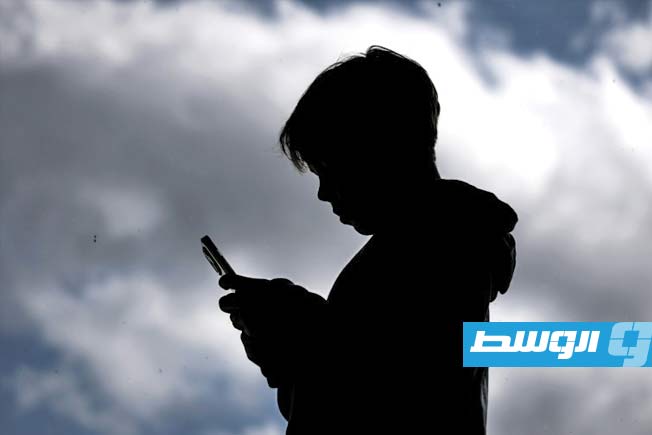
The twins’ father does not hide his worry about this situation, especially as he and his wife are forced to leave their children in front of the television or mobile phone when school days are canceled. Although the twins receive private tutoring, its cost is a burden on the family, given the father’s work in the agricultural sector.
A teacher in Nablus explains that her daughter (16 years old) dropped six grades compared to last year due to reduced study hours. She confirms that the greatest impact is on younger students, saying: “In the foundational stage, there is no sound educational foundation, and insufficient reinforcement of reading and writing skills.”
She adds that irregular attendance has led to poor concentration and discipline, as well as “a decline in grades, tension, laziness, and psychological pressure.”
“A Comprehensive Systemic Emergency”
In the schools of the United Nations Relief and Works Agency for Palestine Refugees (UNRWA), where approximately 48,000 students receive their education in West Bank refugee camps, the picture appears equally bleak. A spokesperson for the agency says the situation has shifted from a “learning poverty crisis” to a “comprehensive systemic emergency.”
Despite UNRWA schools’ good reputation, the spokesperson points to a sharp decline in student performance in Arabic and Mathematics in recent years, attributing it to multiple factors, including the financial crisis, Israeli military incursions, and the ongoing effects of the COVID-19 pandemic.
He adds: “The mix of in-person and remote learning, psychological trauma, and more than two thousand documented incidents of military interventions or settler attacks during 2024 and 2025, are all factors that have led to the loss of educational opportunities for thousands of Palestinian refugee students.”
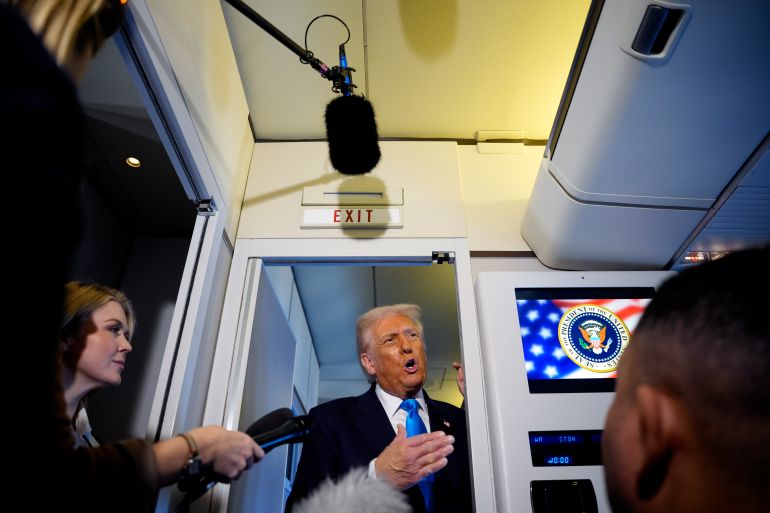
UNRWA is itself considering reducing weekly school days amid a growing financial deficit, following the halt of contributions from major donor countries, including the United States during the administration of President Donald Trump. The agency is the primary provider of health and education services in West Bank refugee camps.
In the northern West Bank, where Israeli military operations in refugee camps displaced approximately 35,000 people during 2025, some students have lost up to 45% of their school days,
West Bank
The West Bank is a landlocked territory in the Middle East, located west of the Jordan River, with a central history tied to ancient biblical kingdoms and later, Ottoman and British rule. Following the 1948 Arab-Israeli War, it was annexed by Jordan, and it has been under Israeli military occupation since the 1967 Six-Day War, though parts are administered by the Palestinian Authority. It is a focal point of the Israeli-Palestinian conflict, containing sites sacred to Judaism, Christianity, and Islam, such as Hebron and Bethlehem.
Palestinian Authority
The Palestinian Authority (PA) is an interim administrative body established in 1994 as a result of the Oslo Accords, tasked with governing parts of the West Bank and the Gaza Strip. Its creation was intended to be a step toward Palestinian self-governance and a resolution to the Israeli-Palestinian conflict, though its effective jurisdiction and political unity have been significantly challenged over time.
Ramallah
Ramallah is a Palestinian city in the central West Bank that has served as the de facto administrative capital of the Palestinian Authority since the 1990s. Historically a Christian-majority town known for its pleasant climate, it grew from a small agricultural village into a major political and cultural center following the 1993 Oslo Accords.
Nablus
Nablus is a historic city in the northern West Bank, founded by the Roman Emperor Vespasian in 72 CE and originally named Flavia Neapolis. It is renowned for its ancient core, vibrant souk, and the production of olive oil soap, and is a key cultural and commercial center in the region.
Gaza
Gaza is a coastal city in the Palestinian territories with a history dating back over 3,000 years, having been ruled by various empires including the Egyptians, Philistines, Romans, and Ottomans. It is a densely populated urban center and holds significant cultural and religious importance in the region. In recent decades, it has been the focus of intense political conflict and humanitarian crises.
Canada
Canada is a North American country formed in 1867 through Confederation, evolving from earlier British and French colonial territories. It is known for its vast landscapes, multicultural society, and a historical development deeply influenced by Indigenous peoples, colonization, and immigration.
Lebanon
Lebanon is a country in the Middle East with a rich history as a crossroads of civilizations, including the Phoenicians, Romans, and Ottomans. It is known for its diverse cultural and religious heritage, ancient ruins like those at Baalbek and Byblos, and its historic coastal cities. Modern Lebanon gained independence from France in 1943 and has since been characterized by both its vibrant cultural life and periods of political conflict.
Israel
Israel is a country in the Middle East, established as a modern state in 1948 following a United Nations partition plan. It is a historic homeland of the Jewish people, containing significant religious sites for Judaism, Christianity, and Islam, such as Jerusalem’s Western Wall and the Dome of the Rock.
United Nations Relief and Works Agency for Palestine Refugees
The United Nations Relief and Works Agency for Palestine Refugees (UNRWA) was established by the UN General Assembly in 1949 to provide humanitarian aid and development programs for Palestinian refugees displaced by the 1948 Arab-Israeli war. It operates in the Gaza Strip, West Bank, Jordan, Lebanon, and Syria, offering services including education, healthcare, and social services.
UNRWA
UNRWA, or the United Nations Relief and Works Agency for Palestine Refugees in the Near East, is a UN agency established in 1949 to provide humanitarian aid and development programs to Palestinian refugees displaced by the 1948 Arab-Israeli war. It operates in the Gaza Strip, West Bank, Jordan, Lebanon, and Syria, offering services such as education, healthcare, and social services.
United States
The United States is a federal republic founded in 1776 after declaring independence from Great Britain, with its modern government established by the Constitution in 1789. Its history encompasses westward expansion, the Civil War, industrialization, and its emergence as a global superpower in the 20th century. The nation is defined by its diverse population, democratic ideals, and significant cultural and economic influence worldwide.
Donald Trump
Donald Trump is a businessman and media personality who served as the 45th President of the United States from 2017 to 2021. His presidency was marked by a populist “America First” agenda, significant tax reforms, and a distinctive, often controversial, communication style.