“Spain plans to approve a plan to regularize the status of 500,000 illegal immigrants, allowing them to work anywhere in the country.”
libyawire.org > News > Economy > “Spain plans to approve a plan to regularize the status of 500,000 illegal immigrants, allowing them to work anywhere in the country.”
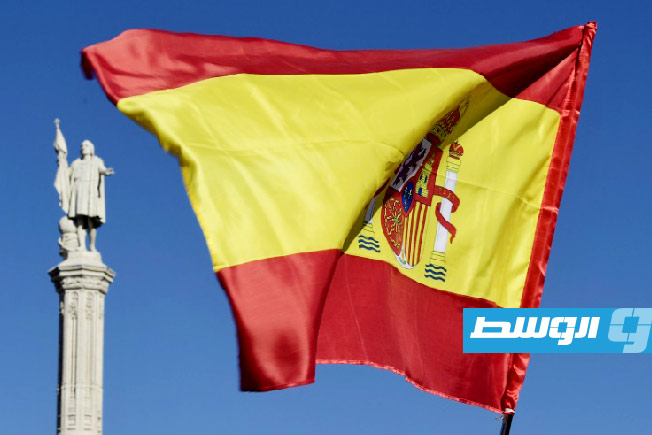
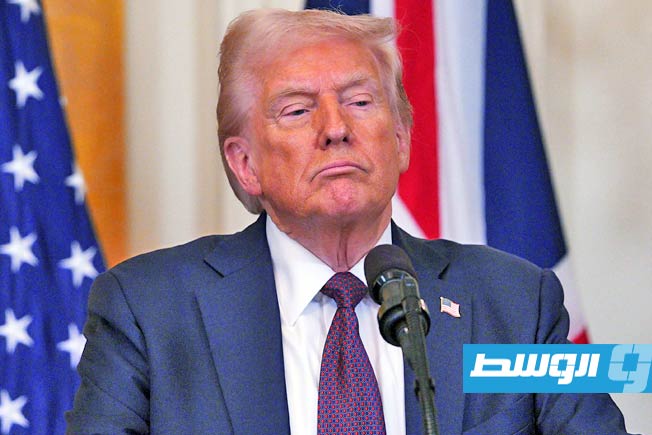
The left-wing Spanish government intends to adopt a plan to regularize the status of undocumented migrants, which could benefit 500,000 people, it was announced on Tuesday.
This measure, aimed at revitalizing the national economy, will allow approximately half a million people who have resided in Spain for at least five months and arrived before December 31, 2025, to obtain legal status and work in any sector and anywhere in the country.
It was clarified that “all applications can be submitted from April until June 30.”
The Spanish Government Welcomes Migrants
It was added, “What we are doing is preserving dignity, providing it, offering guarantees and opportunities, and ensuring the rights of people already in our country.”
The left-wing Spanish government primarily adopts a policy of welcoming migrants for economic reasons, a path distinct from other European Union countries that are moving towards tightening their policies.
To facilitate the implementation of this measure, the government of the Socialist Prime Minister adopted a “royal decree,” a type of legislation provided for by the Spanish Constitution that must be published in the official gazette without needing a parliamentary vote, as the executive branch does not hold a majority.
The announcement of these “comprehensive” measures, aimed at supporting the thriving national economy, came after a meeting between the government and its far-left ally, which welcomed this action.
Main Entry Points to Europe
This regulatory reform comes in response to a popular initiative signed by more than 600,000 people and supported by nearly 900 associations, calling for an exceptional regularization of all undocumented migrants in Spain.
Spain, along with Italy and Greece, is one of the three main entry points for migration into Europe, primarily via the Canary Islands off the northwest coast of Africa.
Approximately 37,000 undocumented migrants entered Spain in 2025, a sharp decline compared to 2024 (a decrease of 42.6%, or 64,000 arrivals), according to interior ministry figures.
According to the latest statistics, more than seven million foreigners live in Spain, out of a total population of 49.4 million.
Spain
Spain is a country in southwestern Europe with a rich and complex history, shaped by Roman rule, the Moorish Al-Andalus period, and its later role as a major global empire. Its cultural sites, such as the Alhambra palace and the Sagrada Família basilica, reflect this diverse heritage through unique architecture, art, and traditions.
European Union
The European Union (EU) is a political and economic union of 27 European countries, established to foster cooperation and prevent conflict after World War II. Its foundations were laid with the 1951 European Coal and Steel Community, evolving through treaties into a single market with common policies and a shared currency, the euro, used by many member states.
Canary Islands
The Canary Islands are a Spanish archipelago located off the northwest coast of Africa, known for their volcanic landscapes and year-round mild climate. Historically, they were inhabited by the Indigenous Guanche people before being conquered by the Kingdom of Castile in the 15th century, becoming a crucial stop for Spanish voyages to the Americas.
Africa
Africa is the world’s second-largest continent, known as the cradle of humankind due to archaeological evidence of the earliest human ancestors. It is home to an immense diversity of cultures, languages, and historic civilizations, including ancient Egypt, the Mali Empire, and Great Zimbabwe. Its history is profoundly shaped by indigenous kingdoms, trans-Saharan trade, European colonization, and the subsequent movements for independence.
Italy
Italy is a country in Southern Europe with a rich cultural history that dates back to the ancient Roman Empire, which left a lasting legacy in law, architecture, and engineering. It later became the epicenter of the Renaissance, producing unparalleled contributions to art, science, and literature. Today, Italy is renowned for its historic cities, artistic treasures, and significant global influence in culture and cuisine.
Greece
Greece is a southeastern European country renowned as the cradle of Western civilization, being the birthplace of democracy, philosophy, and the Olympic Games. Its history spans millennia, from the advanced Minoan and Mycenaean civilizations to the influential Classical Greek city-states and later incorporation into the Roman and Byzantine Empires. The country is famed for its ancient archaeological sites, such as the Acropolis in Athens, and its numerous sun-drenched islands.
Europe
Europe is a continent with a rich and complex history, shaped by ancient civilizations like Greece and Rome, the transformative periods of the Renaissance and the Enlightenment, and the profound impacts of two world wars. Culturally, it is renowned for its diverse artistic heritage, architectural landmarks, and as the origin of many influential philosophical and political movements. Today, it is largely united under the political and economic framework of the European Union.