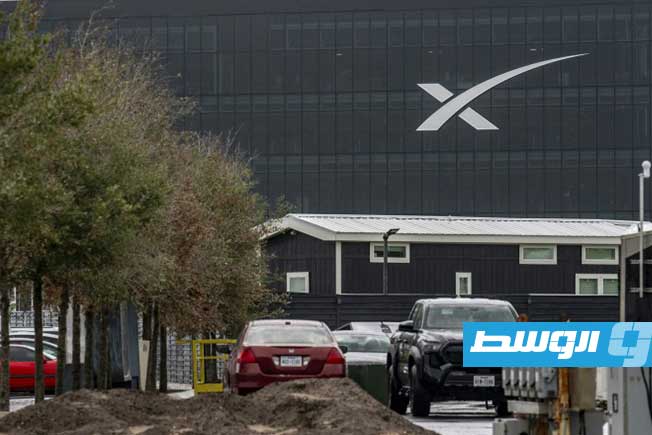
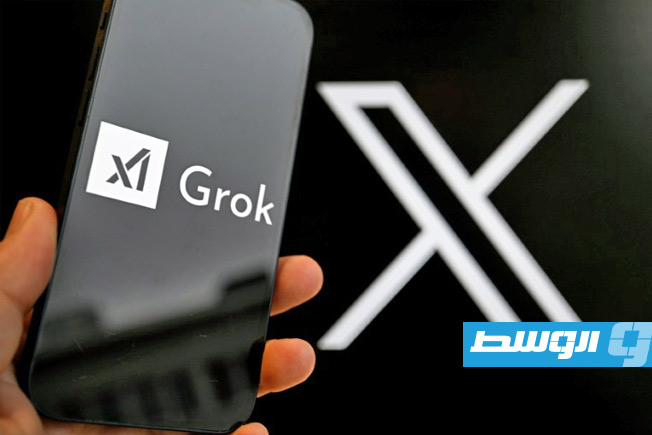
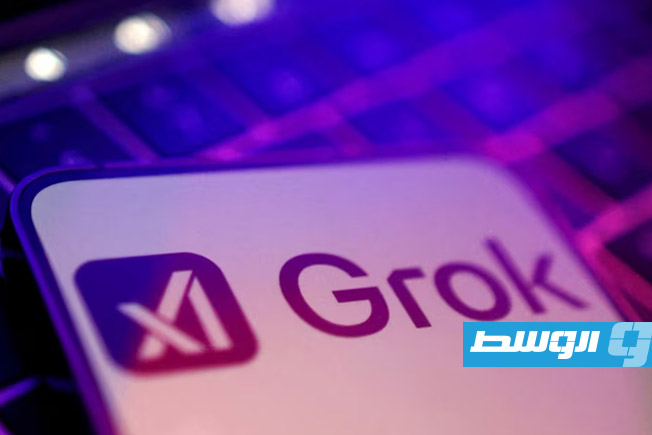
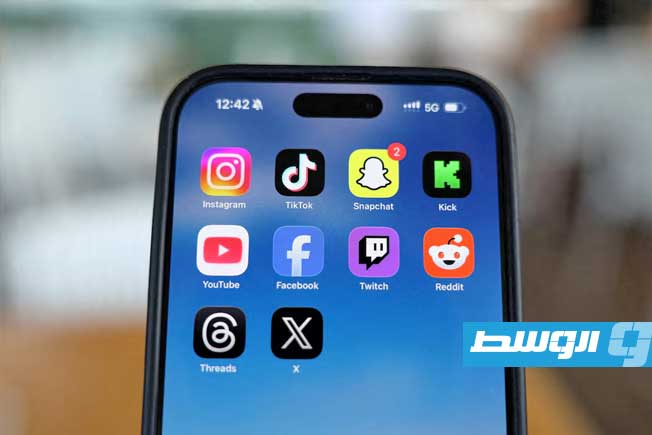
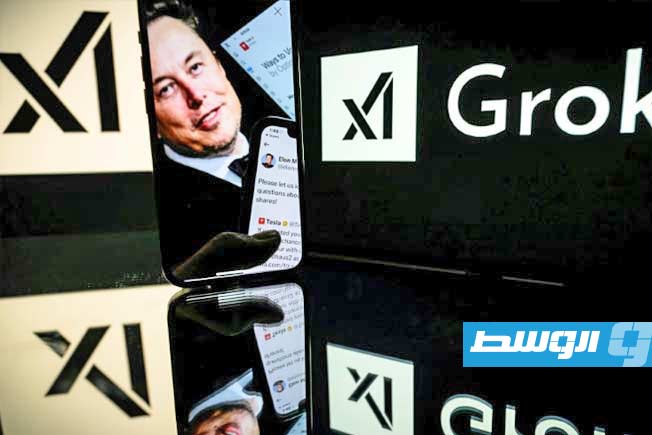
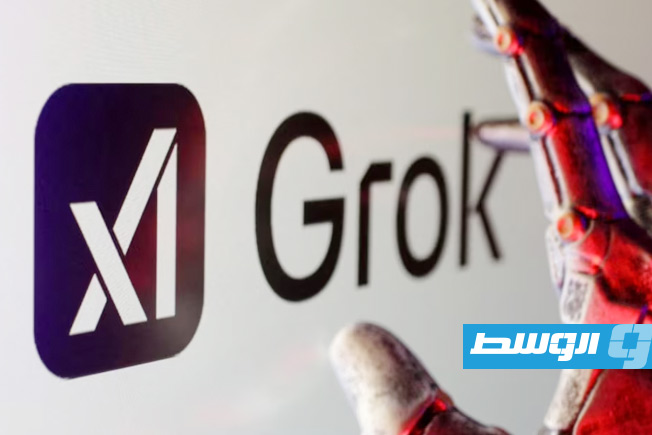
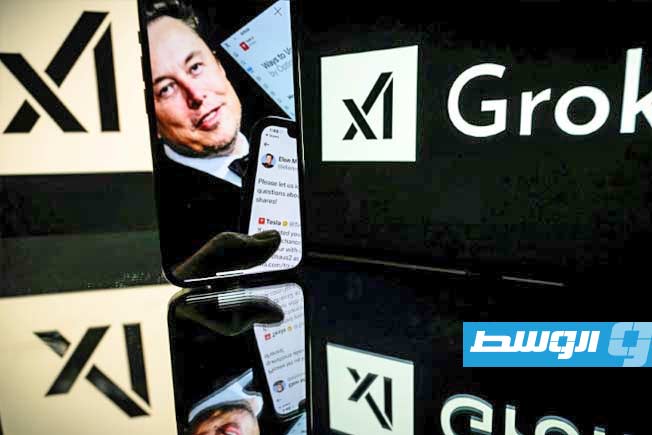
It was announced on Monday that the space industry company SpaceX has acquired the artificial intelligence specialist XAI, the creator of the Grok chatbot integrated into the X platform, as part of an effort to raise the billions needed to fund future ambitions.
In a message published on the SpaceX website, it was stated that the company acquired XAI to form “the most ambitious innovation engine on Earth (and beyond), combining artificial intelligence, rockets, space-based internet, direct-to-cell communications, and the world’s largest platform for instant information and free expression.”
This merger comes ahead of SpaceX’s stock market listing this year, which has been described as the largest in history. SpaceX aims to raise $50 billion through this process, with reports indicating the company is targeting a mid-June stock market debut.
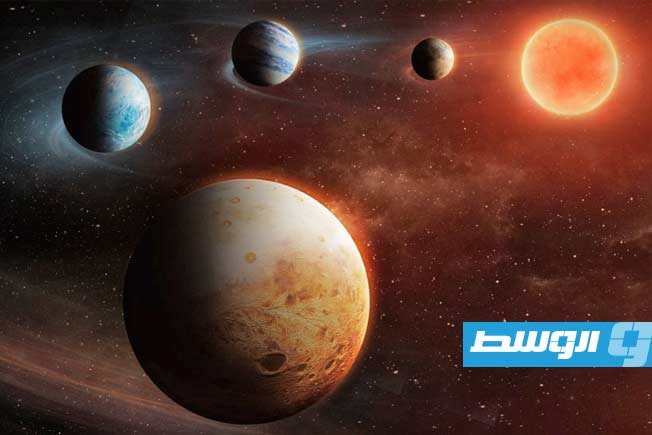
It was also stated that this merger is a step towards achieving the “next chapter” for SpaceX, which involves building giant solar power stations in orbit that are more efficient than those on Earth, in addition to AI-powered data centers.
The financial terms of the acquisition or the implementation timeline were not disclosed. This project, referred to as “Sentient Sun,” is part of the ambition to create “independent bases on the Moon” before “building a full civilization on Mars, and eventually expanding into the universe,” according to the message filled with forward-looking references.
It is asserted that “launching a constellation of a million satellites functioning as orbital data centers is a first step towards transitioning to a Type II civilization on the Kardashev scale,” meaning one capable of harnessing all the energy of its star, referencing a classification concept developed by a Soviet astronomer in the 1960s.
It was noted: “In the near term, global demand for the energy required for AI cannot be met by terrestrial solutions without causing problems for communities and the environment.”
Competition with Blue Origin
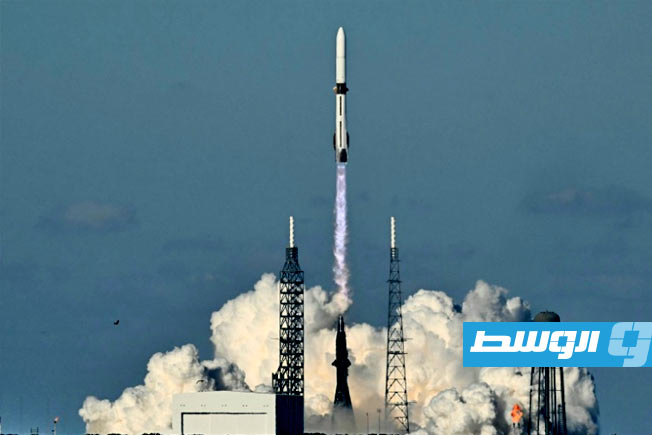
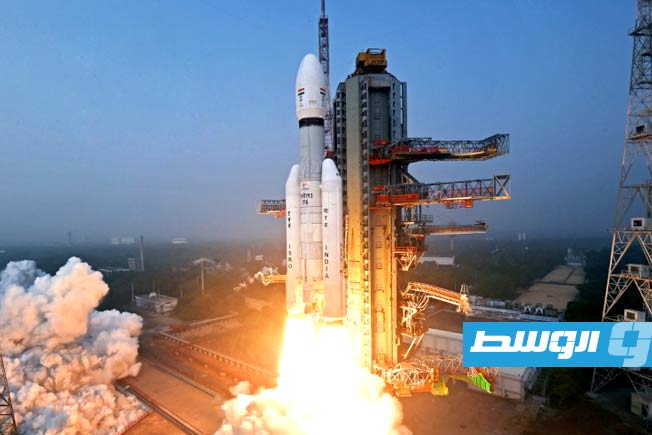
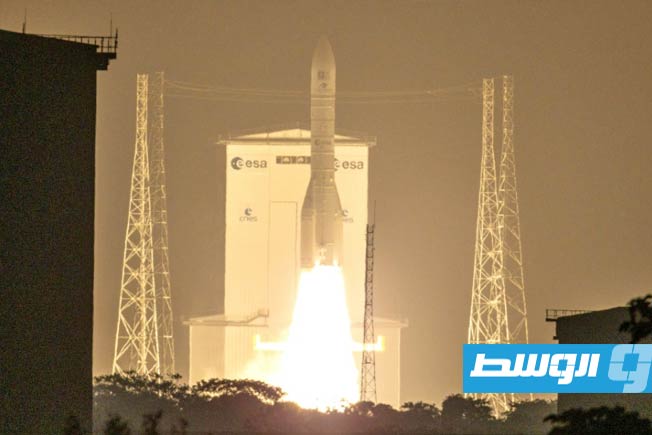
SpaceX dominates the rocket launch market thanks to its reusable rockets and operates the world’s largest satellite constellation, Starlink. The company is currently manufacturing Starship, the largest rocket ever designed for crewed spaceflight.
However, it is expected to face competition from New Glenn, the rocket belonging to the space company Blue Origin.
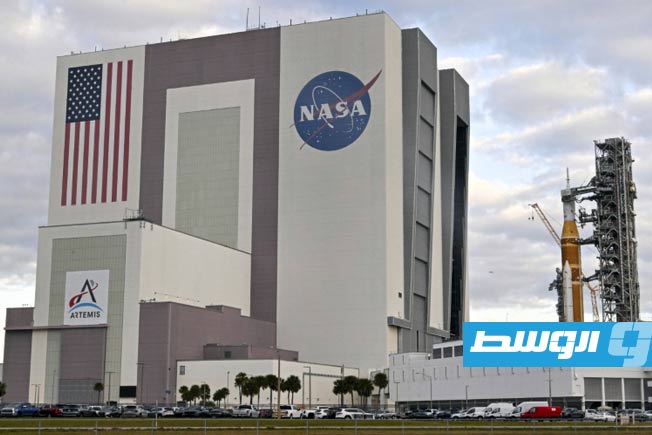
The competition has intensified recently over NASA’s Artemis program, after the agency hinted at the possibility of moving away from SpaceX due to delays in the operational readiness of Starship.
According to reports, the value of the new entity resulting from the merger of SpaceX and XAI will be $1.25 trillion.
Last week, a target of $1.5 trillion was mentioned.
The value of XAI, the innovator behind the Grok chatbot program which acquired the X platform in 2025, was $230 billion during a funding round in January.
SpaceX, founded in 2002, was valued at $800 billion by the end of 2025.
Nevertheless, the company’s planned initial public offering this summer still faces regulatory and political hurdles. SpaceX is currently owned by a number of investment funds, and Alphabet, the parent company of Google, also holds shares.
By becoming a publicly listed company, SpaceX is expected to diversify its investor base, including retail investors, and enable shareholders to sell their stakes more easily while potentially reaping significant gains from share price appreciation. Conversely, the company will be subject to greater financial transparency and may face intense pressure to generate profits.
<figure
SpaceX
SpaceX, founded by Elon Musk in 2002, is a private American aerospace manufacturer and space transportation company. Its history is defined by pioneering reusable rocket technology, drastically reducing the cost of access to space, and achieving milestones like being the first private company to send astronauts to the International Space Station.
XAI
XAI, or Xai-Xai, is a coastal city in southern Mozambique that historically served as a regional trading post under Portuguese colonial rule. Today, it is known for its long beach and as a gateway to nearby attractions, having been rebuilt after significant damage from a cyclone in 2000.
Grok
“Grok” is a conversational AI developed by xAI, launched in 2023 and designed to engage with users with a touch of wit and real-time knowledge access. Its development was influenced by a desire to create an AI with a distinct personality and the capability to process current information from the internet.
X platform
X platform is a social media service founded in 2006, originally gaining popularity for its microblogging format that limited posts to 140 characters. It has played a significant role in global communication, news dissemination, and public discourse, though its ownership and policies have evolved significantly following its acquisition by Elon Musk in 2022.
Earth
Earth is the third planet from the Sun and the only known celestial body to harbor life, with a geological history spanning approximately 4.54 billion years. Human culture and civilization have developed across its diverse continents and ecosystems over hundreds of thousands of years, making it the foundational site for all of human history and heritage.
Moon
The Moon is Earth’s only natural satellite, believed to have formed approximately 4.5 billion years ago from debris after a giant impact between Earth and a Mars-sized body. It has been a central object in human mythology, timekeeping, and exploration, most notably with the first crewed landing by Apollo 11 in 1969.
Mars
Mars is the fourth planet from the Sun and is often called the “Red Planet” due to its iron oxide-rich surface. It has a history of scientific fascination, with early telescopic observations leading to modern robotic exploration seeking evidence of past water and potential for ancient life.
Kardashev scale
The Kardashev scale is not a physical place or cultural site, but a theoretical framework proposed by Soviet astronomer Nikolai Kardashev in 1964. It classifies hypothetical civilizations based on their ability to harness and utilize energy, with types ranging from planetary (Type I) to galactic (Type III) mastery.
Soviet
The term “Soviet” refers to the system of workers’ councils that formed the foundational political structure of the former Soviet Union. It originated during the 1905 and 1917 Russian Revolutions as a grassroots organizing body before becoming the official governing model of the communist state. The Union of Soviet Socialist Republics (USSR), which existed from 1922 to 1991, was a centralized one-party state built upon this council system.
Starlink
Starlink is a satellite internet constellation developed by SpaceX, aiming to provide high-speed, low-latency internet access globally, especially in remote and underserved areas. The project began launching its first operational satellites in 2019 and has since deployed thousands to create a vast network in low Earth orbit.
Starship
Starship is a stainless steel spacecraft and super heavy rocket booster system developed by SpaceX, designed for missions to the Moon, Mars, and beyond. Its history is rooted in the earlier SpaceX Falcon rockets, with the fully reusable Starship system undergoing rapid iterative testing since its initial prototypes in 2019.
Blue Origin
Blue Origin is an American private aerospace manufacturer and sub-orbital spaceflight services company founded in 2000 by Jeff Bezos. Its primary goal is to make access to space more affordable and reliable through reusable rocket technology, with key milestones including the New Shepard vehicle’s first crewed flight in 2021.
New Glenn
New Glenn is a heavy-lift orbital launch vehicle under development by the private aerospace company Blue Origin. Named in honor of NASA astronaut John Glenn, it is designed to be a reusable rocket aimed at competing in the commercial satellite and spaceflight markets. Its development history, beginning in the 2010s, represents a significant part of the current expansion of private sector involvement in space access.
NASA
NASA, or the National Aeronautics and Space Administration, is the United States government agency responsible for the nation’s civilian space program and aerospace research. It was established in 1958 in response to the Soviet Union’s launch of Sputnik, marking the beginning of the U.S.-Soviet space race. NASA is renowned for landmark achievements like the Apollo moon landings and the operation of the Space Shuttle and International Space Station.
Artemis
The Temple of Artemis, located in Ephesus (modern-day Turkey), was a massive Greek temple dedicated to the goddess Artemis. Built and rebuilt multiple times, its most famous version from around 550 BCE was one of the Seven Wonders of the Ancient World before being destroyed in 356 BCE.
Alphabet
The Alphabet, as a concept, refers to a standardized set of letters or characters representing the phonemes of a language. Its history traces back to ancient systems like the Proto-Sinaitic script, with the Phoenician alphabet being a major precursor that heavily influenced the Greek and, subsequently, the Latin alphabet used for English today. This innovation transformed communication by enabling the efficient and widespread recording of language.
Google
Google is an American multinational technology company founded in 1998 by Larry Page and Sergey Brin while they were Ph.D. students at Stanford University. It began as a search engine and has since grown into one of the world’s largest and most influential tech corporations, developing a vast ecosystem of online services, software, and hardware.
Italy
Italy is a country in Southern Europe with a rich cultural history that dates back to the ancient Roman Empire, which was a foundational civilization for Western law, government, and engineering. It later became the epicenter of the Renaissance, a period of immense artistic and scientific flourishing, and today is renowned for its profound contributions to art, architecture, cuisine, and fashion.