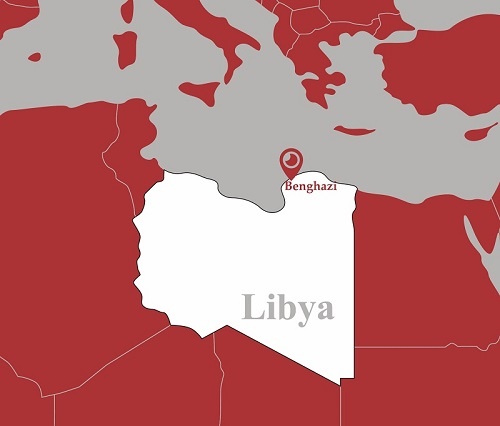
Tripoli, January 8, 2026 – The Public Prosecutor’s Office announced that a foreign national forged data within the Civil Status Authority and subsequently used it to assume the position of Chairman of the Board of Directors of a rapid transport company, thereby obtaining rights derived from citizenship.
The Public Prosecutor’s Office stated that the foreign national, who holds Moroccan citizenship, conspired with the Director of the Information Technology and Documentation Department at the Civil Status Authority and five employees of the Authority to enter his data onto a Libyan family record. This enabled him to obtain national identification numbers for himself, his wife, and four of his daughters, facilitated the issuance of Libyan passports for them, and allowed him to hold a public office.
It added that the foreign national obtained $3,900 from foreign cash allocations designated for heads of households, 19,000 dinars from grants allocated for Libyans, as well as cash benefits intended for those covered under social security legislation, and other benefits stemming from citizenship.
The Office clarified that the investigation committee into the forgery of civil status data, within the jurisdiction of the Public Prosecutor’s Office in Tripoli, identified the involvement of the foreign national; the Director of the Information Technology and Documentation Department at the Civil Status Authority; an employee of the Addition Committee at the Authority; the Service Office Secretary – Tripoli City; an employee of the Civil Registry System at the Office; and an employee of the Civil Registry System – Al-Hadba.
Based on the investigations, the Public Prosecution decided to detain the six suspects in custody pending investigation. It ordered an inventory of the benefits acquired by the foreign national based on the forgery and mandated the suspension of the effects of the related administrative documents that were issued.
Tripoli
Tripoli is the capital and largest city of Libya, historically founded in the 7th century BCE by the Phoenicians. It later became a significant Roman city and a major center under various empires, including the Ottoman Empire, which left a strong architectural and cultural imprint on its old medina.
Moroccan
Morocco is a North African country with a rich cultural heritage shaped by indigenous Amazigh (Berber), Arab, Islamic, and European influences. Historically, it has been home to powerful dynasties like the Almoravids and Almohads, and its famous sites include the ancient city of Fez, the Koutoubia Mosque in Marrakech, and the historic ksar of Ait Benhaddou.
Libyan
Libya is a North African country with a rich history that includes ancient Phoenician, Greek, and Roman settlements, most notably at the UNESCO site of Leptis Magna. Its modern history was significantly shaped by the long rule of Muammar Gaddafi from 1969 until the 2011 revolution. The nation’s cultural heritage reflects its diverse Berber, Arab, and Mediterranean influences.
Civil Status Authority
The Civil Status Authority is a governmental body responsible for recording and maintaining vital life events such as births, marriages, and deaths. Its history is tied to the development of modern state administration, often emerging in the 19th or 20th century as nations sought to systematically document their populations for legal and statistical purposes.
Information Technology and Documentation Department
The Information Technology and Documentation Department is a modern administrative unit, typically established within organizations or institutions to manage digital systems, data preservation, and technical archives. Its history is generally tied to the late 20th-century shift from physical to digital record-keeping and the growing reliance on information technology infrastructure.
Addition Committee
The Addition Committee is a fictional or unspecified entity, as there is no widely recognized cultural or historical site by that name. Without specific context, it is not possible to provide a meaningful summary of its history or significance.
Service Office Secretary – Tripoli City
The Service Office Secretary in Tripoli City is an administrative government office that handles bureaucratic and civil services for residents. Historically, such offices have been central to local governance in Libya, particularly following the country’s administrative restructuring in the latter half of the 20th century.
Civil Registry System
The Civil Registry System is a government-managed administrative framework responsible for recording vital life events such as births, marriages, and deaths. Its history is rooted in the development of modern state bureaucracy, evolving from early parish records to become a centralized, legal proof of identity and family status for citizens.
Al-Hadba
Al-Hadba, meaning “the hunchback” in Arabic, is the popular name for the leaning minaret of the Great Mosque of Al-Nuri in Mosul, Iraq. It was famously commissioned by Nur ad-Din Zangi and completed in 1172–73 AD, becoming an iconic symbol of the city for centuries. The minaret and its adjoining mosque were deliberately destroyed by the Islamic State group in 2017 during the Battle of Mosul.
Public Prosecutor’s Office
The Public Prosecutor’s Office is a legal institution responsible for representing the state in criminal proceedings. Its modern form, found in many countries with civil law systems, historically evolved from the French *parquet* of the Napoleonic era, though similar roles date back to ancient Rome. Its core functions include directing police investigations, deciding on prosecutions, and upholding the law in court.