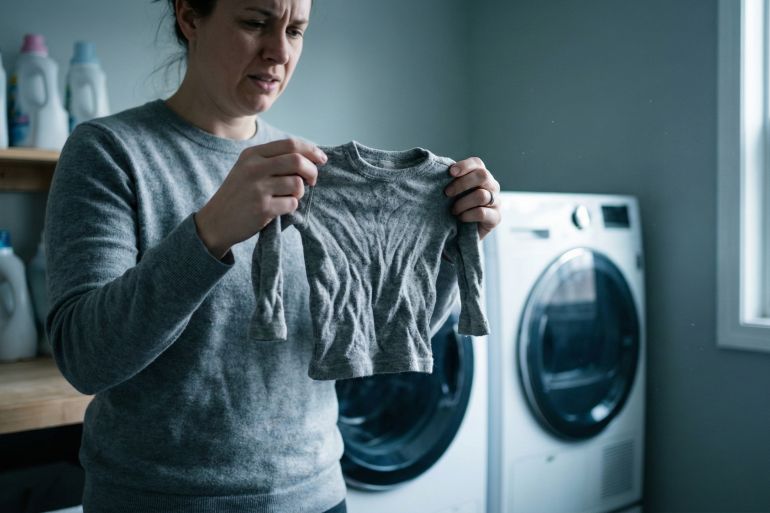
The first thing you might do before buying a new piece of clothing is to check its fabric to see if it will shrink after washing or maintain its original size. Many of us have experienced this annoying situation when we take a favorite item out of the dryer to find it has become noticeably smaller. Fortunately, there are solutions to such problems. By following simple steps, it is possible to restore your clothes to exactly how they were before washing.
Understanding the causes of shrinkage helps us avoid this problem and take preventive measures to maintain the normal size of clothes. The first thing we need to know is that the degree of shrinkage varies depending on the type of fabric.
1 – Natural Cellulosic Fabrics
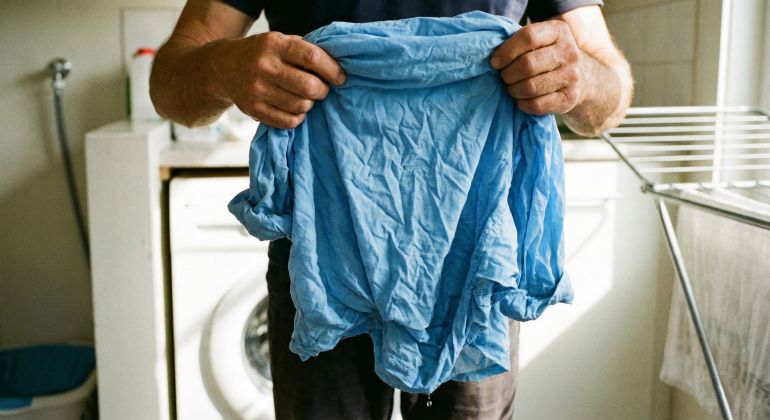
Cellulosic fabrics are the most prone to shrinkage due to their high water absorption capacity. These clothes are usually made from plant fibers based on cellulose, such as cotton, rayon (viscose), and linen.
During manufacturing, the fibers are stretched and mechanically twisted to arrange them cohesively, producing smooth, long threads. When these fabrics are immersed in water during washing, the fibers become softer and more flexible, and the fabric loses some of its original taut shape. As they are placed inside the washing machine, they gradually return to their original state, causing the piece to shrink noticeably.
High heat during washing or drying also accelerates this shrinkage, making clothes appear smaller.
2 – Wool
Wool has unique characteristics that distinguish it from other fabrics in how it shrinks. It is made from animal protein fibers covered with fine scales on their surface. When exposed to water, movement, and heat, these scales open up and interlock with neighboring fibers in a process known as felting.
As a result of this entanglement, the fabric becomes denser and more compact, and its size shrinks clearly. The piece may lose some of its elasticity and become stiffer, making wool shrinkage severe and leading to a noticeable change in the shape of the garment.
3 – Synthetic Fibers
Unlike natural fabrics, synthetic fibers such as polyester and nylon are highly resistant to stretching and shrinking thanks to their stable chemical structure. They are not easily affected by heat or water, allowing them to maintain their original shape even after repeated washing. For this reason, these fibers are used in the manufacture of sportswear and practical clothing that requires greater durability.
How to Rescue Your Shrunken Clothes?
Although shrinkage may seem like a permanent problem, a set of simple steps can restore the fibers’ elasticity and make the garment much closer to its original shape.
Step One: Soak in Lukewarm Water with a Conditioner
To restore shrunken clothes to their normal size, fill a large container with lukewarm water, then add a small amount of a gentle conditioner or fabric softener to moisturize the fibers and make them more flexible for stretching.
Place the garment in the solution, making sure it is completely submerged, and leave it to soak for 15 to 30 minutes until the fibers absorb the treated water and regain their ability to be reshaped.
Step Two: Remove Excess Water Without Wringing
After the soaking stage is complete, lift the garment gently and place it on a wide towel. Then roll the towel with the garment into a cylinder shape, allowing the fabric to get rid of excess water.
It is preferable to avoid any strong wringing because intense pressure may damage the fibers and tighten them again. Therefore, light pressure on the roll is sufficient to ensure moisture absorption without causing any damage to the fabric.
Step Three: Lay the Garment Flat and Stretch it Gradually
Place the garment on a flat surface, then gently pull the edges and sides to reshape it gradually and evenly, taking care not to distort the fabric’s shape.
You can use previous