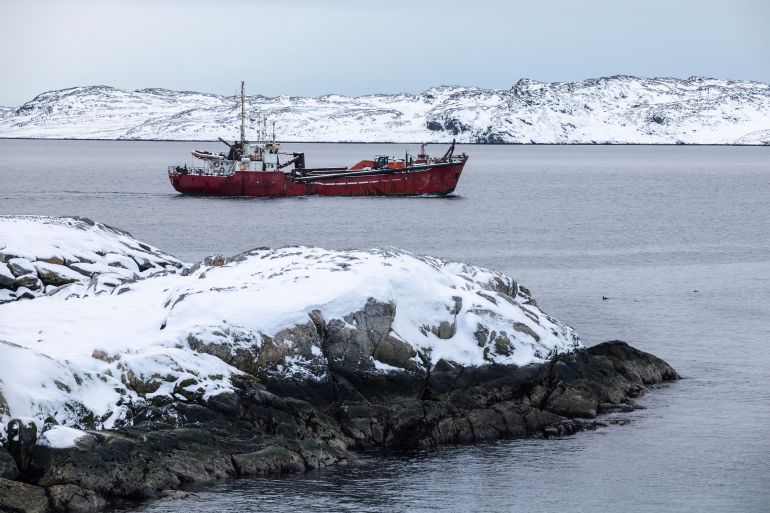
More than a century after the sinking of the Titanic, the dream of building unsinkable ships still captivates engineers worldwide. Today, researchers have revealed a scientific step that could bring this goal closer, by developing a method to make ordinary metal tubes float permanently, even if they are punctured or remain submerged for long periods.
According to a study published on January 27th in the journal “Advanced Functional Materials,” the research team created a technique to transform aluminum tubes into unsinkable objects, thanks to modifications to their internal surface.
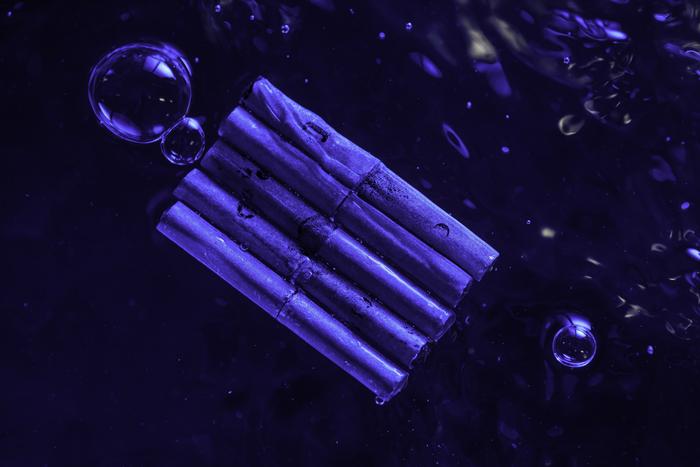
How can a metal tube remain afloat?
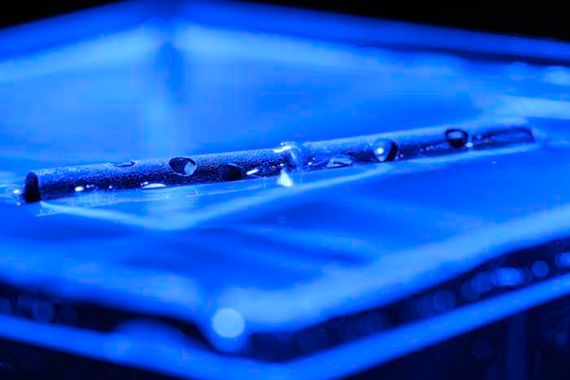
Under normal conditions, metal sinks quickly when saturated with water or damaged. However, the team succeeded in changing this rule by treating the surface of the tubes in a way that makes them superhydrophobic, meaning water does not stick to them but slides off immediately.
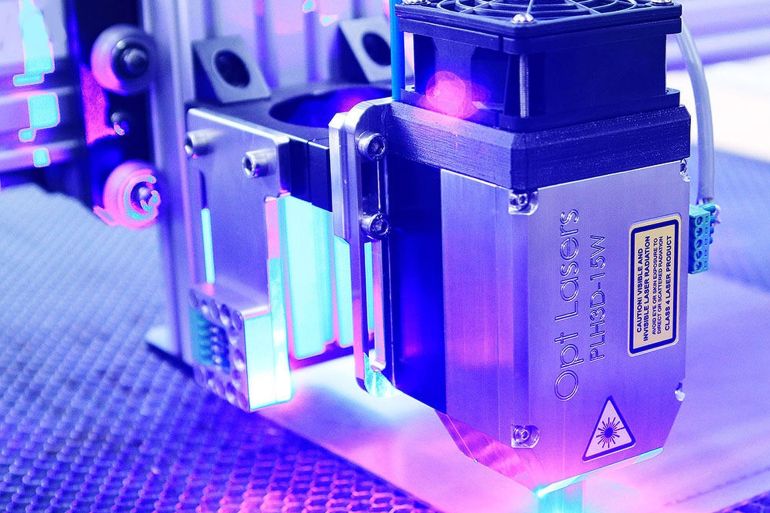
To achieve this, the team drilled very fine holes at the microscopic and nanoscopic level inside the tube’s surface, which can alter the nature of the surface and make it highly water-repellent. “When the tube enters the water, the repellent surface does not allow water to easily infiltrate its interior; instead, it traps a stable air bubble inside the tube. This bubble acts as a shield, preventing the tube from becoming water-saturated and thus allowing it to remain afloat instead of sinking.”
The researchers compare this mechanism to what some creatures do in nature. There are water spiders known as “diving bell spiders” that retain an air bubble around their bodies to stay underwater. Similarly, fire ants can form floating rafts during floods thanks to the water-repellent nature of their bodies.
An Additional Feature to Prevent Buoyancy Loss
To make the design more stable, the researchers added a small barrier inside the middle of the tube to ensure the air bubble remains trapped even if the tube is pushed vertically into the water—a position that would normally lead to air escaping and buoyancy loss. “We added a partition inside the tube so the bubble remains confined, and even under difficult conditions, the tube retains its ability to float.” The team had previously presented a prototype of water-repellent objects in 2019, using two sealed discs joined together to form a floating body, but the new design, based on tubes, is simpler and more robust.
Previous systems could lose their buoyancy if overturned or subjected to sharp angles, whereas the new tubes have proven to withstand more violent conditions, such as sea turbulence and severe waves. The team tested the tubes for weeks in harsh environments without a decline in their buoyancy. More impressively, the team created large and multiple holes in the tubes, yet they continued to float. It was added that the tubes could be punctured multiple times and still remain afloat.
The researchers believe this technology is not limited to the laboratory but can be easily scaled up. Tubes of different lengths, reaching up to about half a meter, have been tested, but scientists say the design is scalable to larger sizes that can support significant weights. Multiple tubes can also be linked together to form rafts or floating platforms, which could form the basis for safer ships, marine buoys, or floating structures used in various fields.
The potential applications are not limited to maritime safety. The researchers have also shown that rafts made from these tubes can be used to capture wave motion and convert it into electricity, opening the door to applications in the field of