Researchers have discovered a strange phenomenon beneath the Arctic sea ice, painting a picture of a polar ocean that is more biologically dynamic and less inhospitable than previously thought.
The study, published in the journal “Communications Earth & Environment,” found unexpected communities of microbes capable of “fixing” nitrogen—that is, converting inert dissolved nitrogen gas in seawater into biologically useful ammonium. These microorganisms live under thick polar ice and along its melting edges.
A Hidden Nitrogen Generator Under the Ice
Nitrogen gas makes up nearly 78% of Earth’s atmosphere, but plants, algae, and animals cannot use it in this form. They rely on specialized microbes called nitrogen fixers, which convert nitrogen gas into ammonium, fueling growth processes throughout ecosystems.
For decades, the prevailing belief was that such primitive life forms could not exist in the dark, cold conditions under Arctic ice, and were limited to warm tropical ocean waters where low oxygen and abundant light suit their functions. The frozen, ice-covered Arctic was thought to be too dark, cold, and oxygen-rich for nitrogen fixation to be of any significant importance.
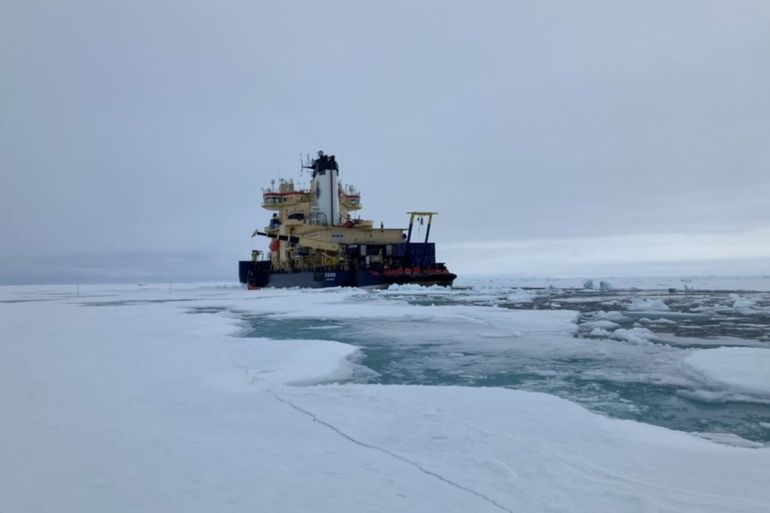
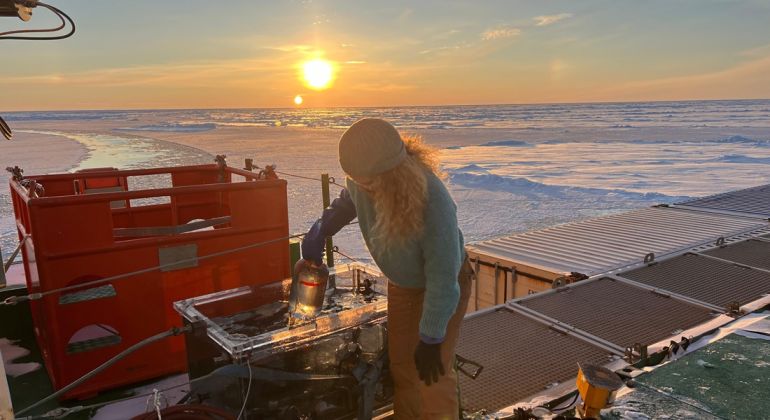
An international team took samples from 13 sites across the central Arctic Ocean and the Eurasian Arctic, including locations with multi-year ice layers and along the marginal ice zone where sea ice melts.
Their measurements revealed active nitrogen fixation in the waters under the sea ice, particularly at the edge of the retreating ice. In these boundary areas, fixation rates increased from below detection levels to several nanomoles of fixed nitrogen per liter per day, which is associated with phytoplankton blooms at the ice edge.
Unconventional Microbes Performing the Task
The most surprising aspect of this study is not just where nitrogen fixation occurs, but the identity of the organisms doing it.
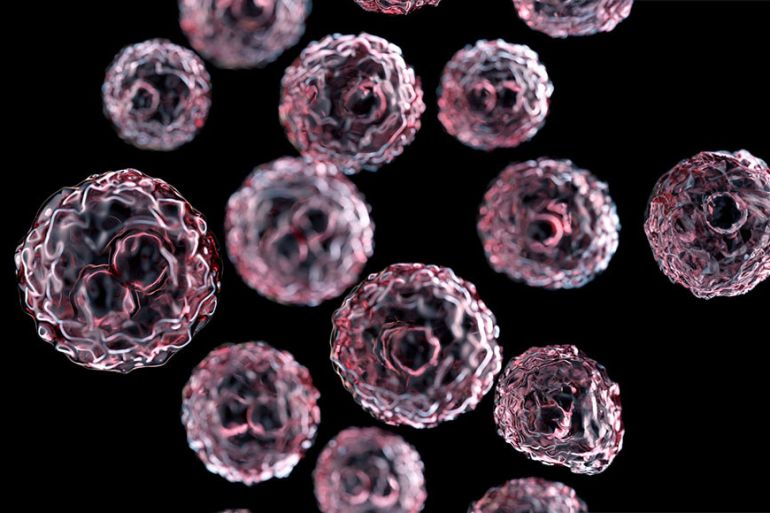
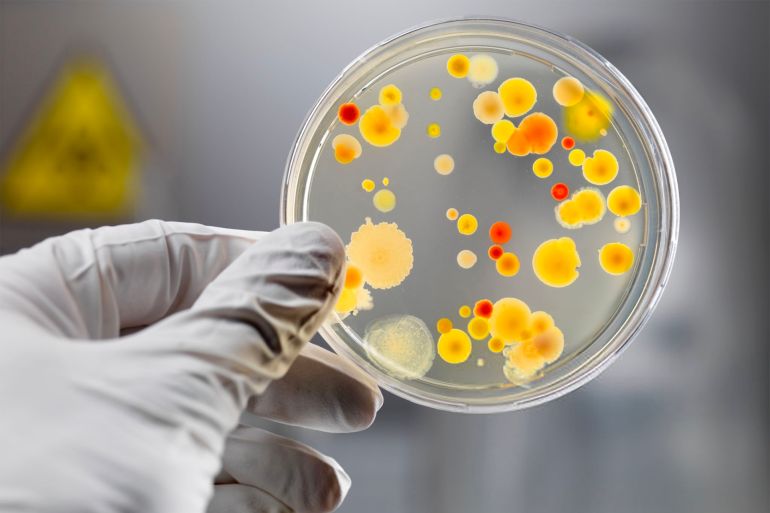
In most low-latitude oceans, cyanobacteria—microscopic, photosynthetic bacteria—dominate the process of nitrogen fixation. In the Arctic, however, the new study found that a completely different group of bacteria is responsible: non-cyanobacterial nitrogen-fixing organisms.
These bacteria do not perform photosynthesis. Instead, they appear to live on dissolved organic matter released by algae and other organisms, while returning the newly fixed nitrogen to the water.
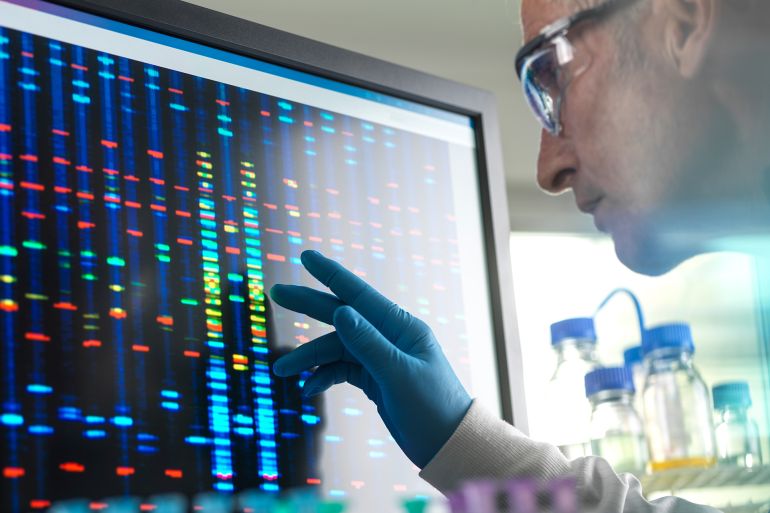
Genetic analyses show that these communities of non-cyanobacterial nitrogen fixers carry the key genes necessary for nitrogen fixation. Their distribution closely matches where researchers measured fixation in the water column. This pattern strongly suggests they are an important and previously unknown source of new nitrogen in the polar ocean.
Ice Retreat Could Mean More Algae
The retreat of sea ice in the Arctic Ocean is an environmental catastrophe by all measures. Ironically, however, melting ice may also fuel the algae that drive Arctic food chains.
Researchers measured the highest nitrogen fixation rates at the ice edge, where ice melts intensely. Although the bacteria can fix nitrogen under the ice, the process is easier for them along its edge. Therefore, as sea ice retreats and the melting zone expands, larger amounts of nitrogen are expected to be added through nitrogen fixation.
The Arctic Ocean is often limited by nitrogen deficiency; there is not enough available in a usable form to fully support algal growth. Therefore, any additional source of nitrogen would boost primary production—the photosynthesis of algae that forms the base of the food web.
Since the highest nitrogen fixation rates occur near the ice edge, the ongoing retreat of sea ice as the climate warms could actually expand the area where these microorganisms operate. As the seasonal melting zone widens, non-cyanobacterial organisms could pump larger amounts of nitrogen into the surface waters, fueling larger or longer-lasting algal blooms.
Algae are consumed by small