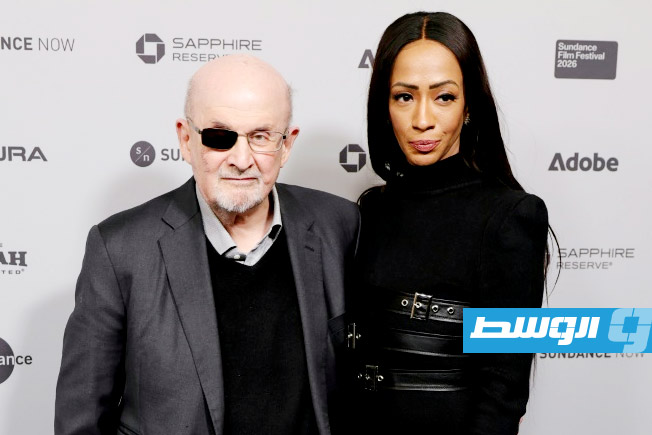
Salman Rushdie warns of political violence during documentary screening about his attempted murder at Sundance Festival.
libyawire.org > News > Culture > Salman Rushdie warns of political violence during documentary screening about his attempted murder at Sundance Festival.
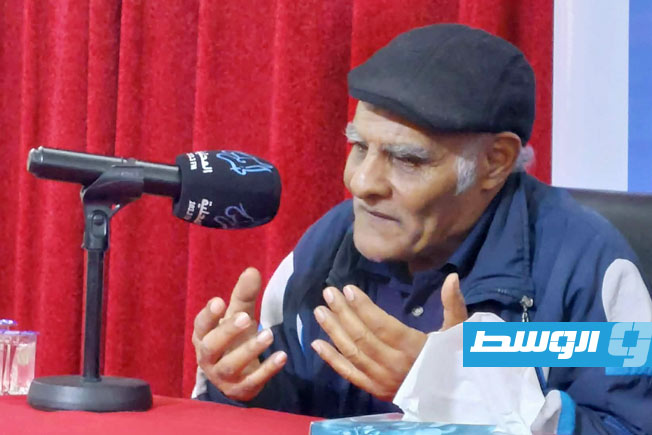
Salman Rushdie stated that the stabbing attack he survived is an example of violence incited by political leaders, warning that “everyone is in danger now” in the United States, which is experiencing increasing tension.
During the premiere of the documentary “Knife: The Attempted Murder of Salman Rushdie,” the author pointed to current events across the country, where a second protester was reportedly killed by federal security forces.
He said at the Sundance Film Festival in Park City, Utah, “The idea of danger and violence is now close to everyone in this country,” adding, “I think everyone is in danger now.”
The documentary, directed by Alex Gibney, serves as a companion to Rushdie’s book “Knife,” in which he detailed the attack he suffered and its aftermath.
In 2022, Rushdie was speaking at an event in New York when Hadi Matar (24 years old) rushed the stage and stabbed him 15 times.
Gibney’s film uses video footage of the attack on Rushdie, along with footage shot by his wife, Rachel Eliza Griffiths, over six weeks while the author was hospitalized.
The film also incorporates archival news reports of the controversy Rushdie sparked in the Islamic world upon publishing his novel “The Satanic Verses” in 1988, and the subsequent fatwa issued by the late Iranian Supreme Leader Ayatollah Khomeini, urging Muslims worldwide to kill Rushdie.
The author lived in hiding for over a decade under British government protection, until an agreement was reached that formally rescinded the fatwa in exchange for Britain’s diplomatic recognition of Tehran.
Hadi Matar, sentenced last year to 25 years in prison, told a reporter before his trial that he believed Rushdie had attacked Islam, noting he had only read two pages of “The Satanic Verses.”
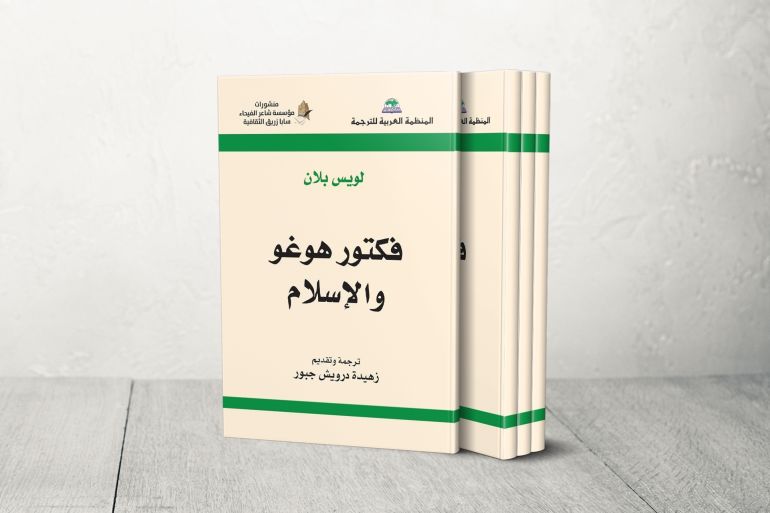
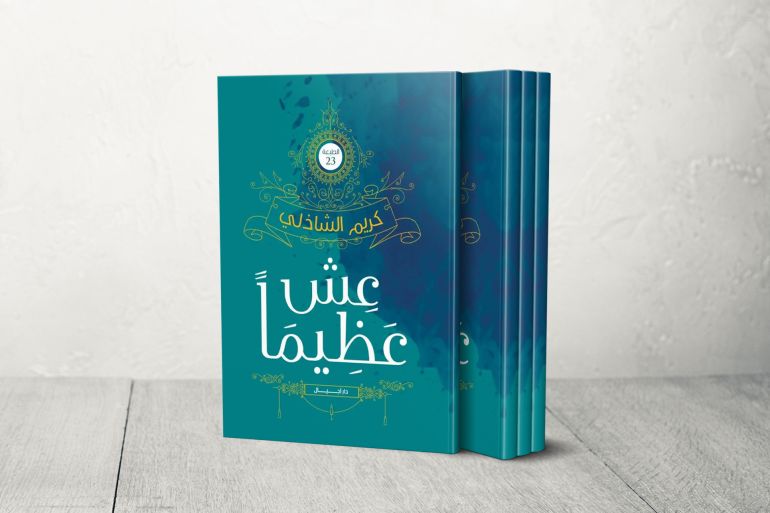
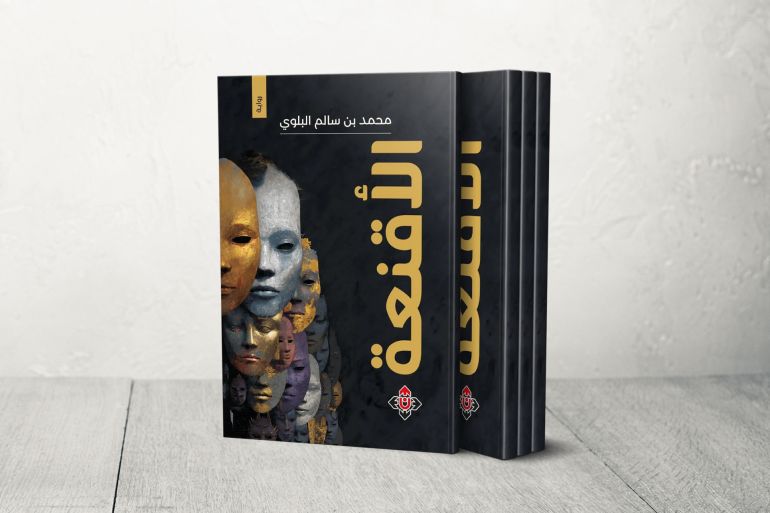
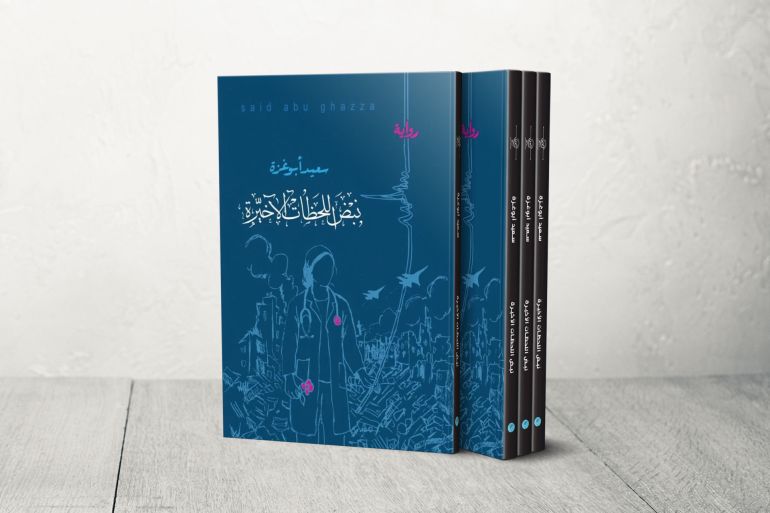
– <a>Release of the translation of Salman Rushdie’s novel “Knife”
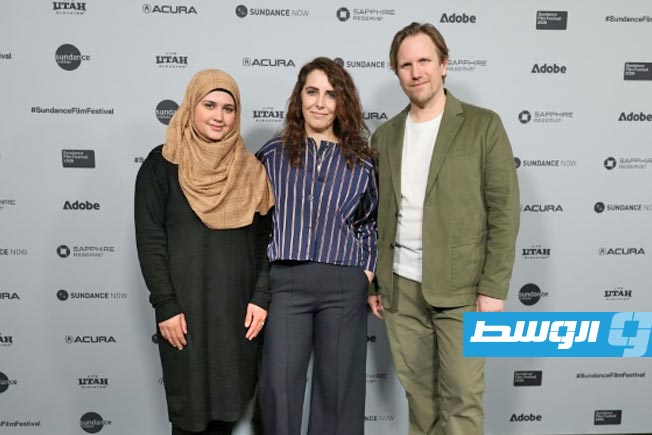
– <a>Premiere of a documentary about a Syrian refugee in Europe at the “Sundance” Festival
– <a>”Khartoum”.. First documentary about Sudan to be shown at the Sundance Festival
Rushdie said, “Violence is that thing, violence unleashed by unscrupulous people who exploit the ignorant to attack… culture.”
Culture is the enemy of the tyrant
He added, “For the tyrant, culture is the enemy. Whether it’s in the field of journalism, universities, music, or writing, the uncultured, the ignorant, and the extremists do not like it and take steps against it, which is what we witness daily.”
Rushdie’s comments follow a campaign of repression against higher education and ongoing mockery of the press and journalists.
The Booker Prize-winning author said the film, as he envisioned it, was not intended to be a commentary on the current reality.
He added, “When you make a film, you make it, then the world moves on, and sometimes the two intersect.”
He continued, “I’ve now begun to think the film has been released at an appropriate moment, and that we all now feel the danger of violence.”
Salman Rushdie
Salman Rushdie is a British-Indian novelist and essayist, best known for his 1988 novel *The Satanic Verses*, which sparked international controversy and led to a fatwa calling for his death issued by Iran’s Ayatollah Khomeini. His work frequently explores themes of migration, identity, and the intersections of Eastern and Western cultures, making him a pivotal and often contentious figure in contemporary literature.
United States
The United States is a federal republic founded in 1776 after declaring independence from Great Britain, with its modern government established by the Constitution in 1789. Its history is marked by westward expansion, industrialization, and its emergence as a global superpower in the 20th century. The nation is defined by its diverse cultural heritage, shaped by immigration and the complex legacy of its indigenous peoples and the institution of slavery.
Sundance Festival
The Sundance Film Festival is an annual independent film festival held in Utah, USA, founded in 1978 by Sterling Van Wagenen and later championed by actor Robert Redford. It was established to provide a platform for independent filmmakers to showcase their work outside the Hollywood studio system. Today, it is one of the most prominent and influential film festivals in the world, launching numerous acclaimed films and careers.
Park City
Park City is a mountain town in Utah, USA, originally founded as a silver mining camp in the 1860s. After the mining industry declined, it successfully reinvented itself as a major year-round destination, most famously hosting the annual Sundance Film Festival and being the home of one of the largest ski resorts in the United States.
Utah
Utah is a state in the western United States, historically inhabited by Native American tribes such as the Ute, Navajo, and Paiute before Mormon settlers arrived in 1847. It is renowned for its striking natural landscapes, including five national parks like Zion and Arches, and its deep cultural ties to the Church of Jesus Christ of Latter-day Saints.
Alex Gibney
Alex Gibney is an acclaimed American documentary filmmaker known for investigative works such as “Taxi to the Dark Side” and “Going Clear: Scientology and the Prison of Belief.” His career, which began in the late 20th century, often focuses on exposing corruption, injustice, and complex institutions.
Rachel Eliza Griffiths
Rachel Eliza Griffiths is an American poet, writer, and visual artist, not a physical place or cultural site. Her work often explores themes of race, family, memory, and the American landscape. She is known for her collections like “Lighting the Shadow” and her multimodal project “Seeing the Body,” which combines poetry and photography.
New York
New York City, originally founded as New Amsterdam by Dutch colonists in 1624, grew into a major global port under British rule and later as the first capital of the United States. It is now one of the world’s most populous and influential cities, renowned for landmarks like the Statue of Liberty, Times Square, and Central Park. Its history as a gateway for millions of immigrants through Ellis Island has cemented its identity as a diverse cultural and economic hub.
Hadi Matar
Hadi Matar is an individual, not a place or cultural site. He gained international attention in 2022 after being charged in connection with the attack on author Salman Rushdie in New York.
The Satanic Verses
“The Satanic Verses” is a 1988 novel by British-Indian author Salman Rushdie, which sparked international controversy for its fictionalized depiction of certain Islamic traditions. Its publication led to widespread protests, a fatwa calling for Rushdie’s death issued by Iran’s Ayatollah Khomeini, and intense debates about blasphemy, freedom of speech, and multiculturalism.
Iran
Iran, historically known as Persia, is home to one of the world’s oldest continuous civilizations, dating back to the Elamite kingdoms of the 4th millennium BCE. Its rich cultural heritage includes influential empires like the Achaemenid and Sassanian, and it is renowned for its profound contributions to art, science, and architecture, such as the ancient ruins of Persepolis and the intricate Islamic designs of Isfahan.
Ayatollah Khomeini
Ayatollah Ruhollah Khomeini was an Iranian Shi’a cleric who became the political and religious leader of the 1979 Iranian Revolution, which overthrew the Pahlavi monarchy. He subsequently founded the Islamic Republic of Iran, establishing a theocratic government based on the principle of *Velayat-e Faqih* (Guardianship of the Islamic Jurist).
Britain
Britain is a sovereign island nation in northwestern Europe with a long and influential history, including the Roman occupation, the formation of the medieval kingdoms of England and Scotland, and the expansive British Empire. Its cultural and political legacy is profound, having developed parliamentary democracy and the English language into global forces. Today, it is a constitutional monarchy comprising England, Scotland, Wales, and Northern Ireland.
Tehran
Tehran is the capital and largest city of Iran, officially becoming the national capital in 1796 under the Qajar dynasty. It is a major cultural and economic center, home to significant sites like the Golestan Palace, a UNESCO World Heritage site from the 19th century.
Sudan
Sudan, located in Northeast Africa, is home to ancient civilizations, most notably the Kingdom of Kush, which ruled from the city of Meroë and once conquered Egypt. It later became a hub for trade and Islamic scholarship before forming Africa’s largest country upon independence in 1956, which was later divided in 2011 with the secession of South Sudan.
Khartoum
Khartoum is the capital city of Sudan, located at the confluence of the Blue and White Nile rivers. Founded in 1821 as an Egyptian military outpost, it later became a focal point during the Mahdist War in the 1880s before being rebuilt under Anglo-Egyptian rule. Today, it serves as the country’s political and cultural center.
Booker Prize
The Booker Prize is a prestigious annual literary award established in 1969, originally for novels written in English by authors from the Commonwealth, Ireland, and Zimbabwe. It was expanded in 2014 to include all novels written in English and published in the UK, significantly broadening its international scope and influence.