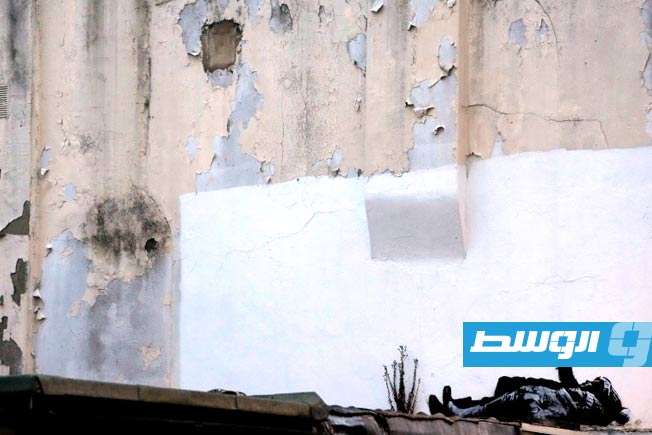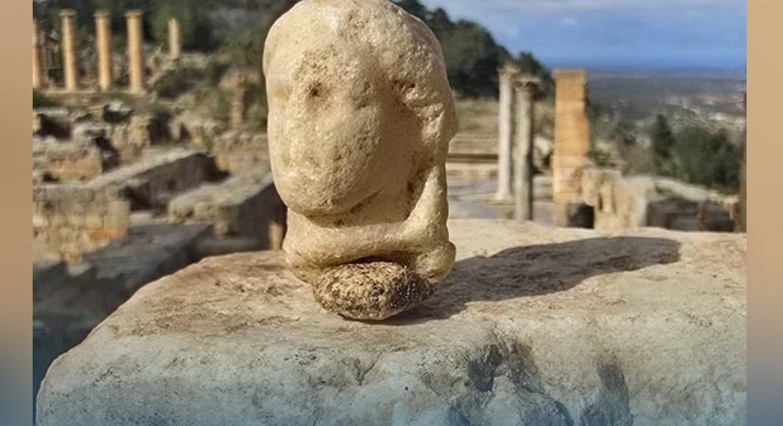
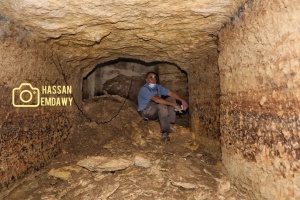
A small statue, believed to date back to the Roman era, was discovered inside an ancient water channel after heavy rains in the city of Shahat last Friday.
The artifact was handed over to the relevant authorities on Saturday, in the presence of members of the tourist police.
The discovered artifact is a block of marble or light limestone, topped with a very small bust of a statue.
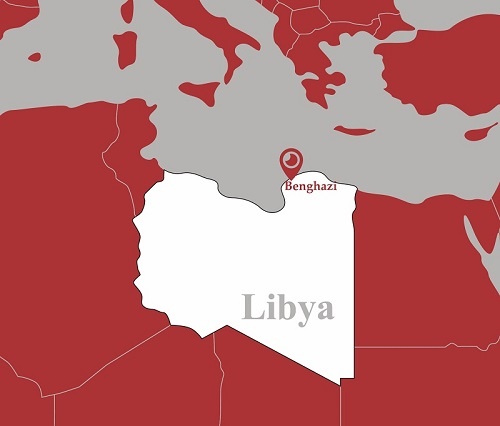
Shahat
Shahat is the modern name for the ancient Greek city of Cyrene, located in present-day Libya. Founded in the 7th century BCE, it became a major center of the Cyrenaic region and is known for its significant archaeological ruins, including temples and a necropolis. The site is a UNESCO World Heritage site, recognized for its well-preserved remains from the Greek and Roman periods.
Roman era
The Roman era, spanning from approximately 753 BC to 476 AD in the West, marks the period of ancient Roman civilization, which grew from a small city-state to a vast empire dominating the Mediterranean. Its history is defined by the Roman Kingdom, Republic, and Imperial periods, leaving a profound legacy in law, governance, engineering, and culture across Europe and beyond.
Benghazi Antiquities Authority
The Benghazi Antiquities Authority is a Libyan governmental body responsible for overseeing and preserving the archaeological heritage of the Benghazi region and eastern Libya. It manages numerous historical sites and artifacts, reflecting the area’s rich history from ancient Greek and Roman periods through subsequent eras. The authority has faced significant challenges, including damage and looting during periods of conflict in the country.
Al-Hasawna Mountains
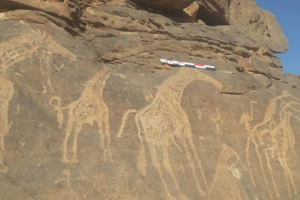
The Al-Hasawna Mountains are a range located in northwestern Libya, historically significant as part of the homeland for the Berber Amazigh people. The area contains ancient rock art and archaeological sites that testify to long-standing human habitation and cultural traditions.
Libya
Libya is a North African country with a rich history rooted in ancient civilizations like the Phoenicians and Romans, followed by centuries of Arab and Ottoman influence. In the modern era, it was an Italian colony before gaining independence in 1951, later becoming known for Muammar Gaddafi’s lengthy rule from 1969 until the 2011 revolution. The country is home to UNESCO World Heritage sites, such as the ancient Greek city of Cyrene and the Roman ruins of Leptis Magna.
Cyrene
Cyrene was an ancient Greek and later Roman city located in present-day Libya, founded in 631 BCE by settlers from the island of Thera. It became a major center of the Cyrenaic region, renowned for its intellectual life and as a significant exporter of grain, horses, and the medicinal plant silphium. The city’s extensive ruins, including temples, a theater, and the Sanctuary of Apollo, reflect its historical importance as one of the principal cities of the ancient Greek world.