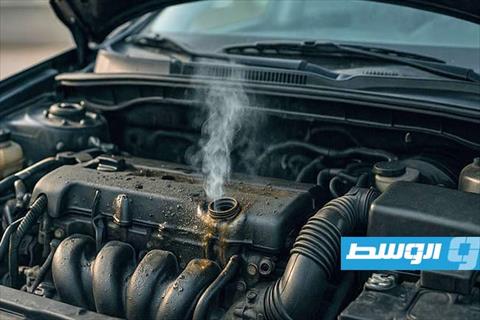
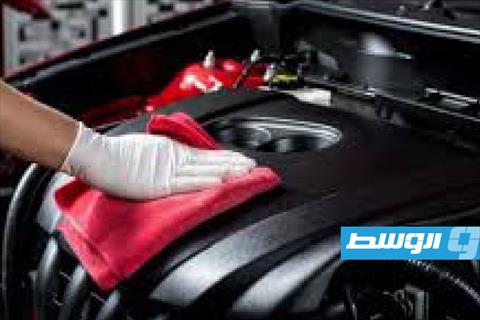
The appearance of smoke from the engine oil cap is a concerning sign that should not be ignored, as it may indicate an internal engine malfunction or poor maintenance. Identifying the causes early helps avoid costly breakdowns and preserves the car’s performance and safety.
First: Causes of smoke from the engine oil cap
Worn Piston Rings
– Worn piston rings allow combustion pressure to leak inside the engine, causing fumes to rise and smoke to appear from the oil cap opening.
Clogged Engine Ventilation System (PCV)
– When the crankcase ventilation valve is clogged, gases accumulate inside the engine and escape as smoke from the oil cap.
High Engine Temperature
– Excessive heat leads to abnormal oil vaporization, resulting in visible fumes and smoke when the oil cap is opened.
Use of Inappropriate or Old Oil
– Poor quality or expired oil loses its properties, causing partial combustion inside the engine and the appearance of smoke.
Second: Effective Solutions to Address the Problem
Inspect the Engine and Repair Damaged Parts
– It is recommended to have the piston rings and valves checked by a specialized technician and to replace any worn parts immediately.
Clean or Replace the (PCV) Valve
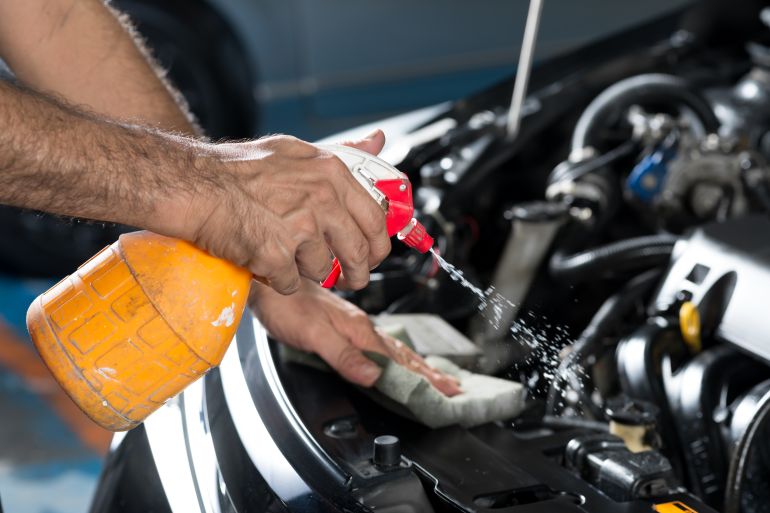
– Maintaining the engine ventilation system helps eliminate excess gases and prevent internal pressure buildup.
Adhere to Suitable Engine Oil and Regular Maintenance
– Using the oil recommended by the manufacturer and changing it on schedule maintains engine efficiency and prevents smoke formation.
With these simple steps, the smoke problem can be reduced, and the engine’s lifespan and performance can be preserved for longer.
engine oil cap
An engine oil cap is a small but essential automotive component that seals the oil filler neck on an engine. Its history is tied to the development of the internal combustion engine, evolving from simple plugs to modern caps that often include pressure relief or integrated dipsticks to maintain proper engine lubrication systems.
engine
The term “engine” broadly refers to a machine designed to convert energy into mechanical motion. Historically, its development is central to the Industrial Revolution, with the steam engine’s invention in the 18th century fundamentally transforming industry and transportation. Modern engines, such as the internal combustion and jet engines, continue to be foundational to contemporary technology and mobility.
piston rings
Piston rings are not a place or cultural site, but a key mechanical component within an internal combustion engine. Their history is tied to the development of the engine itself, with their modern form evolving in the late 19th and early 20th centuries to create a vital seal between the piston and cylinder wall.
engine ventilation system
An engine ventilation system, often referred to as a crankcase ventilation system, is a crucial automotive component designed to manage harmful gases and pressure that build up inside an engine’s crankcase. Its history dates back to the early 20th century, evolving from simple road-draft tubes to modern closed systems that recirculate these blow-by gases back into the engine’s intake to be burned, improving efficiency and reducing emissions.
crankcase ventilation valve
A crankcase ventilation valve, often called a PCV (Positive Crankcase Ventilation) valve, is an automotive emissions control device, not a cultural or historical site. It was introduced in the 1960s to redirect harmful blow-by gases from the engine’s crankcase back into the combustion chamber to be burned, thereby reducing air pollution.
PCV valve
A PCV (Positive Crankcase Ventilation) valve is an automotive emissions control device, not a cultural site or place. It was introduced in the 1960s to redirect harmful blow-by gases from the engine’s crankcase back into the combustion chambers to be burned, thereby reducing air pollution.