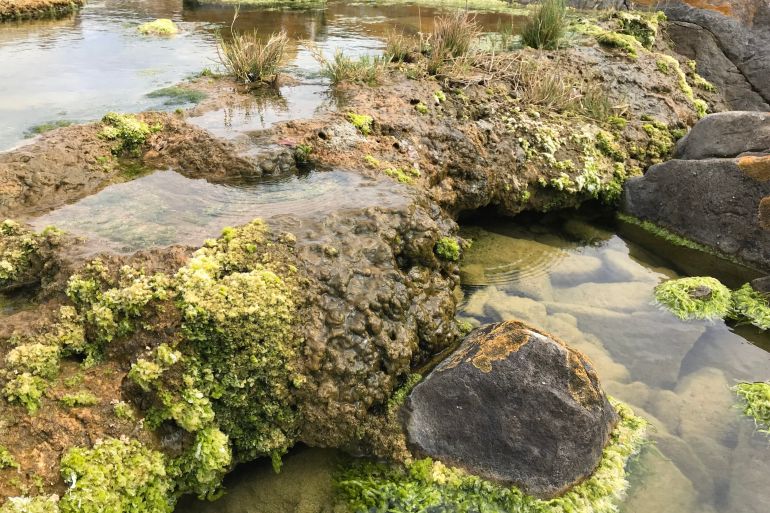
Benghazi, December 13, 2025 – The documentation of the appearance of the White-Faced Whistling Duck (Dendrocygna viduata) in the Kroom Al-Kheil area west of the city of Tobruk is considered a highly significant scientific and environmental event. This marks the first confirmed recording of this species in eastern Libya and the second recording in the country overall.
This sighting, dated August 25, 2025, follows the first documented recording of the species in the city of Misrata in 2022. This suggests a potential expansion in the geographical distribution range of this bird beyond its usual range in sub-Saharan Africa.
The White-Faced Whistling Duck is classified as an intercontinental waterfowl, primarily found in sub-Saharan Africa, Madagascar, the Comoros Islands, as well as parts of Central and South America. Its appearance in North Africa is considered an unusual occurrence with important environmental implications.
While this type of recording is not directly linked to climate change in the scientific paper, it is considered one of the known environmental indicators of the effects of climate change. This is particularly relevant to changes in migration patterns, disruption of traditional bird routes, and the search for new aquatic habitats due to drought or changes in temperature and rainfall.
The availability of aquatic habitats in areas such as Misrata previously and Kroom Al-Kheil currently may be an attractive factor for this bird. This reflects environmental shifts that require follow-up and study. There is a call for relevant authorities to treat these recordings as early warning indicators of environmental changes in Libya.
It is emphasized that it is important to enhance environmental monitoring programs, protect aquatic habitats, and integrate the results of field scientific research, especially bird studies, into the plans and strategies of bodies concerned with the environment and climate change. This is to ensure a comprehensive and sustainable assessment of accelerating environmental impacts.
Benghazi
Benghazi is a major city in eastern Libya, historically significant as a center of trade and culture since its founding as the ancient Greek colony of Euesperides. In modern times, it played a pivotal role as a hub of the 2011 Libyan revolution against Muammar Gaddafi.
Kroom Al-Kheil
Kroom Al-Kheil is a traditional horse festival celebrated by the Shammar tribe in the Hail region of Saudi Arabia. Its history is rooted in ancient Bedouin culture, serving as a gathering to showcase prized Arabian horses, equestrian skills, and tribal heritage. The event reinforces social bonds and preserves the region’s deep historical connection to horsemanship.
Tobruk
Tobruk is a port city in eastern Libya, historically significant for its natural harbor. It gained prominence during World War II when it was the site of a prolonged siege, with Allied forces holding out against German and Italian troops from 1941 to 1942. The city remains an important cultural and economic center in the region.
Libya
Libya is a North African country with a rich history rooted in ancient civilizations like the Phoenicians and Romans, followed by centuries of Arab and Ottoman influence. In the modern era, it was an Italian colony before gaining independence in 1951, later becoming known for Muammar Gaddafi’s lengthy rule from 1969 until the 2011 revolution. The country is home to UNESCO World Heritage sites, such as the ruins of Leptis Magna, which showcase its significant classical past.
Misrata
Misrata is a major port city on the Mediterranean coast of northwestern Libya, historically known as a key trading and commercial center since at least the 7th century. It gained significant modern prominence for its pivotal and prolonged resistance against siege during the 2011 Libyan Civil War, which cemented its role as a major economic and political force in post-Gaddafi Libya.
sub-Saharan Africa
Sub-Saharan Africa is a vast geographic region encompassing all African countries located fully or partially south of the Sahara Desert. Its history is profoundly deep, being the birthplace of humanity and home to numerous powerful pre-colonial kingdoms and empires, such as Mali and Great Zimbabwe. The region’s modern history was heavily shaped by the transatlantic slave trade and the later era of European colonization.
Madagascar
Madagascar is an island nation off the southeastern coast of Africa, renowned for its unique biodiversity and distinct ecosystems that evolved in isolation. Its human history includes settlement by Austronesian peoples around 350 BCE, later forming kingdoms like the Merina, before becoming a French colony in the late 19th century and gaining independence in 1960.
Comoros Islands
The Comoros Islands are a volcanic archipelago in the Indian Ocean, with a history shaped by a blend of African, Arab, and French influences. Historically a hub for trade and sultanates, the islands were a French colony before gaining independence in 1975. Today, the Union of the Comoros is known for its diverse culture and is often called the “Perfume Islands” due to its production of ylang-ylang and spices.
Central America
Central America is a cultural and geographic region connecting North and South America, historically home to advanced indigenous civilizations like the Maya before Spanish colonization in the 16th century. It gained independence in the early 19th century and today comprises seven nations, known for their rich biodiversity and blended mestizo culture.
South America
South America is a continent of diverse landscapes and cultures, with a history shaped by ancient civilizations like the Inca, European colonization primarily by Spain and Portugal, and subsequent waves of independence in the 19th century. Its cultural sites range from the ruins of Machu Picchu in Peru to the historic colonial centers of cities like Cartagena, Colombia, and Salvador, Brazil.
North Africa
North Africa is a region encompassing countries along the Mediterranean coast and the Sahara Desert, historically home to ancient civilizations like the Egyptians, Carthaginians, and Numidians. It later became a major part of the Islamic world following the Arab conquests in the 7th century, profoundly shaping its cultural and architectural heritage. The area’s history also includes periods of Ottoman rule and European colonization before the emergence of modern nation-states.