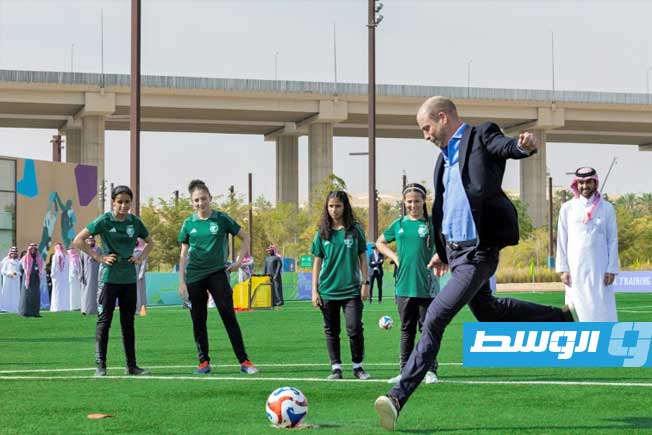
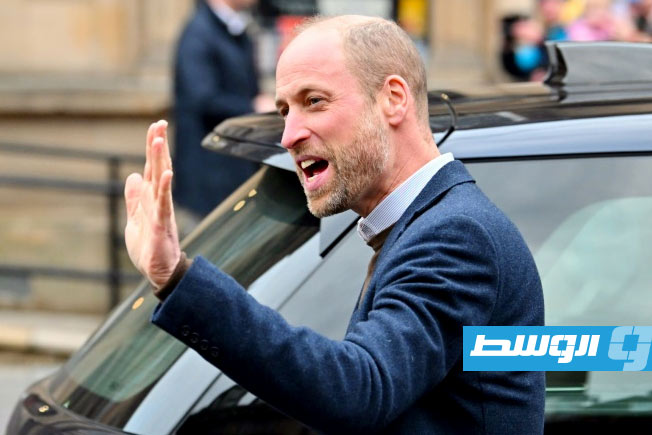
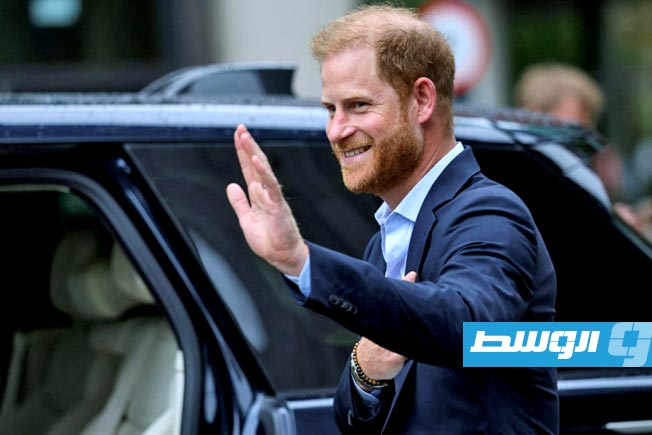
British Crown Prince William concludes his visit to Saudi Arabia this Wednesday with a tour of the historic city of AlUla in the northwest of the Kingdom, where he will visit a nature reserve and learn about environmental conservation projects.
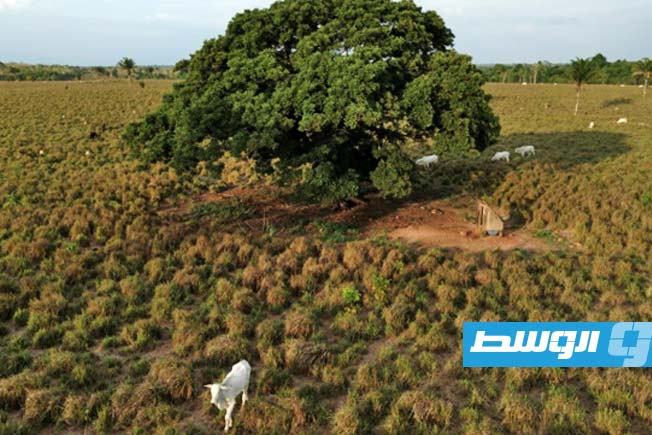
The Prince of Wales, known for his strong environmental commitment, will meet rangers working to protect wildlife in the region, review land reclamation programs, and also meet local farmers involved in sustainable agriculture projects.
Ancient Nabatean Tombs
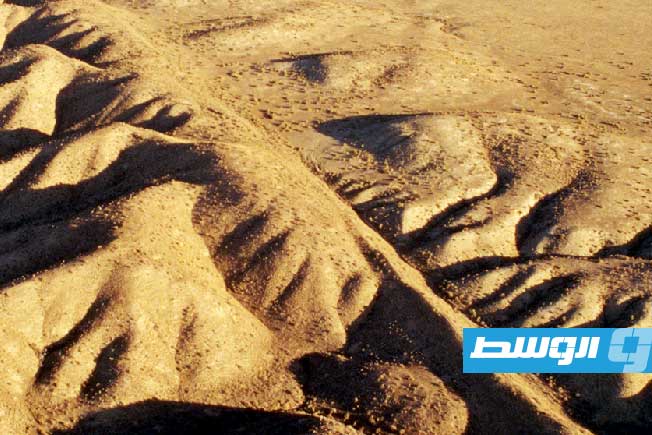
AlUla is home to the ‘Hegra’ archaeological site, listed as a UNESCO World Heritage site, famous for its ancient Nabatean tombs scattered among its mountains and rocky sandstone valleys. For years, Saudi authorities have been working on a project to establish AlUla as a high-end destination for luxury-seeking tourists and art exhibitions.
On a broader scale, the authorities aim to transform Saudi Arabia into a tourist hub as part of the economic and social reform agenda ‘Vision 2030’, led by Crown Prince Mohammed bin Salman, the de facto ruler of Saudi Arabia, the world’s largest crude oil exporter.
– Prince William participates in an e-sports event in Saudi Arabia
– Saudi Arabia issues passports for millions of camels to enhance transparency and protect owners’ rights
Friendly relations have long existed between the Saudi and British royal families. Saudi Arabia is one of Britain’s key partners in the Gulf; the late Queen Elizabeth II received members of the Saudi royal family during four official visits.
King Charles III was the last senior member of the British royal family to officially visit Riyadh, when he was Prince of Wales in February 2014.
Prince William
Prince William is a county in the U.S. state of Virginia, part of the Washington, D.C. metropolitan area. Historically, it was formed in 1731 and named for Prince William, Duke of Cumberland, the third son of King George II. The county is home to significant sites like the Manassas National Battlefield Park, which preserves the location of two major Civil War battles.
Saudi Arabia
Saudi Arabia is a Middle Eastern nation and the birthplace of Islam, home to the religion’s two holiest cities, Mecca and Medina. It was founded as a modern state in 1932 by King Abdulaziz Al Saud, unifying various tribes and regions under a monarchy that continues today. The country’s history and culture are deeply intertwined with its vast oil reserves, discovered in 1938, which transformed its economy and global influence.
AlUla
AlUla is an ancient archaeological site in northwestern Saudi Arabia, historically a significant crossroads for trade and cultural exchange. It is most famous for Hegra (Madain Salih), a UNESCO World Heritage Site featuring over 100 well-preserved Nabataean tombs carved into sandstone outcrops, dating back to the 1st century CE. The broader area also contains evidence of earlier Dadanite and Lihyanite kingdoms, making it a location of profound historical layering.
nature reserve
A nature reserve is a protected area of land designated to conserve wildlife, flora, and natural ecosystems. Its history often involves formal legal protection to prevent development, pollution, or exploitation, stemming from conservation movements that gained significant momentum in the 19th and 20th centuries. These areas serve as crucial sanctuaries for biodiversity and for scientific study.
historic city of AlUla
The historic city of AlUla in northwestern Saudi Arabia is a vast archaeological region that was a crucial crossroads for ancient trade and cultural exchange. Its most famous site is Hegra (Al-Hijr), a Nabataean city with over 100 monumental rock-cut tombs that was the southern capital of the Nabataean Kingdom and Saudi Arabia’s first UNESCO World Heritage Site.
Kingdom
The term “Kingdom” is too broad for a specific summary, as it could refer to many historical or modern nations. For example, the United Kingdom is a sovereign state formed in 1707, while ancient kingdoms like the Kingdom of Kush in Nubia date back over 4,000 years. A more precise name would allow for a concise historical and cultural description.
Prince of Wales
The Prince of Wales is a title traditionally granted to the male heir apparent to the British throne, originating in the 13th century after King Edward I’s conquest of Wales. It symbolizes the union of Wales with the Kingdom of England and is not associated with a specific physical location.
Ancient Nabatean Tombs
The Ancient Nabatean Tombs are monumental rock-cut burial structures carved into sandstone cliffs, most famously at the city of Petra in modern-day Jordan. They were constructed by the Nabatean civilization, a prosperous trading society, primarily between the 1st century BC and the 1st century AD. These elaborate facades, such as the iconic Treasury (Al-Khazneh), reflect a blend of Hellenistic, Egyptian, and native architectural styles, serving as tombs for the Nabatean elite.
Hegra
Hegra, also known as Al-Hijr or Mada’in Salih, is an archaeological site in northwestern Saudi Arabia that was the southern capital of the Nabatean Kingdom. It features over 100 well-preserved monumental tombs with elaborate facades carved directly into sandstone outcrops, dating primarily from the 1st century BCE to the 1st century CE. The site, which was a major trading hub, was the first location in Saudi Arabia to be inscribed as a UNESCO World Heritage Site in 2008.
UNESCO World Heritage site
A UNESCO World Heritage site is a landmark or area selected by the United Nations Educational, Scientific and Cultural Organization for having cultural, historical, scientific, or other form of significance. These sites are legally protected by international treaties for their outstanding value to humanity, with many representing ancient civilizations, unique natural phenomena, or masterpieces of human creative genius. The World Heritage program was formally established in 1972 to identify and preserve the world’s most irreplaceable treasures for future generations.
Saudi authorities
Saudi authorities refer to the governing bodies of the Kingdom of Saudi Arabia, which is an absolute monarchy. The modern state was founded in 1932 by King Abdulaziz Al Saud, and its authorities derive their power from the Quran, the Sunnah, and the country’s Basic Law of Governance.
Vision 2030
Vision 2030 is a strategic framework and national transformation program launched by Saudi Arabia in 2016 to diversify its economy and reduce its dependence on oil. The plan outlines ambitious goals across economic, social, and cultural sectors, aiming to position the country as a global investment powerhouse and a hub connecting three continents.
Crown Prince Mohammed bin Salman
Crown Prince Mohammed bin Salman is the de facto ruler of Saudi Arabia, serving as the kingdom’s Prime Minister and heir to the throne. He is the architect of the ambitious “Vision 2030” plan, which aims to diversify the nation’s economy and modernize its society, marking a significant shift from its traditional oil dependency and conservative social norms.
Saudi and British royal families
The Saudi and British royal families represent two distinct monarchies with differing historical and political roles. The House of Saud has ruled parts of the Arabian Peninsula since the 18th century, formally establishing the Kingdom of Saudi Arabia in 1932, while the British monarchy, with roots dating back over a thousand years, is a constitutional monarchy with largely ceremonial duties today. Their interactions have primarily been shaped by diplomatic and strategic interests, particularly around energy and regional stability in the modern era.
Britain
Britain is a sovereign island nation in northwestern Europe with a rich history spanning millennia, including Roman settlement, the formation of the medieval kingdoms of England and Scotland, and the growth of the vast British Empire. Its cultural and political influence has been profoundly shaped by events such as the Magna Carta, the Industrial Revolution, and its role in both World Wars. Today, it is a constitutional monarchy comprising England, Scotland, Wales, and Northern Ireland, known for its parliamentary democracy and global cultural impact.
Gulf
The Gulf, most commonly referring to the Persian Gulf (or Arabian Gulf), is a mediterranean sea in Western Asia with a history as a vital trade route for ancient Mesopotamian, Persian, and Arab civilizations. Its strategic and economic importance, centered on the petroleum industry, has made it a region of profound global significance in the modern era.
Queen Elizabeth II
Queen Elizabeth II was the longest-reigning British monarch, serving from 1952 until her death in 2022. Her reign spanned a period of significant social change and the transformation of the British Empire into the Commonwealth.
Saudi royal family
The House of Saud is the ruling royal family of Saudi Arabia, which traces its origins to the 18th-century alliance between Muhammad ibn Saud and the religious reformer Muhammad ibn Abd al-Wahhab. The modern Kingdom of Saudi Arabia was formally established in 1932 by King Abdulaziz Al Saud, who unified the regions of the Arabian Peninsula through a series of conquests. The family continues to rule the kingdom, with its members holding key positions in government and its leadership passing through a line of Abdulaziz’s sons.
King Charles III
King Charles III is the current monarch of the United Kingdom and 14 other Commonwealth realms, ascending to the throne on September 8, 2022, following the death of his mother, Queen Elizabeth II. His coronation ceremony took place at Westminster Abbey on May 6, 2023.
Riyadh
Riyadh is the capital and largest city of Saudi Arabia, historically a walled oasis town and the historic seat of the Al Saud dynasty. Its modern transformation began after it was established as the national capital in 1932, fueled by the nation’s oil wealth, and it has since grown into a major global metropolis and financial hub.