In the seminal essay “Supernatural Horror in Literature” published in 1927, one of the founding fathers of modern horror literature states: “The oldest and strongest emotion of mankind is fear, and the oldest kind of fear is fear of the unknown. This fear does not stem from a visible beast, but from the breaking of the laws of the familiar world, when the mind realizes that what it thought was fixed is not so, and that behind reality lie layers the human mind cannot comprehend.”
This theory became the magic key for horror novelists in both the Western and Arab worlds. The greatest challenge remained finding the right doorway to create terrifying characters and events capable of arousing fear to the point of horror in the reader’s mind.
Horror and thrill are like a tranquilizer dart; they either hit their target precisely or fall without effect. In the Arab world, a horror novelist faces a significant challenge: to be a skilled marksman with cunning and imagination, because they target an audience that has experienced real horror—not imaginary—in wars, massacres, and colonial crimes over decades.
Jinn, the Hero of Horror in Arab Memory
It is not easy to trace the history of horror novels in Arabic literature in the early Islamic period or before, especially since history in that era was mostly oral. However, a bundle of tales about jinn and ghouls of various kinds can be found in books of biography and history from the early Islamic centuries, which speak of myths whose heroes are jinn.
The term “superstition” (khurafa) among Arabs has been closely linked since ancient times to tales of the jinn, that supernatural being in time and space with the ability to perpetrate evil according to the Arab collective consciousness.
The origin of the word “khurafa” is attributed, according to tradition, to a man’s name. It is mentioned in the book “The Good Companion” that Aisha, may God be pleased with her, said: The Messenger of God, peace be upon him, once told his wives a story at night. One of them said, “O Messenger of God, this is a tale of Khurafa.” He said, “Do you know what Khurafa is? Khurafa was a man from the tribe of ‘Udhra whom the jinn captured. He remained with them for an age, then they returned him to humankind. He would tell people about the wonders he saw among them, so people said: ‘a tale of Khurafa.'”
The tales transmitted about jinn represent the nucleus of Arabic horror literature, even though these narratives do not carry the modern concept of this literary genre.
It is said: “Arab writers, Egyptians in particular, who specialize in writing horror or fantasy, borrow many ideas and themes from Western works in their writings. This, of course, is not wrong, but many of them may not know that Arab heritage is filled to the brim with terrifying horror themes that could constitute a qualitative leap in the field of horror and fantasy literature if properly utilized.
Arabs had many tales and superstitions about jinn preserved for us in books of history and literature. The Arabized Arabs passed down tales of jinn they received from the original Arabs, who in turn were influenced by what reached them from Persian, Indian, and Aryan cultures.”
The Arab mind weaves imagined images of jinn, ghouls, and other strange characters, in exaggerated formulations that amplify their presence and imbue them with shades of the supernatural.
A research paper titled “Jinn in Arabic Literature” states: “The behavior of jinn in tales does not differ from the behavior of humans. The narrative methods used by storytellers when dealing with human news are the same ones used to treat jinn stories.
They resemble humans in their whims, tendencies, and impulses. They hate and love, resent and sympathize, plot and assist, achieve their goals until the tale ends. It is as
Supernatural Horror in Literature
“Supernatural Horror in Literature” is not a physical place but a significant literary genre and cultural concept. Its history is often traced to Gothic fiction of the 18th century, with seminal works like *The Castle of Otranto*, and it evolved through authors like Edgar Allan Poe and H.P. Lovecraft to explore themes of the unknown and cosmic dread.
Arab world
The Arab world refers to the 22 countries and territories where Arabic is the primary language, spanning from North Africa to Western Asia. Its history is deeply rooted in the rise of Islam in the 7th century, which facilitated the spread of the Arabic language and culture, leading to a shared heritage despite modern political diversity. This shared identity is based on linguistic, cultural, and historical ties rather than a single political entity.
Western world
The term “Western world” broadly refers to nations and cultures whose history is heavily derived from European civilization, often rooted in Greco-Roman antiquity and the spread of Christianity. Its modern identity was shaped by the Renaissance, the Enlightenment, and the era of colonialism, which spread its political, economic, and cultural influence globally. Today, it is often associated with liberal democracy, capitalism, and a set of shared philosophical and cultural traditions.
Arab Memory
“Arab Memory” is a digital cultural initiative focused on preserving and promoting the diverse heritage of the Arab world through archives of documents, photographs, and oral histories. It serves as a collective repository to safeguard historical and cultural narratives that might otherwise be lost, reflecting the region’s rich and complex past.
Arabic literature
Arabic literature encompasses the written and oral works produced in the Arabic language, with a history spanning from the 6th-century pre-Islamic poetry to the present day. Its classical Golden Age during the Abbasid Caliphate saw major advancements in poetry, philosophy, and science, while modern literature continues to evolve with contemporary themes and global influence.
Islamic period
The Islamic period refers to the era following the spread of Islam from the 7th century onward, which profoundly shaped the political, cultural, and architectural landscape across the Middle East, North Africa, and beyond. This period saw the rise of powerful caliphates, the flourishing of science and art, and the construction of iconic sites like the Dome of the Rock and the Alhambra.
Aisha
Aisha is a common Arabic feminine name meaning “alive” or “living,” and it is most famously borne by Aisha bint Abi Bakr, a wife of the Prophet Muhammad and a prominent figure in early Islamic history. She was a scholar and political leader, playing a significant role in the events following Muhammad’s death, including the First Fitna (civil war).
Messenger of God
“Messenger of God” is a 2015 Iranian religious epic film directed by Majid Majidi, chronicling the early life of the Islamic prophet Muhammad. The film focuses on his childhood and the period leading up to his first revelation, produced with the endorsement of Iranian religious authorities.
Khurafa
Khurafa is a village in Saudi Arabia’s Asir Province, historically known for its distinctive mud-brick architecture built on mountain ridges. It is part of the Rijal Almaa region, a cultural area recognized by UNESCO for its heritage and traditional building methods.
Udhra
Udhra refers to an ancient Arab tribe historically centered in the northern Hijaz region, known in pre-Islamic and early Islamic history. The tribe is particularly famous in Arabic literature and lore for its association with the theme of idealized, chaste love, most notably through the legendary poet Jamil ibn Ma’mar and his love for Buthayna.
Egyptians
The ancient Egyptians established one of the world’s earliest and most influential civilizations along the Nile River, renowned for its monumental architecture like the pyramids and its complex religious beliefs. Their history spans over 3,000 years, from the unification of Upper and Lower Egypt around 3100 BCE through periods of great pharaonic power, decline, and eventual incorporation into the Roman Empire.
Persian
The term “Persian” broadly refers to the culture, language, and historical empires originating in Persia, modern-day Iran. Its rich history spans millennia, from the ancient Achaemenid Empire founded by Cyrus the Great to the influential Safavid and Qajar dynasties. This heritage is reflected in iconic sites like Persepolis and in enduring contributions to art, literature, and architecture.
Indian
“Indian” is a broad term that typically refers to the culture, history, and people of India, a country in South Asia with one of the world’s oldest civilizations. Its rich history spans thousands of years, from the ancient Indus Valley Civilization through the Vedic age, various empires, Mughal rule, and British colonization, leading to its independence in 1947. Today, it is renowned for its profound cultural diversity, including numerous languages, religions, festivals, and architectural wonders like the Taj Mahal.
Aryan
“Aryan” is not a specific place or cultural site, but a historical linguistic and ethnic term that originally referred to Indo-Iranian peoples. It was infamously misappropriated and distorted by Nazi ideology in the 20th century to construct a pseudoscientific racial category. Today, its historical academic use is largely separate from this modern, harmful association.
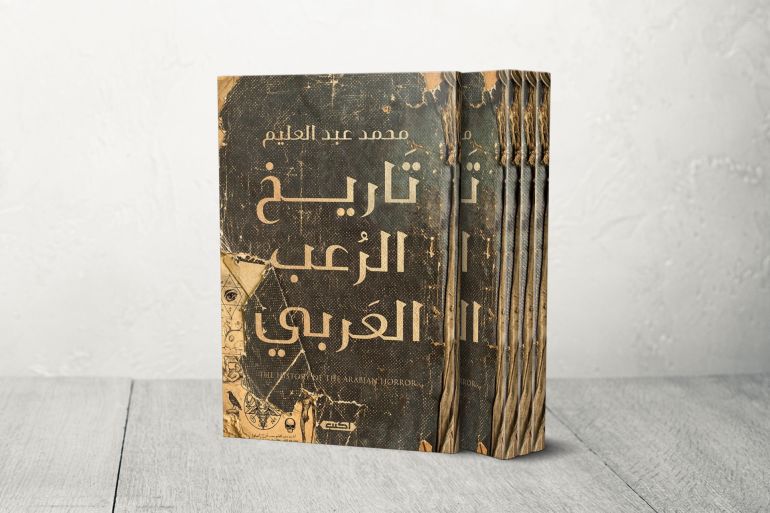
History of Arab Horror
“History of Arab Horror” is not a physical place or cultural site, but a term referring to the study and exploration of horror themes within Arab literature, folklore, and cinema. This field examines historical and cultural narratives, often rooted in regional myths and societal anxieties, that have evolved into a distinct genre. It traces the development of these stories from traditional oral tales to modern film and literature.
Jinn in Arabic Literature
“Jinn in Arabic Literature” refers to the rich tradition of supernatural beings known as jinn within the literary heritage of the Arab world. These figures, rooted in pre-Islamic Arabian mythology and later codified in the Quran, appear across genres—from classical poetry and *The Thousand and One Nights* to modern novels—often serving as metaphors for human desires, the unknown, or societal critiques. Their portrayal has evolved over centuries, reflecting changing cultural, religious, and philosophical contexts.