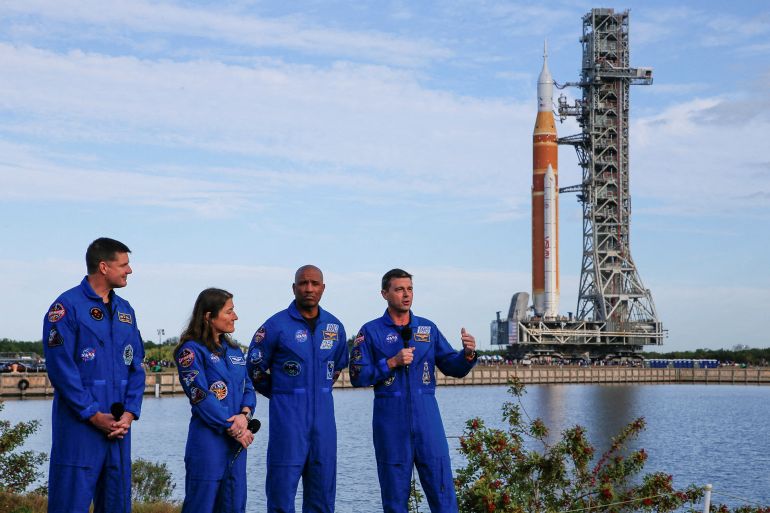
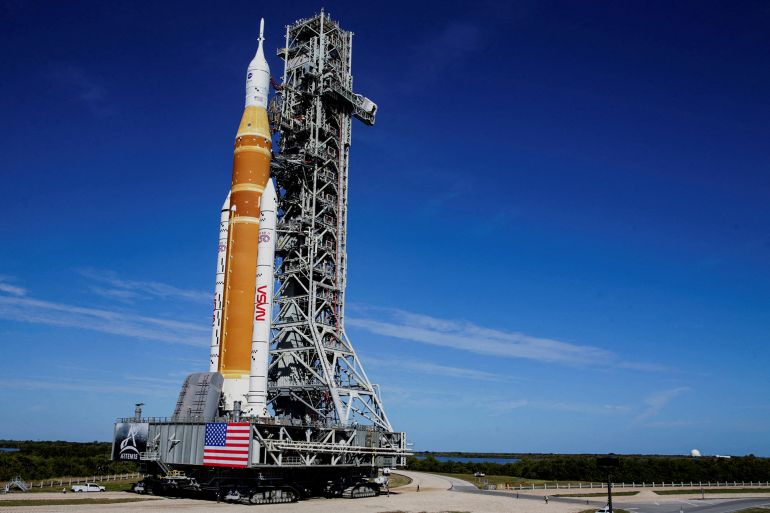
NASA has taken a crucial step toward returning humans to the vicinity of the Moon, moving its giant Space Launch System (SLS) rocket to the launch pad at the Kennedy Space Center in Florida, marking the start of the final phase of preparations for the Artemis II mission.
The rocket, which stands about 98 meters tall, moved at a very slow speed not exceeding 1.6 kilometers per hour on its mobile launcher, covering a distance of four kilometers from the massive Vehicle Assembly Building to the launch pad, under the watch of hundreds of the agency’s engineers and staff.
First Crew to Orbit the Moon
The “Artemis II” mission is the second flight in the Artemis program, but it is the first to carry astronauts since the “Apollo 17” mission in 1972.
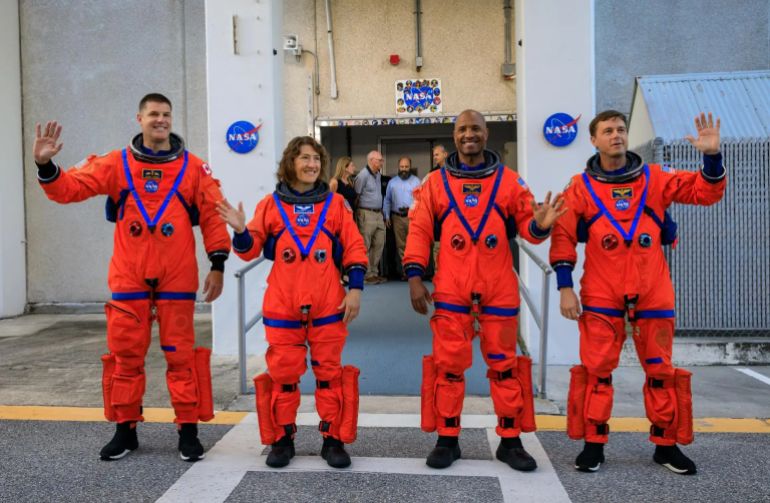
Four astronauts, three Americans and one Canadian, will undertake a 10-day journey during which they will orbit the Moon before returning to Earth, reaching the farthest distance humans have traveled in space to date.
NASA is currently targeting February 6, 2026, as the earliest possible launch date. However, this date remains contingent on the success of a critical test known as the “wet dress rehearsal,” a full simulation of the countdown process that includes fueling the rocket, conducted four days before the scheduled date.
The launch management confirms that this test is essential for detecting any potential technical issues, and reviewing its data may require several days before giving the final go-ahead.
The crew of the manned “Artemis 2” spacecraft to the Moon.
In addition to technical challenges, the Artemis II schedule faces congestion with other space missions. Preparations for the mission coincide with the launch of Crew-12, a routine astronaut flight to the International Space Station, whose date was moved up due to the early return of a previous crew following a medical emergency.
This overlap of missions puts pressure on human and technical resources, which may prompt NASA to postpone the launch to a later time.
Alternative Launch Dates
NASA has three potential launch windows extending until April:
From February 6 to April 11.
From March 3 to March 11.
Artemis II
Artemis II is NASA’s upcoming crewed mission, planned for September 2025, which aims to send four astronauts on a lunar flyby without landing. It is a critical step in the Artemis program, building on the uncrewed Artemis I test flight to return humans to the Moon for the first time since 1972.
Space Launch System
The Space Launch System (SLS) is NASA’s super heavy-lift launch vehicle, developed to enable human exploration beyond Earth orbit, including planned missions to the Moon. Its core stage design and RS-25 engines are derived from the Space Shuttle program, representing a continuation of legacy technology for deep space objectives.
Orion crew capsule
The Orion crew capsule is NASA’s next-generation spacecraft designed for deep-space exploration, including future missions to the Moon and Mars. Its development, part of the Artemis program, builds upon legacy spacecraft designs and was first launched uncrewed in 2014 for a test flight.
Kennedy Space Center
The Kennedy Space Center, located on Florida’s Merritt Island, is NASA’s primary launch center for human spaceflight, established in 1962. It was the launch site for the Apollo missions to the Moon, including Apollo 11, and continues to support launches for the Space Shuttle program and modern commercial and exploration missions.
Cape Canaveral
Cape Canaveral is a prominent cape on Florida’s Atlantic coast, most famous as the primary launch site for American spaceflight. Its history in rocketry began in the late 1940s, and it became the launch complex for NASA’s Mercury, Gemini, Apollo, and Space Shuttle programs. Today, it serves as a major spaceport for both government (NASA) and commercial space launches.
Florida
Florida is a southeastern U.S. state known for its extensive coastline, theme parks, and unique Everglades ecosystem. It was first colonized by Spain in the 16th century, changed hands between Spain and Britain, and became a U.S. territory in 1821 before achieving statehood in 1845. Its history is deeply shaped by its indigenous peoples, Spanish colonial legacy, and later development as a major tourist destination.
Moon
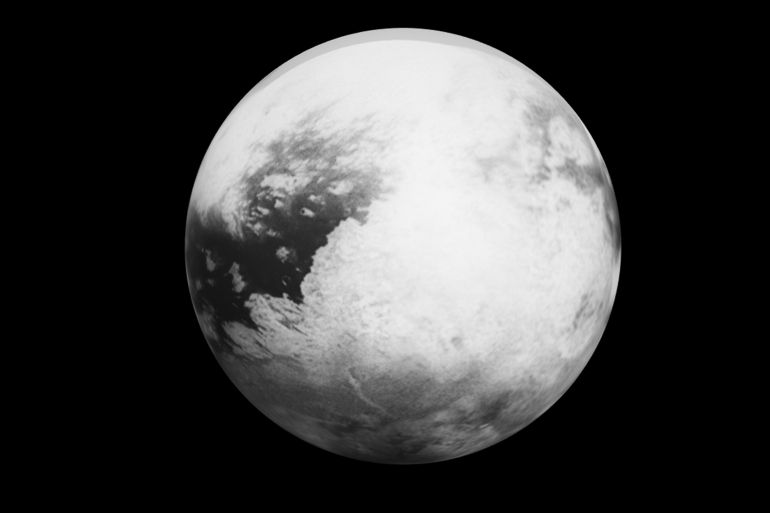
The Moon is Earth’s only natural satellite, formed approximately 4.5 billion years ago from debris after a giant impact between Earth and a Mars-sized body. It has been a central object in human mythology, timekeeping, and scientific study throughout history, with the first human landing occurring in 1969 during NASA’s Apollo 11 mission.
Vehicle Assembly Building
The Vehicle Assembly Building (VAB) at NASA’s Kennedy Space Center in Florida is a massive structure originally constructed in the 1960s to assemble large rockets for the Apollo program, including the Saturn V. It was later used for the Space Shuttle program and is currently being prepared for NASA’s Artemis missions to the Moon.
Artemis
The Temple of Artemis, located in Ephesus (modern-day Turkey), was a grand Greek temple dedicated to the goddess Artemis, completed around 550 BCE. It was renowned as one of the Seven Wonders of the Ancient World for its immense size and ornate decoration before being destroyed and rebuilt multiple times, with its final destruction occurring in 401 CE.
Apollo 17
Apollo 17 was the final mission of NASA’s Apollo program, landing humans on the Moon in December 1972. It set records for the longest lunar surface exploration and the largest sample return, with astronauts Eugene Cernan and Harrison Schmitt conducting extensive geological work in the Taurus-Littrow valley.
Earth
Earth is the third planet from the Sun and the only known astronomical object to harbor life, with a geological history spanning over 4.5 billion years. Its surface features diverse ecosystems and has been the cradle for the development of all known human civilizations and cultures.
International Space Station
The International Space Station (ISS) is a habitable artificial satellite in low Earth orbit, representing a multinational collaborative project primarily led by the United States and Russia. Its first module launched in 1998, and it has been continuously occupied by rotating crews since 2000, serving as a microgravity and space environment research laboratory.
Neil Armstrong Operations and Checkout Building
The Neil Armstrong Operations and Checkout Building at NASA’s Kennedy Space Center is a historic facility where spacecraft, including the Apollo command and service modules and the Orion spacecraft, are prepared for flight. Originally called the Manned Spacecraft Operations Building, it was renamed in 2014 to honor the first person to walk on the Moon.
Launch Pad 39B
Launch Pad 39B is a historic rocket launch site at NASA’s Kennedy Space Center in Florida, originally constructed for the Apollo program’s Saturn V rockets. It was later modified for the Space Shuttle and is now a key multi-user launch complex for NASA’s Artemis program, which aims to return humans to the Moon.