A bird’s retina operates almost continuously without oxygen, despite being one of the body’s most energy-consuming tissues. This contrasts with the long-held biological understanding that human neurons cannot withstand oxygen deprivation, according to the results of a new study published on January 21 in the journal “Nature”.
The results showed that retinal cells rely on anaerobic energy production, while a mysterious ancient structure called the “pecten” does not supply them with oxygen as previously thought. Instead, it transports sugar to the retina and removes metabolic waste.
According to the study, this discovery changes an understanding that lasted for centuries and could open new avenues for understanding human tissue damage in conditions of oxygen deficiency, such as strokes.
A Retina Without Blood Vessels
In most animals, neural tissues are nourished by a dense network of tiny blood vessels that deliver oxygen directly to the cells. The retina – as a direct extension of the brain – is no exception; in fact, it is one of the most energy-consuming tissues in the entire body. But birds are different.
“The retinas of birds are completely devoid of blood vessels, a characteristic believed to give them an important visual advantage, as vessels do not obstruct light before it reaches the light-sensitive cells. However, this advantage raises a central question: How does the retina stay alive and function efficiently without oxygen? According to everything we know about physiology, this tissue shouldn’t function at all.”
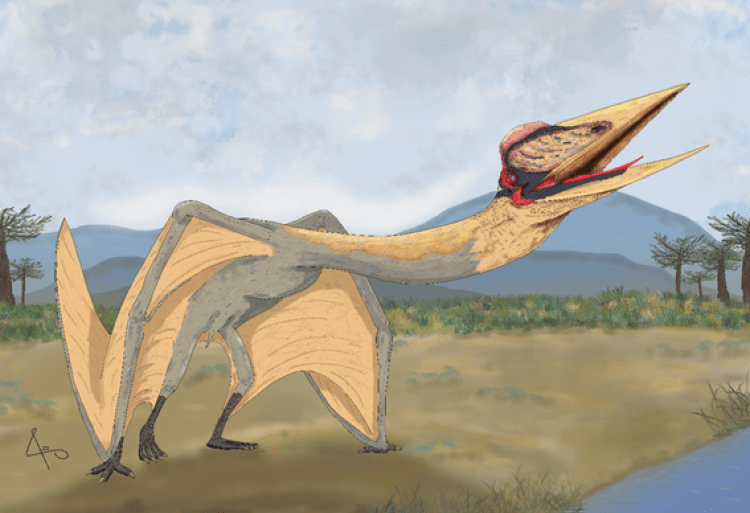
For over 300 years, scientists assumed that a strange structure (rich in blood vessels) inside the bird’s eye, known as the “pecten”, solved the problem and supplied the retina with oxygen.
But this assumption was never directly tested due to the extreme technical difficulty of measuring oxygen levels inside the eye of a living bird without affecting its natural state. After years of work, the team finally succeeded in making these precise measurements.
“The result was surprising: the pecten does not supply the retina with oxygen at all. In fact, about half of the retina operates in a state of chronic oxygen deprivation.”

Where Does the Energy Come From?
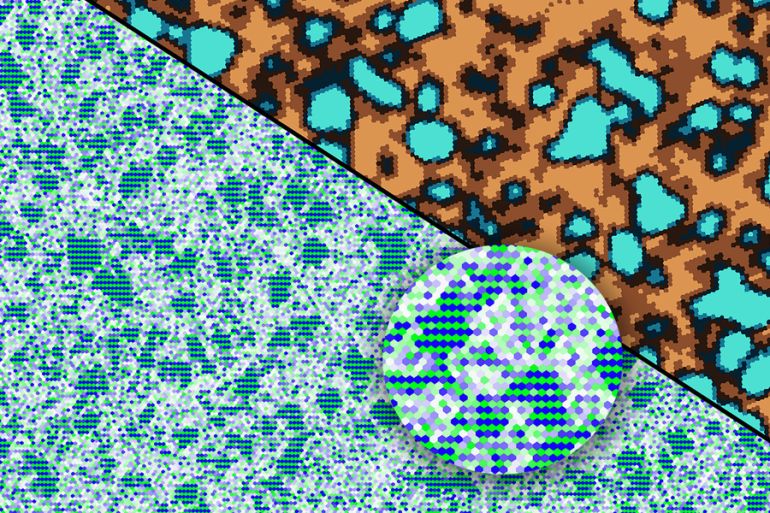
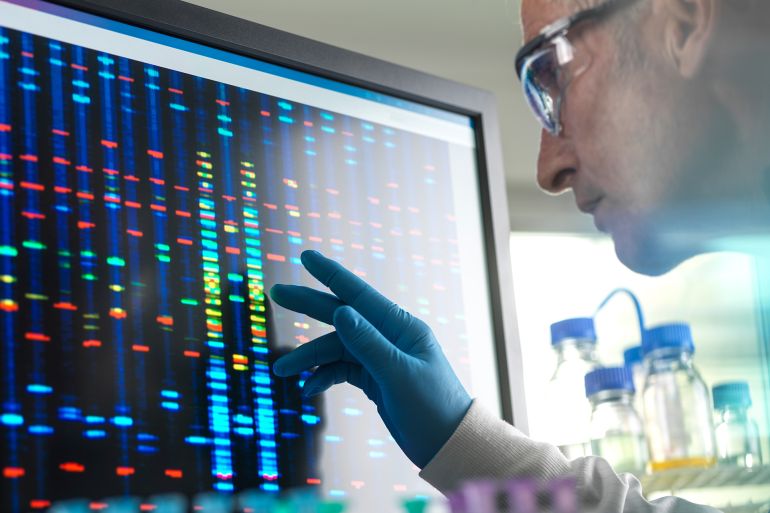
The researchers used an advanced technique known as “spatial transcriptomics,” which allows for precise mapping of gene activity within tissue. The results revealed that the inner layers of the retina rely almost entirely on anaerobic energy production, i.e., breaking down sugar without using oxygen.
The team says this method is much less efficient, producing about 15 times less energy compared to the oxygen-dependent pathway. This raised the most perplexing question: How can a highly energy-consuming tissue rely on such an inefficient system?
This paradox brought the scientists back to the pecten, but with a completely different role. Analyses showed that this structure acts as a nutritional supply station, not an oxygen source. It pumps large amounts of sugar into the retina and, in turn, helps remove the waste produced by anaerobic energy production. In other words, the pecten supplies the retina with fuel, not air.
This discovery “changes an understanding that lasted for centuries.” Science doesn’t just build new knowledge; sometimes it has to completely dismantle old perceptions.
What happens in the bird’s retina is, in a reverse way, similar to what fails in human neural tissue during strokes. The problem is not just a lack of oxygen, but also the accumulation of metabolic waste—waste from the process of converting food into energy, such as carbon dioxide, urea (from proteins), uric acid, salts, and excess water.