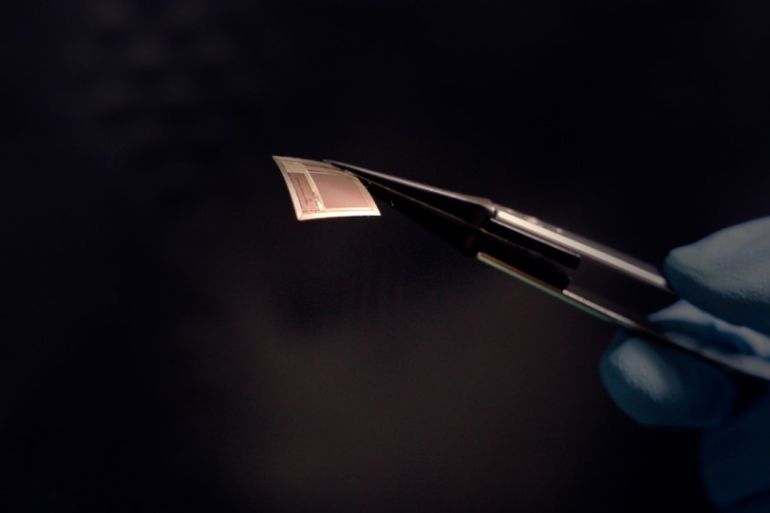
Billionaire Elon Musk announced that his company Neuralink will begin mass production of brain-computer interface devices in 2026, transitioning to fully automated surgical procedures. The goal is to enable paralyzed patients to control devices directly via brain signals.
Musk explained that the company began human trials in 2024 after addressing safety concerns raised by the U.S. Food and Drug Administration. He noted that 12 people worldwide with severe paralysis have used these chips to control digital and physical tools, including video games, internet browsing, and posting on social media.
Neuralink faces strong competition from companies like Synchron, which implanted its first device in a U.S. patient’s brain in 2022, as well as Chinese companies developing the “NEO” chip for wireless control of electronic devices through thought.
Recent experiments have shown that artificial intelligence can accelerate the translation of thoughts into spoken speech in fractions of a second. This addresses the issue of slow response times when controlling speech using neural interfaces and enhances patients’ ability to communicate and control their environment faster and more accurately.
This step is part of Neuralink’s effort to expand its production and advance in the competitive brain chip market, following $650 million in funding secured in June 2025.
Brain-computer interfaces are among the fastest-growing areas of medical technology, aiming to help patients with neurological disabilities regain control functions for devices and connect with the external world.
Neuralink was founded in 2016 with the goal of developing brain chips capable of directly connecting humans to computers. The company has garnered global attention after demonstrating experimental models capable of moving digital devices using thought alone.