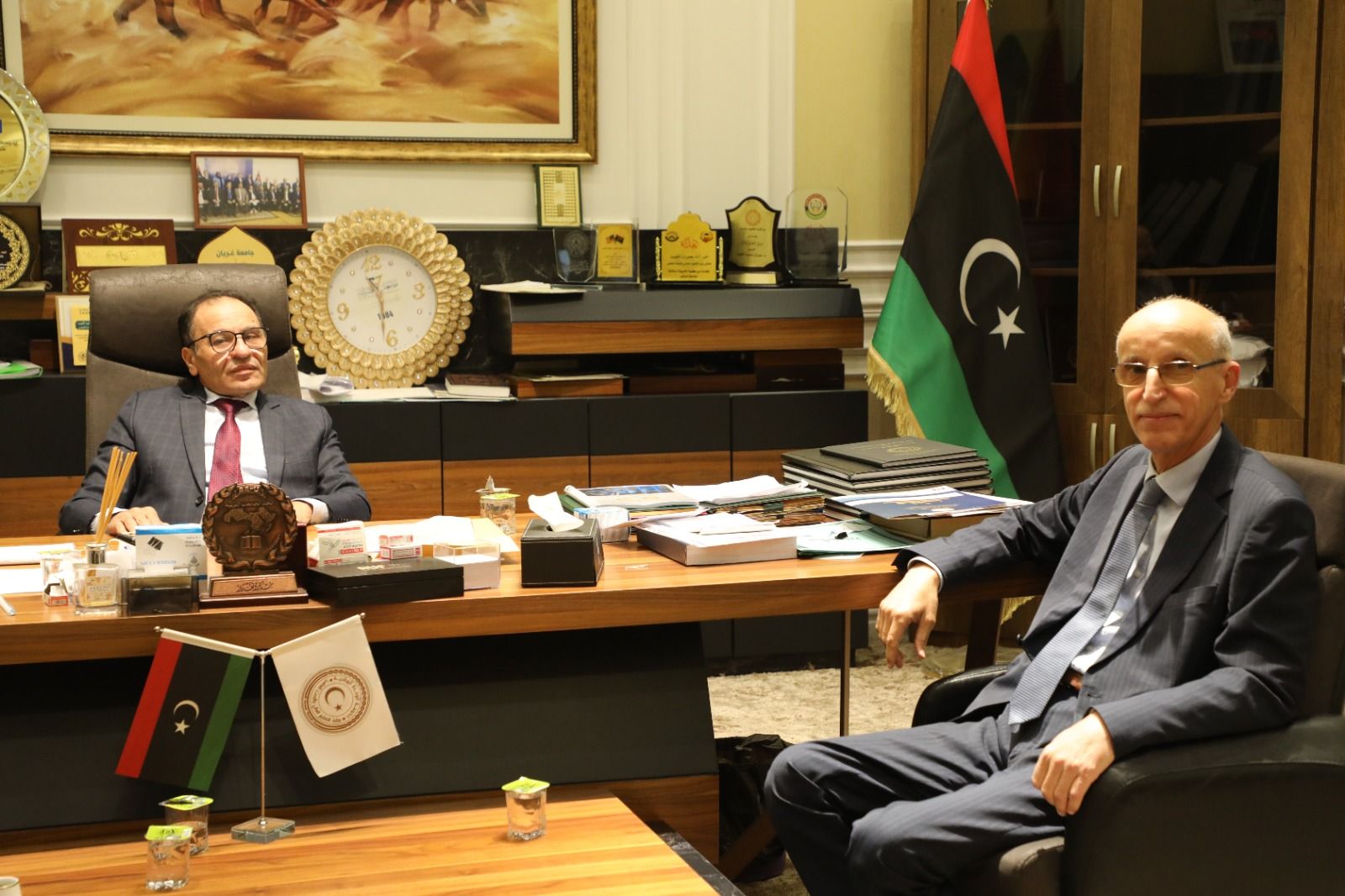
Tripoli, January 5, 2025 – The Minister of Higher Education and Scientific Research discussed today with the President of the University of Tripoli the most prominent challenges facing the educational process at the university and ways to address them in order to contribute to improving the quality of university education.
During the meeting, which was held at the Ministry’s headquarters in Tripoli, the Minister also reviewed a detailed report on the progress of the Arabic language (Al-Dad) and English language exams for applicants to postgraduate programs at the University of Tripoli. The exams were conducted yesterday with the participation of more than 2,270 male and female students, in suitable organizational conditions that reflected the efforts made to ensure the smooth running of the exams and to achieve the principle of equal opportunities among applicants.
The Minister emphasized the importance of these exams in supporting postgraduate pathways and elevating the level of students, appreciating the organizational and administrative efforts made by the University of Tripoli to ensure the exams proceeded according to approved regulations and standards.
…