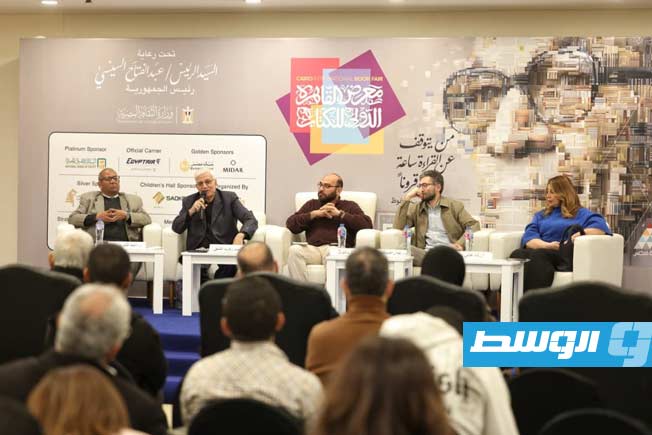
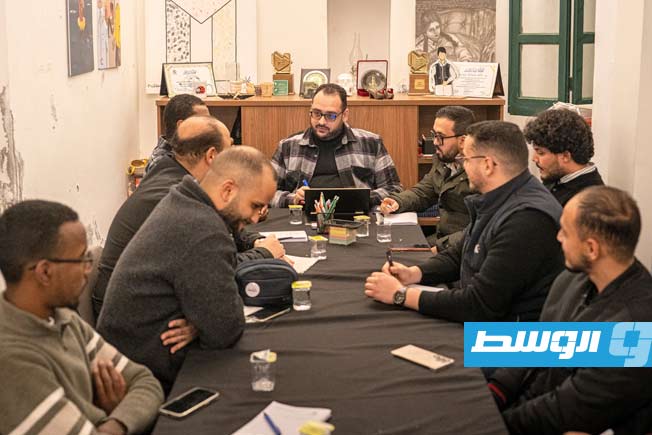
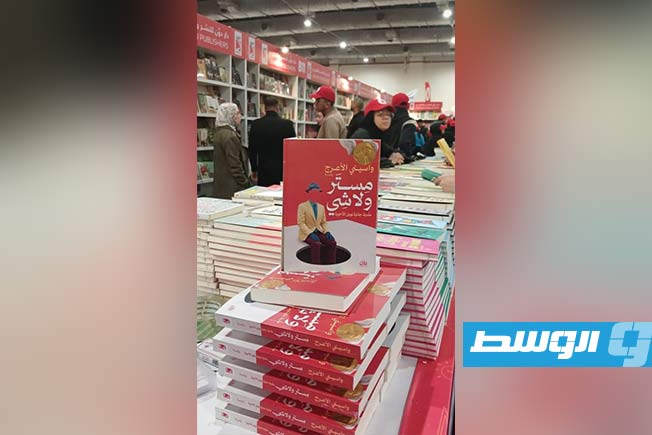
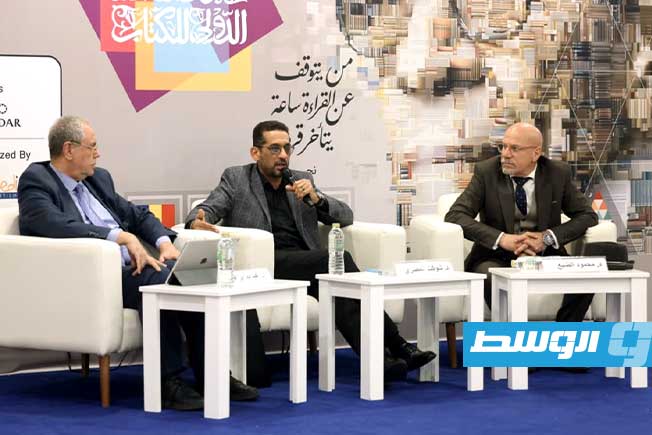
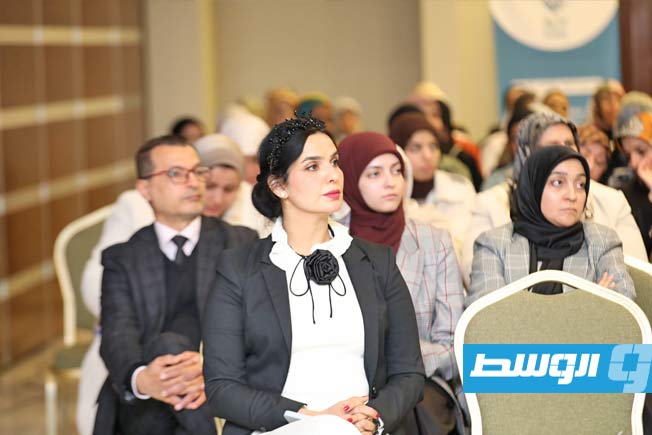
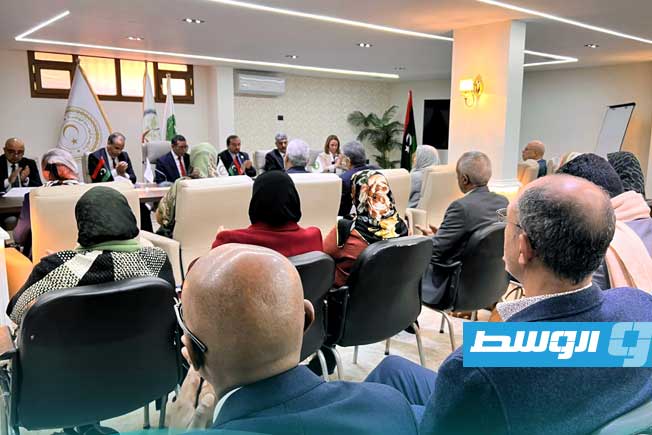
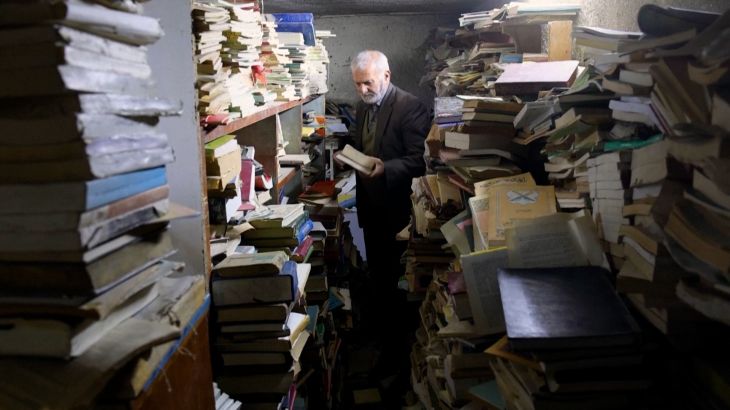
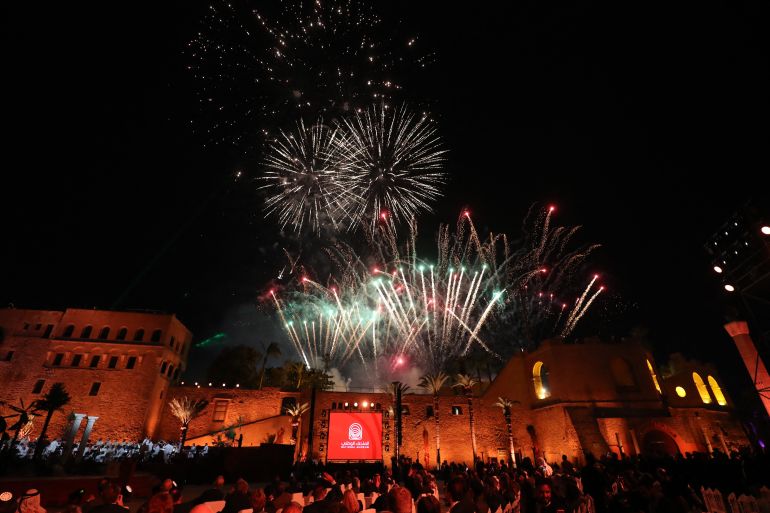
The 57th Cairo International Book Fair hosted a seminar titled “The Novel and History… Political and Social Transformations in Naguib Mahfouz’s Narratives,” as part of the fair’s main theme.
Participants in the seminar affirmed that Mahfouz had a clear passion for historical literature, suggesting that through his writings he sought to inspire people by evoking history.
Characters That Speak History
It was noted that the presence of history in Naguib Mahfouz’s works is, at its core, a presence of time, confirming that all his characters speak through history, whether through satirical dialogue or realistic narrative.
It was added that Mahfouz had genuine questions about history and time, which was reflected in his interest in the flow of the river of time within his novels, where history flows smoothly through the narrative.
It was stated that there is a close relationship between literature and history, explaining that literature emerged from the womb of history. One cannot imagine a writer who has not read history, just as one cannot imagine a historian who has not studied the literature of the period they are writing about.
It was further added that Mahfouz used the novel to chronicle and discuss issues indirectly, before later turning to realism and presenting his views clearly without disguise.
The Impact of Historical Events on Society
It was said that literary works that draw their themes from history present an alternative image of it on social and economic levels, explaining that Naguib Mahfouz attempted to address societal issues through his works.
In an intervention, it was noted that the most prominent feature of Mahfouz’s works is that he does not present history in a dry form; rather, he reflects the impact of historical events on society. It was added that Mahfouz wrote about the marginalized, a fundamental characteristic of his works, mentioning an attempt to follow the same approach in other novels.
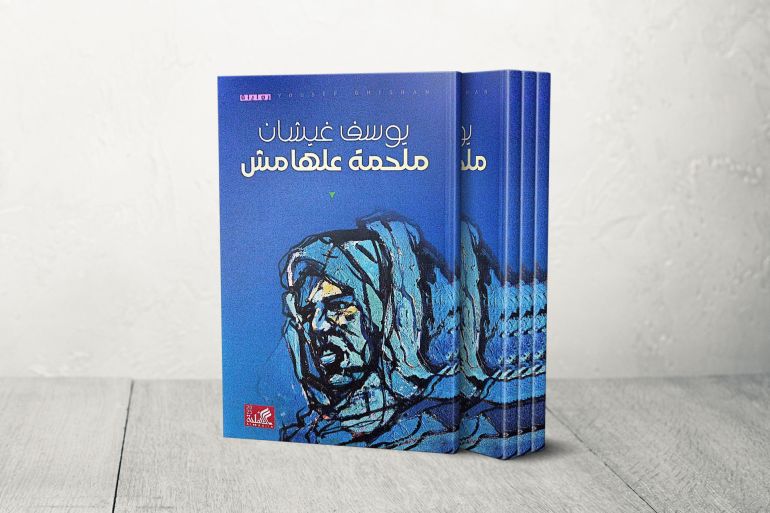
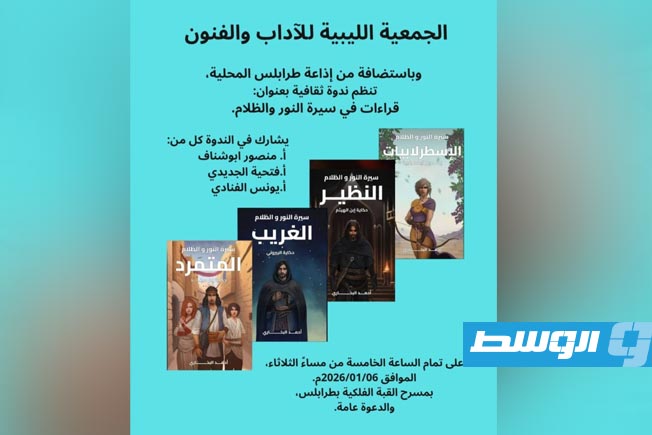
It was affirmed that Naguib Mahfouz’s genius is clearly evident in the novel “Morning and Evening Talk,” even though it does not receive the same attention as “The Cairo Trilogy” and “The Harafish,” explaining that it chronicles a long period of Egypt’s history from the occupation until the 1952 revolution.
Cairo International Book Fair
The Cairo International Book Fair is the largest and oldest book fair in the Arab world, first held in 1969. It is held annually at the Egypt International Exhibition Center and serves as a major cultural event, attracting publishers, authors, and visitors from across the region to promote literature and intellectual exchange.
Naguib Mahfouz
Naguib Mahfouz was a renowned Egyptian novelist and the first Arabic-language writer to win the Nobel Prize in Literature in 1988. He is best known for his “Cairo Trilogy,” which depicts life in Cairo across generations in the 20th century. His extensive body of work, deeply rooted in the social and political landscape of Egypt, has made him a central figure in modern Arabic literature.
Morning and Evening Talk
“Morning and Evening Talk” is a novel by Nobel Prize-winning author Naguib Mahfouz, published in 1987. The story is set in a single Cairo alleyway and uses the intertwined lives of its residents to explore themes of memory, time, and Egyptian society across the 20th century. While not a physical site, the work is a profound cultural landmark of modern Arabic literature, reflecting the nation’s historical transformations through a rich tapestry of personal narratives.
The Cairo Trilogy
“The Cairo Trilogy” is a celebrated series of three novels by Egyptian Nobel laureate Naguib Mahfouz, published between 1956 and 1957. It chronicles the lives of a Cairo family across three generations, from 1917 to 1944, capturing Egypt’s social and political transformations during that period.
The Harafish
“The Harafish” is a novel by Egyptian Nobel laureate Naguib Mahfouz, published in 1977. It is not a physical place but a literary work that chronicles the rise and fall of a family dynasty in a Cairo alley over several generations, using their story as an allegory for societal change and the cyclical nature of power.
Egypt
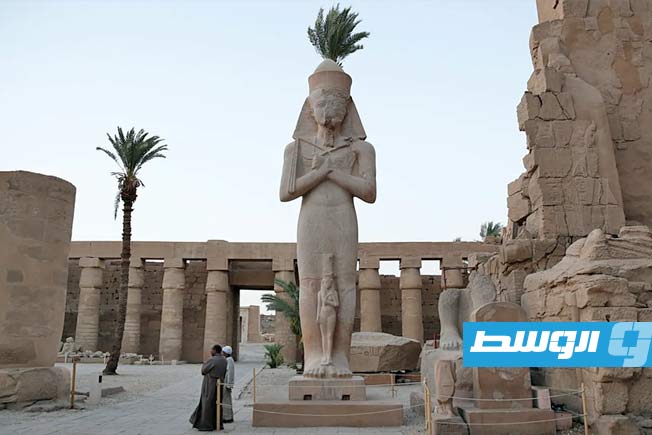
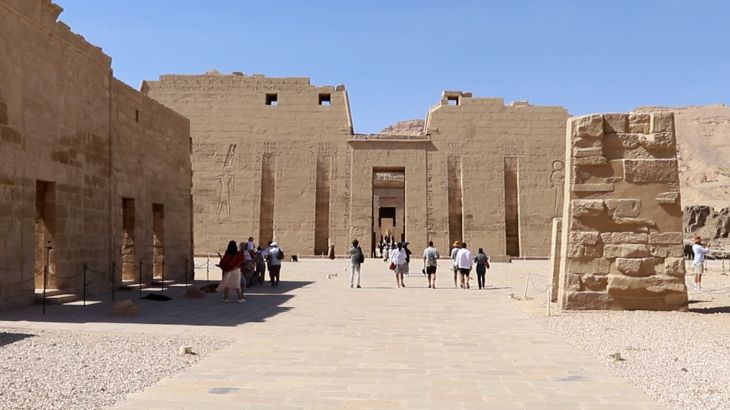
Egypt, home to one of the world’s oldest civilizations, is famed for the ancient pyramids of Giza and the Nile River. Its history spans over 5,000 years, encompassing the era of the pharaohs, Greco-Roman rule, and later Islamic caliphates. Modern Egypt is a cultural and political hub in the Arab world, with its rich heritage centered in cities like Cairo and Luxor.
1952 revolution
The 1952 Revolution, also known as the July 23 Revolution, was a military coup in Egypt led by the Free Officers Movement, which overthrew King Farouk I. It marked the end of the monarchy and British colonial influence, establishing a republic and paving the way for Gamal Abdel Nasser’s rise to power.