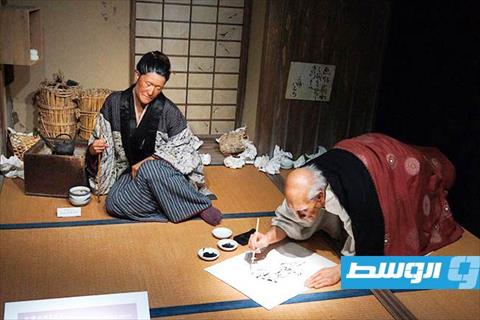
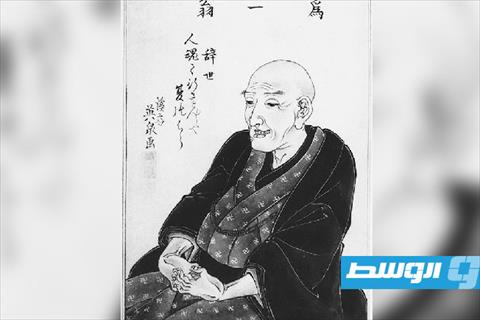
The great Japanese artist Katsushika Hokusai (1760–1849) may have cleverly pointed out, nearly two centuries ago, the fact that an artist’s success depends on their ability to innovate. A year before his passing, he said: “If heaven had granted me ten more years, or even five, I would have become a true artist,” a clever reference to continuing to paint, and thus to innovate.
Hokusai… A Pioneer of “Manga”
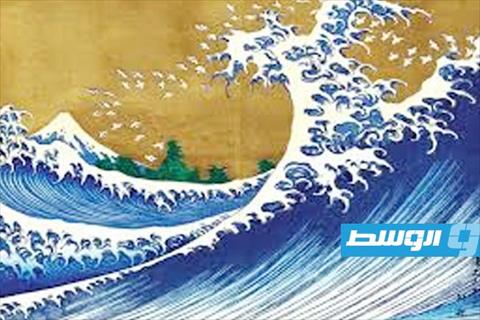
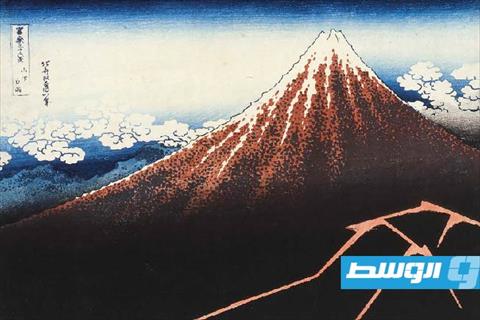
Due to his constant desire for innovation, he became the first to begin drawing illustrated stories that the Japanese call “manga.” He created previously unknown colors by mixing chemical pigments which he used in his paintings, and focused on showing their gradations in his work, so that light, shadows, and the horizon that illuminates the world are revealed, making him the most famous artist in Japan; his works are distinctive, such as “The Great Wave off Kanagawa” and “Rainstorm Beneath the Summit.”
Fifteen Volumes Penned by His Own Hand
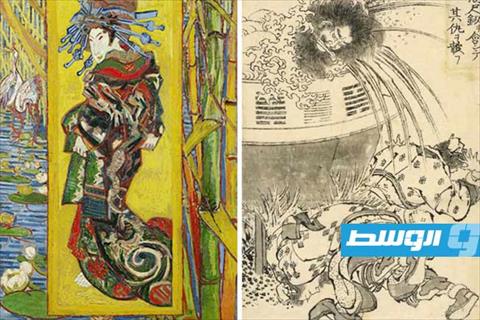
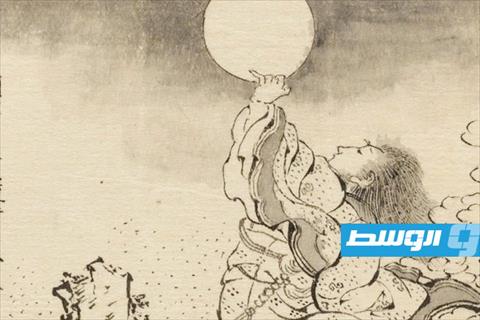
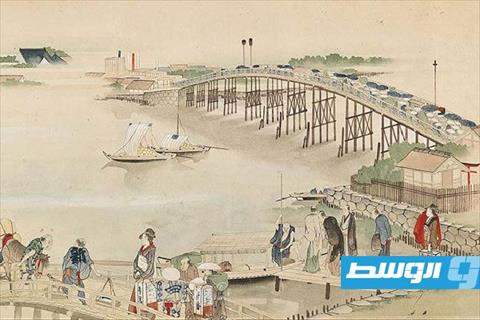
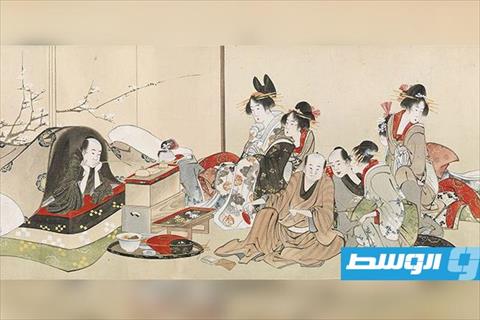
He was not yet six years old, born near Tokyo, when he began his simple drawings using symbols and signs. By the time he was fifty, he began painting real and imaginary characters and animals, painting dragons in fifteen volumes penned by his own hand, alongside various plants, landscapes, seascapes, and images of poets and gods assembled in a way that defies all attempts to weave a story around them. He also created what is called the “floating (or transient) world” attributed to him, and enriched the Japanese art scene with diverse cultures, and printed “Thirty-six Views of Mount Fuji,” which in Buddhist and Taoist traditions is believed to hold the secret of immortality, of which he seems to have received a share.
Multiple Names for Signing His Paintings
We have read, while preparing this brief information, that the “British Museum” in London is virtually exhibiting one hundred and three lost drawings by Hokusai, believed to have been executed in 1829, and of course they will be studied in order to organize an exhibition about the late period of his life, during which specialists believe he produced works that were lost in 1848 and are being republished. He used multiple names to sign his paintings, as this method was a practice circulated by Japanese artists at the time, and he invented painting styles that differed from those known then. It is seen that this was achieved due to his exposure to many artistic schools, contrary to what was prevalent among painters who adhered to a single school, not to mention his broad exposure to examples of European art, specifically Dutch and French copper engravings in the context of trade exchanges between Japan and Europe.
<img alt="Japanese artist Katsushika Hokusai" src="https://libyawire.org/wp-content/uploads/
Katsushika Hokusai
Katsushika Hokusai was a prolific Japanese ukiyo-e artist of the Edo period, most famous for his woodblock print series “Thirty-Six Views of Mount Fuji,” which includes the iconic print “The Great Wave off Kanagawa.” His work, which evolved significantly over his long career, had a profound influence on Western artists in the 19th century and helped shape global perceptions of Japanese art.
Japan
Japan is an island nation in East Asia with a rich cultural history spanning thousands of years, from its ancient Shinto traditions and imperial rule to the feudal era of samurai and the modernizing Meiji Restoration. Today, it is known for its unique blend of deep traditional arts and cutting-edge technology, with iconic cultural sites ranging from historic temples and castles to vibrant contemporary cities.
The Great Wave off Kanagawa
“The Great Wave off Kanagawa” is a famous 19th-century woodblock print by Japanese artist Katsushika Hokusai. It depicts a large wave threatening boats near Mount Fuji and is part of his series *Thirty-Six Views of Mount Fuji*. The print is an iconic example of *ukiyo-e* art and has had a significant influence on Western artists.
Rainstorm Beneath the Summit
“Rainstorm Beneath the Summit” is a famous Chinese landscape painting created by the Southern Song dynasty artist Ma Yuan. It depicts a solitary scholar observing a storm from a cliffside pavilion, masterfully capturing the dynamic power of nature through ink wash techniques. The work is celebrated as a prime example of the “one-corner” composition style, which uses empty space to evoke a profound, contemplative mood.
Tokyo
Tokyo, originally a small fishing village called Edo, became Japan’s political center in 1603 when Tokugawa Ieyasu established his shogunate there. It was renamed Tokyo (“Eastern Capital”) in 1868 when the emperor moved his residence from Kyoto, marking the beginning of the Meiji Restoration. Today, it is a vast, modern metropolis and the capital of Japan, known for blending cutting-edge technology with historic temples and districts.
floating world
The “floating world,” or *ukiyo-e*, refers to the urban pleasure districts of Edo-period Japan (1603–1868), which celebrated a culture of entertainment, theater, and art. It is most famously captured in the woodblock prints and paintings of the same name, depicting scenes of beauty, kabuki actors, and landscapes. This art form profoundly influenced both Japanese culture and later Western artists like the Impressionists.
transient world
“Transient world” is a translation of the Japanese term **”Ukiyo,”** which originally referred to the Buddhist concept of the sorrowful, fleeting nature of life. During the Edo period (1603-1868), it evolved to describe the hedonistic “floating world” culture of pleasure districts, theaters, and woodblock prints. This cultural movement celebrated beauty, fashion, and entertainment as a poignant embrace of life’s ephemeral moments.
Thirty-six Views of Mount Fuji
“Thirty-six Views of Mount Fuji” is a celebrated series of woodblock prints created by the Japanese ukiyo-e artist Katsushika Hokusai in the early 1830s. The series, which famously includes “The Great Wave off Kanagawa,” depicts Mount Fuji from various locations and in different seasons, reflecting the mountain’s deep spiritual and cultural significance in Japan. It represents a peak of Japanese landscape art and had a profound influence on Western artists in the 19th century.
Mount Fuji
Mount Fuji is Japan’s highest and most iconic volcano, reaching 3,776 meters and considered a sacred site in both Shinto and Buddhism. Its symmetrical cone has been celebrated in art and literature for centuries, most famously in the woodblock prints of the Edo period. The volcano is classified as active, with its last major eruption occurring in 1707.
British Museum
The British Museum, founded in 1753, is one of the world’s oldest and most comprehensive museums, located in London. Its vast permanent collection, encompassing over eight million works, was largely established during the era of the British Empire and includes famous artifacts like the Rosetta Stone and the Parthenon Marbles.
London
London is the capital city of England and the United Kingdom, with a history dating back to Roman times when it was founded as *Londinium*. It has since grown into a major global city, historically serving as the centre of the British Empire and now as a leading hub for finance, culture, and politics.
Dutch
The Netherlands, often referred to as “Dutch” in a cultural context, is a country in Northwestern Europe with a rich history as a major maritime and trading power during the 17th-century Dutch Golden Age. Its culture is renowned for artistic masters like Rembrandt and Van Gogh, a tradition of tolerance, and iconic landscapes shaped by extensive water management systems.
French
France is a country in Western Europe with a rich cultural history that has significantly influenced art, philosophy, and politics globally. Its historical timeline includes the rise of the Frankish Kingdom, the French Revolution of 1789, and its role as a major colonial power. Today, it is known for landmarks like the Eiffel Tower and the Louvre Museum, and its cultural contributions in cuisine, fashion, and literature.
Europe
Europe is a continent with a deeply layered history, shaped by ancient civilizations like Greece and Rome, the transformative Middle Ages, the Renaissance, and the profound impacts of two World Wars. Culturally, it is renowned for its diverse artistic heritage, architectural landmarks, and as the birthplace of influential movements like the Enlightenment and Industrial Revolution. Today, it is a major political and economic union, with the European Union fostering cooperation among many of its nations.