Iranians are celebrating “Yalda” on Sunday, an ancient occasion with deep historical roots dating back to ancient Persian times, symbolizing the beginning of winter. This rare moment of joy is overshadowed by inflation rates and economic recession.
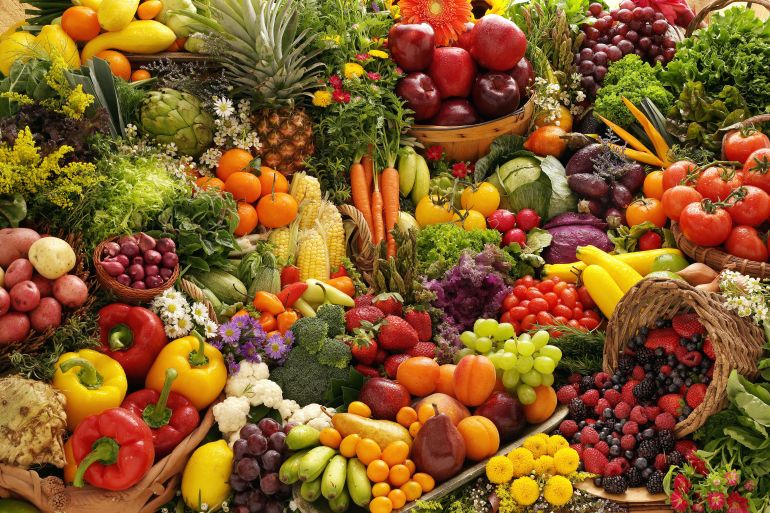
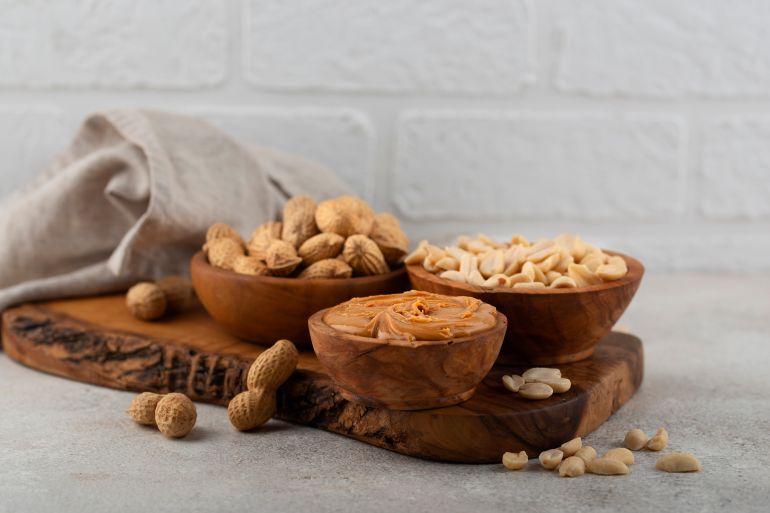
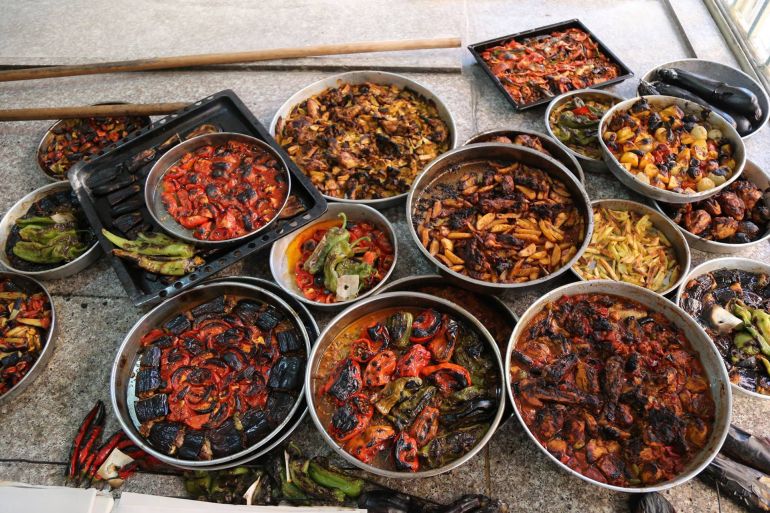
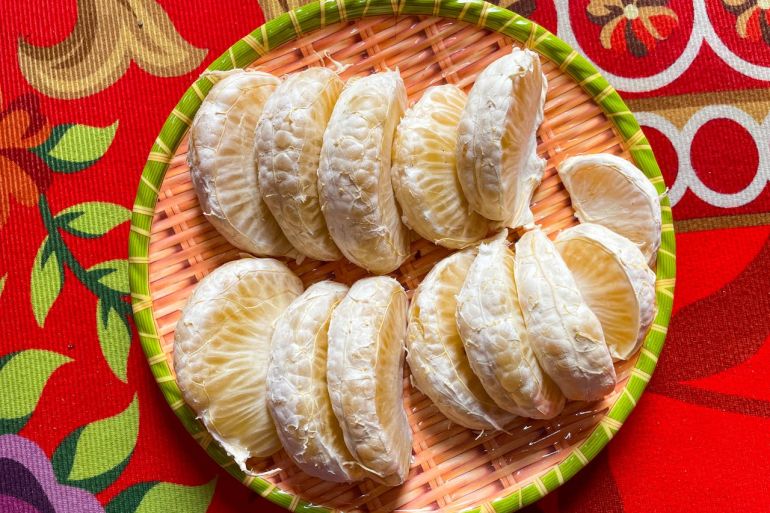
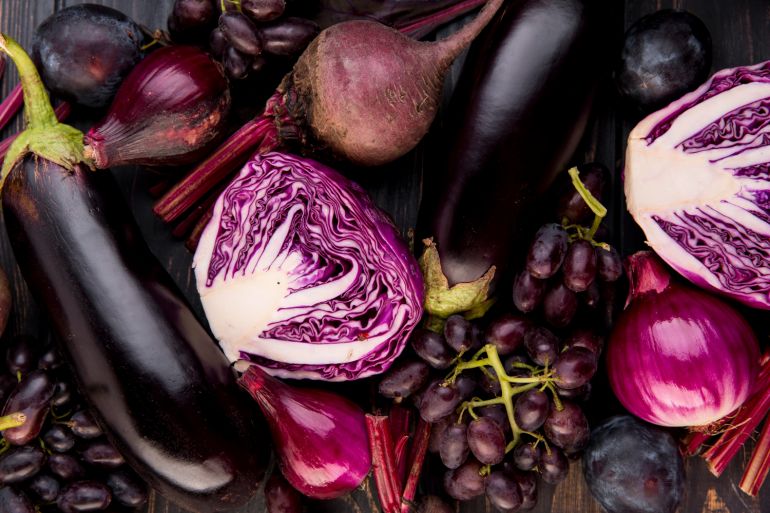
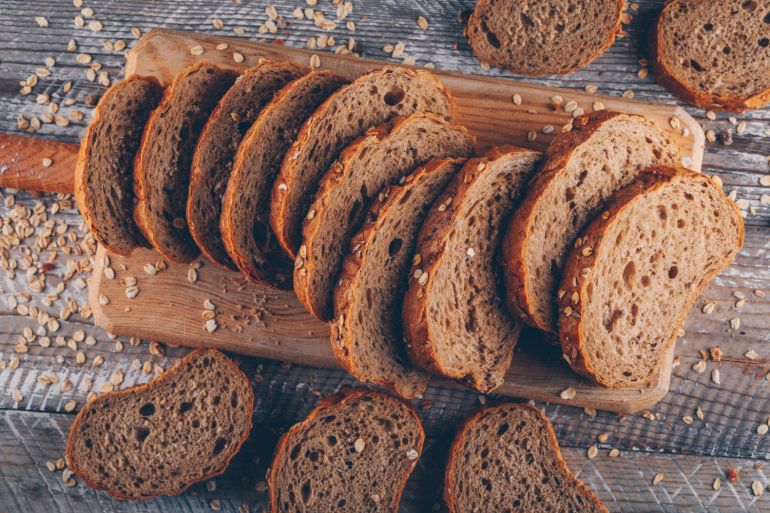
Yalda night, with its pre-Islamic roots when Zoroastrianism was the dominant religion in Persia, is the winter solstice and the longest night of the year. Iranians mark it with family gatherings to enjoy sweets and fruits, especially pomegranates, watermelon, and persimmons, as well as nuts.
A 37-year-old interior designer, met while shopping for Yalda in Tehran’s Tajrish market, said: “On Yalda night, the whole family gathers at my grandparents’ house to reminisce about the good old days.”
She added, wearing a pink scarf around her neck: “Unfortunately, due to events like the war (the 12-day conflict with Israel in June) and the rise in the dollar’s price, people’s purchasing power has significantly declined.”
Iran’s central bank announced an annual inflation rate of 41% at the beginning of December, a figure that does not fully reflect the sharp increases in the prices of basic goods.
The designer said regretfully: “That’s why we don’t see as many varieties on the tables as in previous years.”
Fruit Out of Reach
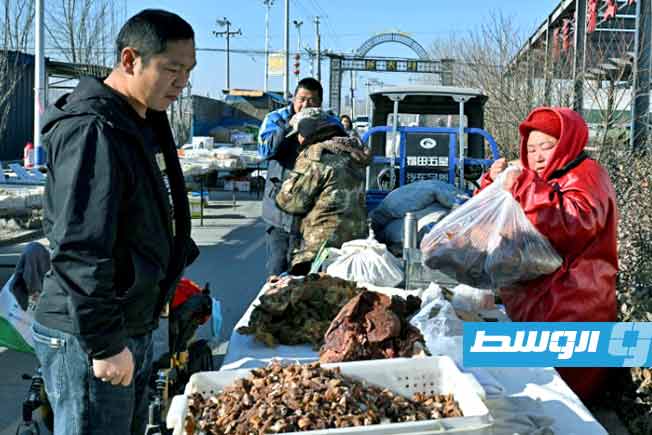
A fruit seller in front of his stall said: “With prices rising, it’s not like it used to be when we could invite the whole family.”
He explained that the prices of pomegranates, the essential fruit for Yalda, have doubled compared to last year, leading to an automatic drop in sales.
A cartoon titled “Yalda Night” published on Saturday shows a poor man trying to reach a basket of fruit hanging from the moon but unable to get it, hinting that fruit has become out of reach for some families.
The Iranian rial recently hit its lowest level against the dollar in the unofficial exchange market, at about 1.3 million rials, compared to around 770,000 a year ago.
A 21-year-old nut shop seller, who preferred not to give his full name, said: “The market and the economy are in chaos. We are trying to hold on; we have no other choice.”
The war in June, fears of a new confrontation, the return of international sanctions over Iran’s nuclear program, and stalled negotiations with the United States have increased anxiety among Iranians and disrupted the economy.
Hope and Poetry
Yalda night traditionally symbolizes the triumph of good and hope (light) over evil (darkness) and is usually a moment of joy and wishes.
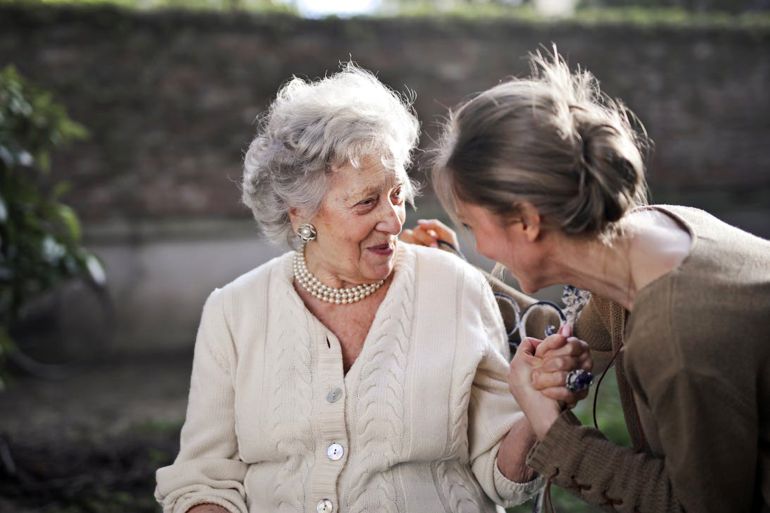
A smiling 16-year-old student said: “We spend time with family, grandparents, aunts, and cousins. We read Hafez, drink tea or coffee, and sometimes my grandmother sings.”
The “Divan of Hafez,” by the 14th-century poet Shams-ud-din Muhammad Hafez Shirazi, a cultural icon in Iran, is an integral part of Yalda traditions, representing a search for a glimmer of hope amid life’s difficulties.
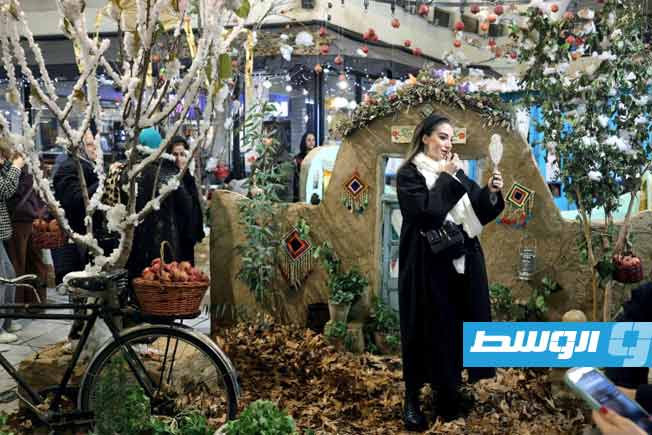
Just as Christmas trees and decorations spread in the West, shopping centers in Tehran are adorned with symbolic trees, pomegranates, and huge fruit platters to mark the arrival of Yalda.
The celebrations are not limited to Iran but are also held in other Persian-speaking countries like Afghanistan and Tajikistan.
Iran
Iran, historically known as Persia, is home to one of the world’s oldest continuous major civilizations, dating back to the Elamite kingdoms of the 4th millennium BCE. Its rich cultural heritage is exemplified by numerous UNESCO World Heritage sites, including the ancient ceremonial capital of Persepolis and the intricate architecture of Isfahan’s Naqsh-e Jahan Square. The modern Islamic Republic was established in 1979 following a revolution that transformed the nation from a monarchy into a theocratic republic.
Persia
Persia, historically known as the Achaemenid Empire founded by Cyrus the Great in the 6th century BCE, was one of the largest and most influential empires of the ancient world. Today, the region corresponds primarily to modern-day Iran, and its rich cultural legacy includes contributions to art, architecture, literature, and governance that have had a lasting global impact.
Tehran
Tehran is the capital and largest city of Iran, officially becoming the national capital in 1786 under the Qajar dynasty. It serves as the country’s political, economic, and cultural center, home to significant historical sites like the Golestan Palace, a UNESCO World Heritage site from the 19th century.
Tajrish market
Tajrish Market is a historic bazaar located in the northern Tehran district of Shemiran, known for its traditional atmosphere and vibrant trade in spices, herbs, and local goods. Its history dates back centuries, serving as a key trading hub along the old routes to northern Iran, and it remains a popular destination for both locals and tourists.
Israel
Israel is a country in the Middle East, established as a modern state in 1948 following the United Nations partition plan for the British Mandate of Palestine. It is a historic homeland of the Jewish people, containing significant religious sites for Judaism, Christianity, and Islam, such as the Western Wall, the Church of the Holy Sepulchre, and the Al-Aqsa Mosque.
United States
The United States is a federal republic founded in 1776 after declaring independence from Great Britain, establishing itself through a revolutionary war and the ratification of its Constitution in 1789. It grew from thirteen original colonies into a global superpower, with a history significantly shaped by westward expansion, the Civil War, industrialization, and its role in 20th-century world affairs. Its diverse culture is a product of immigration and the blending of numerous traditions from around the world.
Afghanistan
Afghanistan is a landlocked country in Central and South Asia with a history spanning over 5,000 years, having been a crossroads for empires and a key location on the ancient Silk Road. It is home to significant cultural sites like the Minaret of Jam and the Buddhas of Bamiyan, though the latter were tragically destroyed in 2001. The modern nation has faced decades of conflict, including the recent Taliban takeover in 2021 following the withdrawal of U.S.-led forces.
Tajikistan
Tajikistan is a Central Asian country with a rich history as a key part of the ancient Silk Road and the historical region of Sogdiana. Its cultural heritage is deeply influenced by Persian traditions, and it is home to significant sites like the ancient city of Penjikent and the Pamir Mountains. Modern Tajikistan gained independence following the dissolution of the Soviet Union in 1991.
Yalda night
Yalda Night is an ancient Iranian festival celebrating the winter solstice, traditionally observed on the longest night of the year. Rooted in Zoroastrian tradition, it symbolizes the victory of light over darkness, with families gathering to eat special foods like pomegranates and watermelon, read poetry, and stay awake together.
pomegranates
Pomegranates are not a specific place or cultural site, but a fruit with deep historical and symbolic significance across many cultures, from ancient Persia and Greece to the Mediterranean and Middle East. They are often associated with themes of fertility, abundance, and the afterlife in mythology and religious traditions.
watermelon
“Watermelon” is not a specific place or cultural site, but rather a fruit with a long history of cultivation. It is believed to have originated in Northeast Africa, with evidence of its use in ancient Egypt. Today, it is grown and enjoyed worldwide, often as a symbol of summer and refreshment.
persimmons
Persimmons are a type of fruit with deep cultural significance in several East Asian countries, particularly Japan, Korea, and China, where they have been cultivated for centuries. In these cultures, the persimmon tree and its fruit are often symbols of transformation, longevity, and good fortune, featuring prominently in art, folklore, and seasonal traditions.
nuts
Nuts is a historic village in the Swiss Alps, known for its well-preserved medieval architecture and as a key transit point on the Septimer Pass trade route during the Middle Ages. Its history is deeply tied to alpine trade and transhumance, with many buildings dating back to the 13th and 14th centuries. Today, it is recognized for its cultural heritage and traditional Engadine houses with characteristic sgraffito decorations.
Divan of Hafez
The Divan of Hafez refers to the collected works of the 14th-century Persian lyric poet Hafez, revered as a pinnacle of Persian literature. His poetry, primarily composed in the form of ghazals, explores themes of love, spirituality, and fate, and his tomb in Shiraz, Iran, has become a cherished cultural site where visitors engage in bibliomancy with his book.
Hafez
Hafez refers to the tomb of Hafez, the celebrated 14th-century Persian lyric poet, located in Shiraz, Iran. The site has been a place of pilgrimage and cultural reverence for centuries, with the current elegant pavilion and garden complex largely dating from the 1930s. It embodies the deep national admiration for Hafez’s poetry, which explores themes of love, spirituality, and human frailty.
Shams-ud-din Muhammad Hafez Shirazi
Shams-ud-din Muhammad Hafez Shirazi, commonly known simply as Hafez, was a 14th-century Persian poet from Shiraz, Iran, whose lyrical *Divan* is a masterpiece of world literature. His tomb, the Hafezieh, located in a garden in Shiraz, is a major cultural site and a place of pilgrimage for admirers of his profound and mystical poetry.
Christmas trees
The Christmas tree is a decorated evergreen tree, traditionally associated with the celebration of Christmas. Its modern popularity is often traced to 16th-century Germany, with earlier roots in winter solstice rituals and medieval paradise plays. It became a widespread global tradition in the 19th century, largely popularized by Britain’s Queen Victoria and Prince Albert.
shopping centers
Shopping centers, as large-scale retail complexes, emerged in the mid-20th century, particularly in the United States, with the rise of suburban development and automobile culture. They consolidated various stores and services under one roof, evolving from simple strips to enclosed malls, and have significantly influenced consumer habits and urban planning worldwide.
Tehran
Tehran is the capital and largest city of Iran, officially becoming the capital in 1796 under the Qajar dynasty. It is a major economic and cultural center, home to significant sites like the Golestan Palace, a UNESCO World Heritage site from the Qajar era.
Iranian rial
The Iranian rial is the official currency of Iran, introduced in 1798 as a coin and later becoming the nation’s primary monetary unit in 1932. Its value has been significantly impacted over decades by economic factors, including international sanctions and domestic inflation.
dollar
The dollar is the official currency of the United States, established by the Coinage Act of 1792. Its history is tied to the Spanish dollar and it has become the world’s primary reserve currency since the Bretton Woods agreement in the mid-20th century.