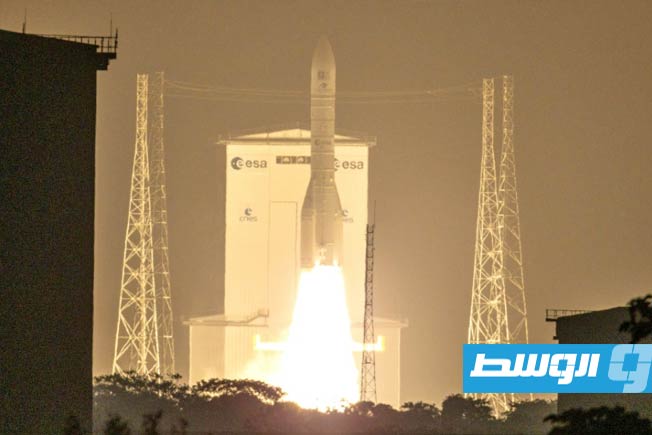
India placed its heaviest satellite into orbit on Wednesday, an achievement hailed by Prime Minister Narendra Modi as an “important step forward” for the space sector of the world’s most populous nation.
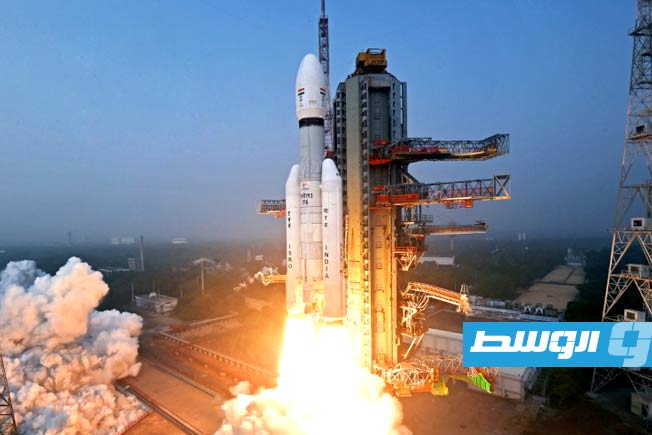
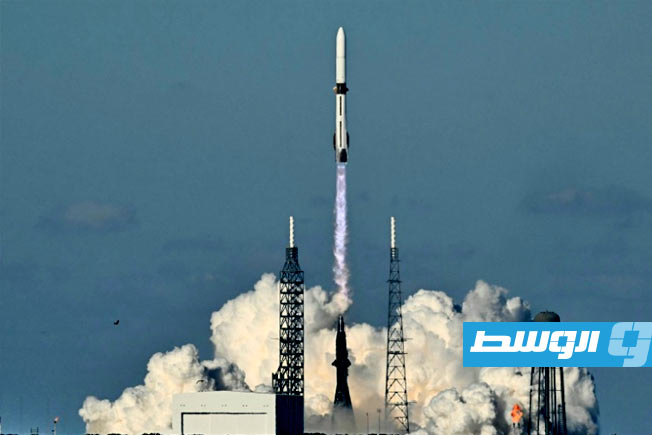
The Indian Space Research Organisation (ISRO) stated that the 6.1-ton AST SpaceMobile communications satellite was launched into low Earth orbit by the LVM3-M6 rocket, which consequently carried “the heaviest payload ever launched from Indian soil.”
Modi said this success “strengthens India’s capability for launching heavy rockets and our growing role in the commercial market of this sector.” This comes as the country aims to conduct its first manned space flight in 2027 and to send an astronaut to the Moon by 2040.
Development in the Indian Space Sector
In early November, the national space agency launched another communications satellite, CMS-03, weighing 4.4 tons. To carry out this type of mission, the agency uses a modified version of the rocket it employed to send an unmanned spacecraft to the Moon in August 2023.
India is a vast South Asian country with one of the world’s oldest civilizations, dating back to the Indus Valley Civilization around 2500 BCE. Its long and complex history includes the rise of major religions like Hinduism and Buddhism, periods of rule by Mughal and British empires, and its emergence as an independent democratic republic in 1947.
Indian Space Research Organisation
The Indian Space Research Organisation (ISRO) is India’s national space agency, founded in 1969 to advance space technology and exploration. It has a notable history of cost-effective missions, including the successful Mars Orbiter Mission (Mangalyaan) in 2013 and the Chandrayaan lunar exploration program.
AST SpaceMobile
AST SpaceMobile is a company developing a space-based cellular broadband network designed to provide direct mobile connectivity to standard smartphones from orbit. Its history traces back to the founding of its parent company, AST & Science, in 2017, with the goal of eliminating global coverage gaps. The company launched its first test satellite, BlueWalker 3, in 2022 to demonstrate the technology.
LVM3-M6
The LVM3-M6 is a launch vehicle of the Indian Space Research Organisation (ISRO), which successfully deployed 36 OneWeb satellites into orbit in March 2023. This mission was part of the commercial partnership between OneWeb and NewSpace India Limited, marking the second dedicated commercial launch for the LVM3.
CMS-03
CMS-03 is a Chinese lunar rover, part of the Chang’e-3 mission, which achieved the first soft landing on the Moon since 1976. It deployed the Yutu rover to explore the lunar surface, conducting scientific analyses and significantly advancing China’s deep space exploration capabilities.
Moon
The Moon is Earth’s only natural satellite, believed to have formed approximately 4.5 billion years ago from debris after a massive collision between Earth and a Mars-sized body. It has no atmosphere or liquid water, and its surface is marked by dark volcanic plains (maria) and bright, heavily cratered highlands. Culturally, it has been a central object in mythology, timekeeping, and human exploration, most notably with the first crewed landing by Apollo 11 in 1969.
International Space Station
The International Space Station (ISS) is a habitable artificial satellite in low Earth orbit, representing a multinational collaborative project primarily led by the United States and Russia. Its construction began in 1998, with continuous human occupation since 2000, serving as a microgravity and space environment research laboratory.