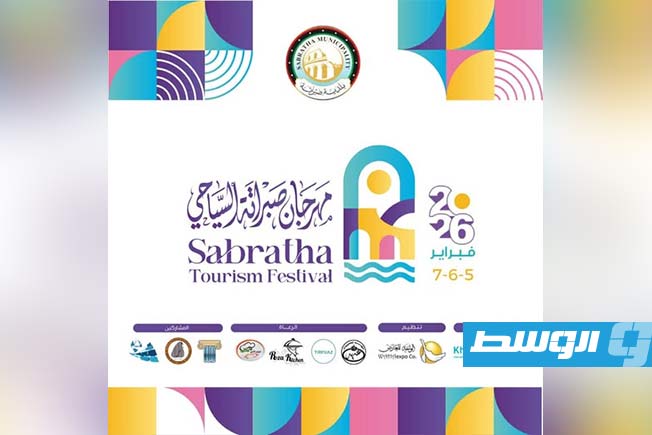
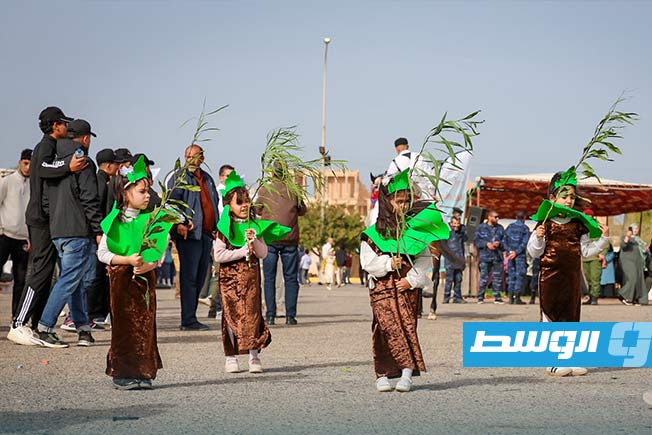
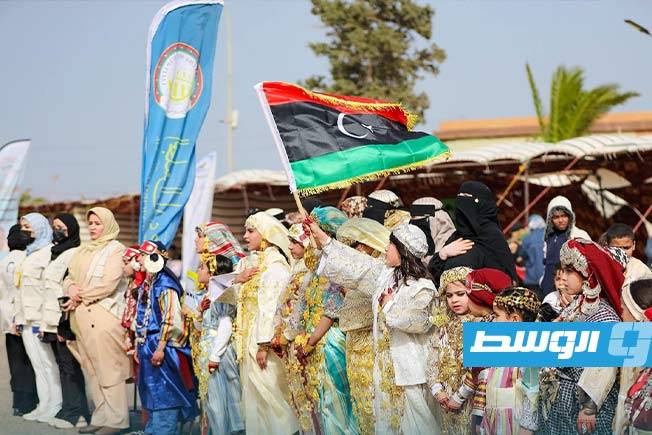
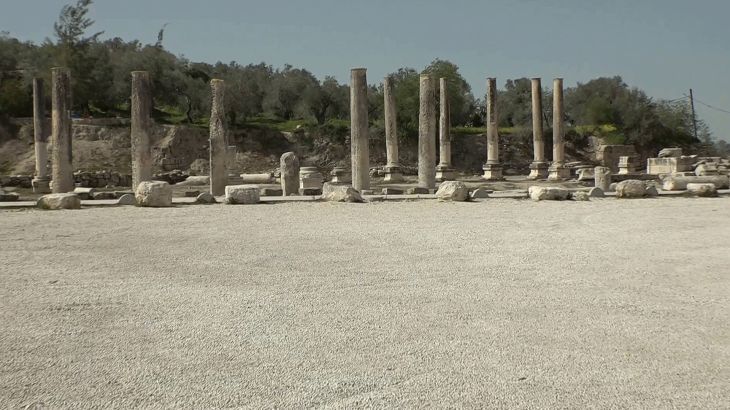
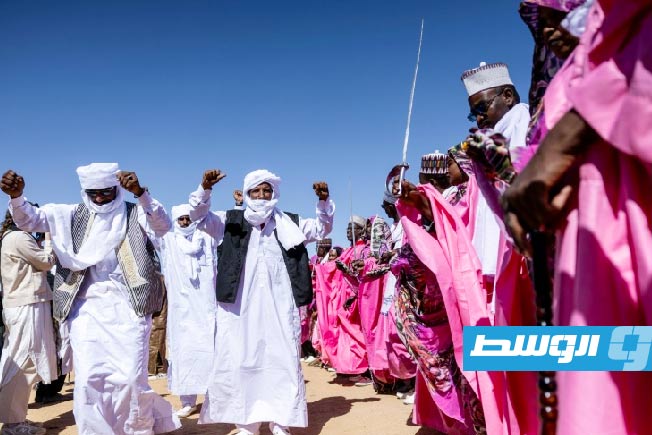
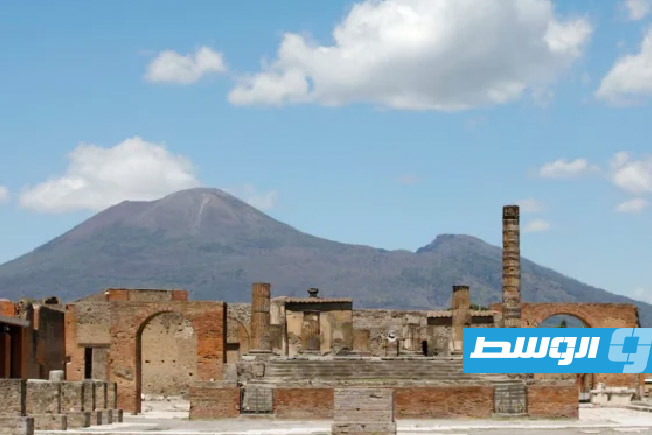
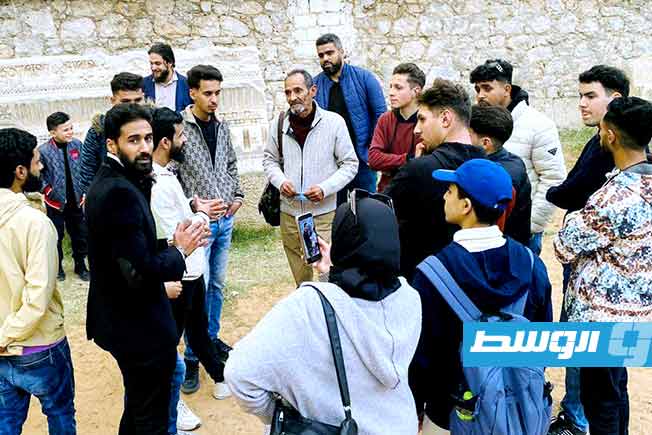
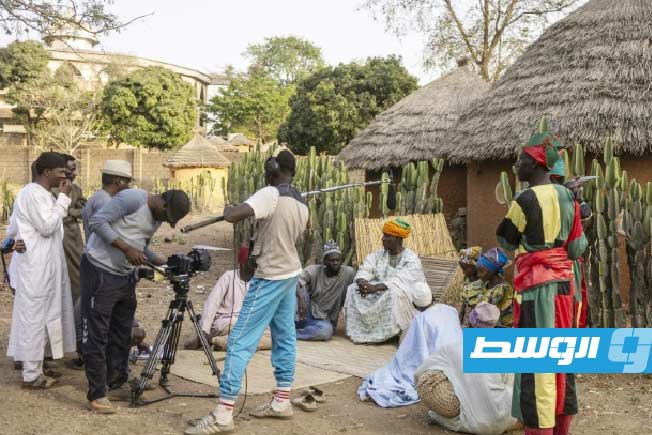
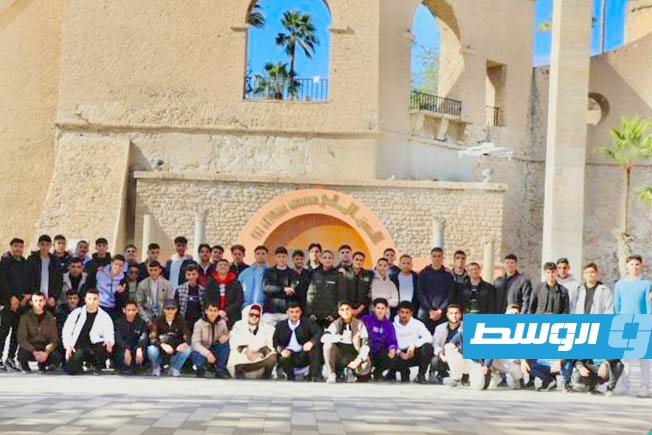
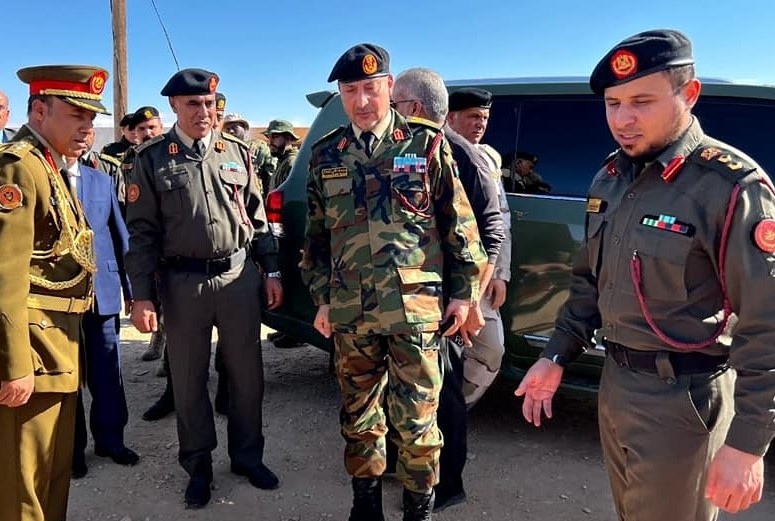
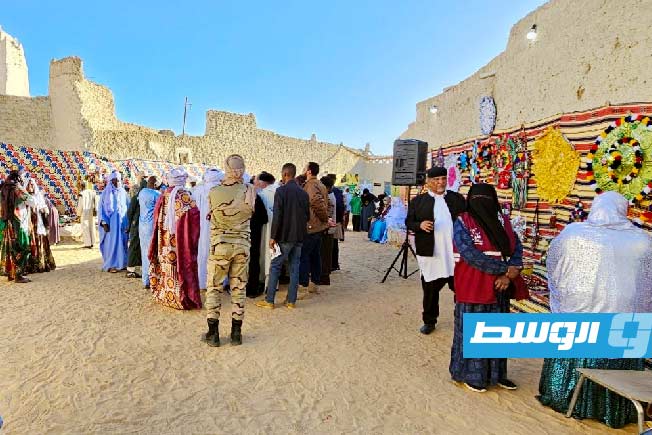
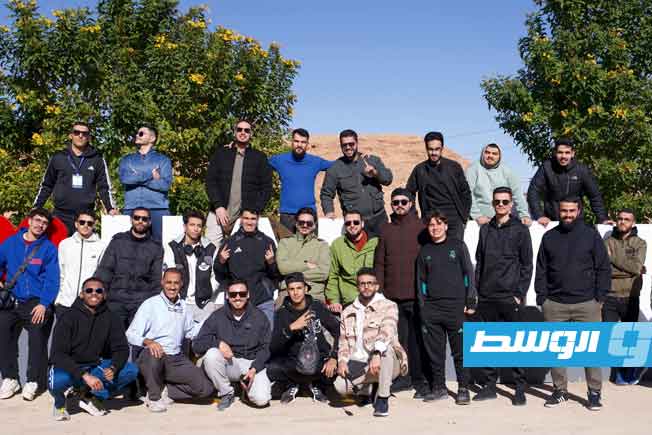
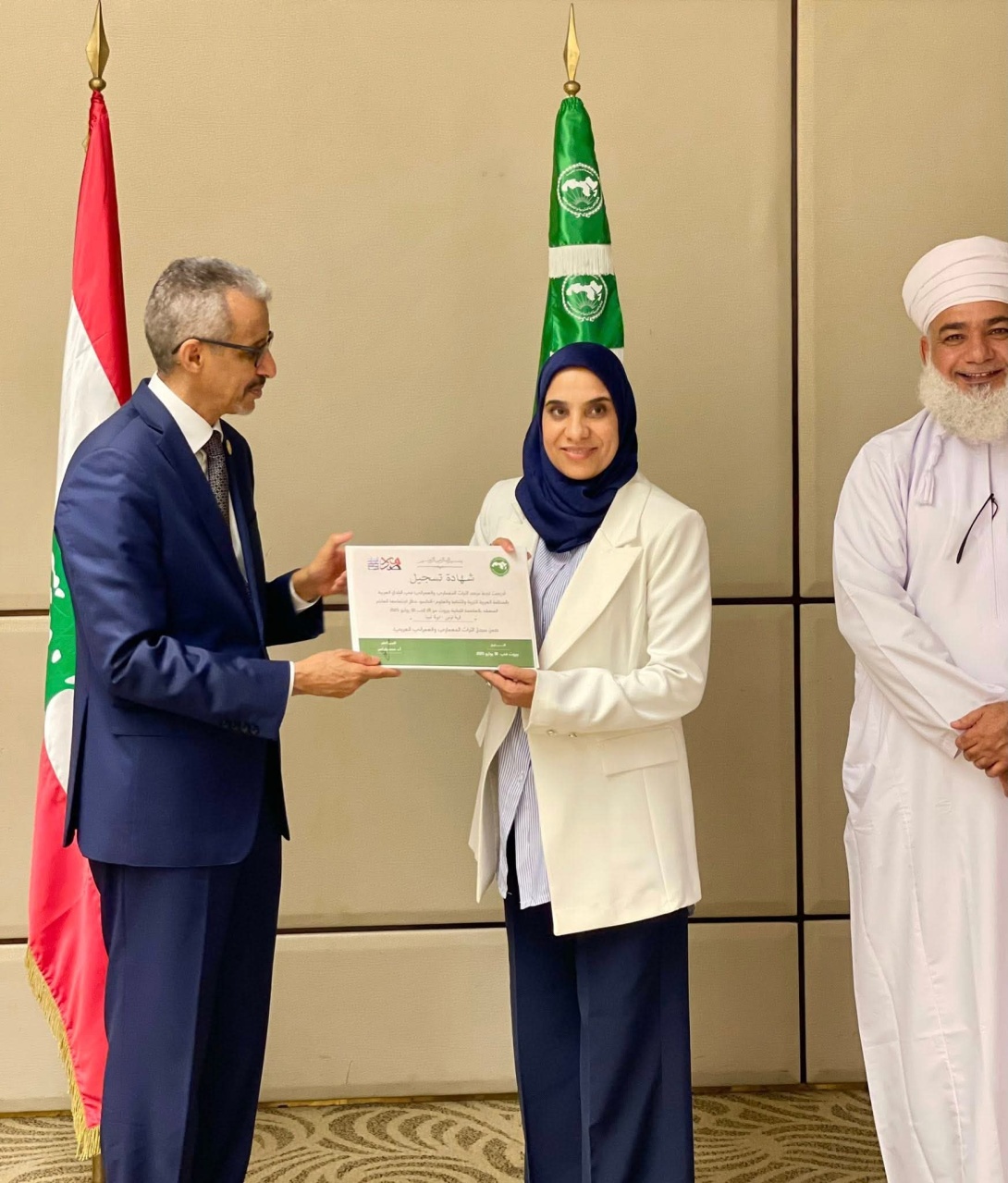
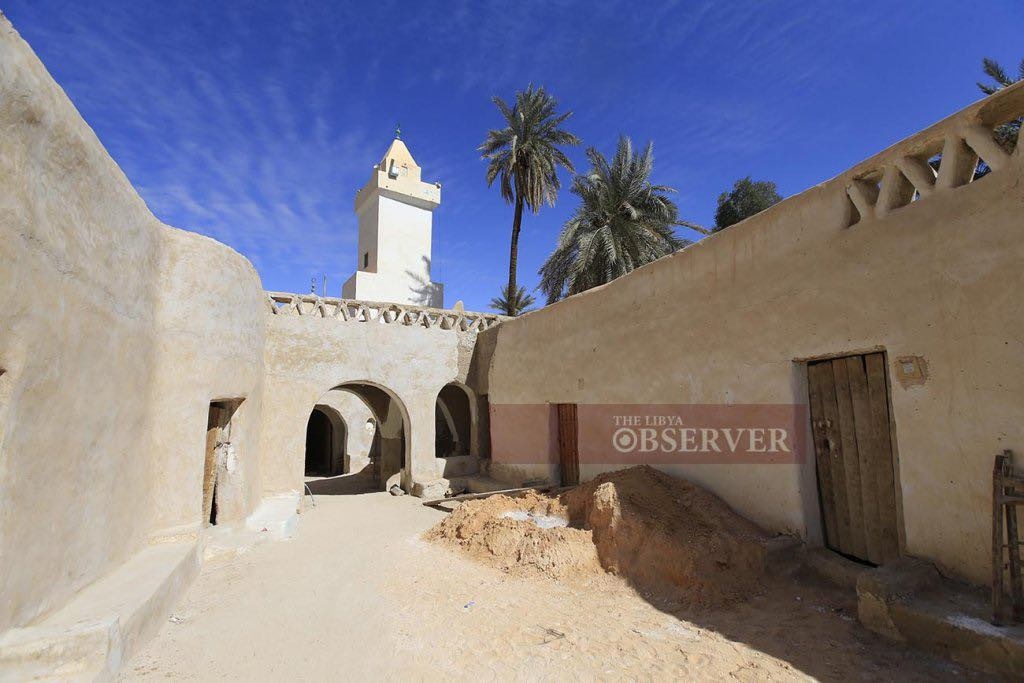
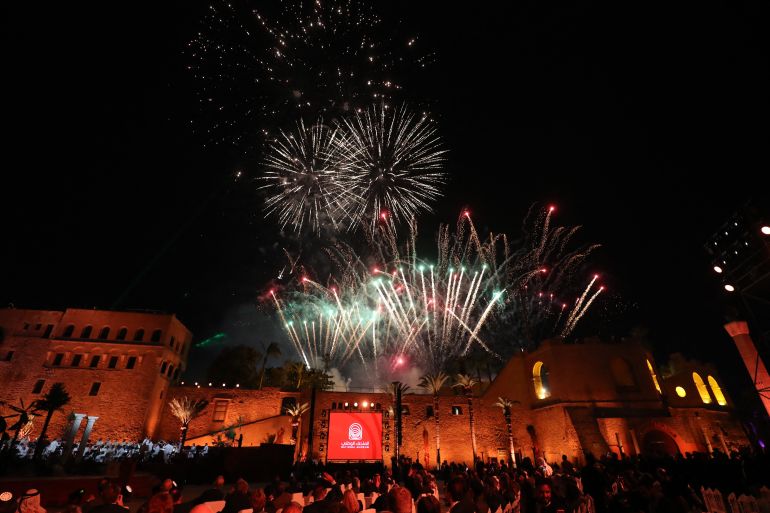
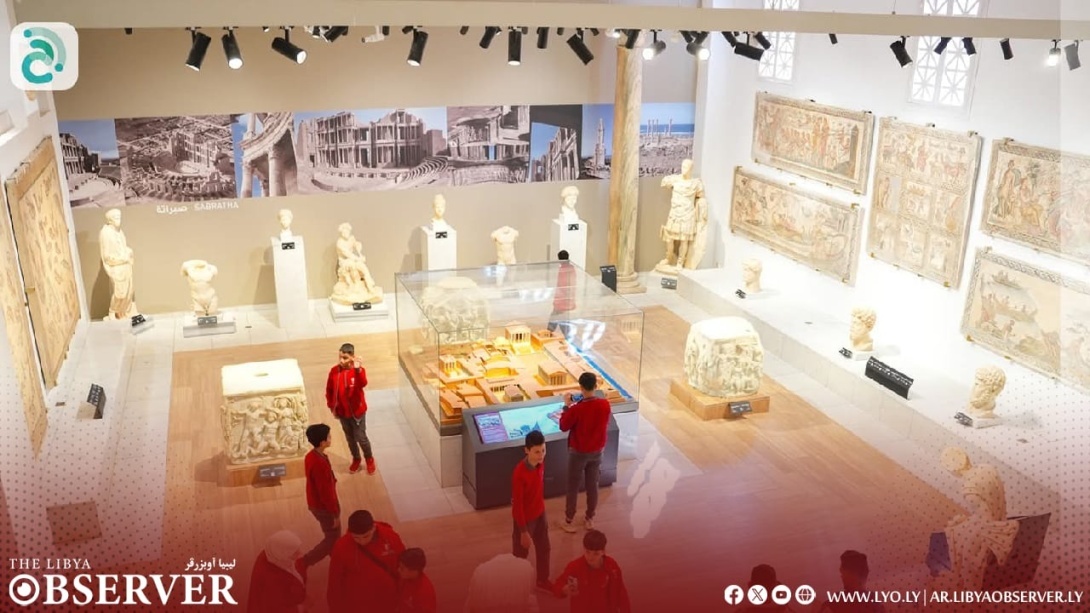
On Thursday, the activities of the Sabratha Tourism Festival were launched at the Archaeological Square, marking the culmination of the ‘One Hundred Days’ initiative. The event began with a massive public procession starting from in front of the City Hall towards the festival site.
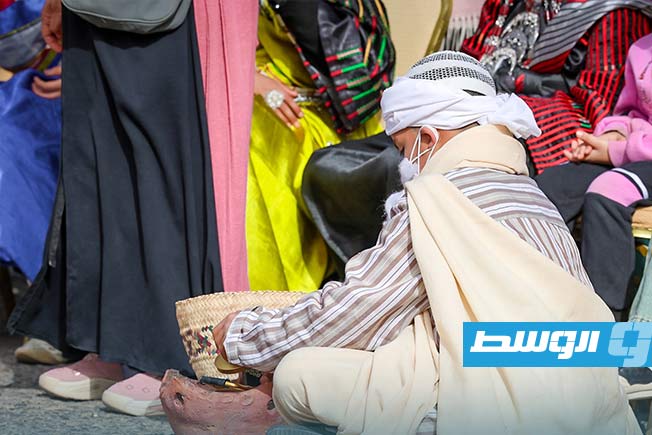
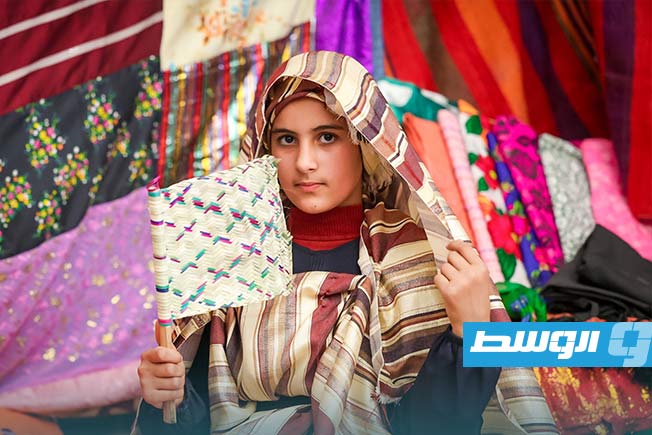
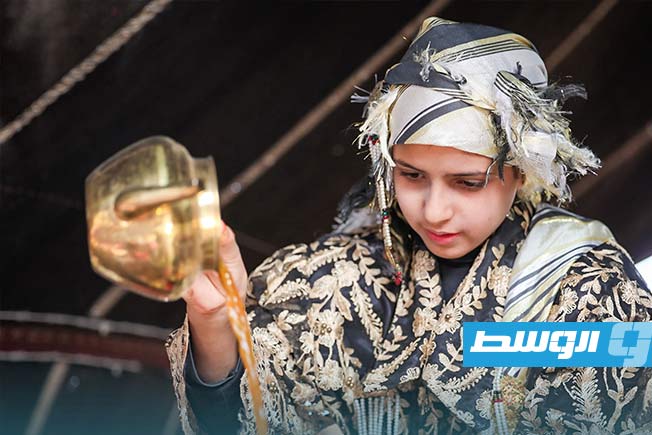
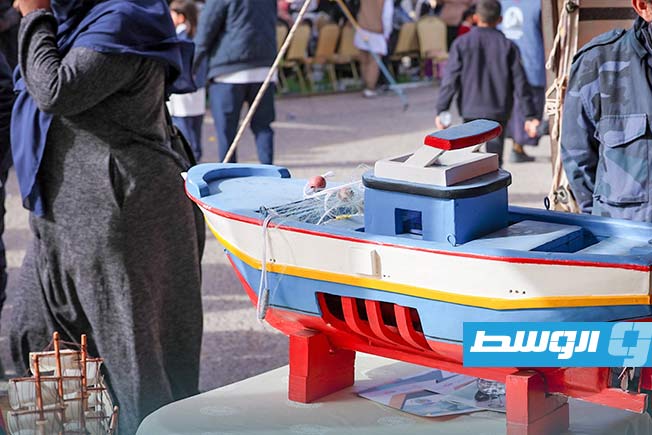
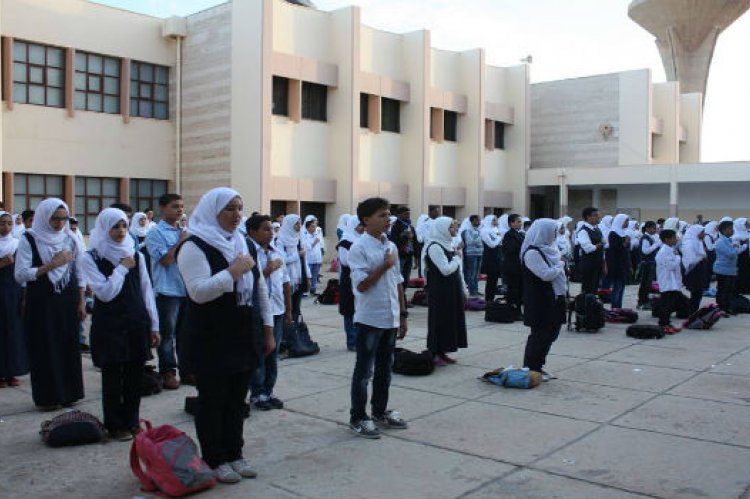
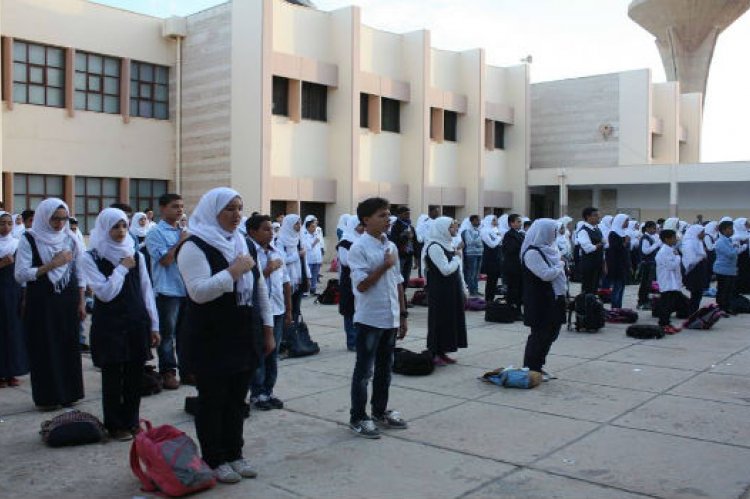
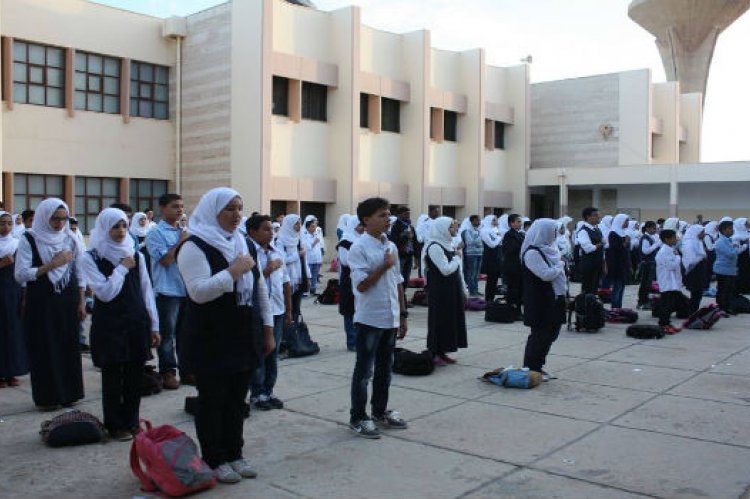
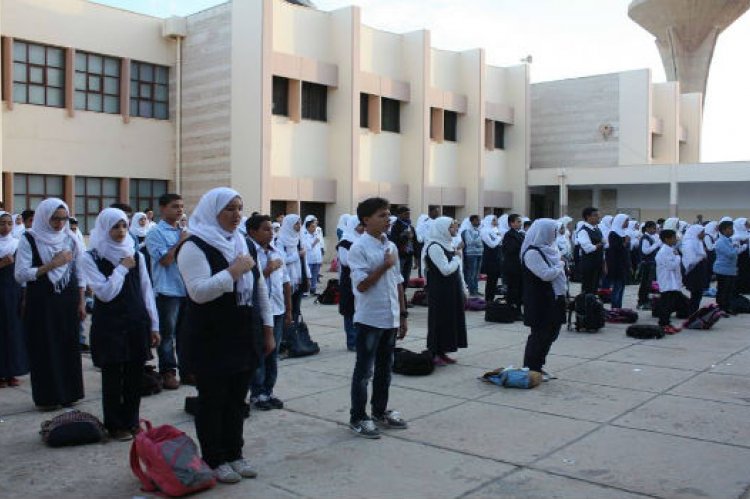
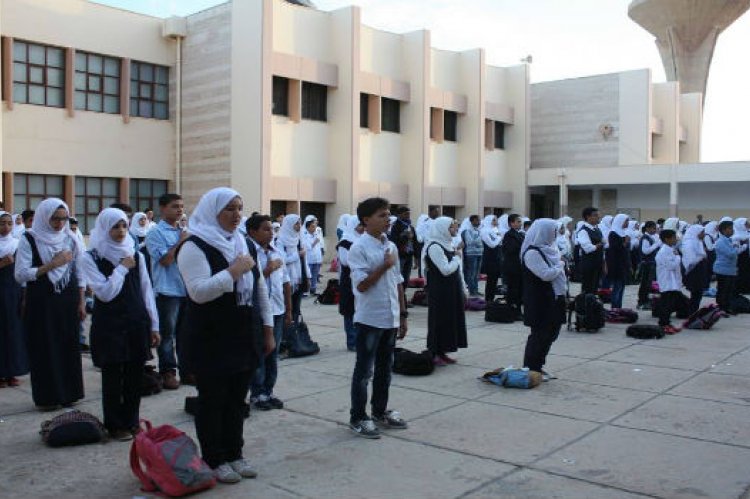
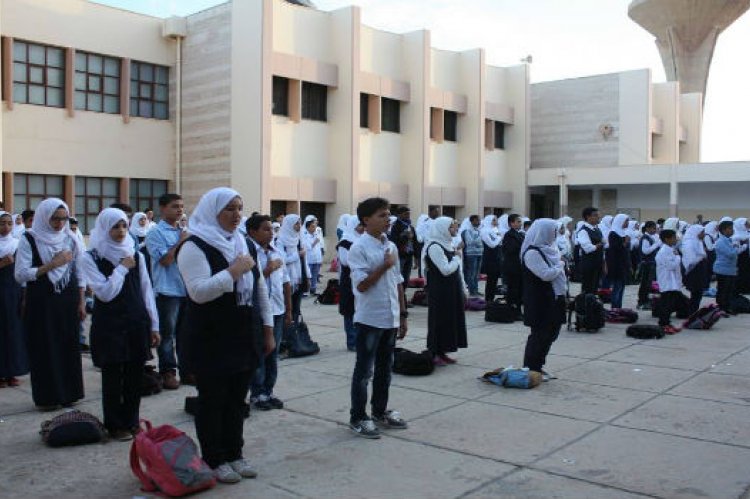
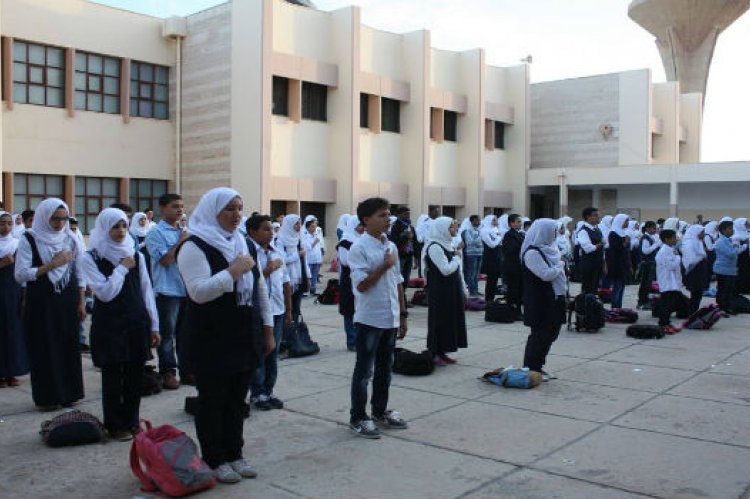
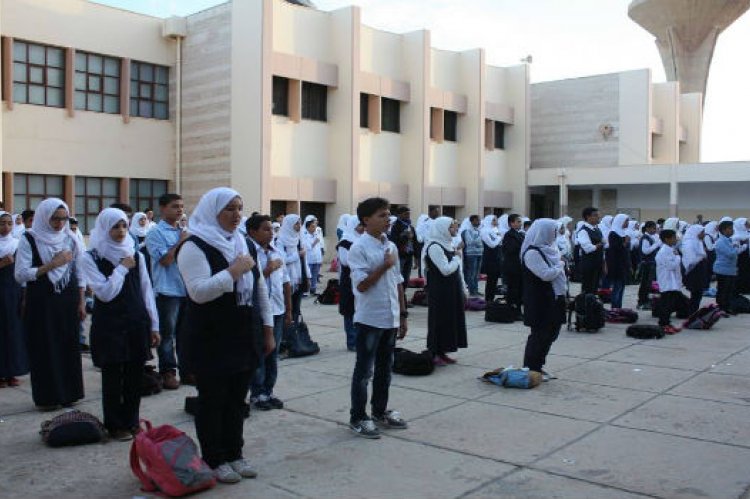
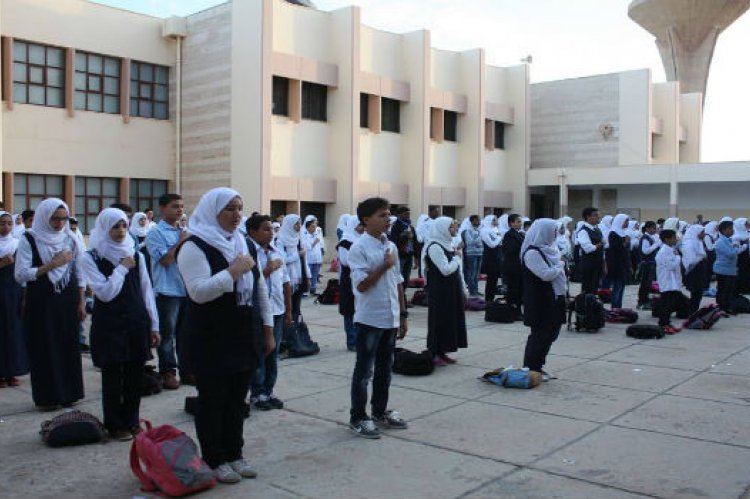
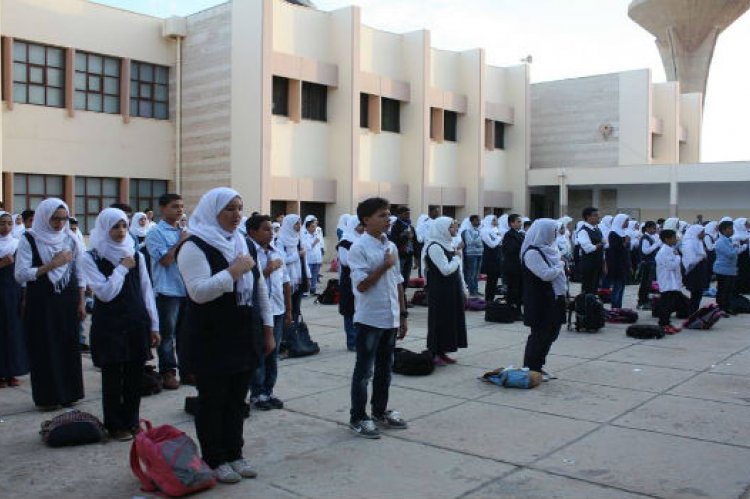
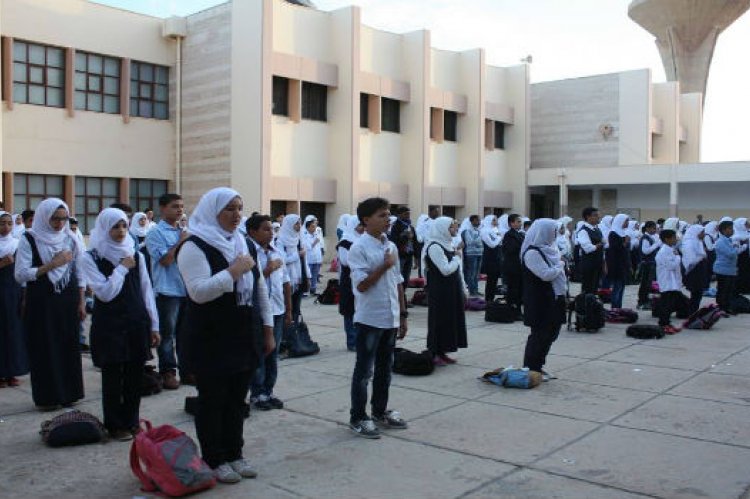
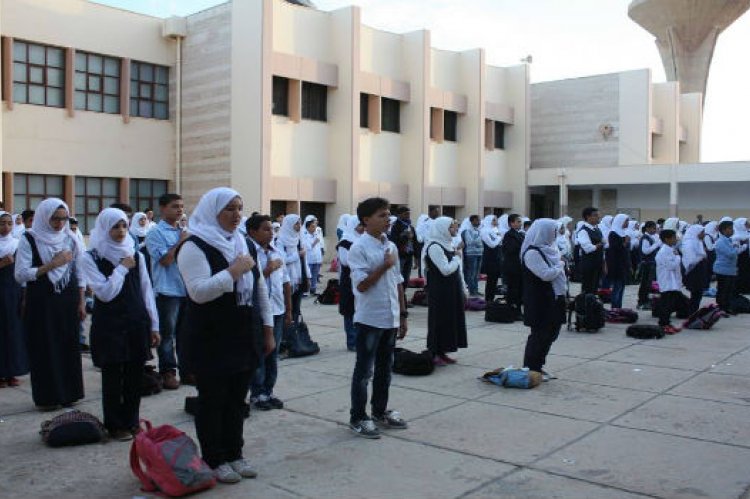
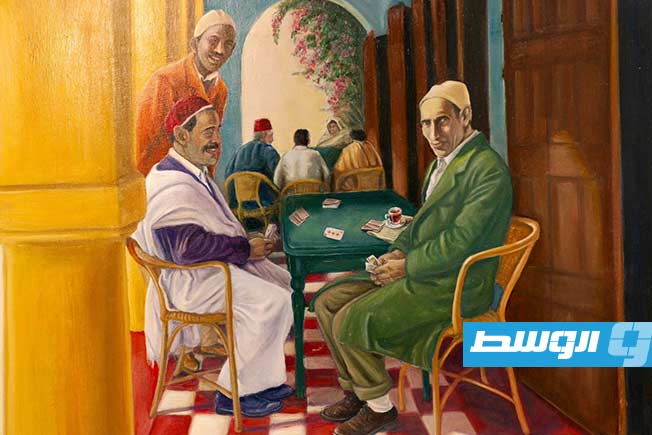
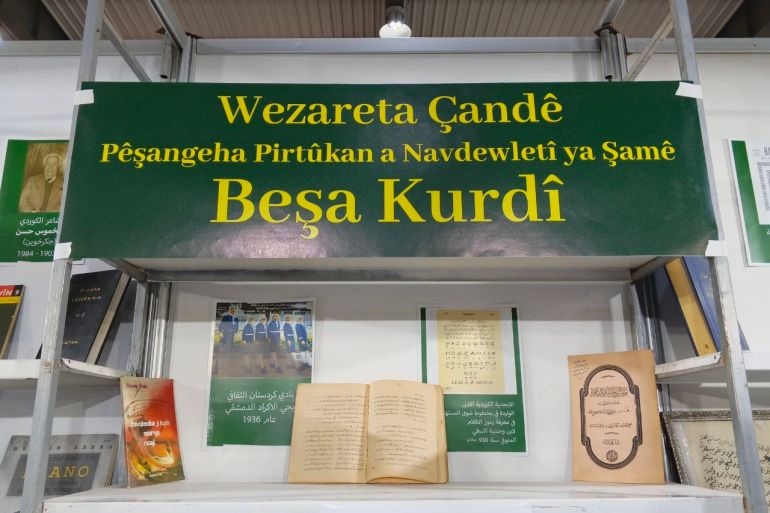
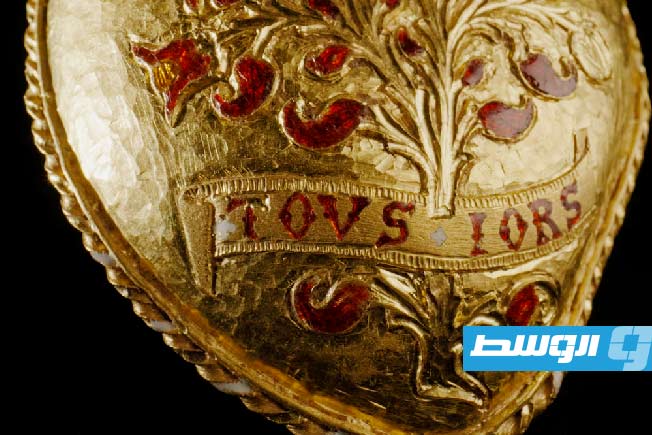
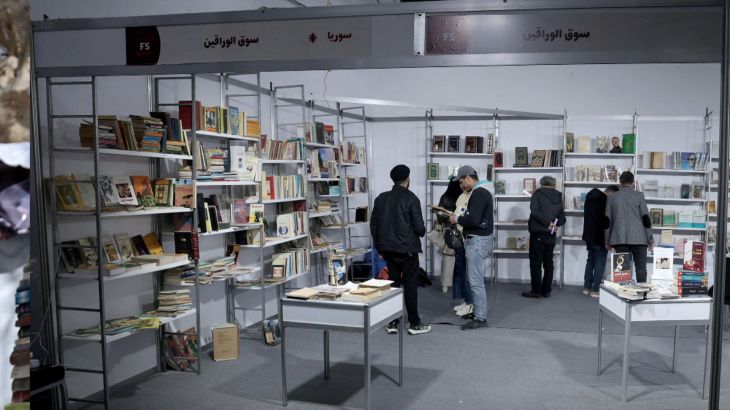
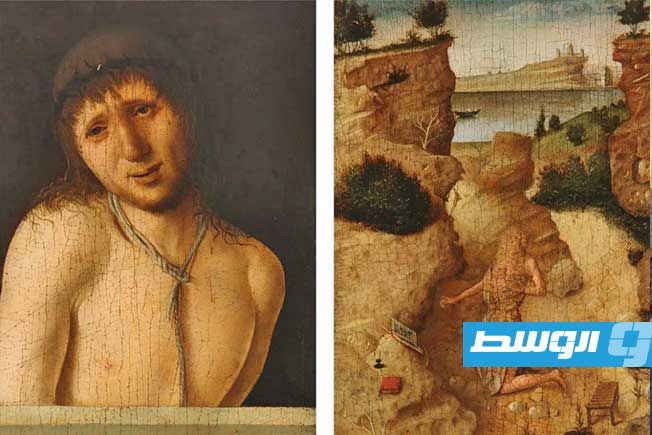
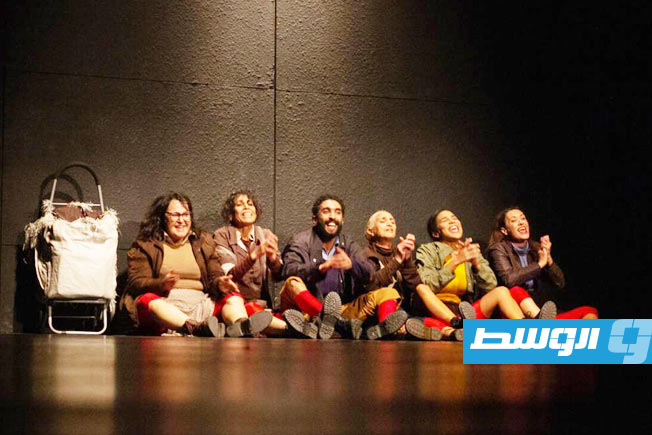
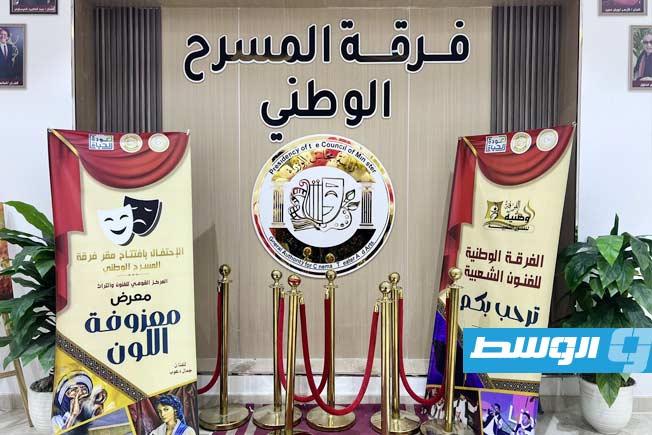
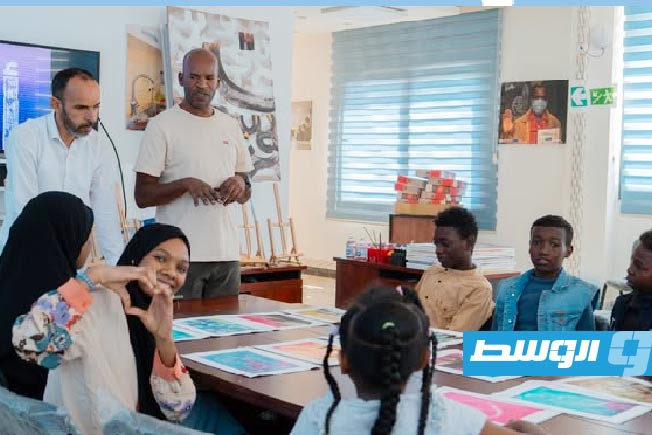
The festival’s program, which is part of the ‘We Protect’ project aimed at supporting cultural heritage and boosting the local economy, included a fine arts exhibition, a bazaar of popular cuisine reflecting local heritage, and displays of folk collectibles and classic cars that embody the city’s ancient history. Students from educational institutions under the supervision of the Sabratha Education Directorate also presented artistic performances.
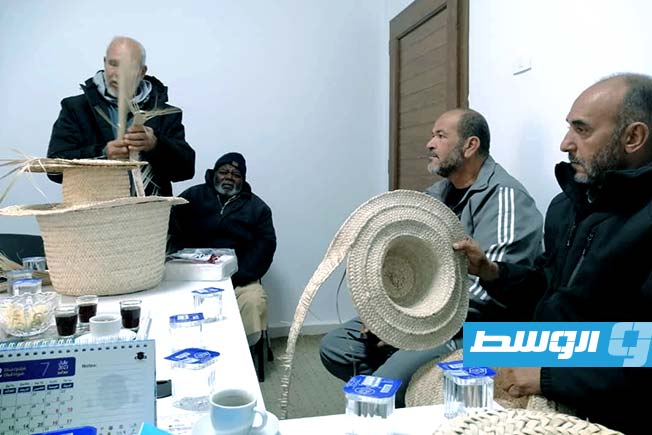
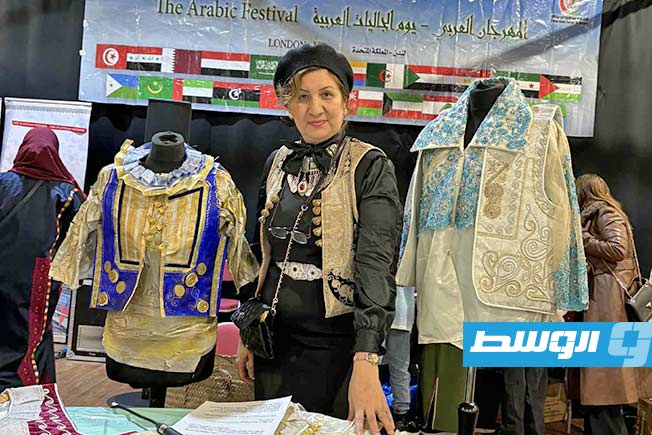
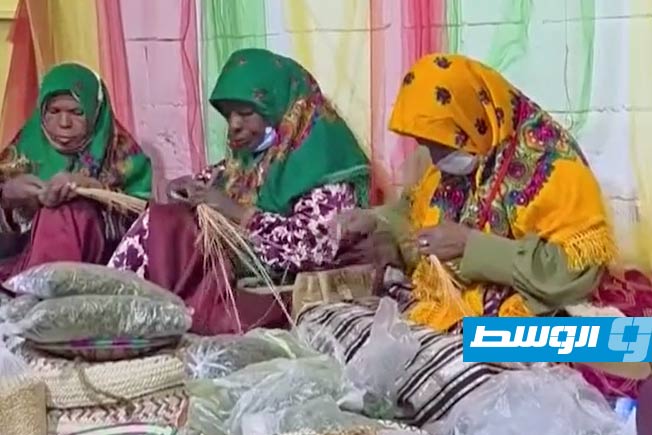
Civil associations and owners of small and medium enterprises also displayed a variety of dates, traditional clothing, and dried food products.
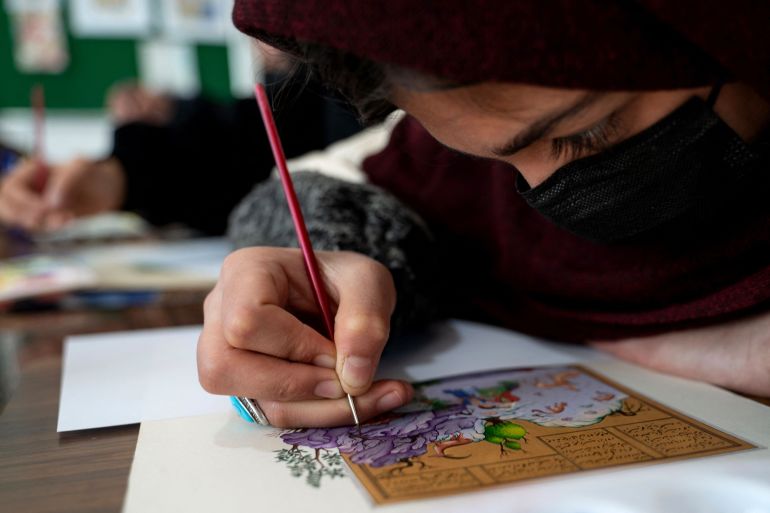
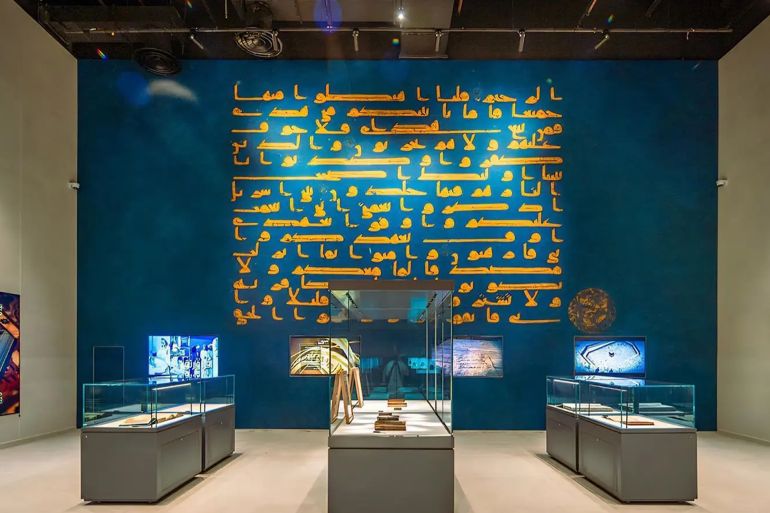
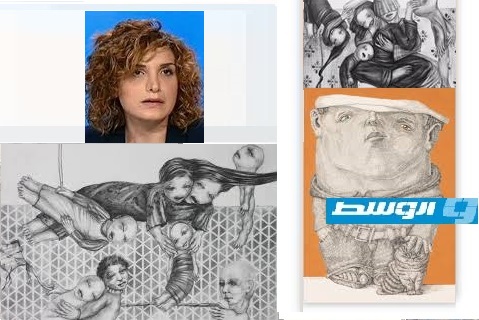
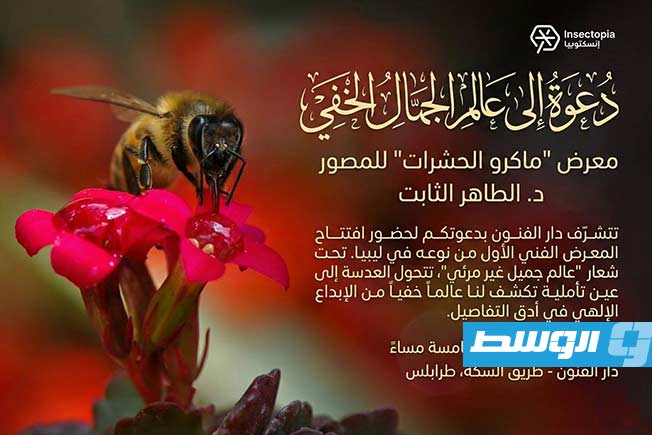
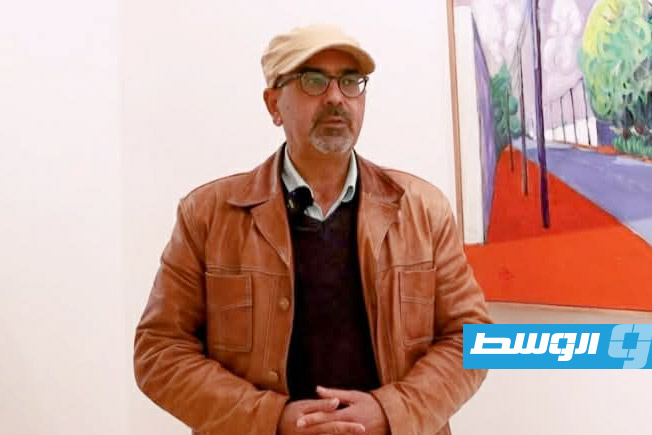
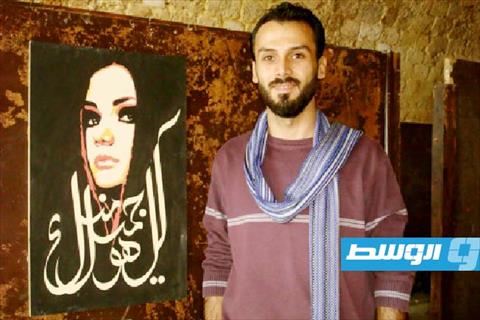
Arts and Calligraphy Exhibition
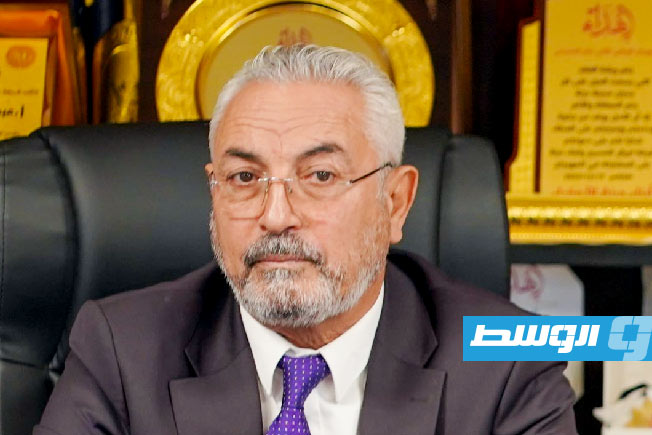
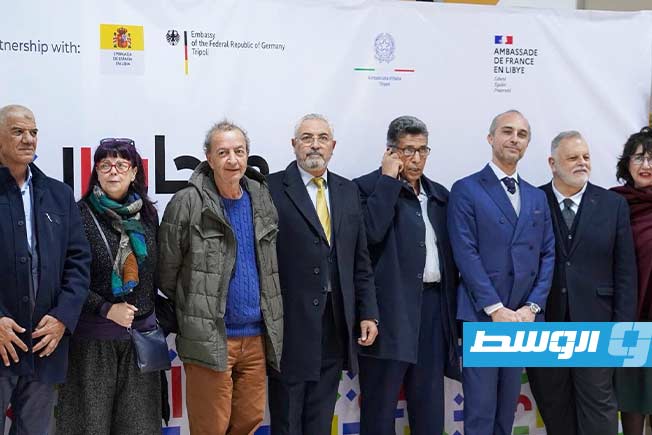
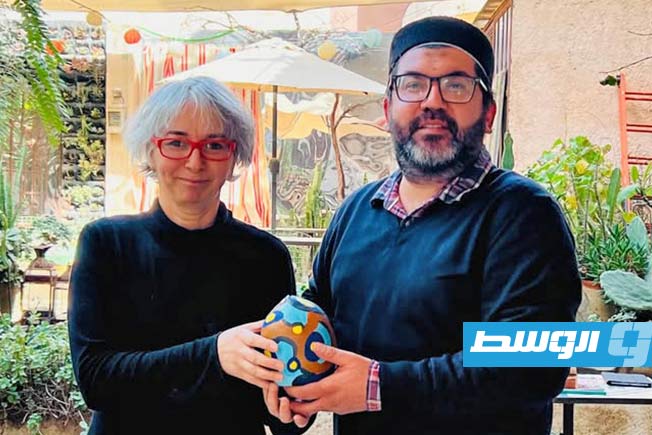
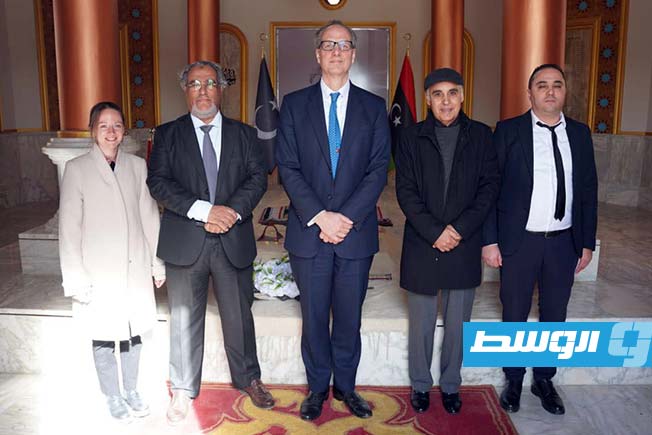
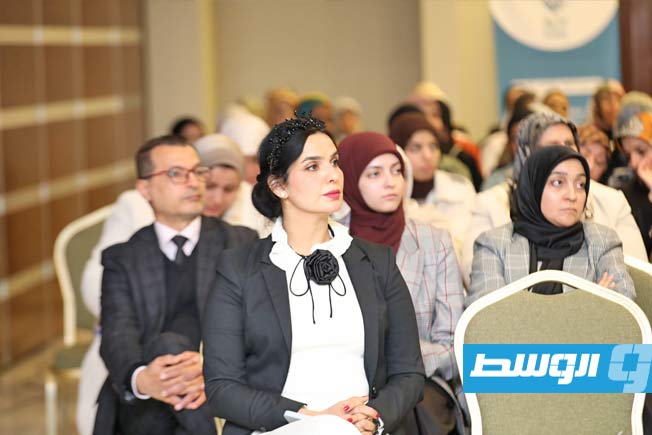
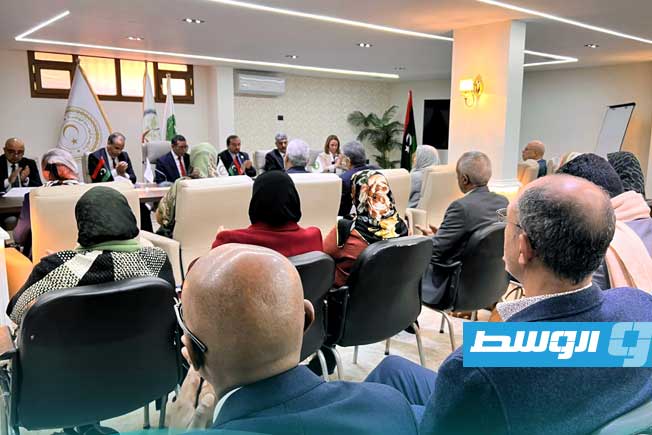
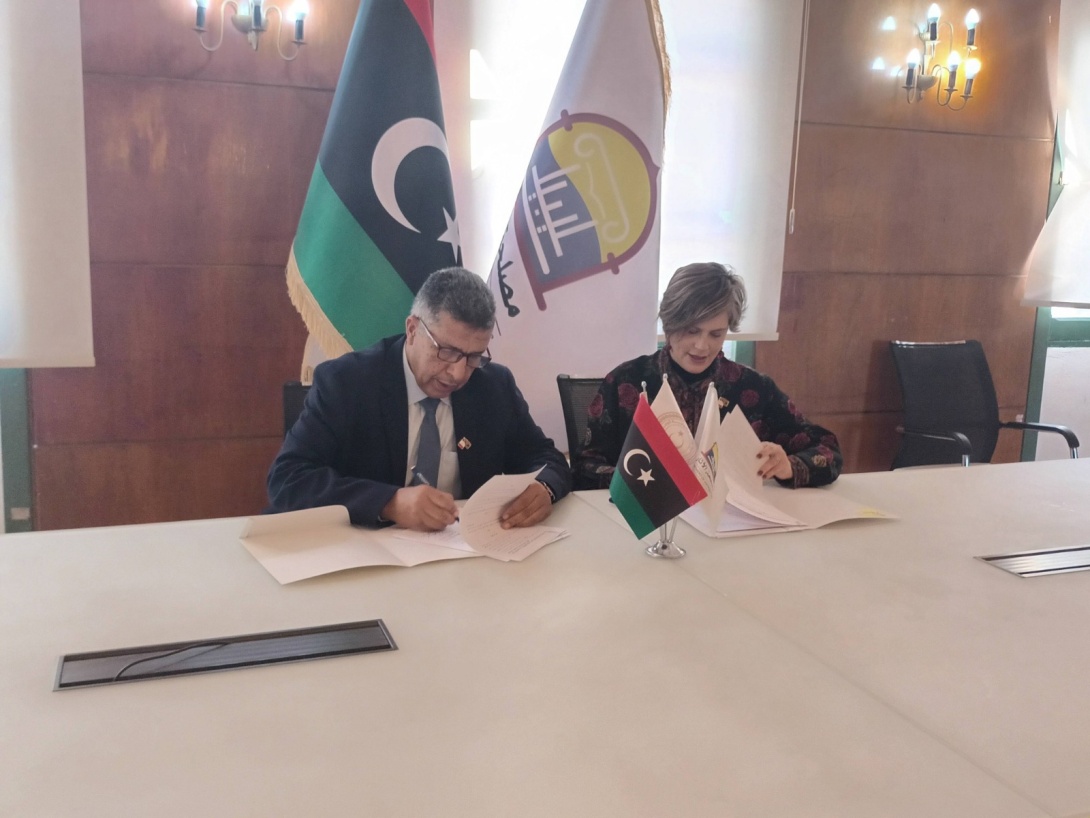
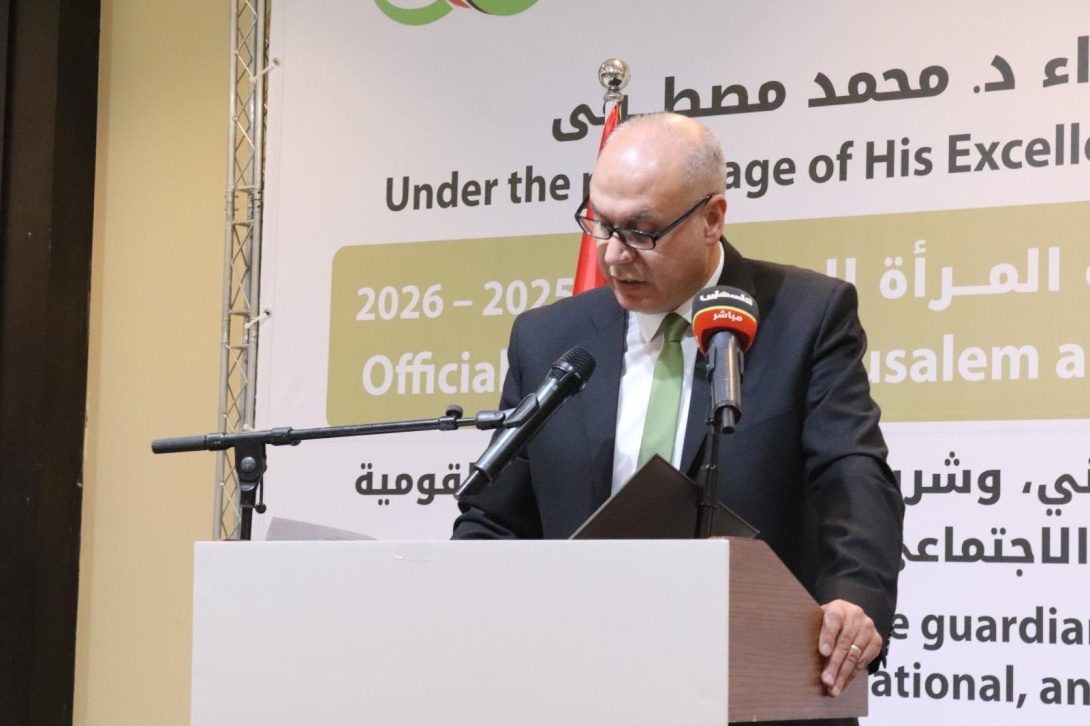
An exhibition of arts and calligraphy was opened by the head of the Sabratha Municipal Council, in the presence of deans of neighboring municipalities and directors of departments from the Ministry of Tourism in the Government of National Unity.
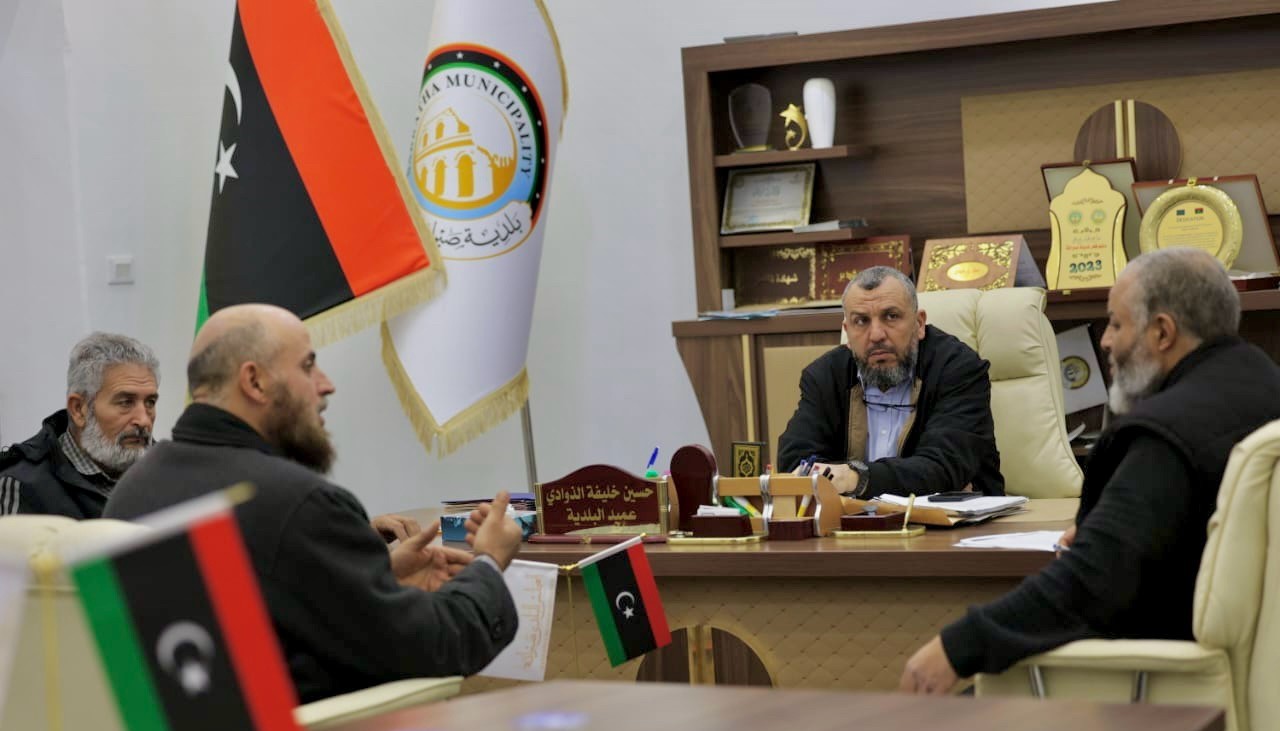
In a statement, the head of the municipal council stated that the municipality intends to launch a permanent Sabratha Tourism Festival, which will be officially announced next November.
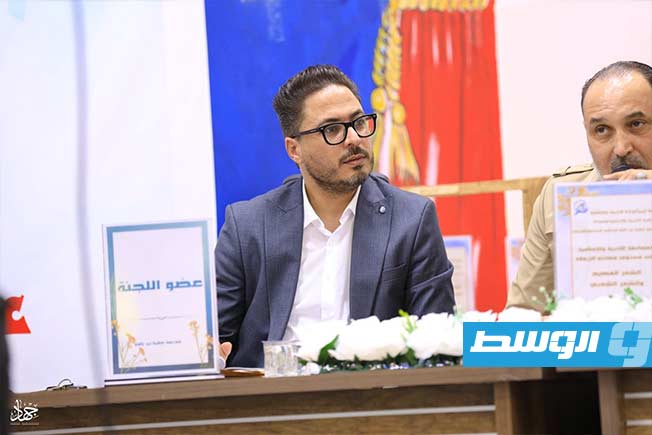
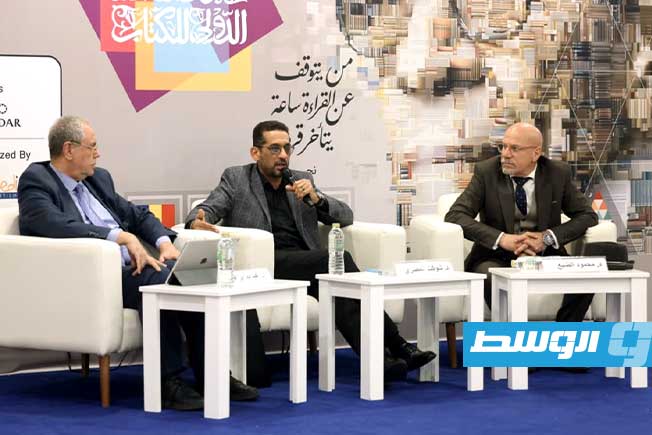
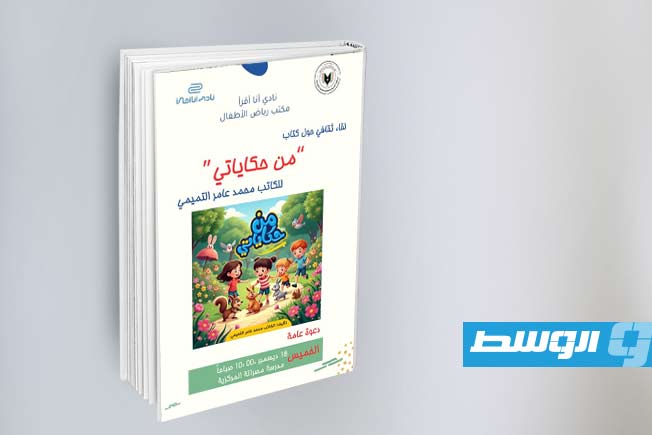
A member of the Sabratha Municipal Council and head of the festival’s preparatory committee noted that the festival featured the organization of cultural activities including introductory lectures on the city’s legacy and mechanisms for registering tangible and intangible heritage, both in Sabratha and other Libyan cities, in addition to poetry evenings and ‘Grandparents’ Tales’ events.
It is worth mentioning that the ‘One Hundred Days’ initiative, launched by the Libyan Antiquities Authority, aims to provide the necessary equipment and transportation for archaeological survey and documentation work, complete the list of Libyan national heritage, restore buildings and landmarks at risk of collapse, in addition to local awareness programs, and providing electronic monitoring systems for museums and storage facilities.
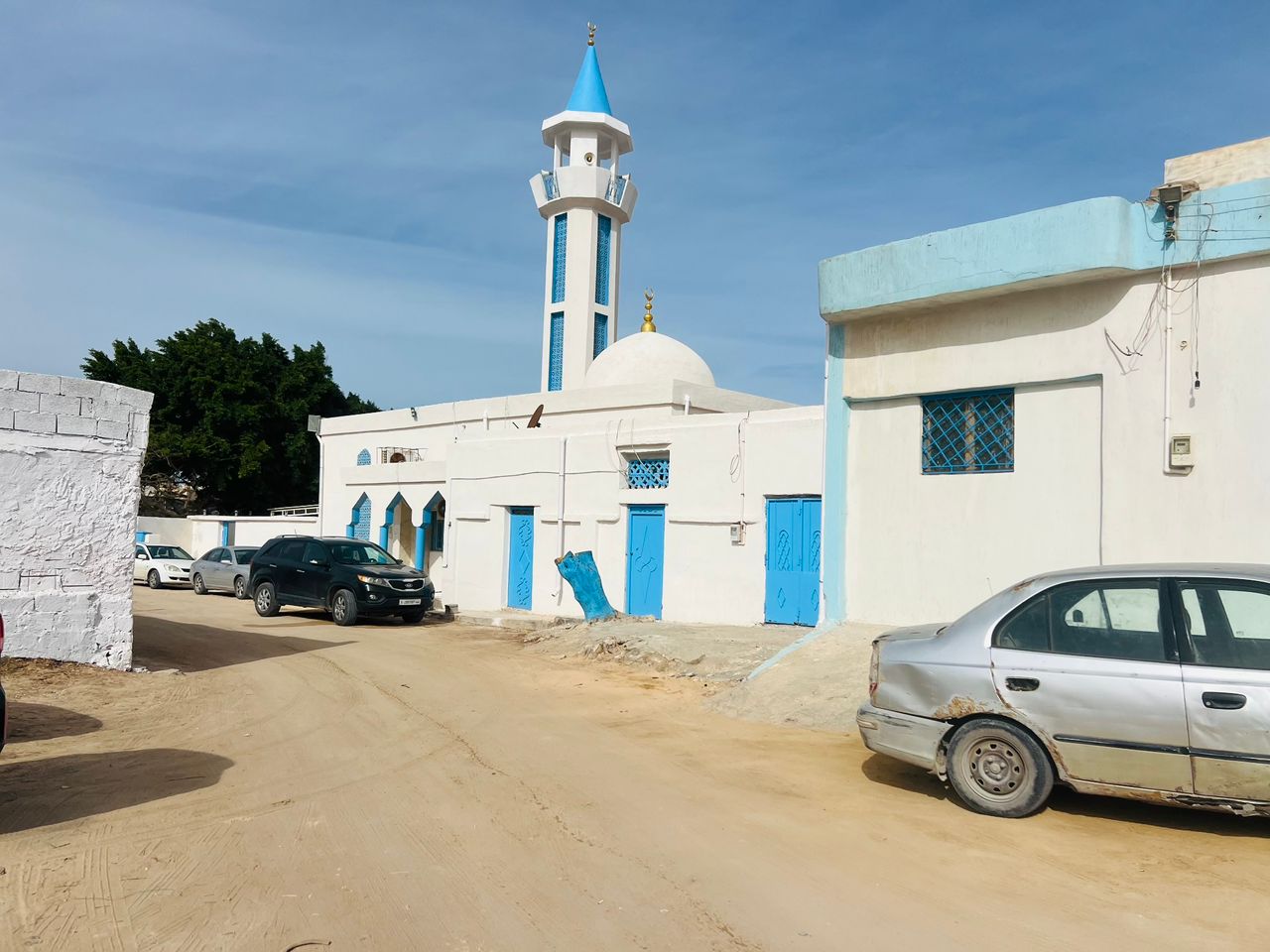
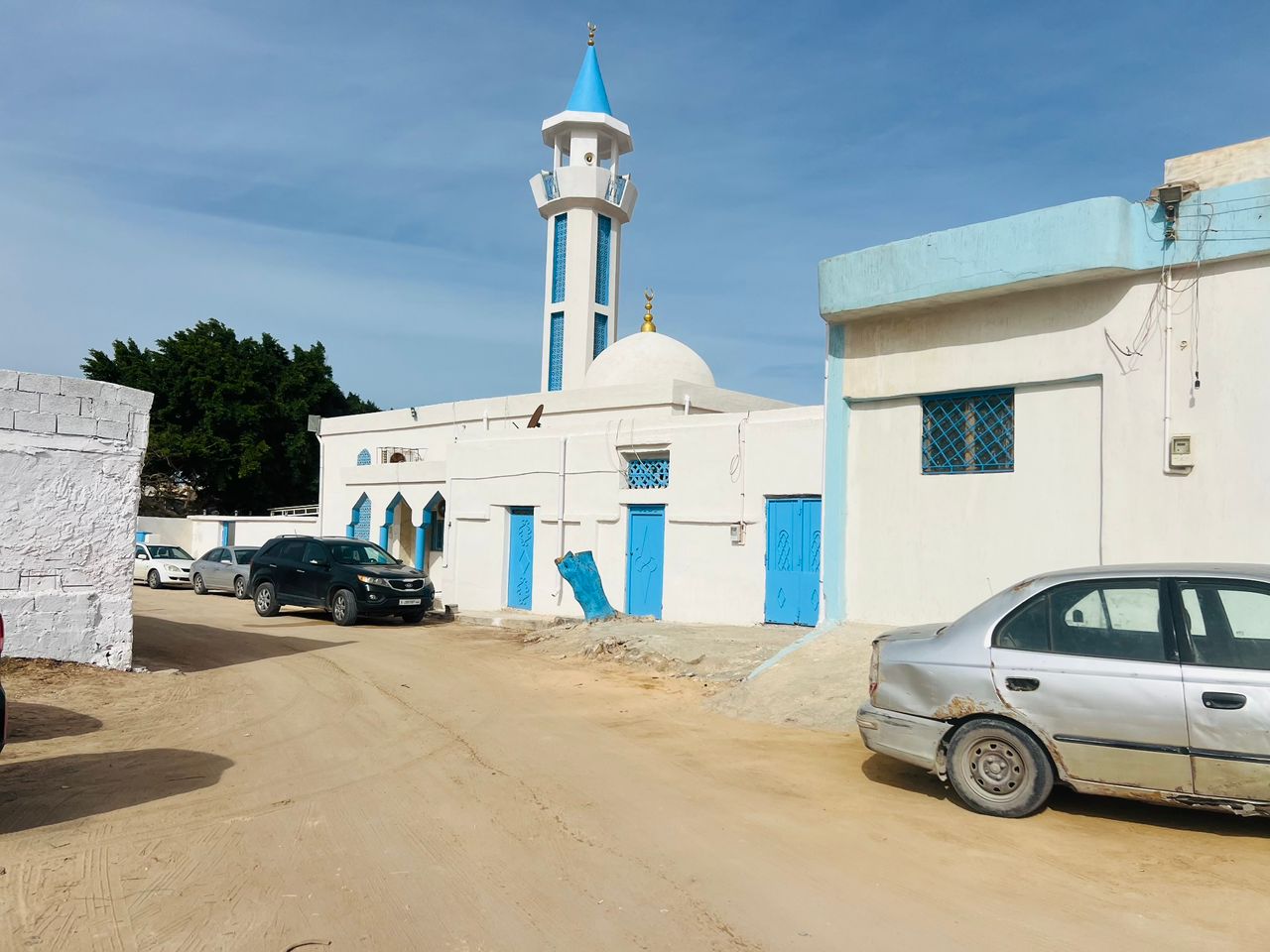
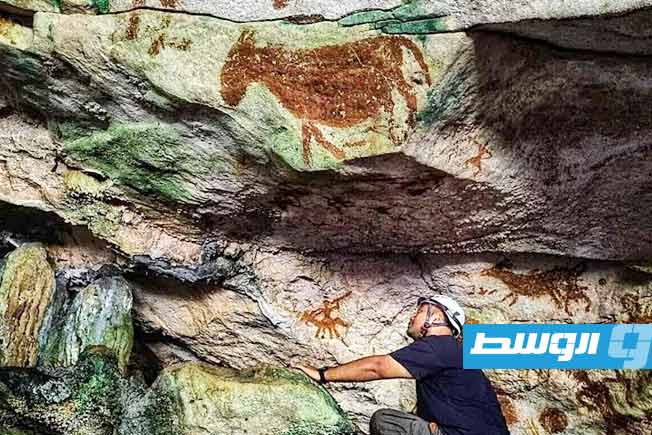
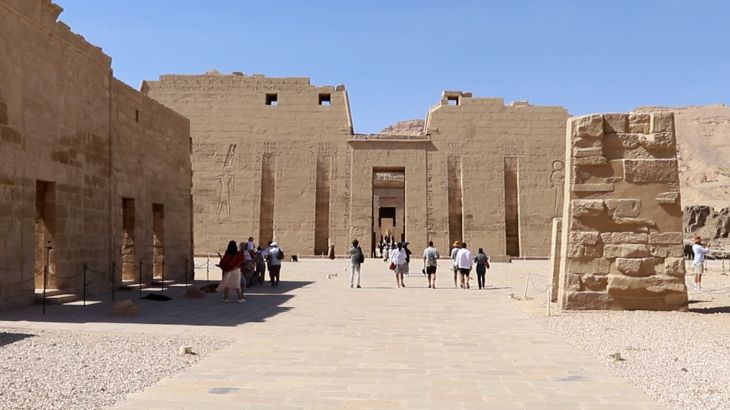
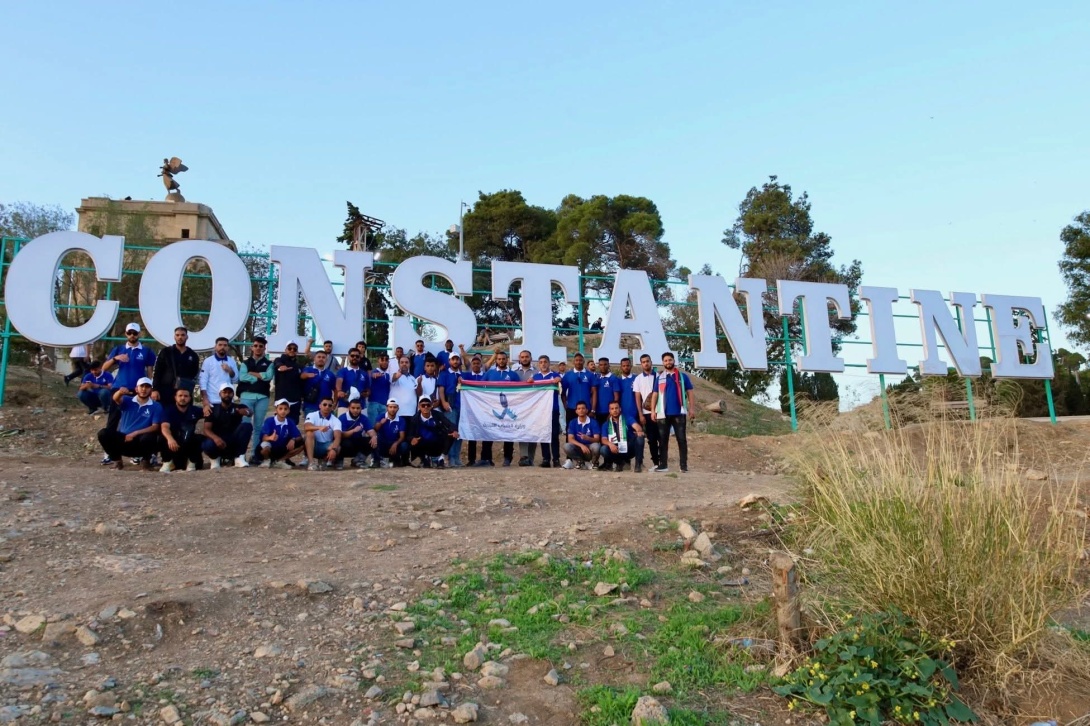
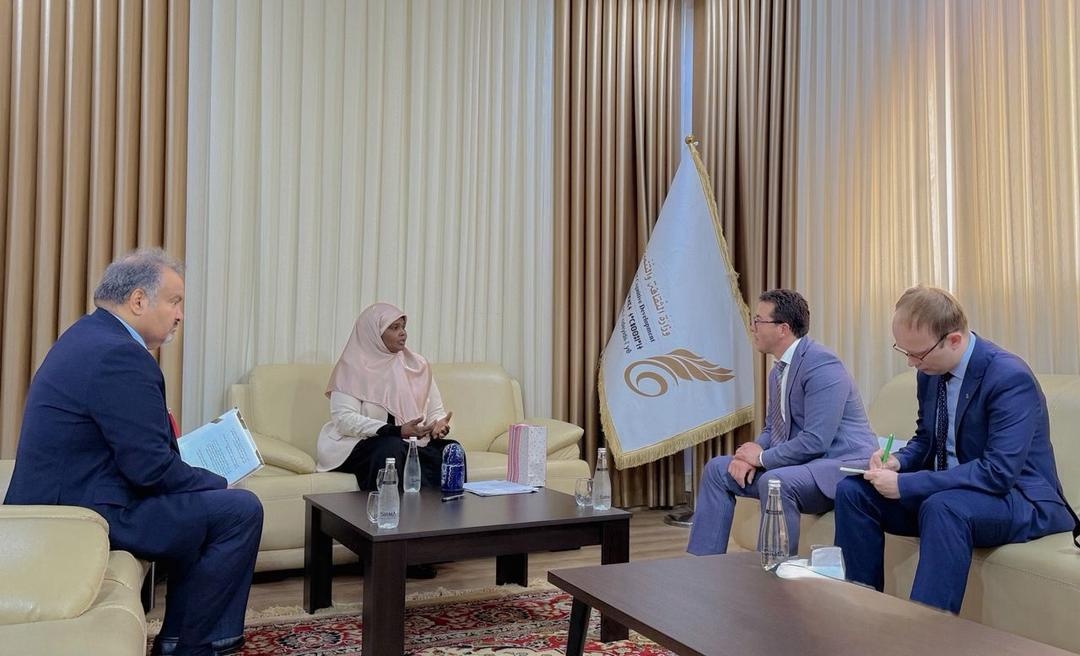
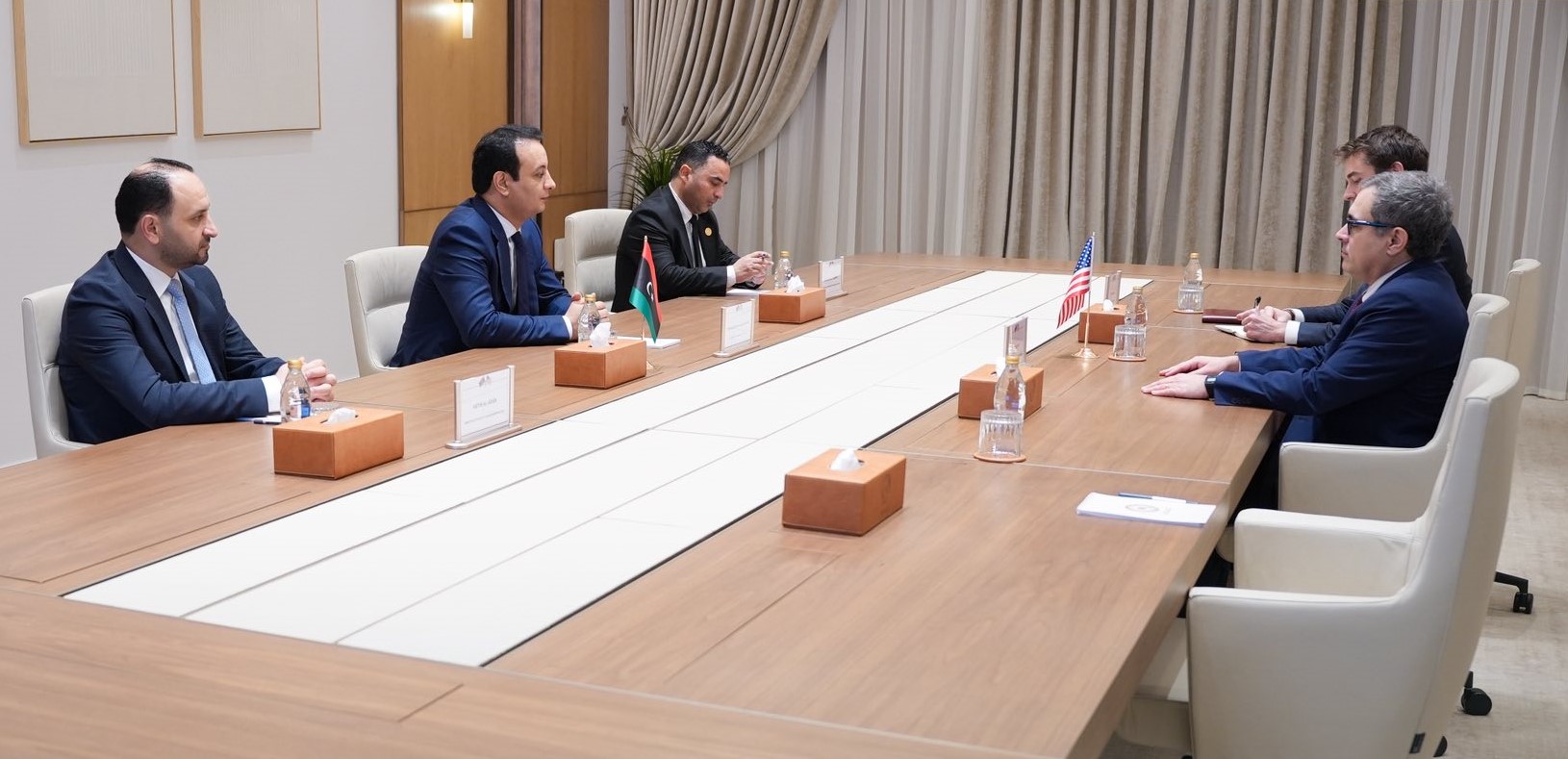
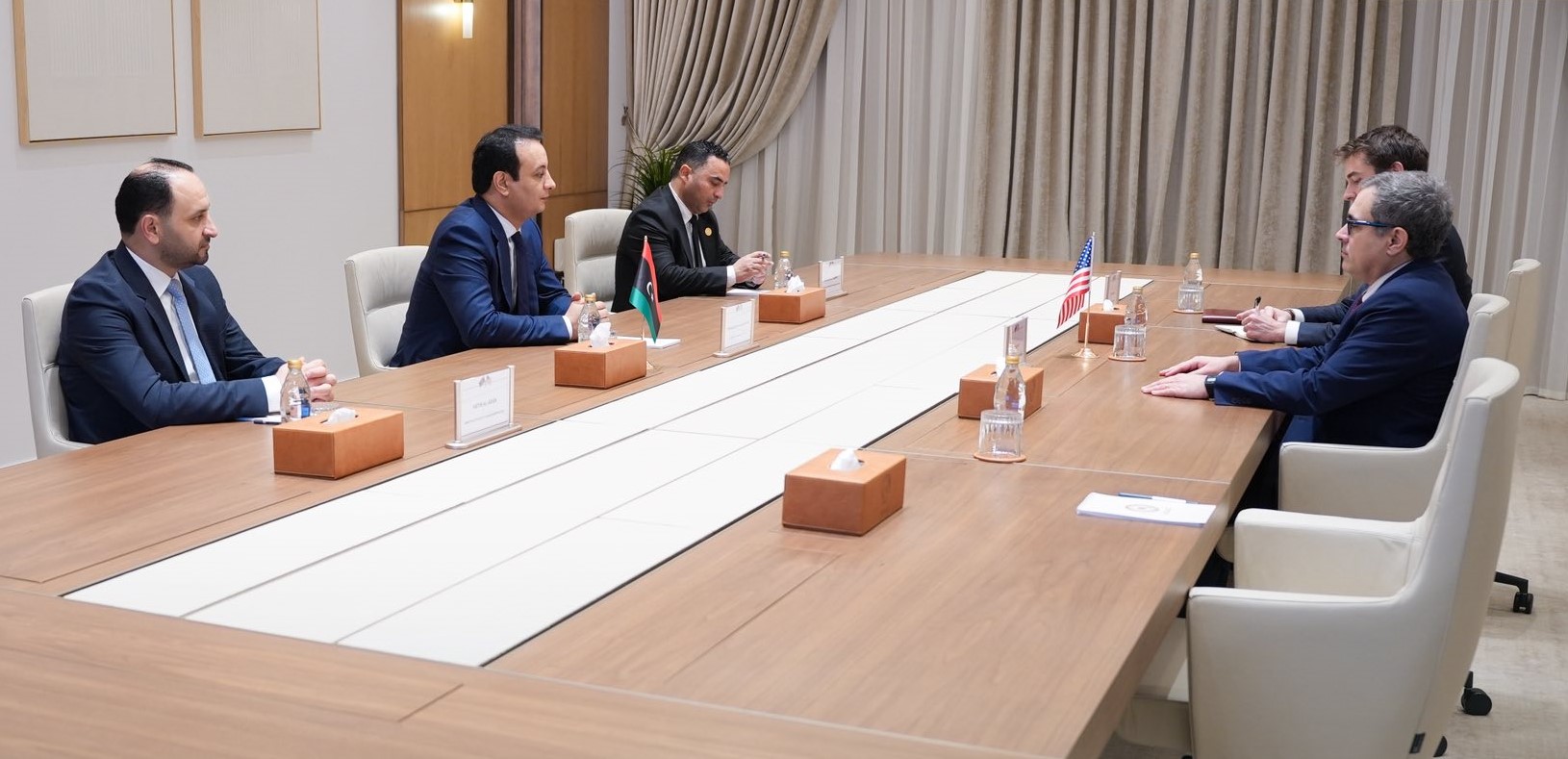
A view of the activities of the Sabratha Tourism Festival.A view of the activities of the Sabratha Tourism Festival.A view of the activities of the Sabratha Tourism Festival.A view of the activities of the Sabratha Tourism Festival.A view of the activities of the Sabratha Tourism Festival.<img alt="A view of the activities of the Sabratha Tourism Festival." src="https://liby
Sabratha Tourism Festival
The Sabratha Tourism Festival is an annual cultural event held in the historic coastal city of Sabratha, Libya. It celebrates local heritage and aims to promote tourism, drawing on the city’s fame for its nearby UNESCO-listed Roman ruins, which include a well-preserved theater from the 2nd century AD.
Archaeological Square
The Archaeological Square, often referring to sites like the Roman Forum or similar central excavation areas in ancient cities, is a historic public space that was the civic, religious, and commercial heart of its society. These squares typically contain layered ruins from centuries of construction, revealing the long-term evolution of urban life and governance from antiquity through later periods.
City Hall
City Hall is the administrative headquarters of a city’s government, typically housing the offices of the mayor and city council. Its history often dates to the city’s founding or a period of major growth, with many buildings serving as historic landmarks that reflect the architectural styles and civic pride of their era.
Sabratha Education Directorate
The Sabratha Education Directorate is the administrative body overseeing public education in the Sabratha region of Libya. It operates within the framework of the country’s national education system, which has undergone significant restructuring and challenges throughout Libya’s modern history following its independence in 1951.
Sabratha Municipal Council
The Sabratha Municipal Council is the local administrative body for the ancient coastal city of Sabratha in Libya. The city itself is a UNESCO World Heritage Site, renowned for its exceptionally well-preserved Roman ruins, including a theater from the late 2nd century AD, which date from its time as a trading post of the Roman Empire.
Ministry of Tourism
The Ministry of Tourism is a government department responsible for developing and promoting a country’s tourism industry. Its history is tied to the formal recognition of tourism’s economic importance, with many nations establishing such ministries in the 20th century to strategically manage growth, infrastructure, and cultural heritage sites for visitors.
Government of National Unity
The Government of National Unity (GNU) is a term most notably applied to the post-apartheid coalition government in South Africa, formed in 1994 following the country’s first multiracial elections. Led by Nelson Mandela as President, it brought together the African National Congress, the National Party, and the Inkatha Freedom Party to oversee the transition from minority rule to a multiracial democracy.
National Museum Hall
The National Museum Hall is a prominent cultural institution in Bangkok, Thailand, originally established in 1874 by King Chulalongkorn (Rama V) to preserve and display the royal collections of the Thai monarchy. It is considered the first public museum in Thailand and now houses extensive exhibits on Thai history, art, and archaeology, spanning from prehistoric times to the modern Bangkok period.
Shahat
Shahat, also known as Cyrene, is an ancient Greek and later Roman city located in modern-day Libya. Founded in 631 BC, it was a major center of the Cyrenaic region and is renowned for its well-preserved ruins, including temples, tombs, and a grand agora. The archaeological site is a UNESCO World Heritage Site, reflecting its historical significance as a powerful Mediterranean colony.
Libyan Antiquities Authority
The Libyan Antiquities Authority is the government body responsible for protecting and managing Libya’s archaeological heritage, including ancient sites like Leptis Magna and Cyrene. It was established to oversee the preservation of artifacts and historical locations, many of which date back to Phoenician, Roman, and Byzantine periods. Its work has been significantly challenged in recent decades due to periods of conflict and instability in the country.