Tripoli, January 25, 2026 – Various districts and neighborhoods in the capital, Tripoli, witnessed hail showers on Sunday evening, locally known as “Taborouri,” at unusual rates that covered streets and squares in white.
Activists in the capital shared video clips on social media platforms documenting this phenomenon, which amazed them due to the unusual amounts of falling snow.
The snowfall resulted from a significant drop in temperatures and a wave of severe weather fluctuations Libya has been experiencing these days, accompanied by active winds stirring sand and dust, in addition to heavy rainfall causing valley runoff.
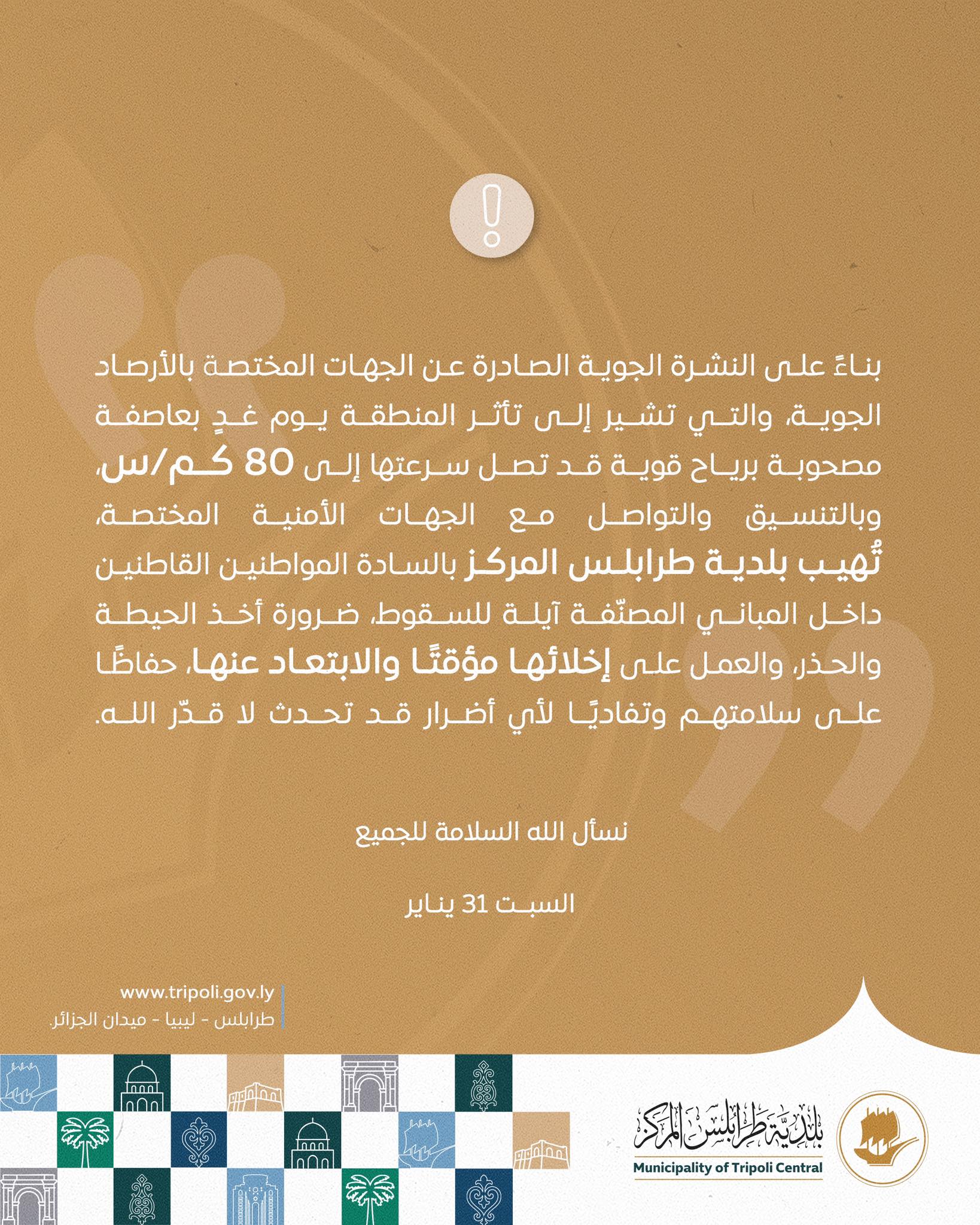
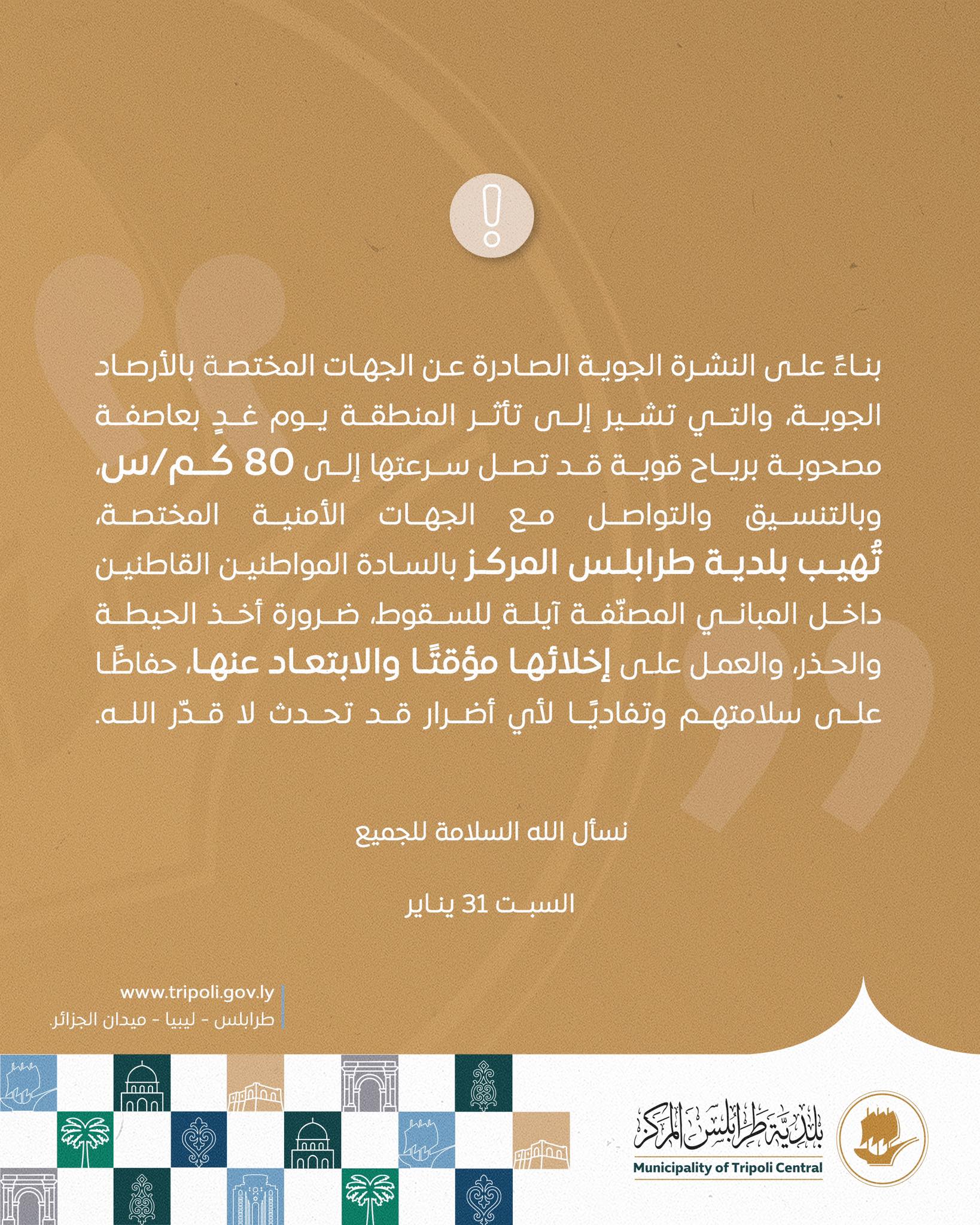
The National Meteorological Center expects unsettled weather with active to strong winds stirring dust and sand over the next three days across most northern regions, along with a drop in temperatures.
The weather bulletin issued by the Center on Sunday showed that wind speeds could reach up to 60 kilometers per hour in most areas, with temperatures ranging between 13 and 25 degrees Celsius.
Tripoli
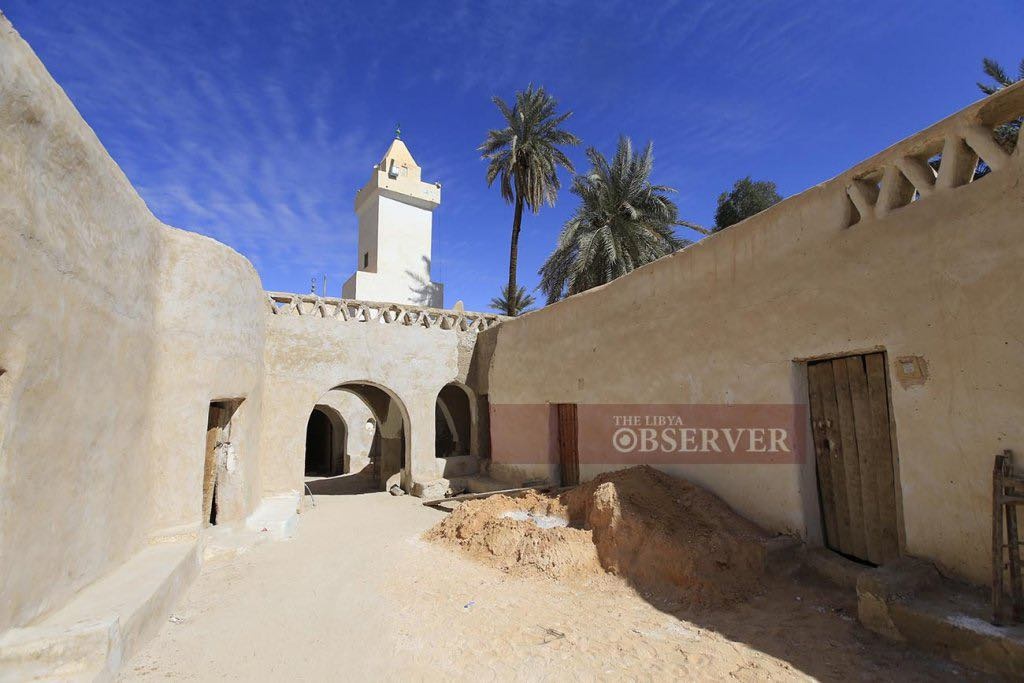
Tripoli is the capital and largest city of Libya, with a history dating back to the 7th century BC when it was founded by the Phoenicians. It later became a major center under Roman, Arab, Ottoman, and Italian rule, which is reflected in its historic architecture, such as the Red Castle (Assaraya al-Hamra) and the old medina.
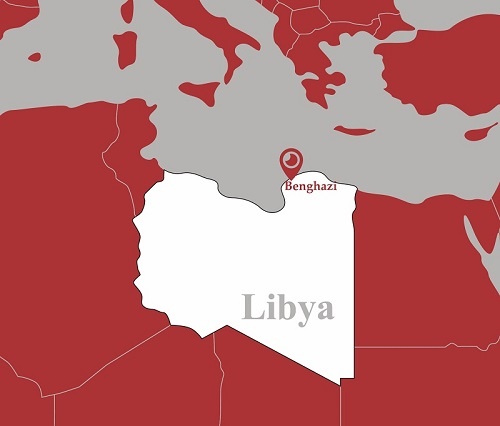
Libya
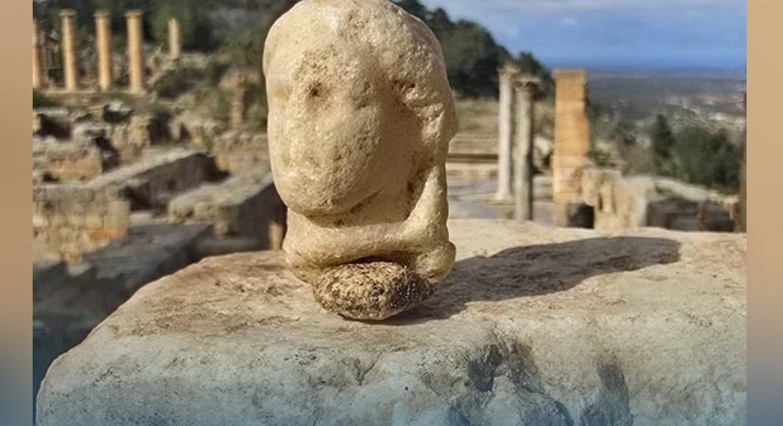
Libya is a North African country with a rich history that includes ancient Phoenician and Greek settlements, most notably at Cyrene, and later Roman rule. It was part of the Ottoman Empire before Italian colonization in the early 20th century, gaining independence as a kingdom in 1951. The nation’s modern history was dominated by Muammar Gaddafi’s lengthy rule from 1969 until the 2011 civil war and his overthrow.
National Meteorological Center
The National Meteorological Center is a key institution responsible for weather forecasting, climate monitoring, and meteorological services in its respective country. Its history typically involves evolving from a basic weather observation office into a modern hub utilizing advanced technology for data analysis and public safety warnings. These centers play a critical role in disaster preparedness and supporting sectors like agriculture and aviation.