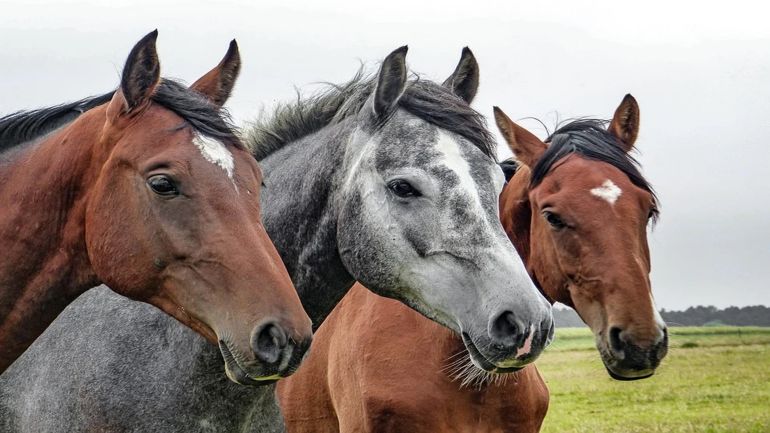
Horses have long been described in literary works or by their enthusiasts and breeders as sensitive creatures, capable of sensing human tension even before a word is spoken.
Today, a new study scientifically and precisely confirms this idea, proving that horses can indeed smell human fear through sweat odor alone and respond to it both physically and behaviorally.
Revealing Sweat Samples
In the study, published in the journal “PLOS ONE,” sweat samples were collected from volunteers after they watched fear-inducing film clips. These samples were then presented to a number of horses under controlled conditions, without the horses seeing the people themselves. The goal was to isolate the odor from any visual or behavioral cues.
The team placed pads soaked with sweat in a special Lycra muzzle designed for 43 Welsh mares. These horses were randomly divided into three groups.
The fear group was exposed only to sweat collected from horror movie viewers. The joy group smelled only the sweat of people who watched videos inducing joy or humor. The control group wore muzzles equipped with clean pads free of any human odor.
In addition, the horses underwent 4 behavioral tests while their reactions were monitored. These tests included: grooming them, their interaction with a suddenly opened umbrella, a human approaching them, and their exploration of a new object.
Behavioral Response
The results indicate that when the horses inhaled the sweat of fearful people, their heart rate increased. They displayed more cautious and anxious behavior and were less inclined to approach humans compared to when exposed to neutral odors.
Scientists explain this phenomenon by noting that fear alters the chemical composition of human sweat. Glands secrete volatile compounds that carry an emotional signature, which animals with a strong sense of smell can easily detect.
According to the study, this discovery could have significant implications for animal welfare. It suggests that a trainer’s emotional state could be transmitted to the horse through odor, even when the trainer attempts to hide their feelings.
This may influence how humans train horses and their overall welfare, a matter that requires new interventions to develop our way of interacting with these creatures.