From “War” to “Humanitarian Crisis”: How Has the Language of Global Cultural Institutions Changed the Narrative on Gaza?
libyawire.org > News > Culture > From “War” to “Humanitarian Crisis”: How Has the Language of Global Cultural Institutions Changed the Narrative on Gaza?
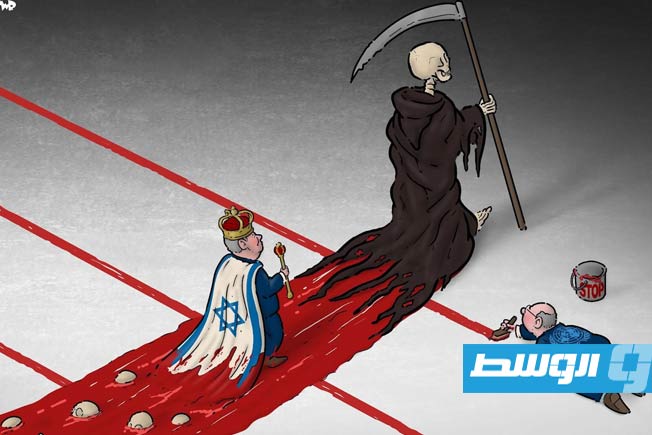
The language adopted in statements from international cultural institutions regarding events in Gaza has undergone a notable shift towards what is known as “white language”—formulations that do not accurately reflect the reality of an area subjected to continuous bombardment under a complete siege for over two years. In statements issued by major film festivals, global museums, and artistic and literary unions, expressions such as “Humanitarian Crisis,” “The Situation,” and “Humanitarian Suffering” are repeatedly used, while the direct descriptor “War on Gaza” has seen a clear decline.
This linguistic shift appears simultaneously across different institutions and in various contexts, making it a common feature in cultural discourse recently. This occurs amid a noticeable convergence in the language of political and international statements and declarations, which themselves rely on general humanitarian vocabulary when addressing developments in Gaza. This has allowed these formulations to become a ready-made linguistic reference within the cultural field, without naming the actor or referring to the military context.
With the repetition of this pattern in institutional cultural discourse, a broader question arises about the nature of these institutions’ approach to events and their reasons for resorting to a “safe” linguistic reference: Is it due to funding concerns, or adherence to a specific political lexicon?
The Political Lexicon First
A few weeks after the war on Gaza began in October 2023, major international and political institutions adopted a specific lexicon, focusing on the humanitarian impact and avoiding direct description of military action. In its periodic updates, the UN Office for the Coordination of Humanitarian Affairs (OCHA) stated that “The humanitarian situation in the Gaza Strip continues to deteriorate.”
In a statement by the UN Relief and Works Agency for Palestine Refugees (UNRWA), events were described as “A Catastrophic Humanitarian Crisis,” focusing clearly on the humanitarian consequences of the war without naming it as a war.
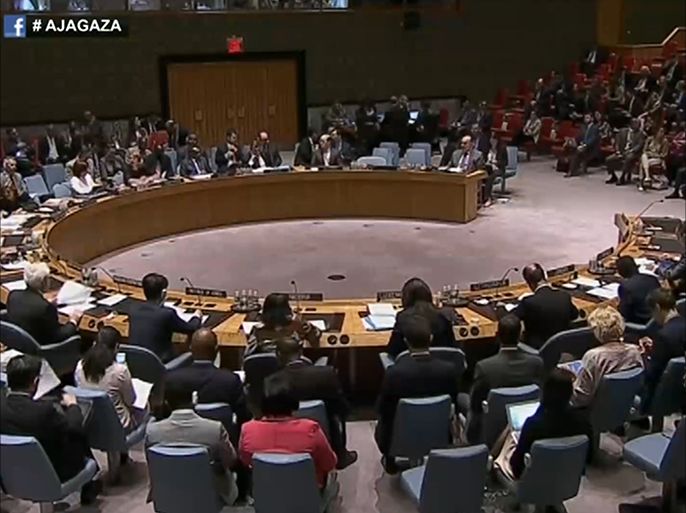
This lexicon quickly solidified at the highest levels of international discourse. On October 27, 2023, the UN General Assembly, in its resolution ES-10/21, called for “an immediate, durable and sustained humanitarian truce.” The Security Council repeated the same formulation in its Resolution 2720 in December 2023, when it spoke of “the urgent humanitarian needs stemming from the humanitarian crisis in Gaza,” using the phrase “the Gaza humanitarian crisis.”
Over time, this lexicon became the dominant political language and automatically transferred to cultural institutions, which found themselves under increasing pressure to take a position without directly clashing with politics. In European Union statements, for example, a statement from the European External Action Service in January 2024 described events as “The catastrophic humanitarian situation in Gaza,” without referring to war or military operations.
Ceasefire with Conditions
In the American context, the same shift appeared, albeit in a different form. Instead of using the term “Ceasefire” in the early stages, official statements focused on “humanitarian pauses.” The US Mission to the UN stated in an official Security Council briefing that it supported “Humanitarian pauses to facilitate assistance.” The term “Ceasefire” entered the discourse later but was coupled with political and security conditions.
The political lexicon quickly found its way into cultural discourse. In April 2024, when deciding to keep the Israeli pavilion closed at the opening of the Venice Biennale, the expression “war on Gaza” was not used at all. The statement linked the pavilion’s opening to a specific condition: “A Ceasefire and Hostage Release Agreement.” Here, naming the event is replaced by a procedural condition, allowing the institution to avoid describing the war itself.
The same approach was repeated in major museums. Statements and remarks associated with major American art institutions used descriptions like “Ongoing humanitarian suffering in Gaza,” an expression that highlights human pain but separates the suffering from its political and military cause.
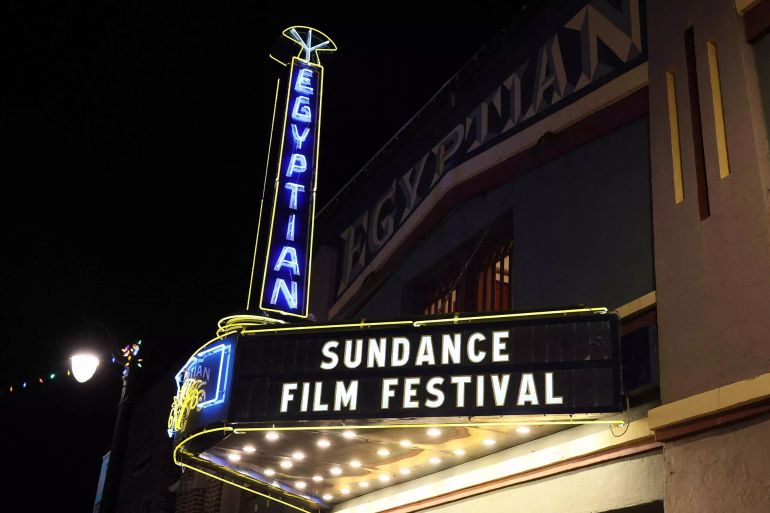
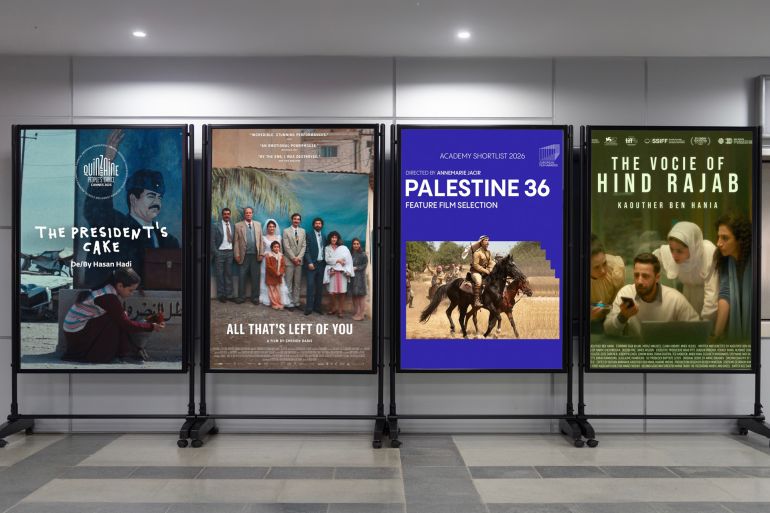
In film festivals, such as Sundance, films addressing Gaza were presented as “Stories from affected communities
Gaza
Gaza is a coastal city in the Palestinian territories with a history dating back over 3,000 years, having been ruled by various empires including the Egyptians, Philistines, Romans, and Ottomans. It is a densely populated urban center and holds significant cultural and historical importance in the region. In recent decades, it has been a focal point of the Israeli-Palestinian conflict and is administered by the Hamas movement.
UN Office for the Coordination of Humanitarian Affairs (OCHA)
The UN Office for the Coordination of Humanitarian Affairs (OCHA) was established in 1991 to strengthen the international response to complex emergencies and natural disasters. It serves as the central UN mechanism for mobilizing and coordinating humanitarian action, advocating for the rights of people in need, and ensuring a coherent global response.
UN Relief and Works Agency for Palestine Refugees (UNRWA)
The UN Relief and Works Agency for Palestine Refugees (UNRWA) was established by the United Nations General Assembly in 1949 to provide humanitarian aid and development programs to Palestinian refugees displaced by the 1948 Arab-Israeli war. It offers essential services such as education, healthcare, and social services primarily in the Gaza Strip, West Bank, Jordan, Lebanon, and Syria.
UN General Assembly
The United Nations General Assembly is the main deliberative body of the UN, established in 1945 following World War II. It serves as a forum where all 193 member states have equal representation to discuss and coordinate on international issues covered by the UN Charter.
Security Council
The United Nations Security Council is one of the six principal organs of the UN, established in 1945 following World War II. It holds primary responsibility for maintaining international peace and security, with its 15 members including five permanent members with veto power.
European Union
The European Union (EU) is a political and economic union of 27 European countries, established to foster cooperation and prevent conflict after World War II. Its foundations were laid with the 1951 Treaty of Paris, creating the European Coal and Steel Community, which evolved through subsequent treaties into the modern EU with a single market and common policies.
European External Action Service
The European External Action Service (EEAS) is the diplomatic service and foreign ministry of the European Union, established in 2010 following the Lisbon Treaty. It supports the EU’s High Representative for Foreign Affairs and Security Policy in conducting a coherent and effective common foreign and security policy for the member states.
US Mission to the UN
The US Mission to the United Nations is the diplomatic representation of the United States to the UN, based in New York City. It was established following the founding of the United Nations in 1945 to advance US foreign policy interests and engage in international diplomacy within the UN system.
Venice Biennale
The Venice Biennale is a major international cultural exhibition founded in 1895, originally focused on contemporary art. It has since expanded to include architecture, cinema, dance, music, and theatre, hosting national pavilions and events that make it a leading forum for global artistic dialogue.
Sundance Film Festival
The Sundance Film Festival is an annual independent film festival held in Utah, founded in 1978 by Sterling Van Wagenen and initially chaired by actor Robert Redford, whose Sundance Institute took over management in 1985. It was established to provide a platform for independent filmmakers and has grown into one of the most prominent and influential film festivals in the world.
Egyptian Theatre
The Egyptian Theatre is a historic movie palace in Hollywood, California, which opened in 1922 and was the site of the first-ever Hollywood movie premiere. Its distinctive Egyptian Revival architecture, inspired by the then-recent discovery of King Tutankhamun’s tomb, made it a landmark for film exhibition and a symbol of 1920s cinematic grandeur.
Park City
Park City is a mountain resort town in Utah, USA, originally founded as a silver mining camp in the 1860s. After the decline of mining, it successfully reinvented itself as a major destination for skiing and winter sports, now famously hosting the annual Sundance Film Festival.
Utah
Utah is a state in the western United States known for its diverse landscapes, including deserts, mountains, and the Great Salt Lake. Historically, it was the homeland of indigenous tribes like the Ute and was settled in the mid-19th century by Mormon pioneers, who established the territory that later became a state in 1896. Today, it is a major center for outdoor recreation and is home to significant cultural sites like Temple Square in Salt Lake City.