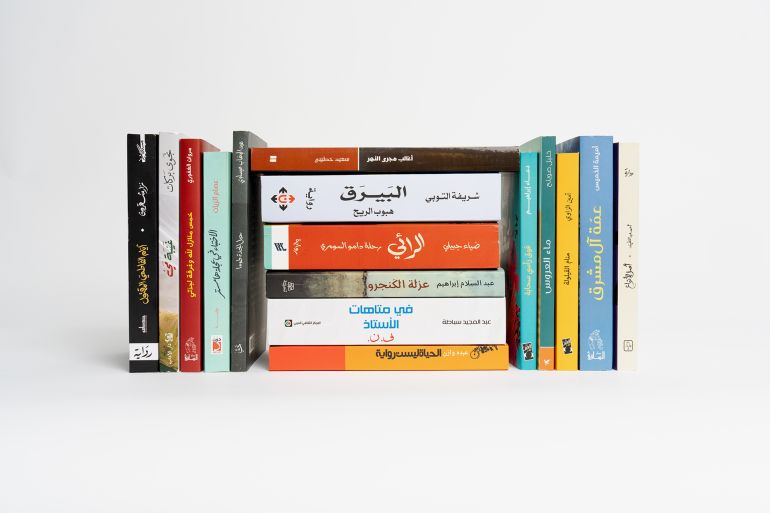
Today, more than 400 million people around the world speak Arabic, including about 200 million native speakers, in addition to between 200 and 250 million non-native speakers.
Thus, Arabic is one of the world’s most widespread and influential languages, not only in terms of the number of speakers but also due to its deep presence in other languages and cultures, most notably English.
Modern Standard Arabic is used as an official language in government, law, and education, and it also holds a prominent place in religious and international contexts. Alongside this, more than 25 spoken Arabic dialects are prevalent across the Middle East and North Africa, reflecting a wide linguistic and cultural diversity within the single Arabic framework.
Every year on December 18, the “World Arabic Language Day” is celebrated, honoring it as “a pillar of humanity’s cultural diversity.” This specific date was chosen to commemorate the day in 1973 when Arabic was adopted as the sixth official language of the United Nations.
On this occasion, we review a set of common words in contemporary English that trace their origins to Arabic, or passed through Arabic, before becoming part of everyday usage in English-speaking societies.
How did Arabic words enter other languages?
As the most widespread Semitic language—a language family that originated in Southwest Asia and parts of Africa—Arabic has influenced other societies and languages over many centuries.
Linguists confirm that the presence of Arabic vocabulary in different languages reflects a long history of communication and contact through trade, translation, scientific research, and cultural exchange.
Languages such as English, Spanish, French, Turkish, and many others have absorbed hundreds, even thousands, of Arabic words, a large number of which are still used in daily life without their speakers realizing their linguistic origins.
It is noted that this type of linguistic overlap is a “natural phenomenon,” pointing out that languages have exchanged vocabulary among themselves for many centuries.
It was added that “Arabic is no exception, and its presence is reflected in the vocabulary of science, technology, and civilization.”
A Multi-Form Alphabet
The Arabic alphabet consists of 28 letters, is written from right to left, and is characterized by a connected script where the shapes of letters change according to their position in a word.
Short vowels are often omitted in everyday writing. These characteristics, along with the richness of Arabic vocabulary, have contributed to forming a common impression among non-native speakers that it is a difficult language to learn.
However, it is argued that this impression is “far from accurate,” explaining that Arabic is not among the world’s most difficult languages, but its systems differ from English or many European languages.
It is pointed out that the Arabic script is familiar to speakers of languages like Urdu and Persian, while Turks find it easy to memorize Arabic vocabulary due to the thousands of words the Turkish language has absorbed throughout history.
From “Algebra” to Customs “Tariff”
The contribution of the Arabic language to the fields of mathematics and science is among its most prominent global influences.
Algebra: It is considered a pillar of mathematics, derived from the Arabic term “al-jabr,” which appeared in the title of a book written by the scholar Muhammad ibn Musa al-Khwarizmi in the 9th century CE on solving equations.
Algorithm: This word is derived from the name “al-Khwarizmi” himself and has today become a central concept in computer science.
Over time, these terms entered other languages after undergoing abbreviations and phonetic modifications that made their Arabic origins less obvious. Examples of this include:
Carat: A unit for measuring the weight of gemstones, its roots trace back to the word “qīrā
Powell’s Books
Powell’s Books is an iconic independent bookstore in Portland, Oregon, founded in 1971 by Walter Powell. It occupies an entire city block and is renowned as one of the world’s largest new and used bookstores, with a history of fostering a vibrant literary community.
Portland
Portland is a major city in the U.S. state of Oregon, founded in 1845 and incorporated in 1851. Its growth was historically driven by its strategic location as a port at the confluence of the Willamette and Columbia Rivers, facilitating trade and earning it the nickname “Stumptown” during its early logging boom. Today, it is known for its vibrant arts scene, expansive parks, and distinctive urban culture.
Ore
Ore is a small village in eastern Estonia, historically known for its manor estate first established in the 17th century. The Ore Manor house, built in the late 18th century in a Neoclassical style, is a preserved architectural monument and cultural site.
United Nations
The United Nations is an international organization founded in 1945 after World War II to promote peace, security, and cooperation among nations. It replaced the League of Nations and is headquartered in New York City, with 193 member states working through bodies like the General Assembly and Security Council.
Middle East
The Middle East is a transcontinental region centered on Western Asia and Egypt, historically home to some of the world’s earliest civilizations, including Mesopotamia and Ancient Egypt. It is the birthplace of major Abrahamic religions—Judaism, Christianity, and Islam—and has been a central crossroads for trade, empire, and cultural exchange for millennia. In the modern era, the region’s vast oil reserves and complex geopolitical dynamics have shaped its contemporary significance.
North Africa
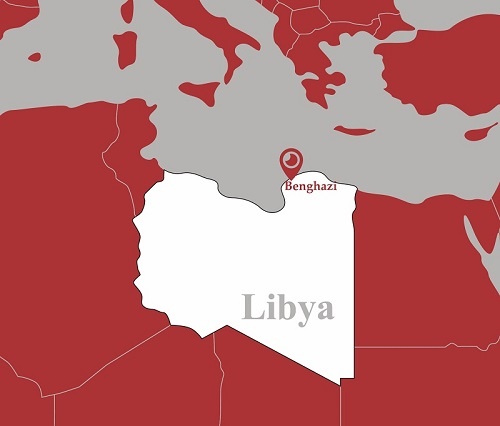
North Africa is a region encompassing countries such as Morocco, Algeria, Tunisia, Libya, and Egypt, historically defined by the Mediterranean Sea to the north and the Sahara Desert to the south. It has a rich and layered history, having been home to ancient civilizations like the Egyptians and Phoenicians, and later forming a core part of the Roman Empire, the Islamic Caliphates, and the Ottoman Empire. This complex past has created a distinct cultural identity blending indigenous Berber (Amazigh) traditions with Arab, Mediterranean, and African influences.
Southwest Asia
Southwest Asia, often referred to as the Middle East, is a transcontinental region that is the historical cradle of some of the world’s earliest civilizations, including Mesopotamia and the Fertile Crescent. It is home to major religious sites for Islam, Christianity, and Judaism, and its history has been profoundly shaped by ancient empires, the spread of monotheistic faiths, and its strategic geopolitical position.
Africa
Africa is the world’s second-largest continent, known as the cradle of humankind due to archaeological evidence showing the origins of human evolution. It is home to immense cultural and historical diversity, with ancient civilizations like Egypt and Mali, and was profoundly shaped by centuries of transatlantic trade and colonial rule.
English
English is the primary language of England and the United Kingdom, evolving from the Germanic dialects of Anglo-Saxon settlers in the 5th century. Its history includes significant influences from Old Norse after Viking invasions and a major transformation through Norman French following the 1066 conquest, leading to the Middle and Modern English spoken globally today.
Spanish
Spain is a country in southwestern Europe with a rich and diverse cultural heritage shaped by various civilizations, including the Romans, Visigoths, and Moors. Its history features the powerful medieval kingdoms of Castile and Aragon, the subsequent unification under the Catholic Monarchs, and a vast global empire in the early modern period. Today, Spain is known for its distinct regional identities, languages like Castilian Spanish and Catalan, and influential contributions to art, architecture, and cuisine.
French
France is a country in Western Europe with a rich cultural history shaped by Celtic, Roman, and Frankish influences. It is renowned for its global impact in art, philosophy, and cuisine, and is home to numerous UNESCO World Heritage sites like the Palace of Versailles and Mont-Saint-Michel.
Turkish
Turkey is a transcontinental nation with a rich history that spans ancient civilizations like the Hittites and Byzantines, followed by the powerful Ottoman Empire. Its modern identity was forged as the Republic of Turkey in 1923 under Mustafa Kemal Atatürk. The country is renowned for its unique cultural blend of Eastern and Western influences, visible in its architecture, cuisine, and traditions.
Urdu
Urdu is a major language of South Asia, with its origins developing around the 12th-13th centuries in the Delhi region through the interaction of local Prakrits with Persian, Arabic, and Turkish. It is the national language of Pakistan and an official language in several Indian states, renowned for its rich literary tradition, particularly in poetry.
Persian
The term “Persian” broadly refers to the culture, language, and historical empires originating from the Iranian plateau. Historically, it is most famously associated with the Achaemenid Empire, founded by Cyrus the Great in the 6th century BCE, which became one of the largest ancient empires. This rich heritage has left a lasting legacy in art, architecture, and literature across the Middle East and Central Asia.
Muhammad ibn Musa al-Khwarizmi
Muhammad ibn Musa al-Khwarizmi was a 9th-century Persian scholar from the Abbasid Caliphate, renowned as the “father of algebra.” His seminal work, “Al-Kitab al-Mukhtasar fi Hisab al-Jabr wal-Muqabala,” systematically presented algebraic methods and gave the discipline its name. He also made foundational contributions to astronomy, geography, and mathematics, including popularizing the Hindu-Arabic numeral system.