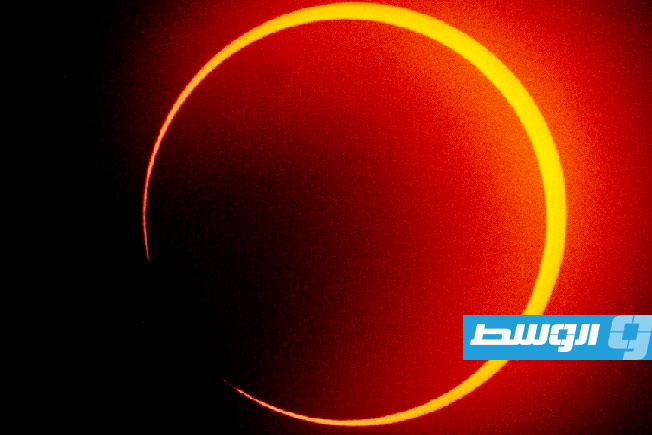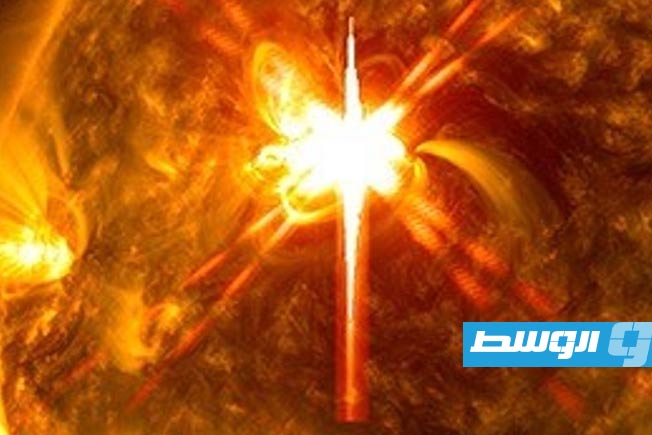
Global space monitoring centers have announced the detection of a ‘quartet’ of super-powerful solar flares that erupted from the sun in recent hours, paving the way for what could be the most tumultuous and disruptive week of space weather in months.
This fiery display began on February 1st, precisely at 12:33 UTC, when the sun unleashed an X1.0-class flare.
Only about 11 hours later, at 23:37 UTC, a massive explosion with a magnitude of X8.1 occurred. This event is classified as the strongest solar flare since October 2024 and the 19th on the list of the most powerful flares ever recorded.
This was followed by two additional explosions on February 2nd; the first with a magnitude of X2.8 at 00:36 UTC, and the other with a magnitude of X1.6 at 08:14 UTC. This completed a series of four X-class flares, the most intense and powerful category the sun can produce.
According to the Space Weather Prediction Center (SWPC) of the National Oceanic and Atmospheric Administration (NOAA), these explosions originated from a sunspot group known as RGN 4366.
Interestingly, these sunspots have just begun their journey facing planet Earth, meaning any upcoming explosions will be directed straight at us.
–
–
Experts from the center stated: “If this group continues to evolve and remains structurally complex, the chances of Coronal Mass Ejections (CMEs) will increase significantly, requiring close monitoring.”
Technology Threat
Coronal Mass Ejections are massive clouds of plasma and magnetic fields ejected by the sun. While these ejections are responsible for the appearance of the enchanting ‘aurora borealis’ in Earth’s sky, they also have a darker side; they can disrupt satellites, electrical power grids, and global communication and navigation systems.
Although the sun has already passed the peak of its current 11-year cycle, these recent events confirm that ‘space weather’ still holds violent surprises before its expected calm around the year 2030.
Observers predict that the coming days will bring more ‘exciting activity’ that could put Earth’s technology to a real test.