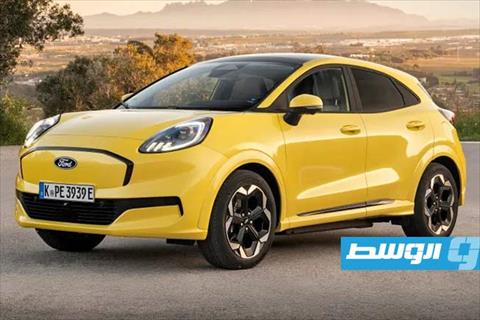
The Ford Fiesta is preparing for a massive return to global markets, two years after bidding farewell to Britain’s best-selling car. A new alliance between Ford and Renault, involving the sharing of electric vehicle platforms, has opened the door for the beloved Fiesta’s return in 2028.
The agreement, announced in early December, allows Ford to use Renault’s ‘AmpR’ platform for small electric vehicles, which is used in models like the Renault 5, Renault 4, Alpine A290, and Nissan Micra.
Two New Models
Ford is expected to produce two new models: one a small hatchback to revive the ‘Fiesta’ name, and a second fully electric model. Both will be designed by Ford and will have unique structures, rather than being slightly redesigned and rebadged versions of Renault models like the new Micra.
Car Design
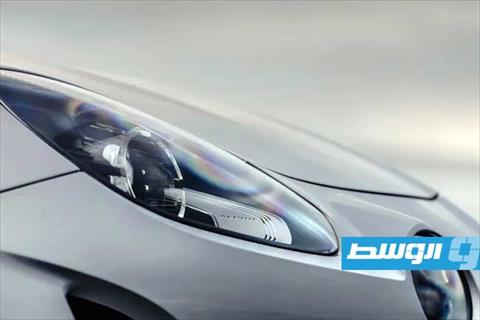
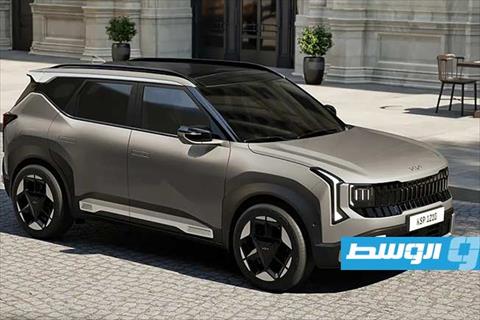
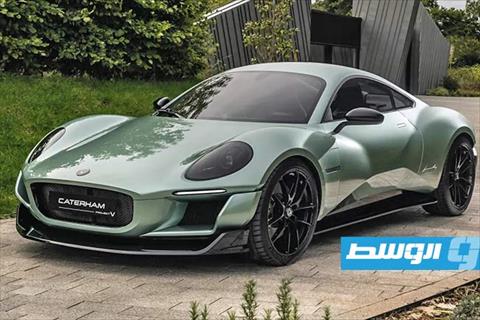
Some exclusive images show the expected look of the new electric Ford Fiesta. As it is based on the same platform as the Renault 5, its dimensions are expected to be similar. However, the Fiesta will likely feature a sharper and more dynamic design, in line with Ford’s design direction.
The head of Ford Europe stated: “We are fully confident in our ability to completely differentiate our offerings to customers. Ford will lead the development of the design, as well as other aspects such as the driving, steering, control, and braking systems, to impart a distinctive Ford character and support our brand’s position.”
It was added that the distinctive designs have already been presented to major distributors and other relevant parties for their approval.
The ‘AmpR’ platform allows Renault cars to have battery options of either 40 kWh or 52 kWh, providing a range of up to 252 miles. The larger battery is connected to a motor producing 148 horsepower, allowing the car to accelerate from 0 to 100 km/h in 8 seconds.
Ford Fiesta
The Ford Fiesta is a popular subcompact car model introduced by the Ford Motor Company in 1976, designed as an economical and practical vehicle for the European market. It became one of the world’s best-selling cars over its production history, known for its affordability and fuel efficiency across multiple generations.
Britain
Britain is a sovereign island nation in northwestern Europe with a long and influential history, including the Roman occupation, the formation of the United Kingdom, and the vast British Empire. Its modern constitutional monarchy and parliamentary democracy have been shaped by landmark events like the Magna Carta and the Industrial Revolution. The country is globally recognized for its cultural contributions in language, literature, and law.
Ford
Ford is an American automobile manufacturer founded by Henry Ford in 1903. It revolutionized the industry with the introduction of the moving assembly line for the Model T, making cars affordable for the masses and profoundly shaping 20th-century manufacturing and transportation.
Renault
Renault is a major French multinational automobile manufacturer, founded in 1899 by the Renault brothers. It played a significant role in motorizing France in the early 20th century and became a state-owned enterprise after World War II before being privatized in the 1990s.
Renault 5
The Renault 5 is a classic French supermini car, first launched by the manufacturer Renault in 1972. It became an iconic and popular city car of the 1970s and 80s, known for its practical and economical design.
Renault 4
The Renault 4 is a small economy car produced by the French manufacturer Renault from 1961 to 1992. It was designed as a modern, practical, and affordable vehicle for the masses, becoming one of the first successful front-wheel-drive hatchbacks and selling over eight million units worldwide.
Alpine A290
The Alpine A290 is a forthcoming all-electric hot hatchback from the French performance brand Alpine, which has its roots in motorsport and was founded in 1955. It represents a modern reinterpretation of classic performance driving, built on a dedicated EV platform and serving as the first model in Alpine’s new electric vehicle lineup.
Nissan Micra
The Nissan Micra is a compact car model first introduced by the Japanese automaker Nissan in 1982. It became particularly popular in Europe, known for its reliability and compact size, with its third generation model being the first car built at Nissan’s Sunderland plant in the United Kingdom.
Ford Europe
Ford Europe is the European division of the Ford Motor Company, established in 1967 with its headquarters in Cologne, Germany. It was formed to oversee the company’s operations across the continent, building on a presence dating back to the early 1900s with the founding of Ford’s first European manufacturing plant in Manchester in 1911.