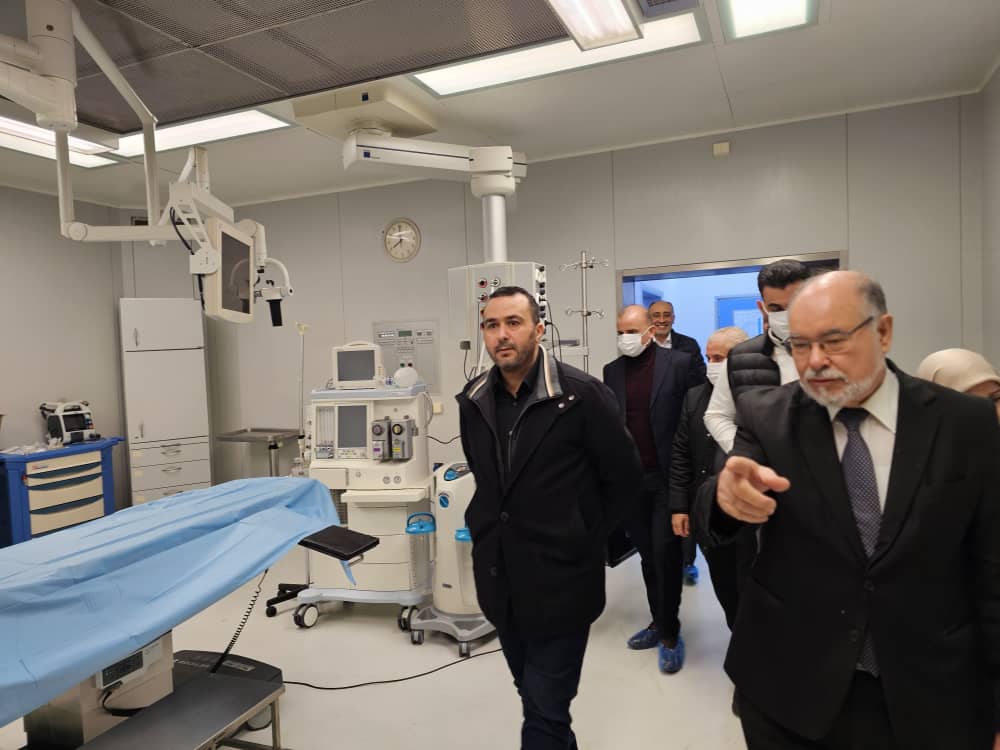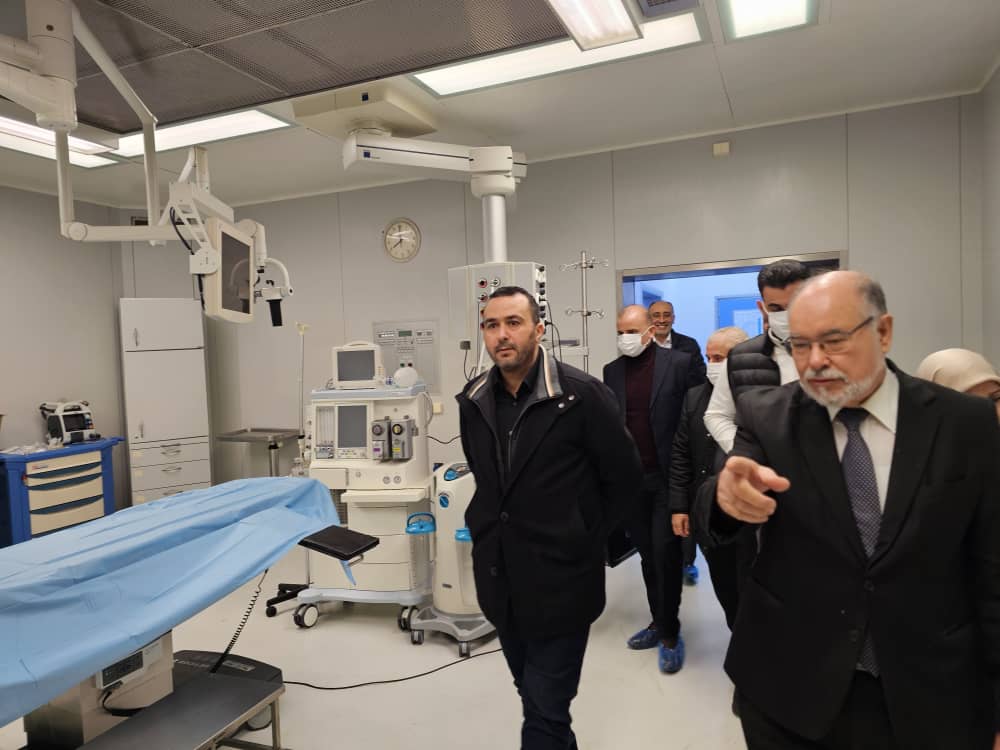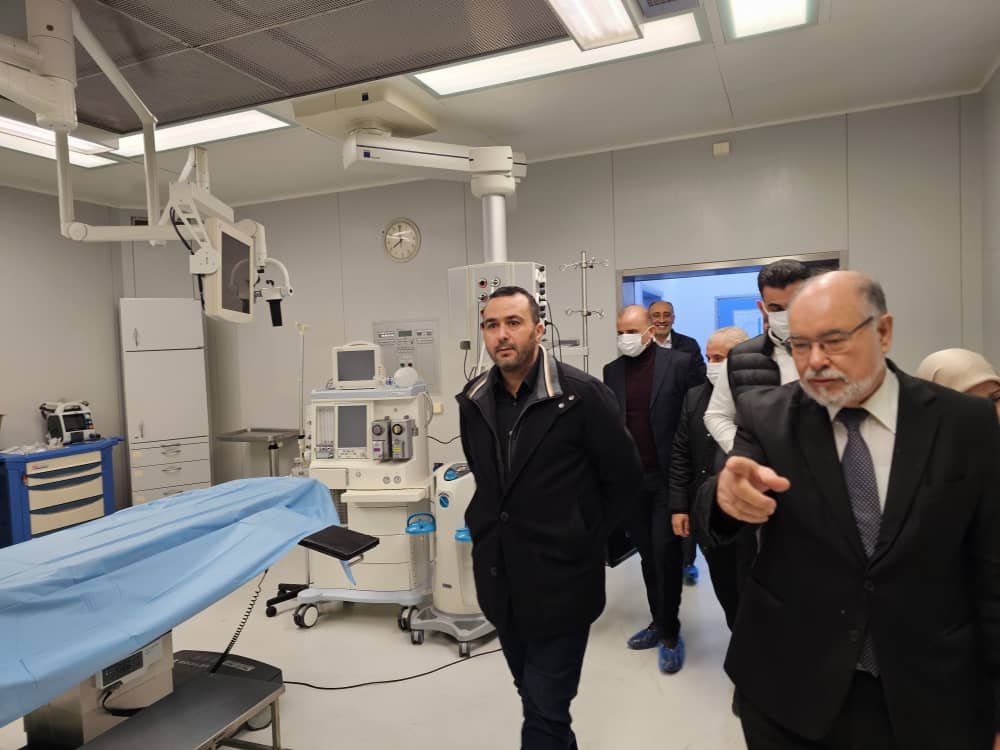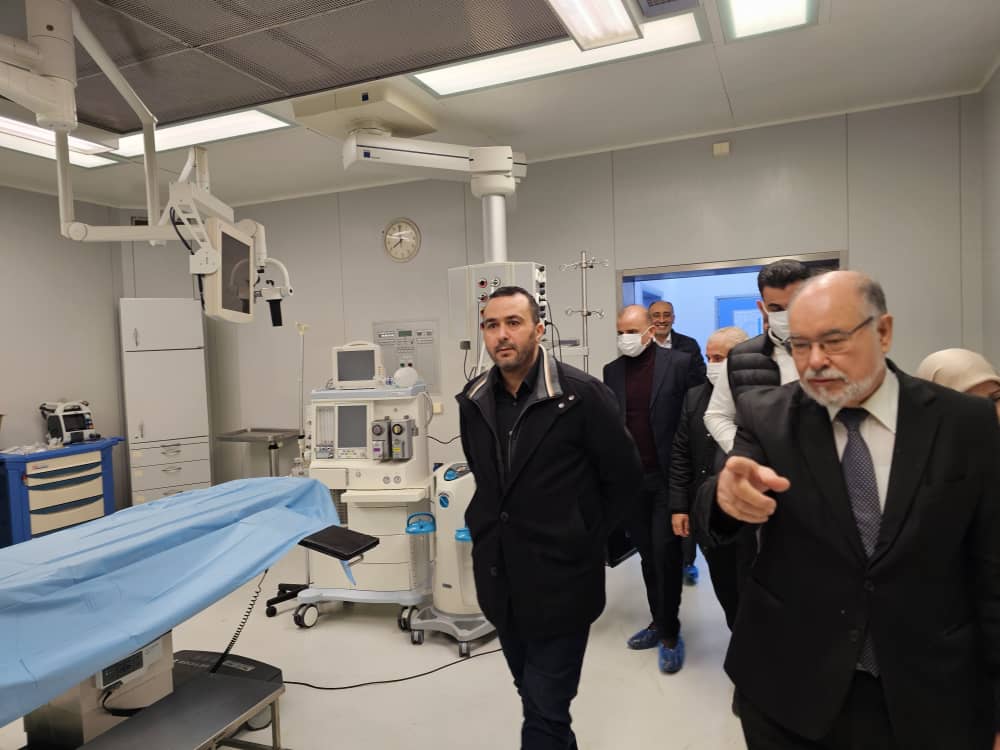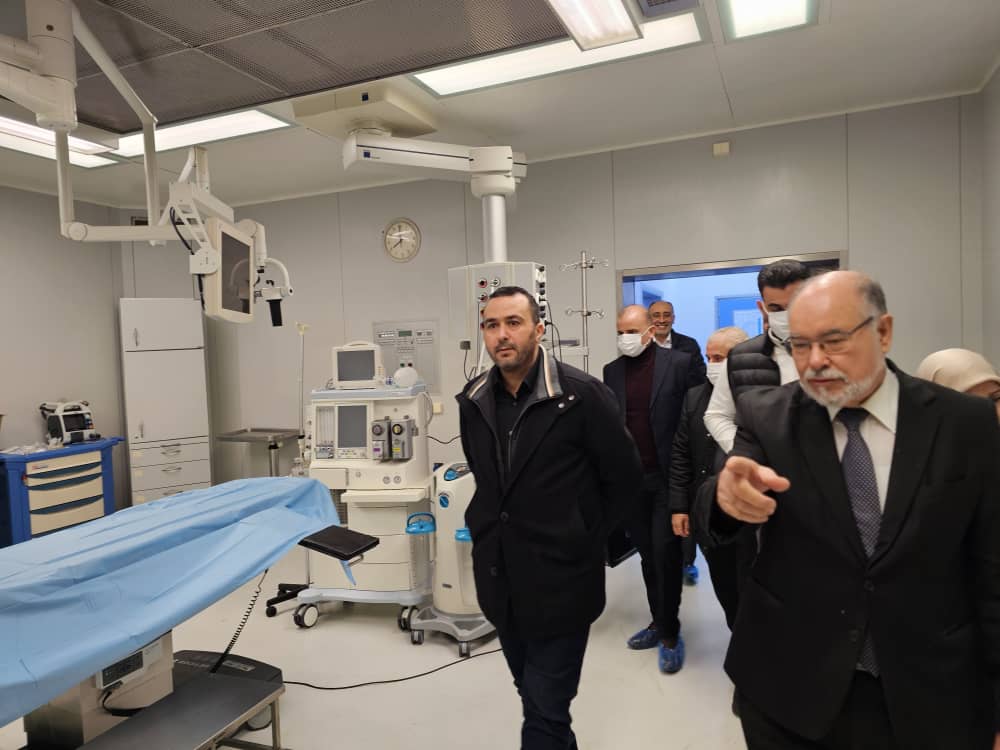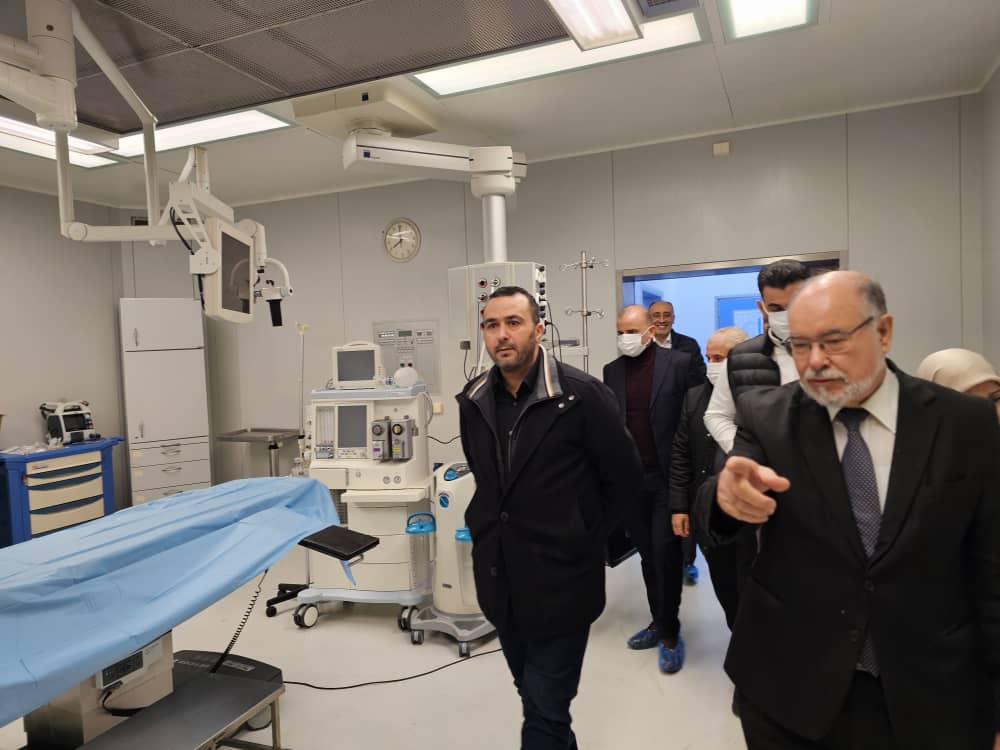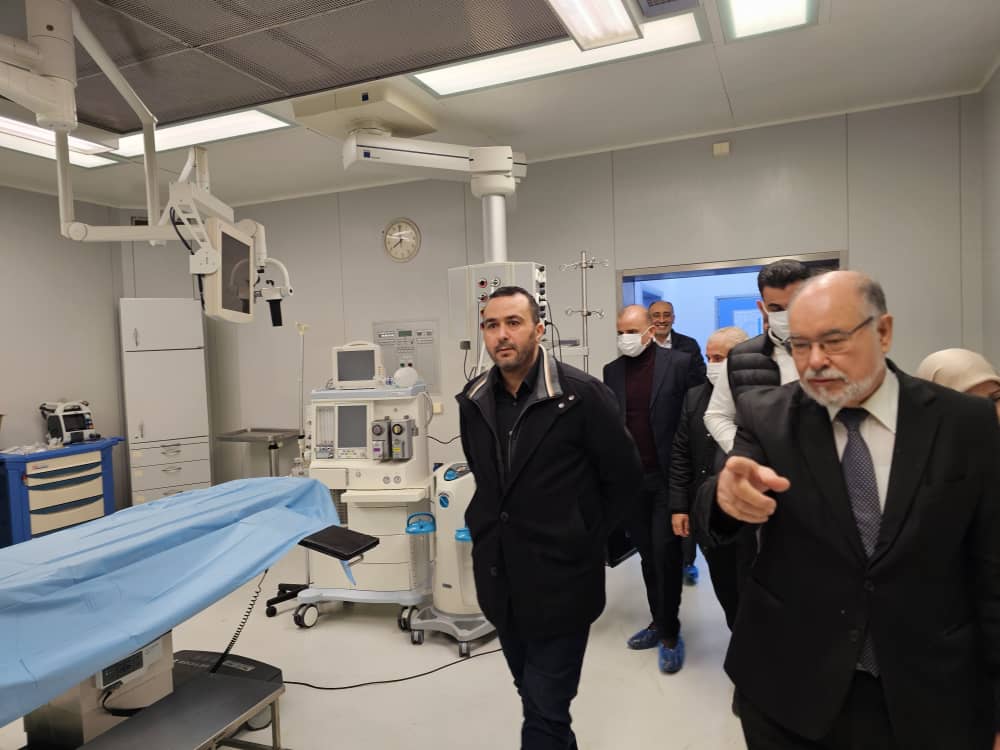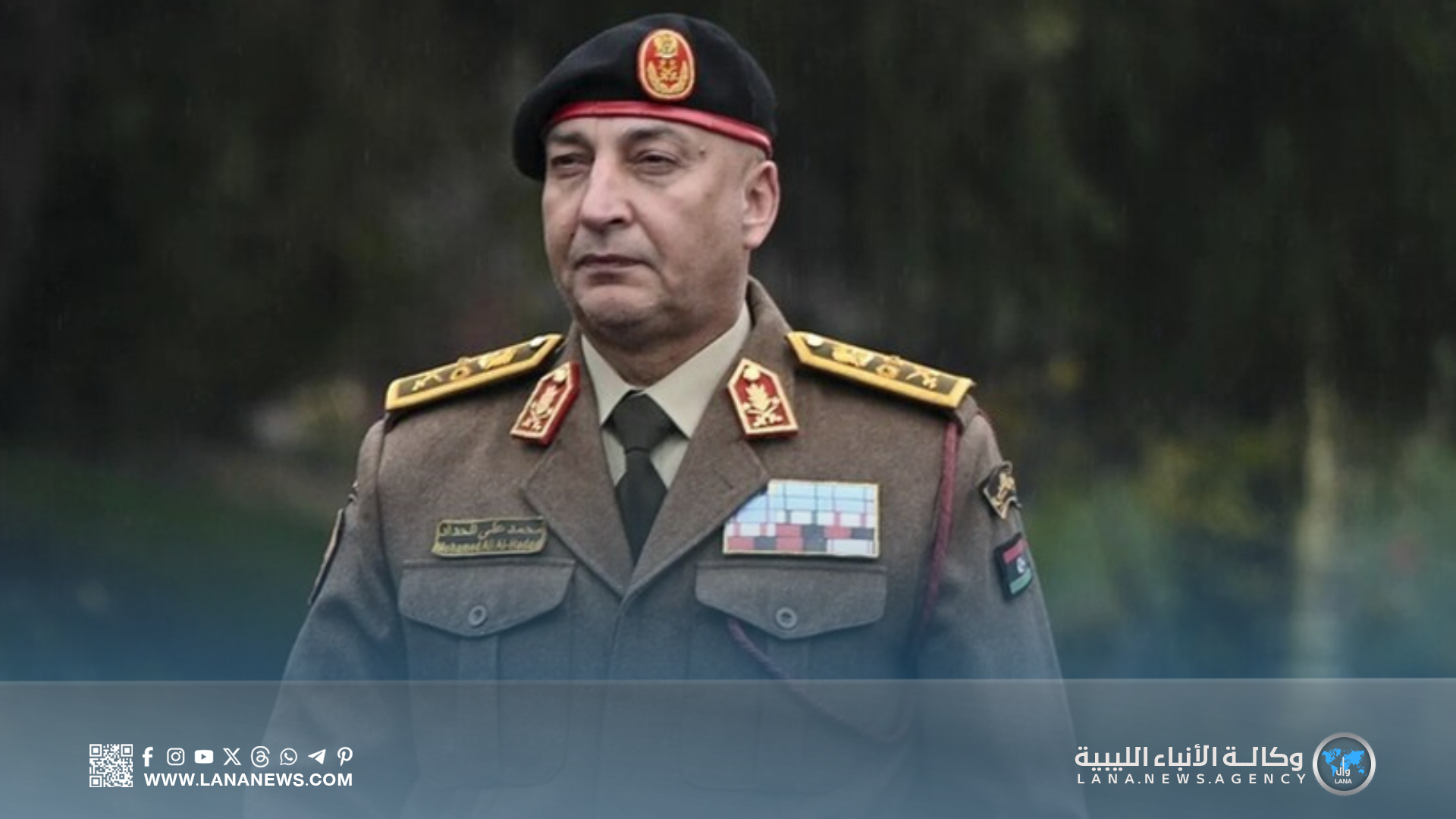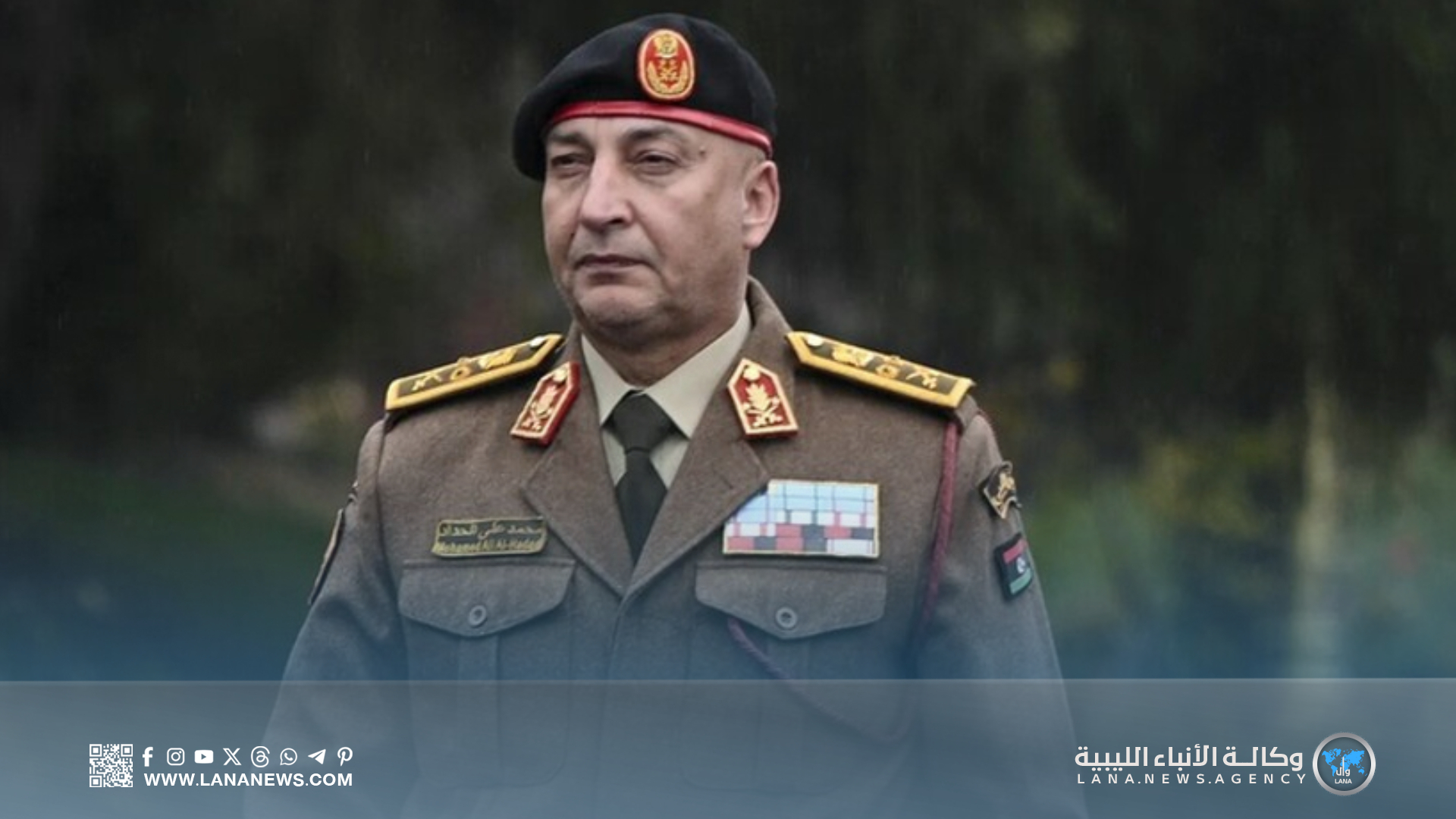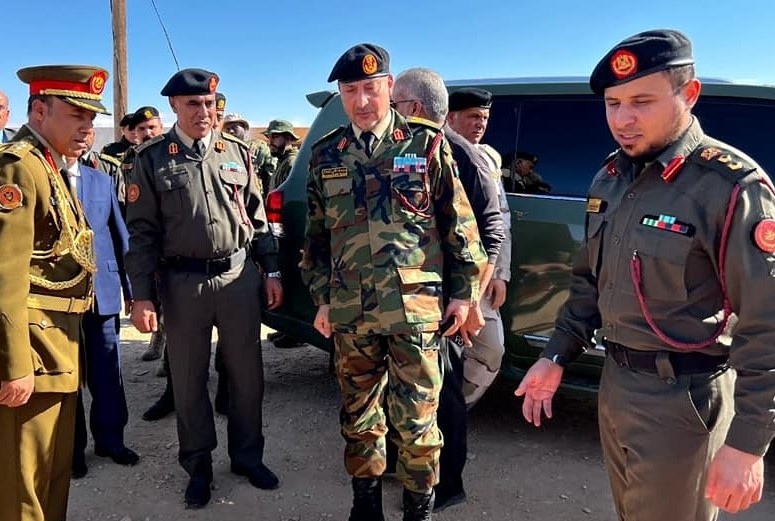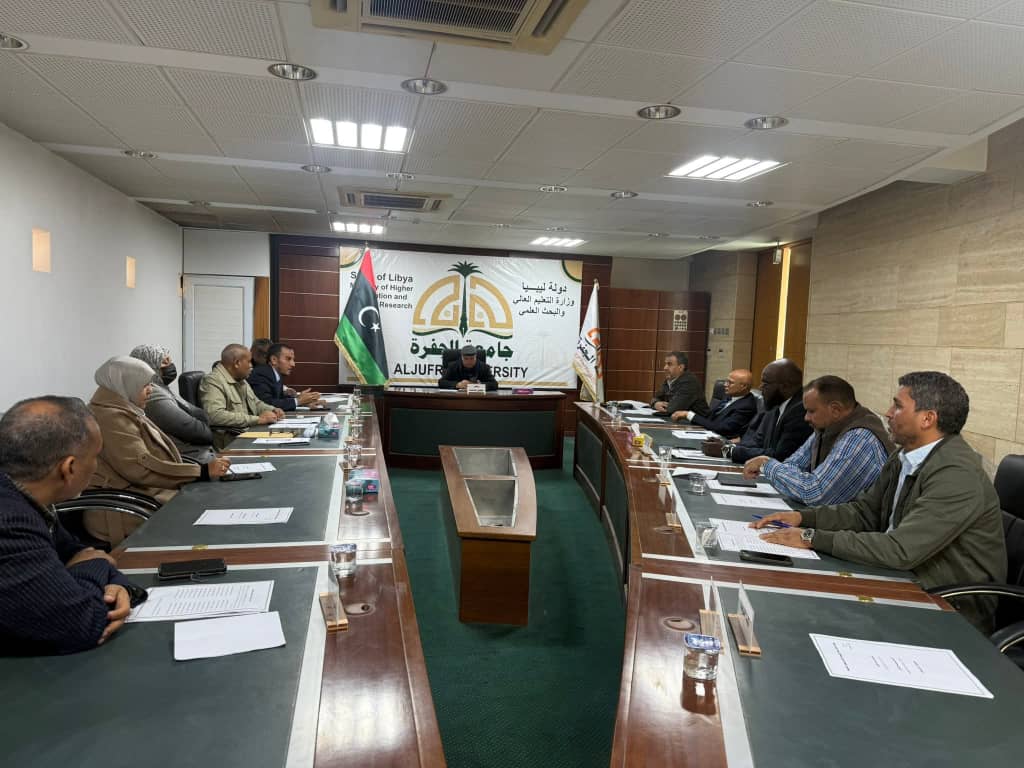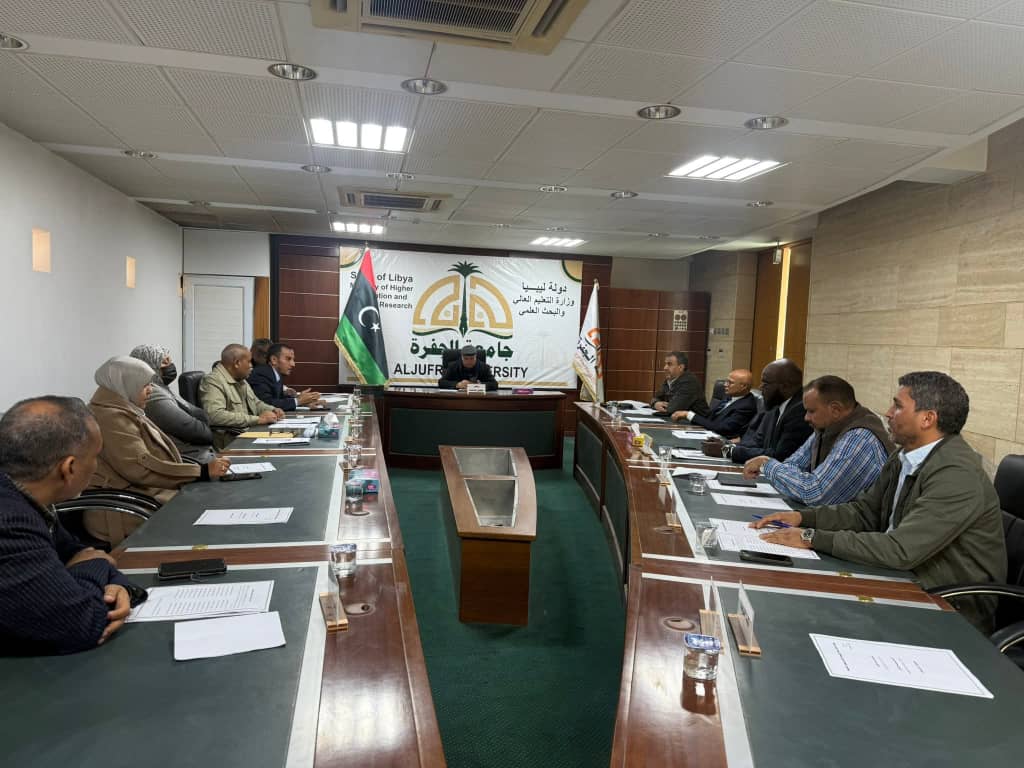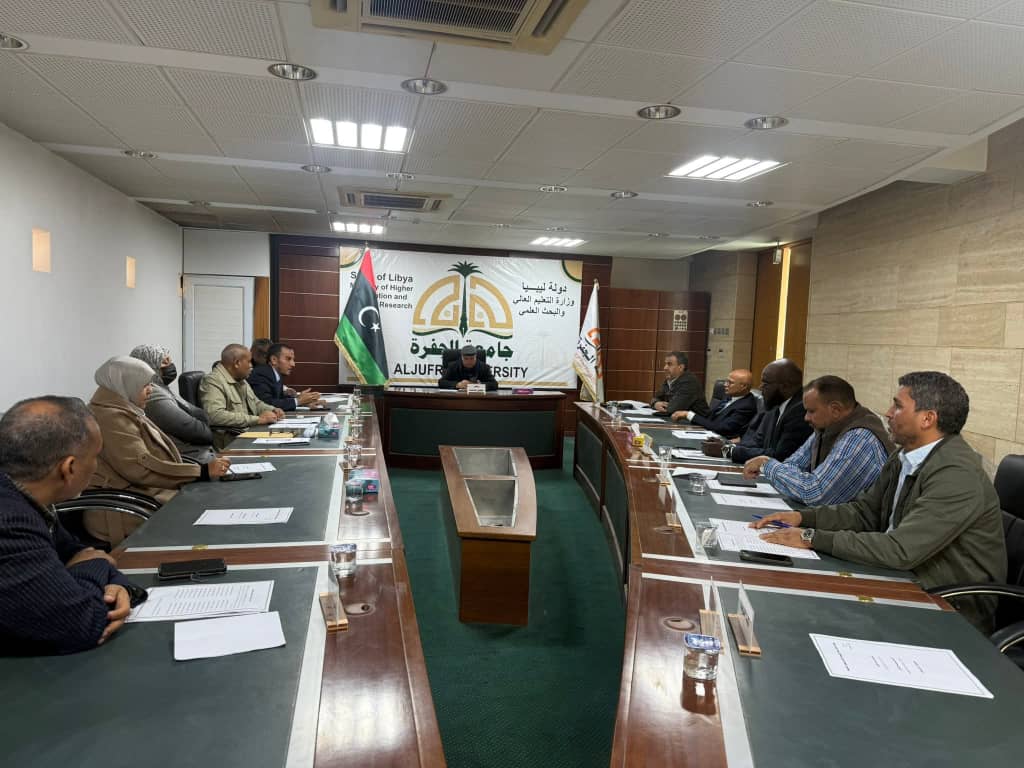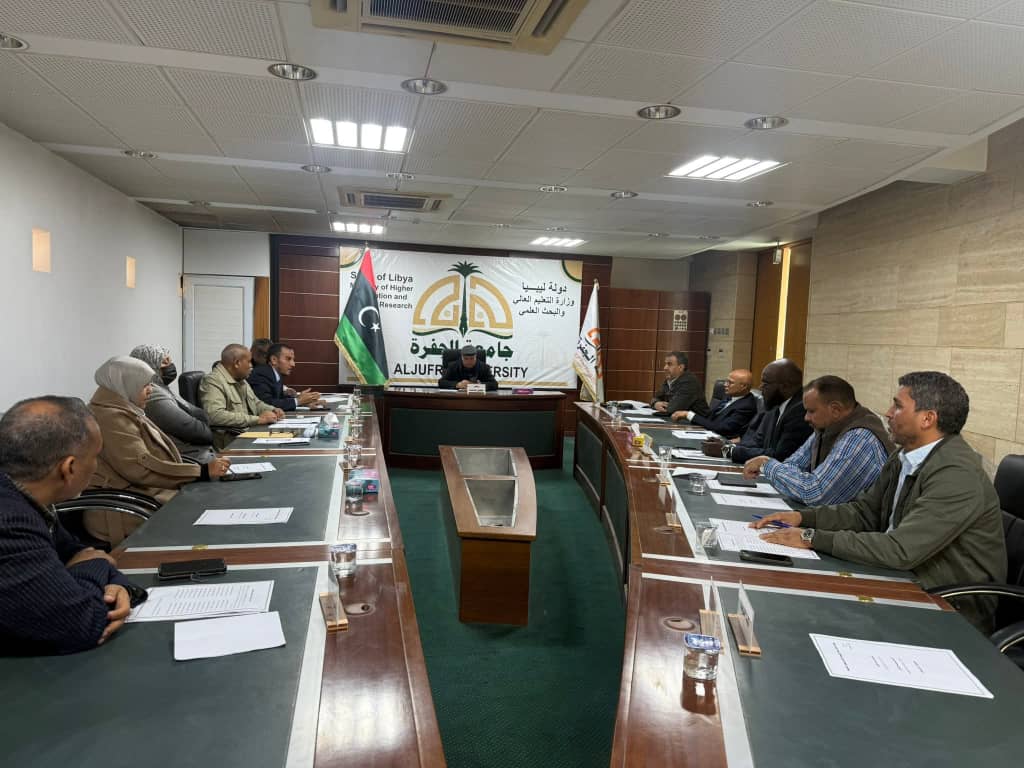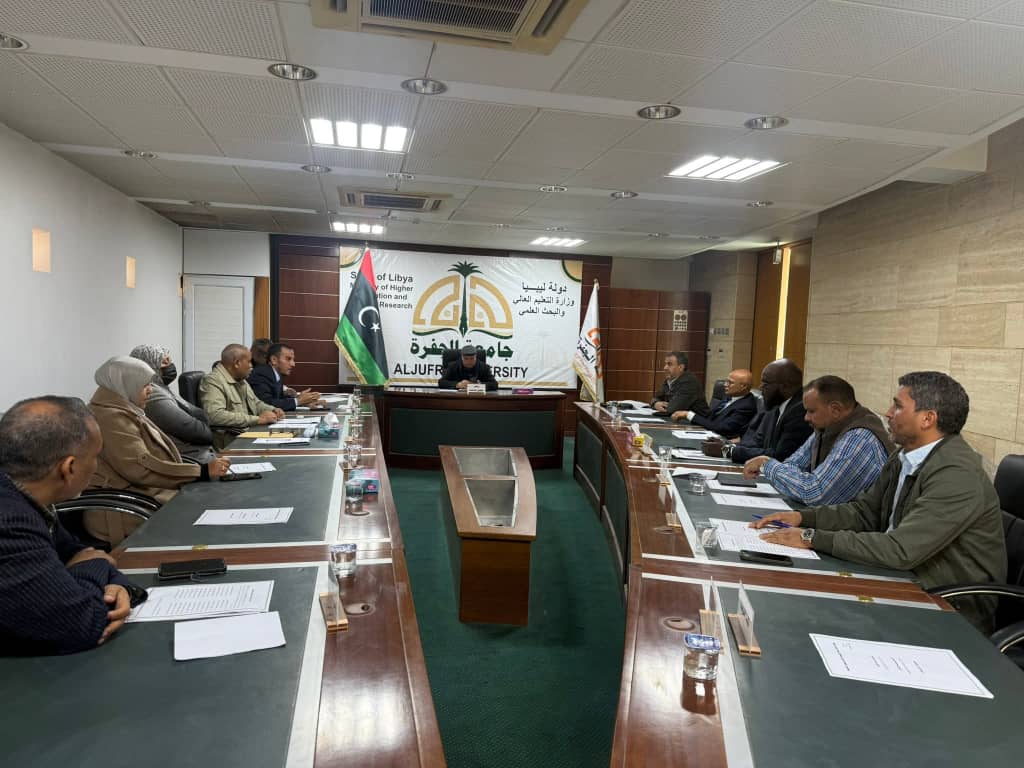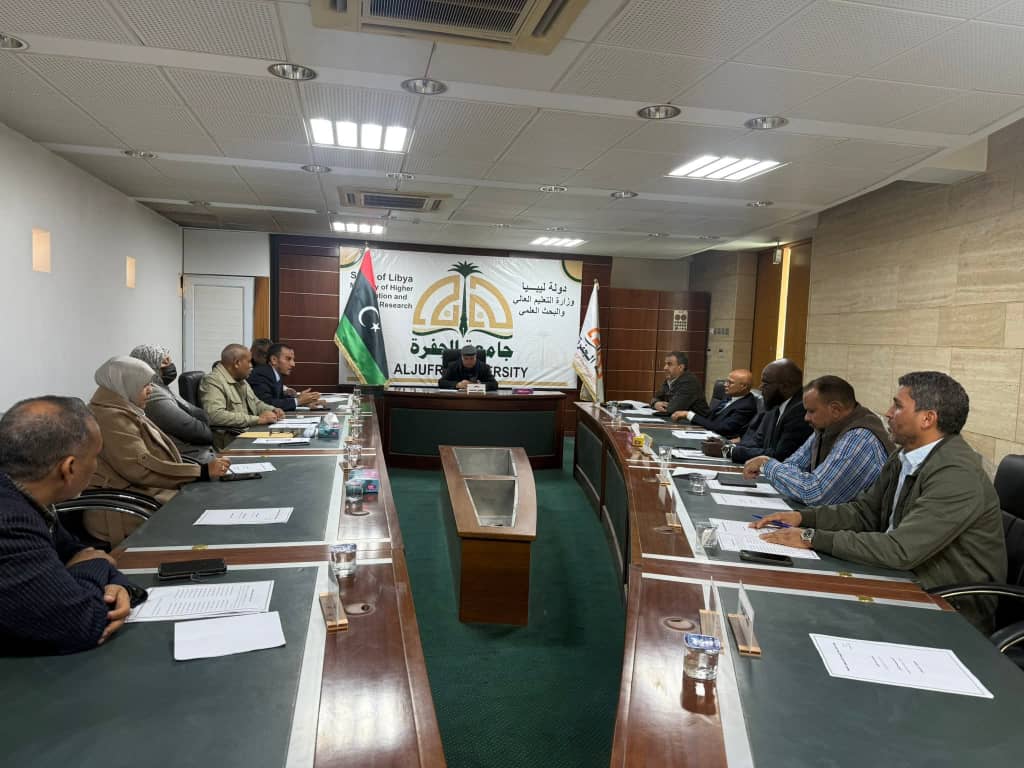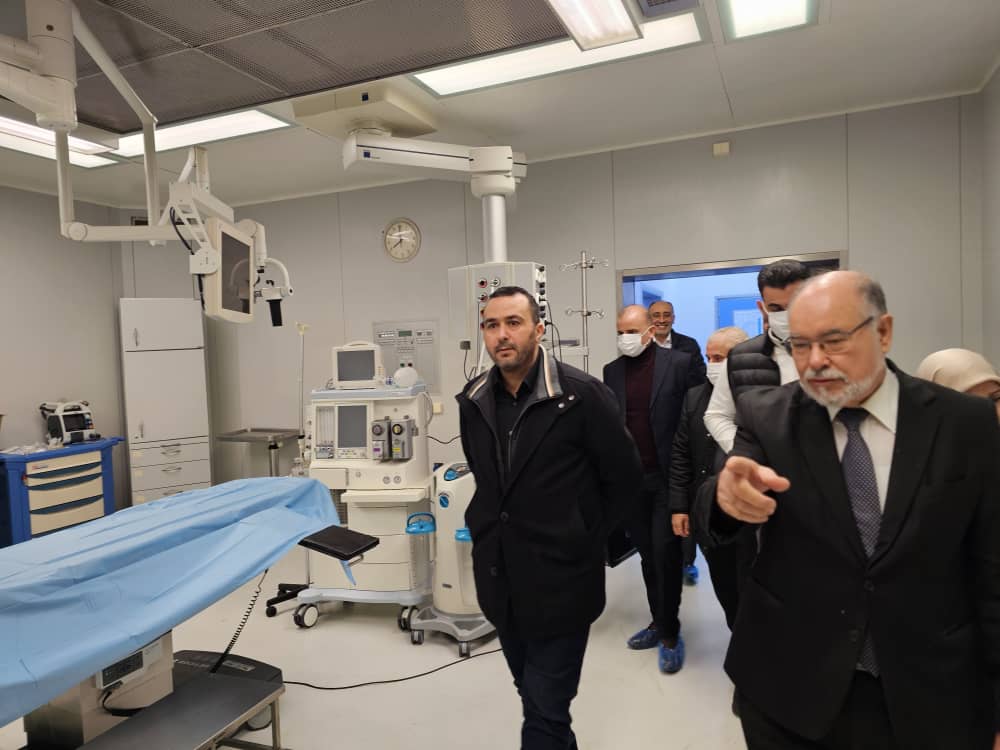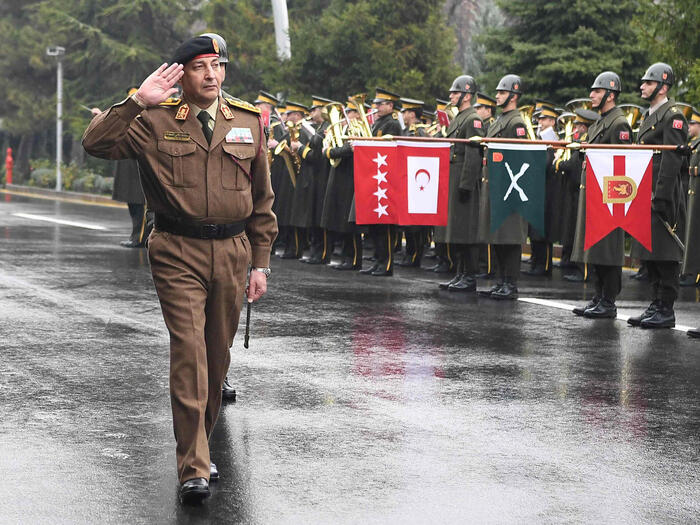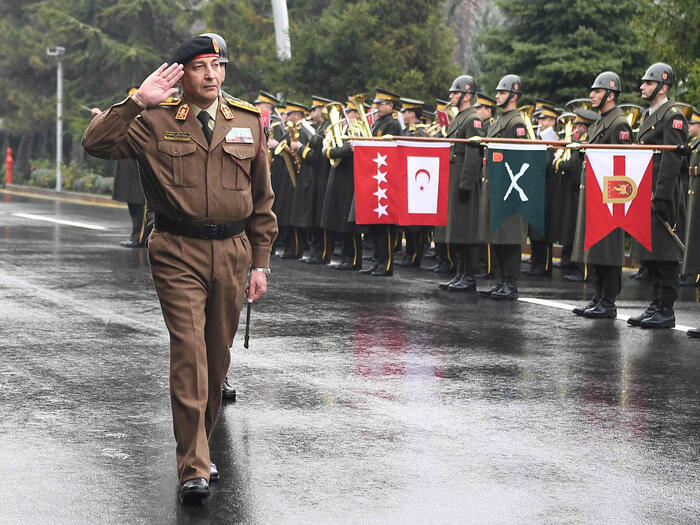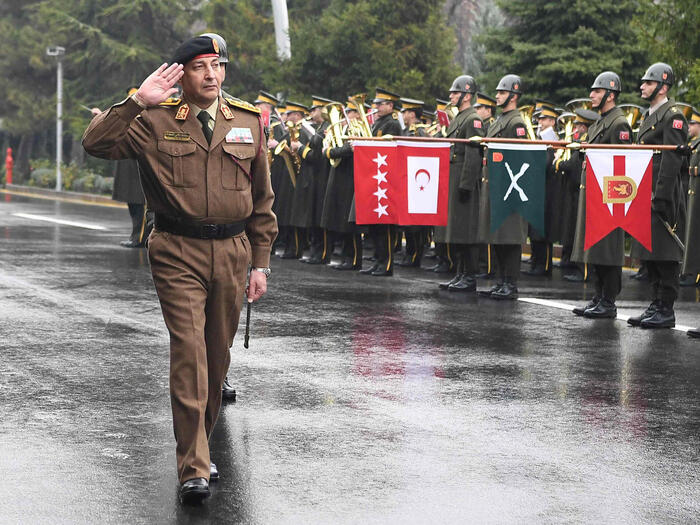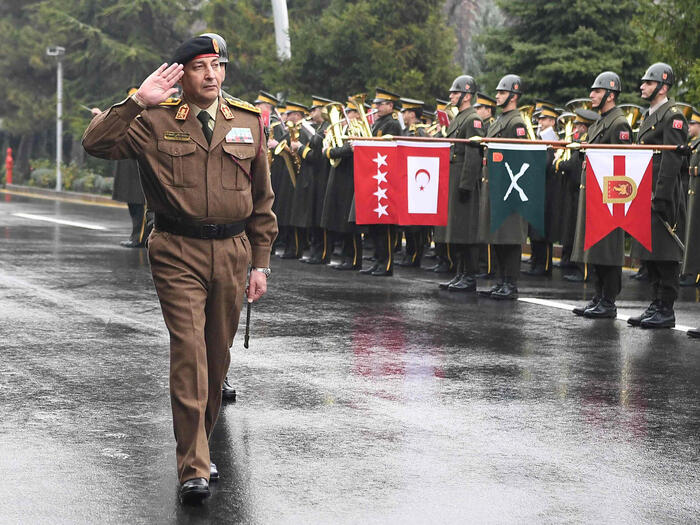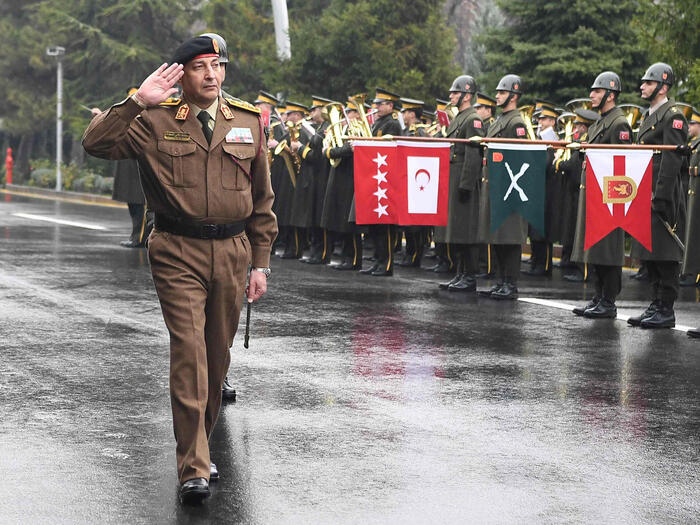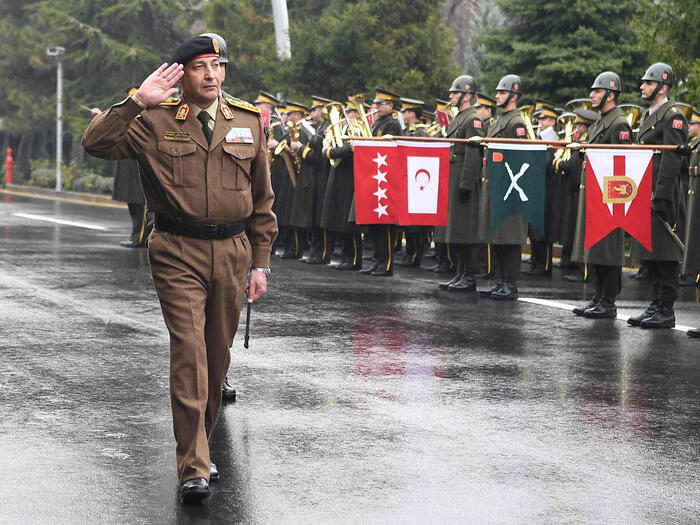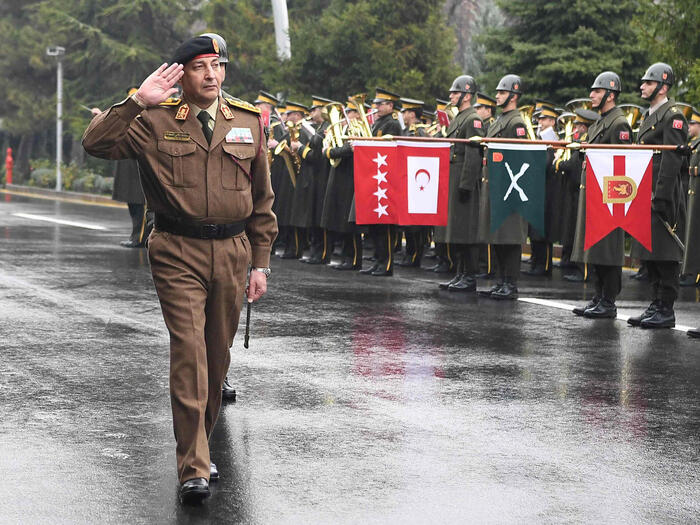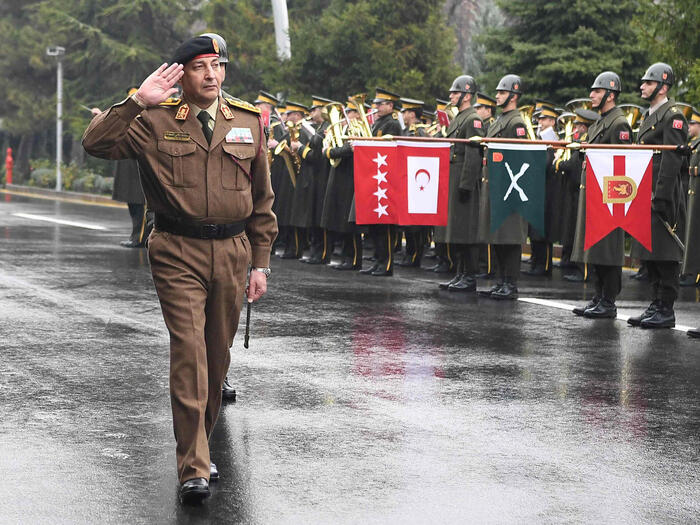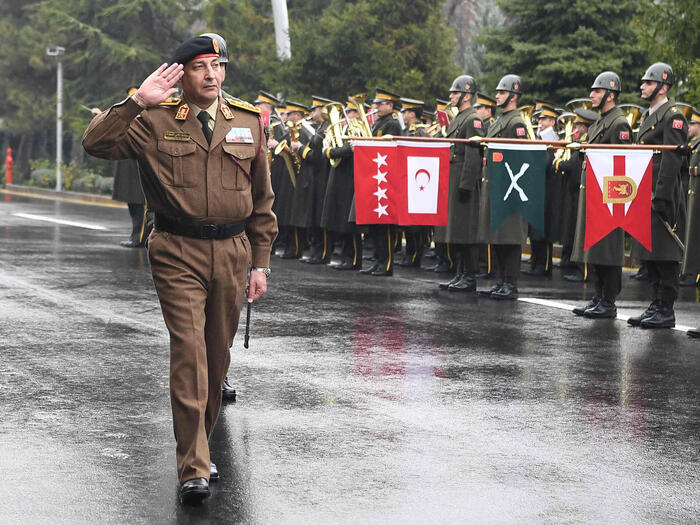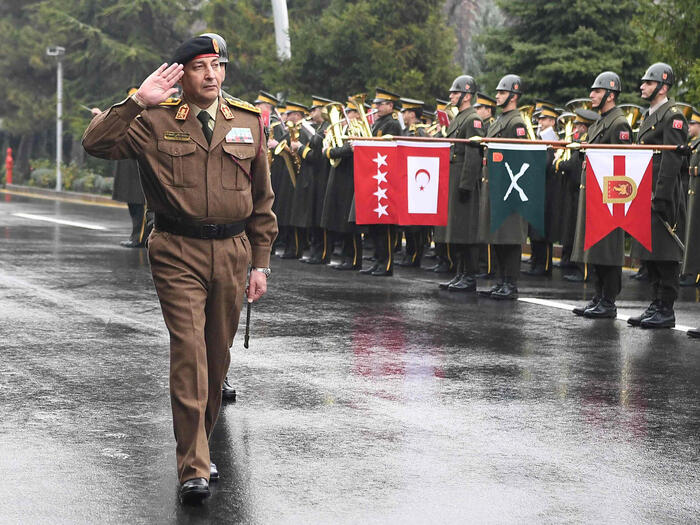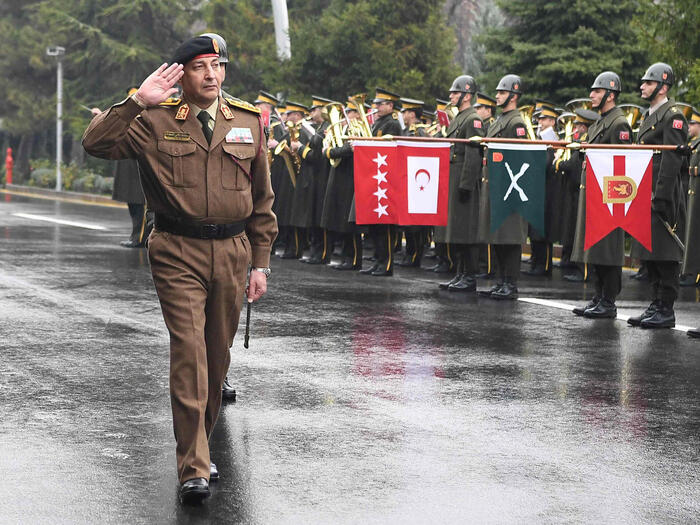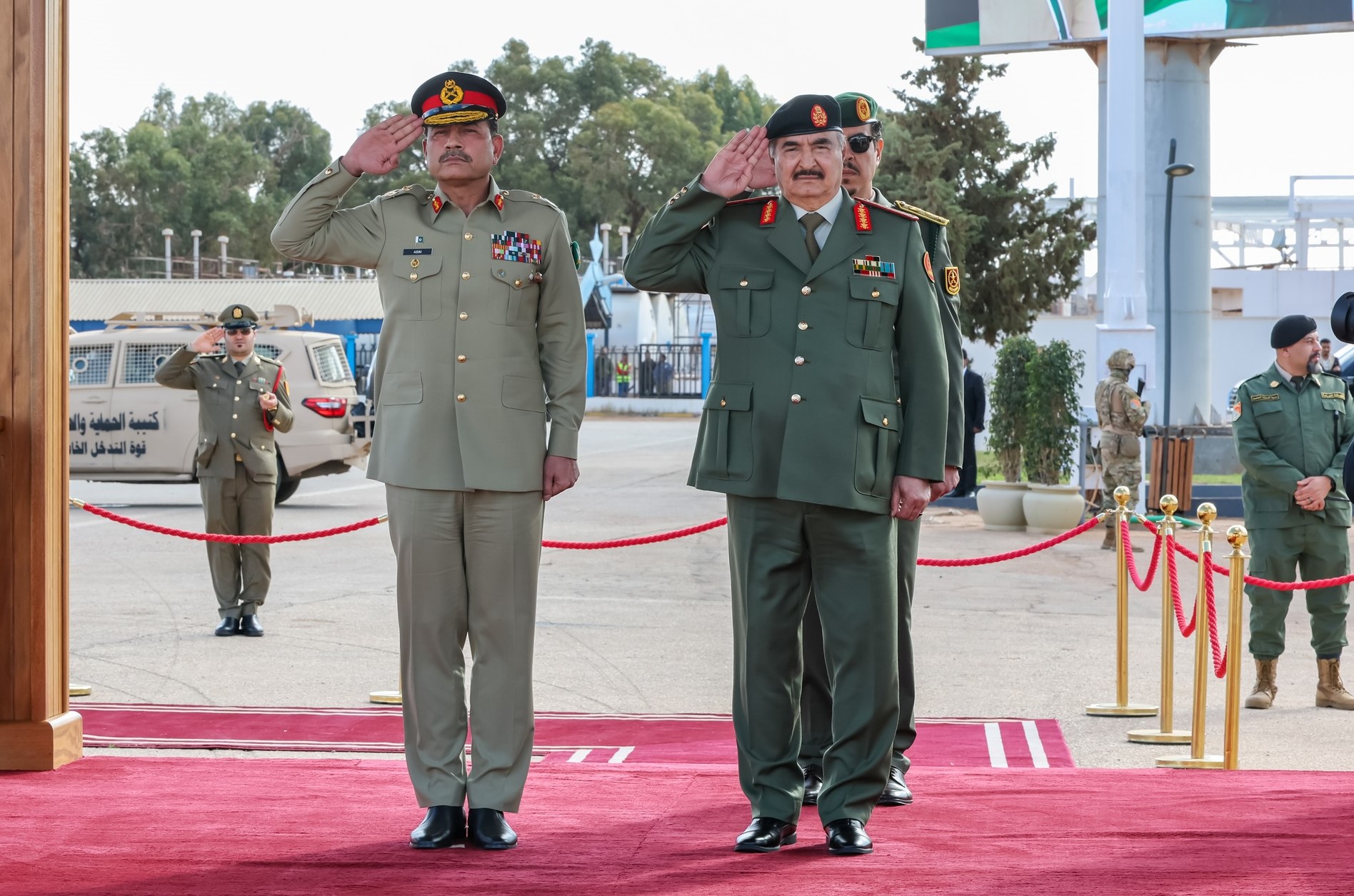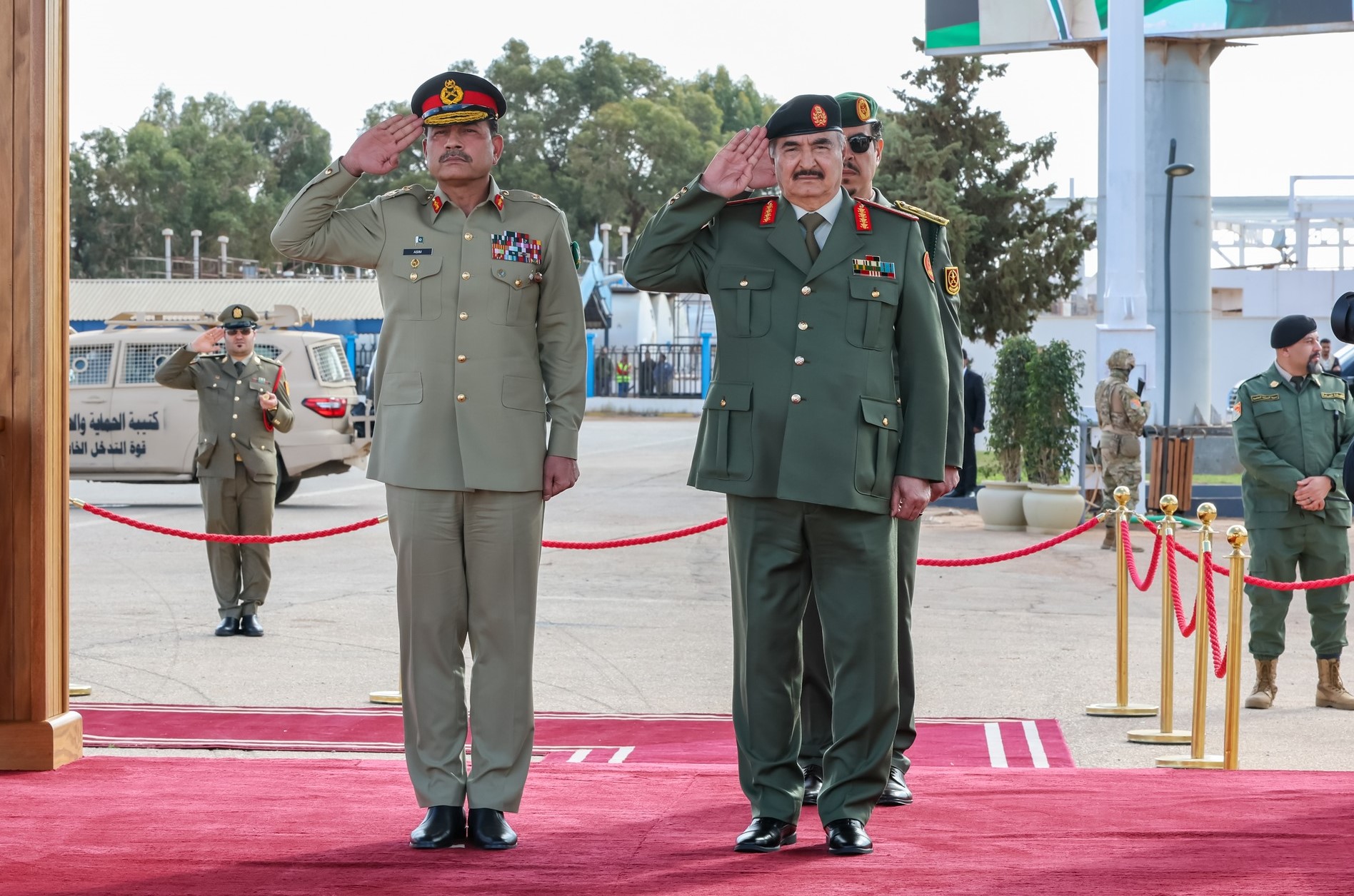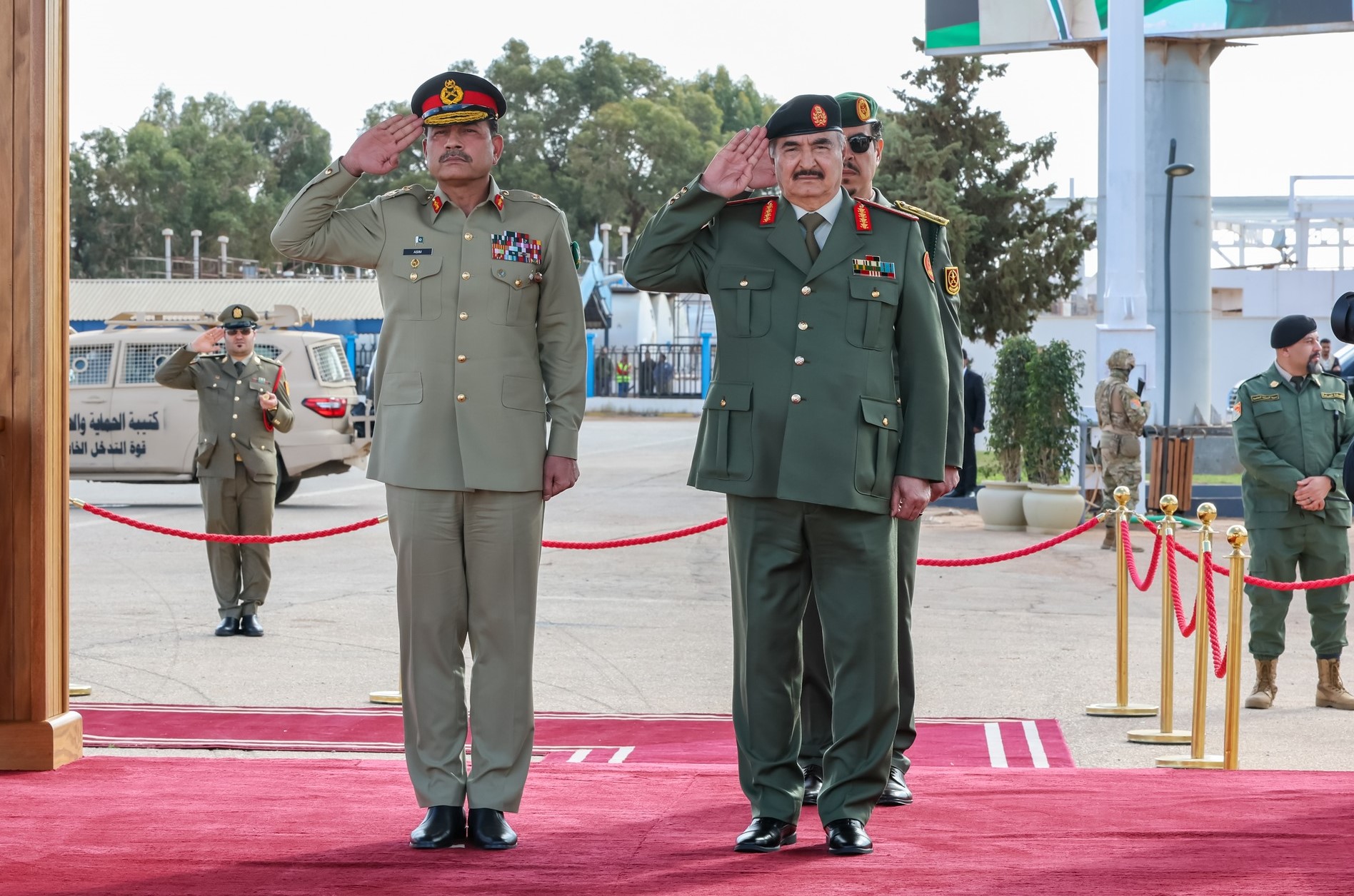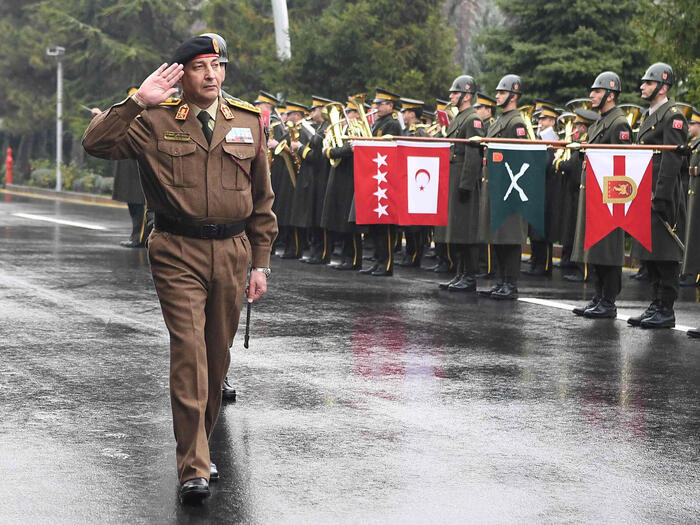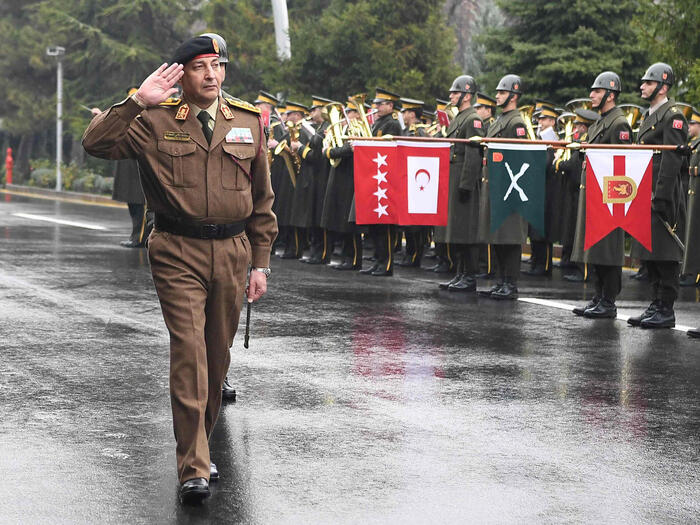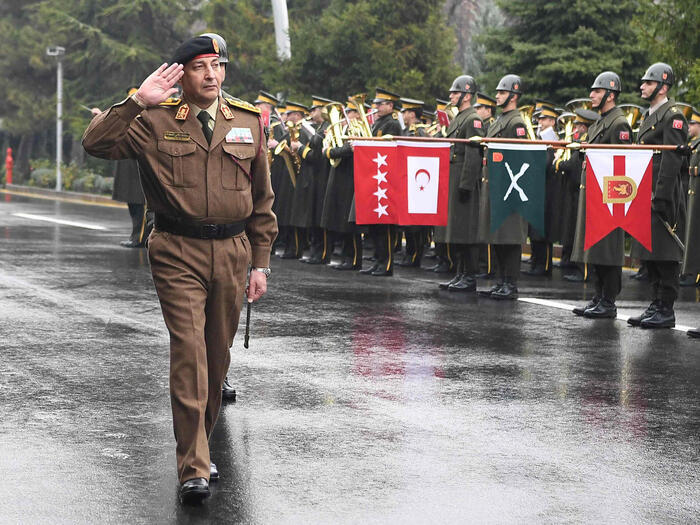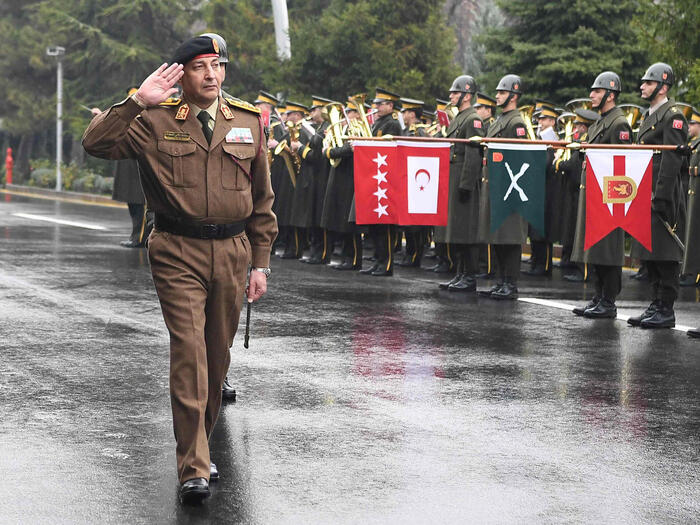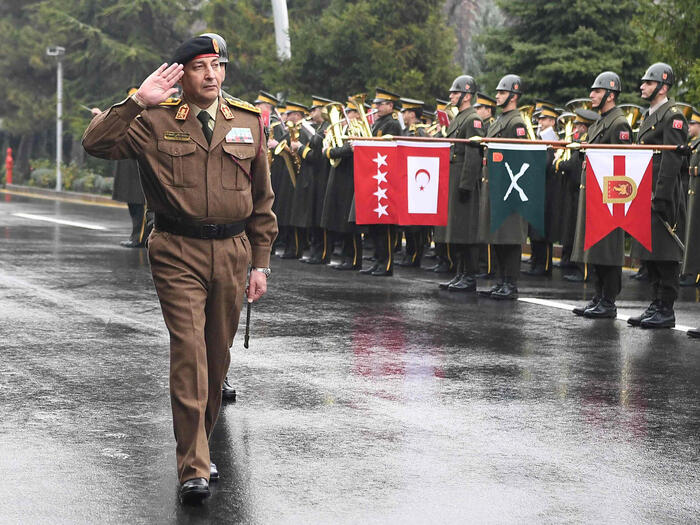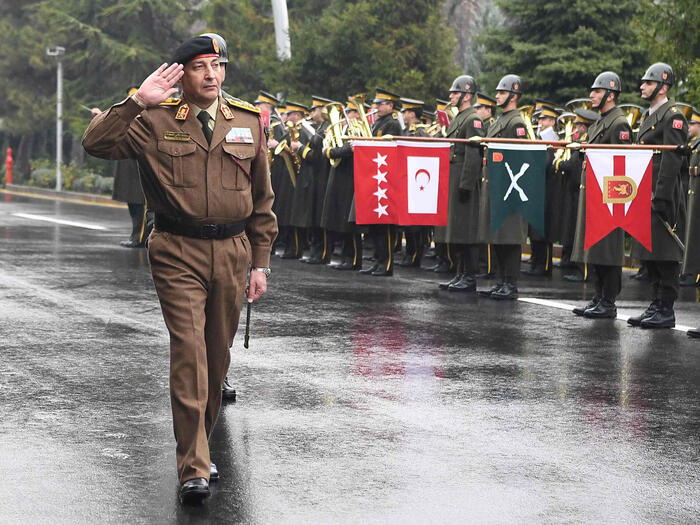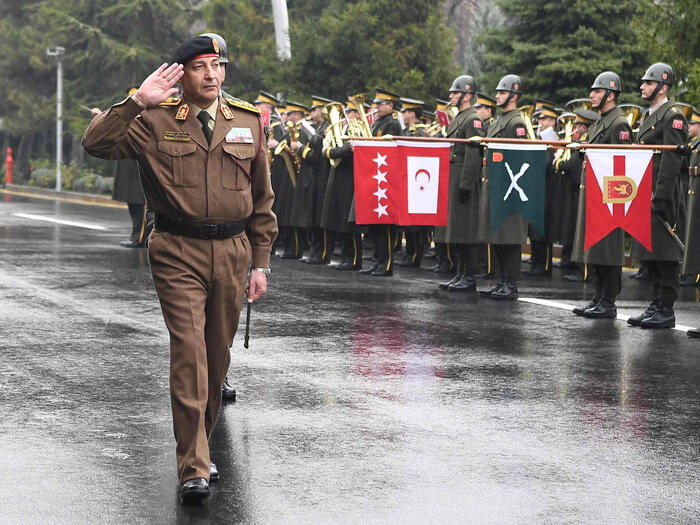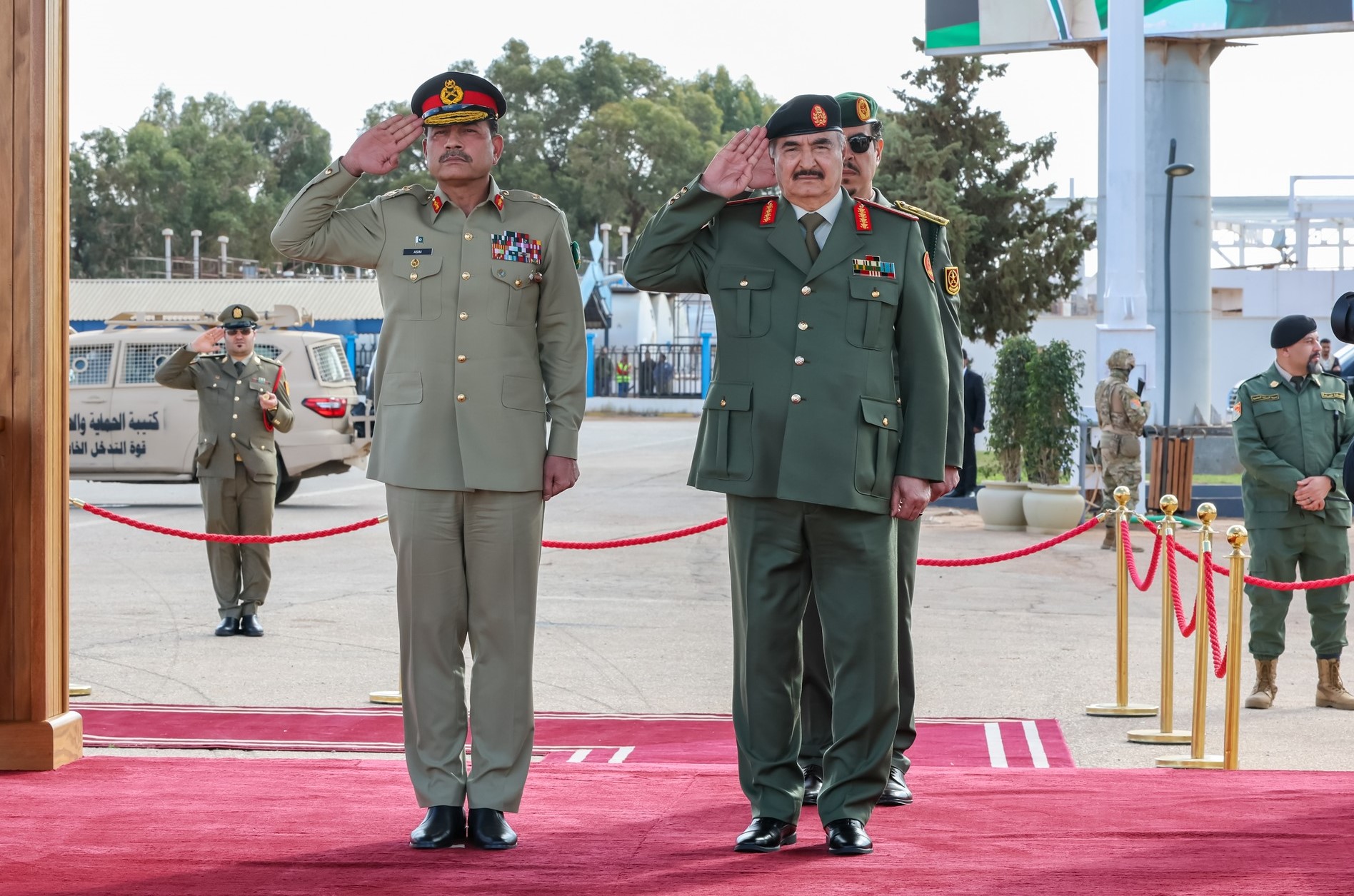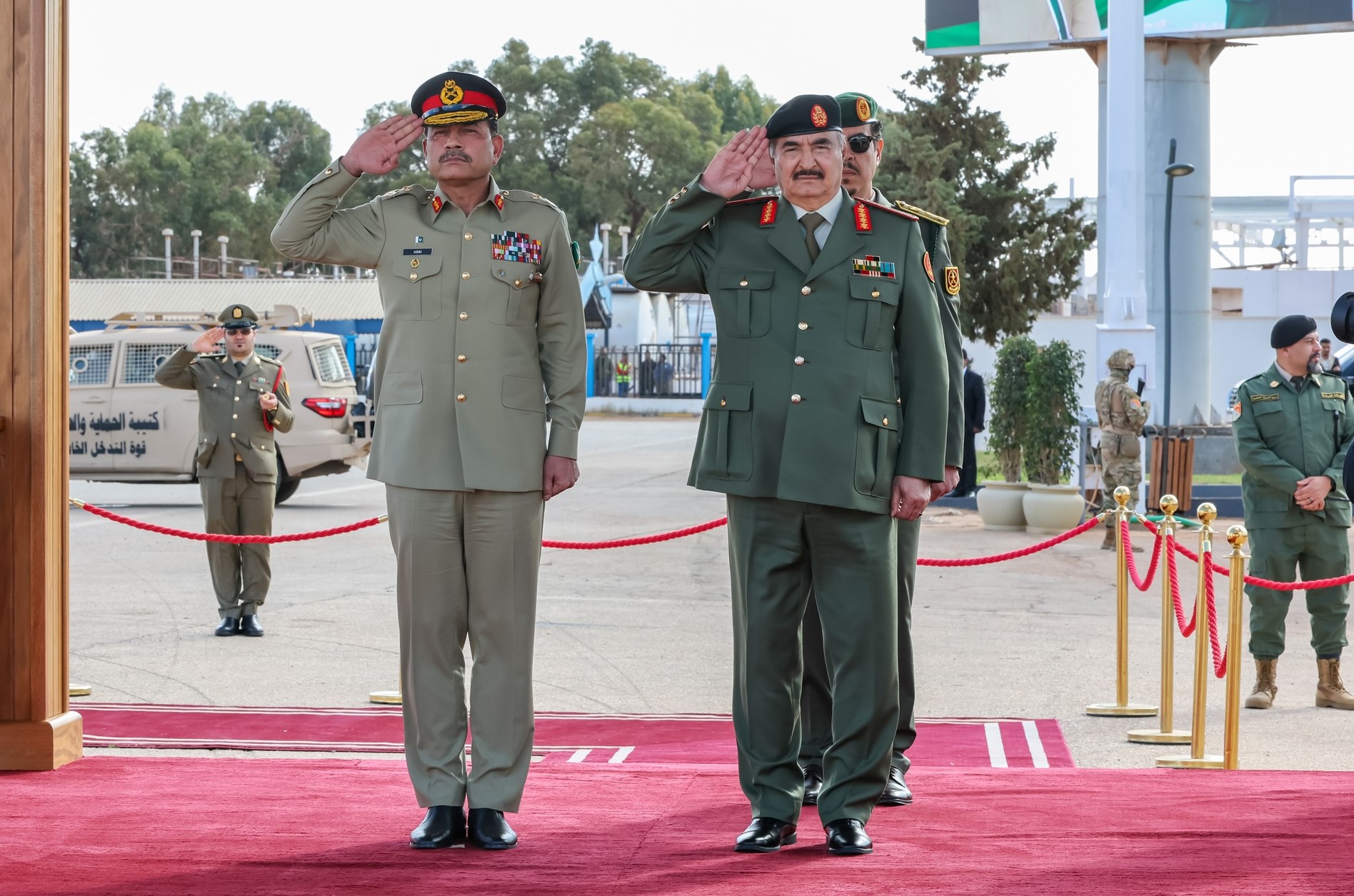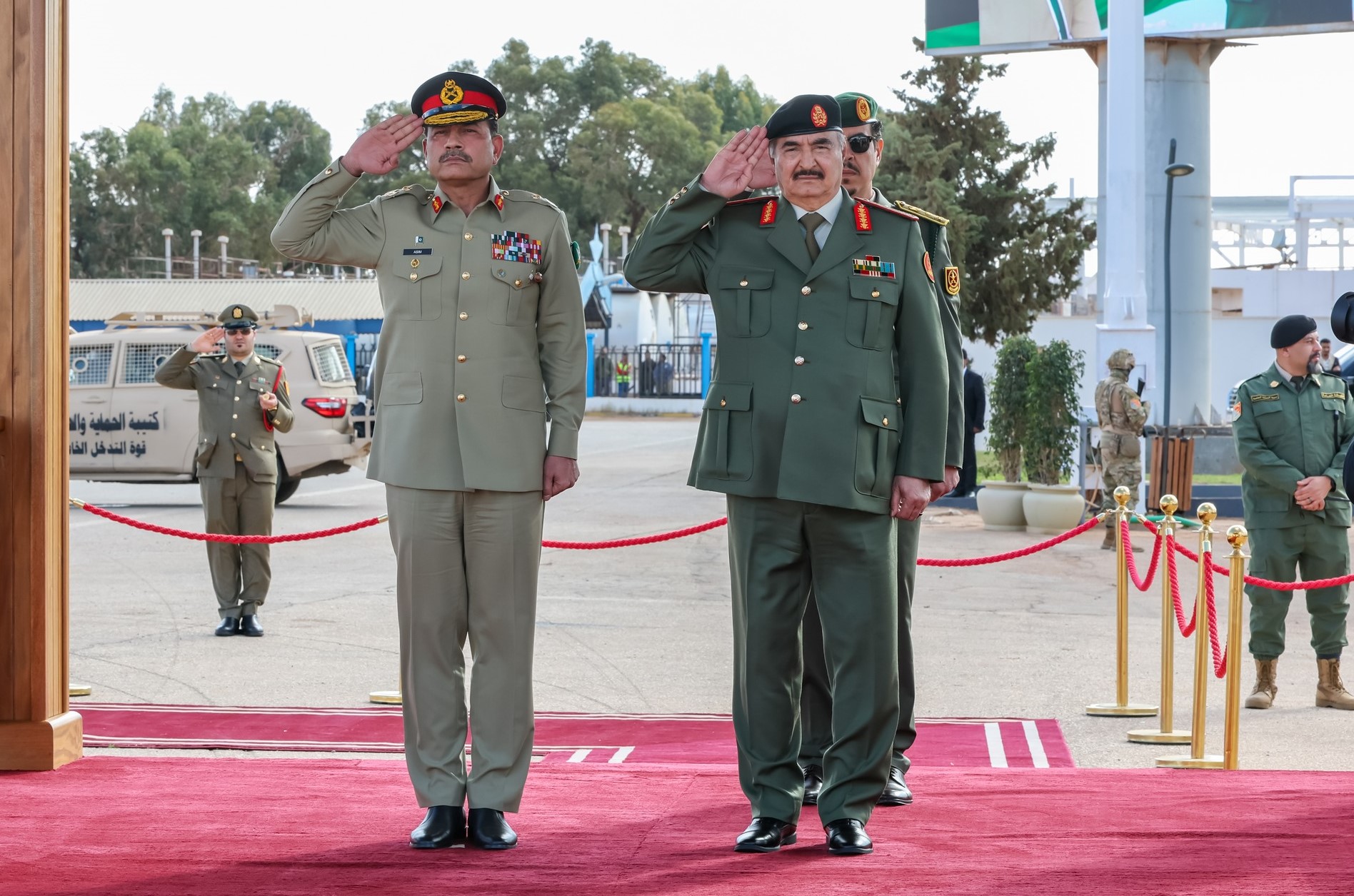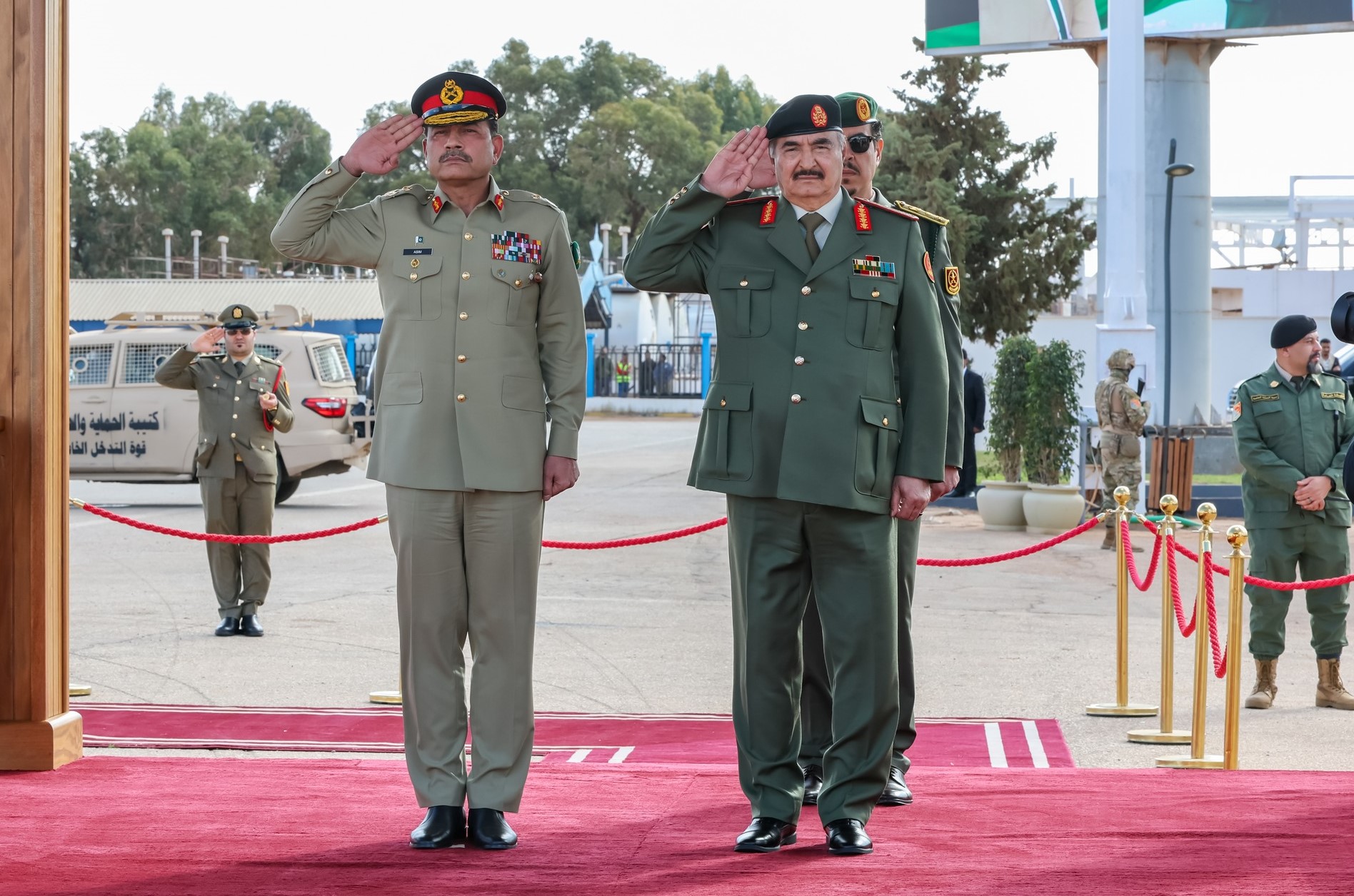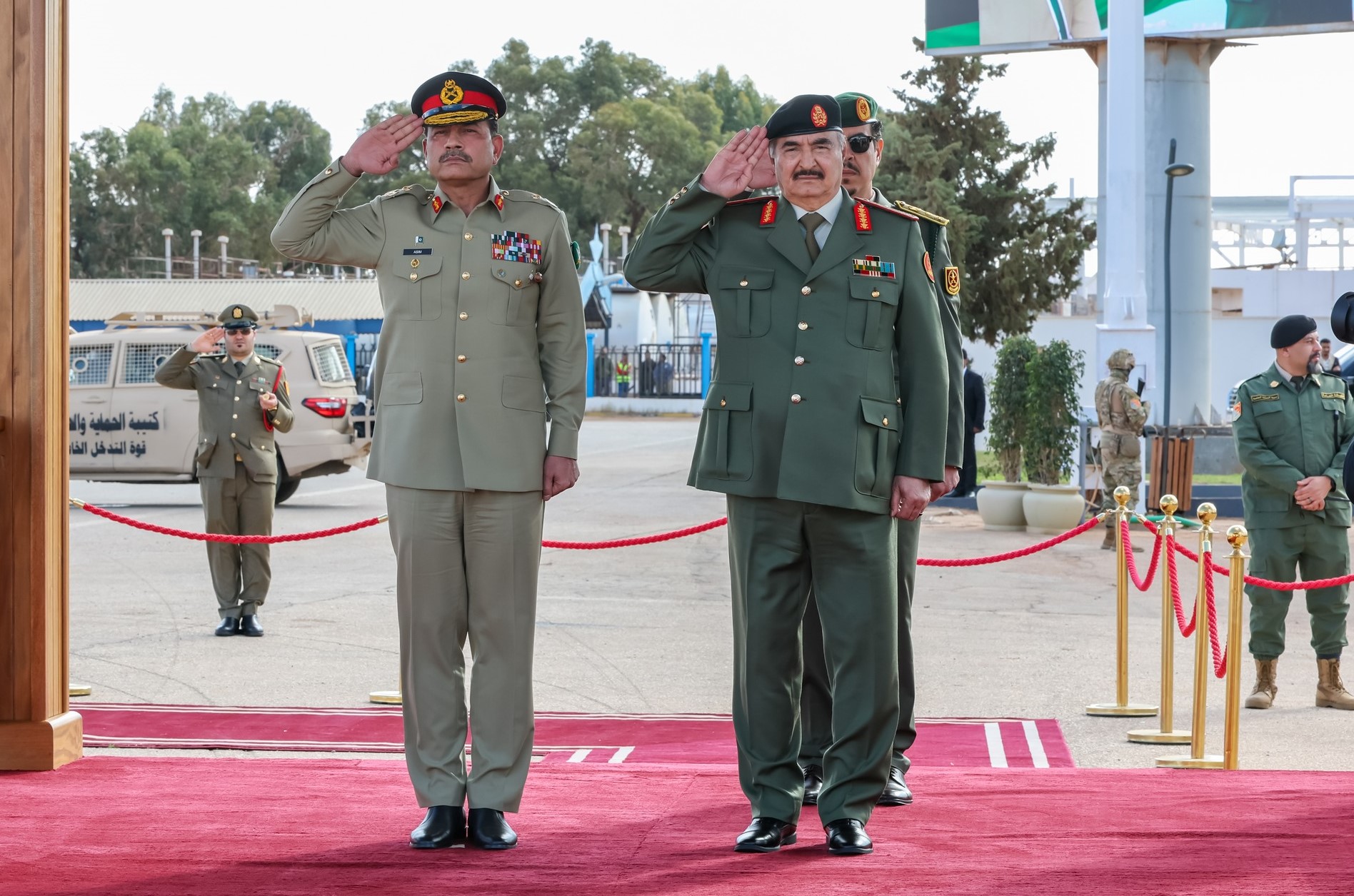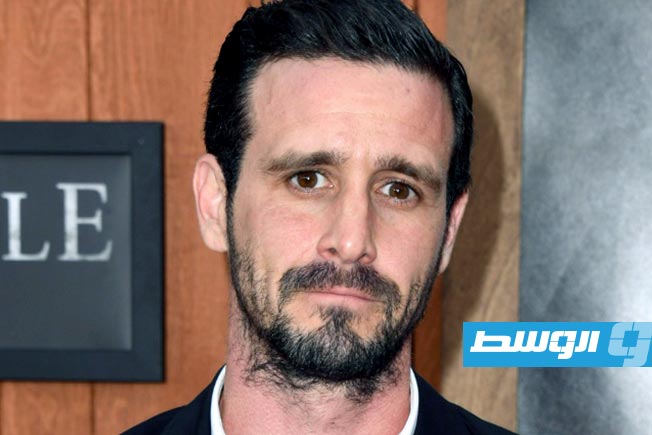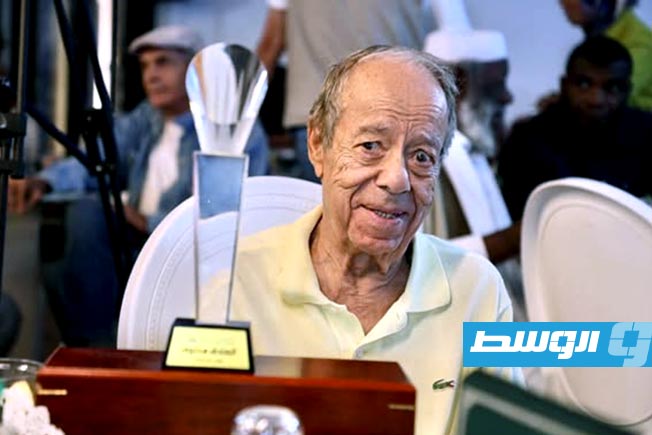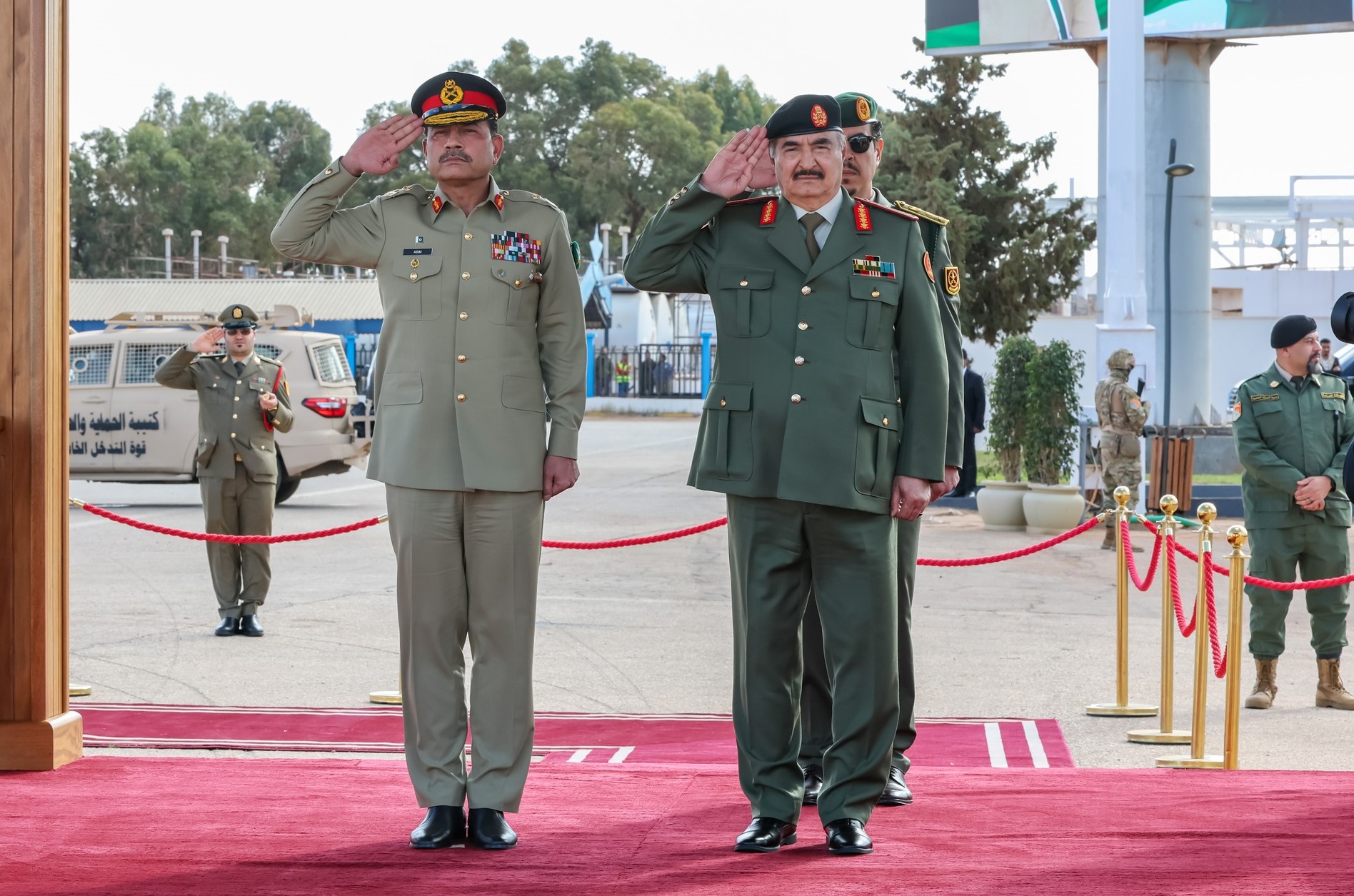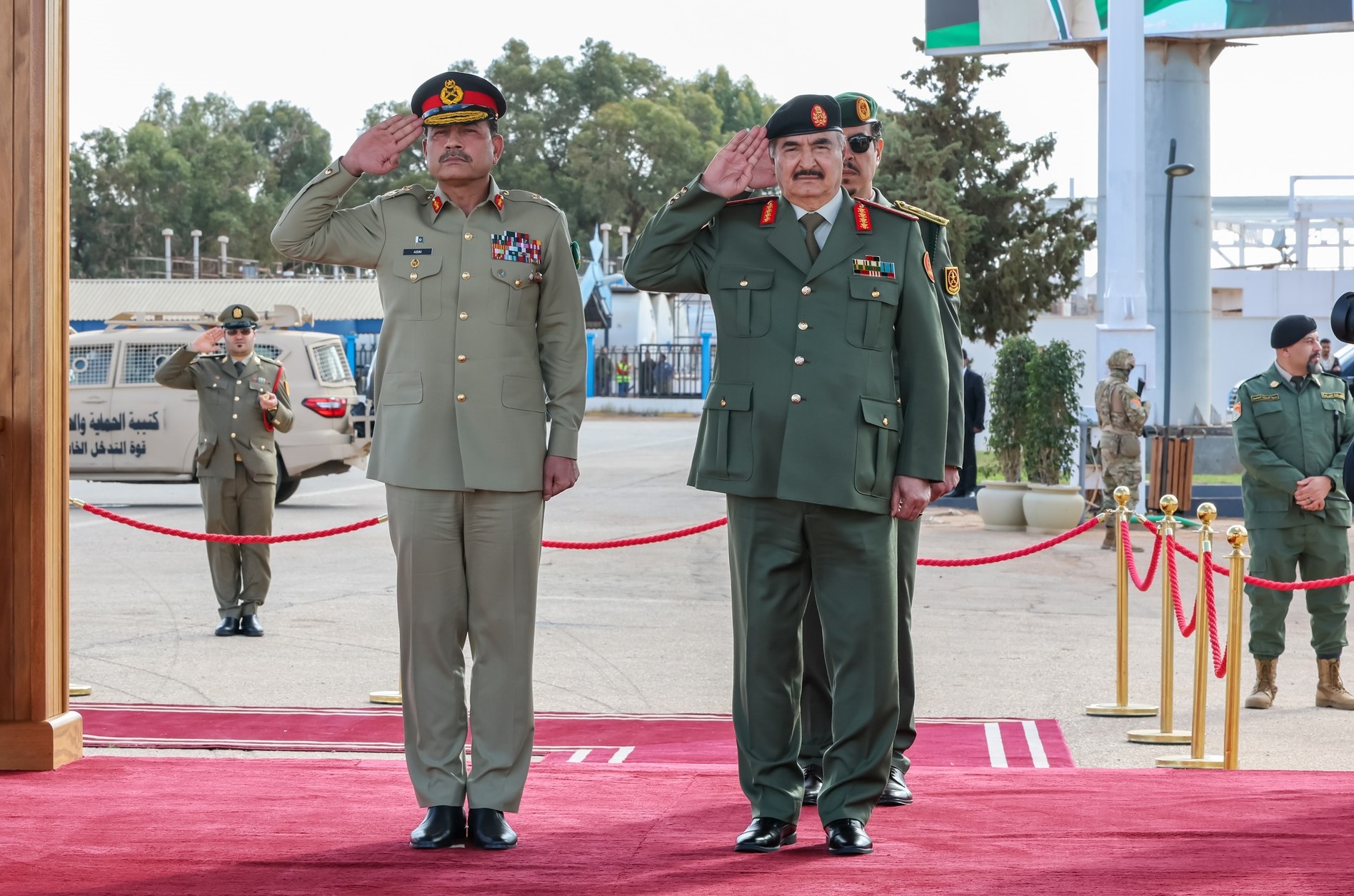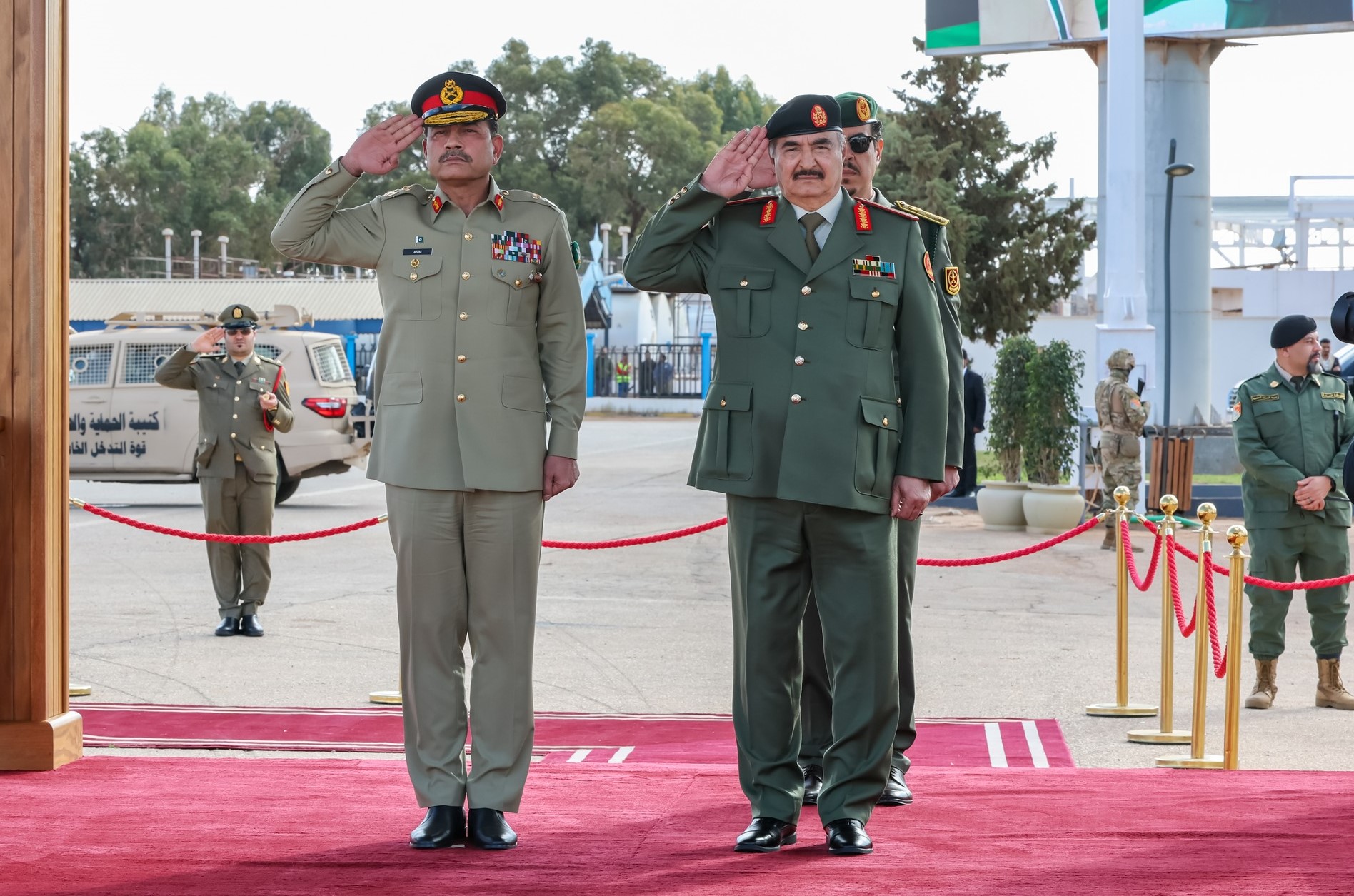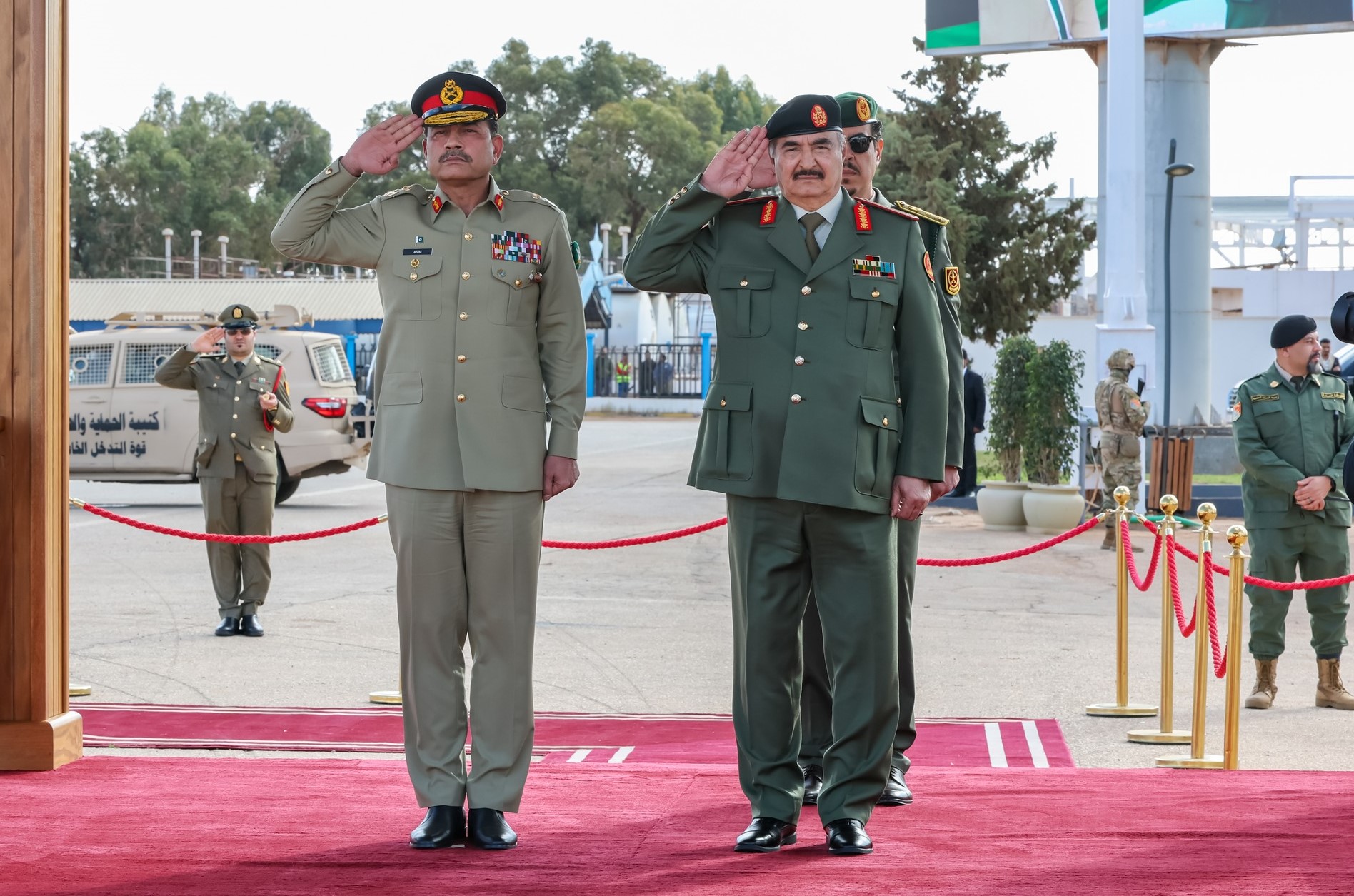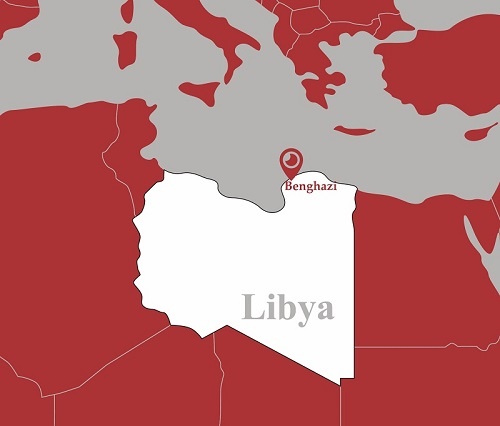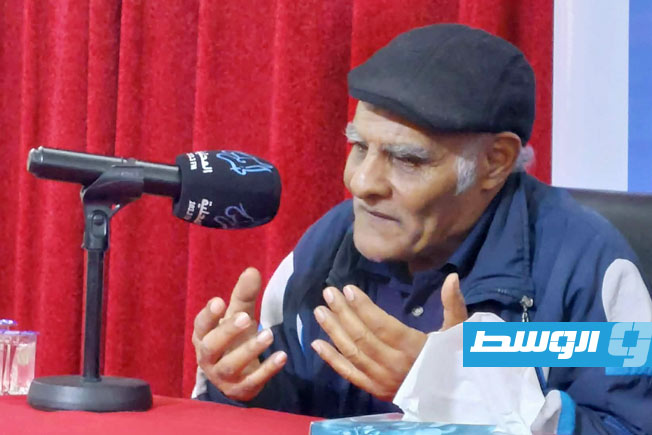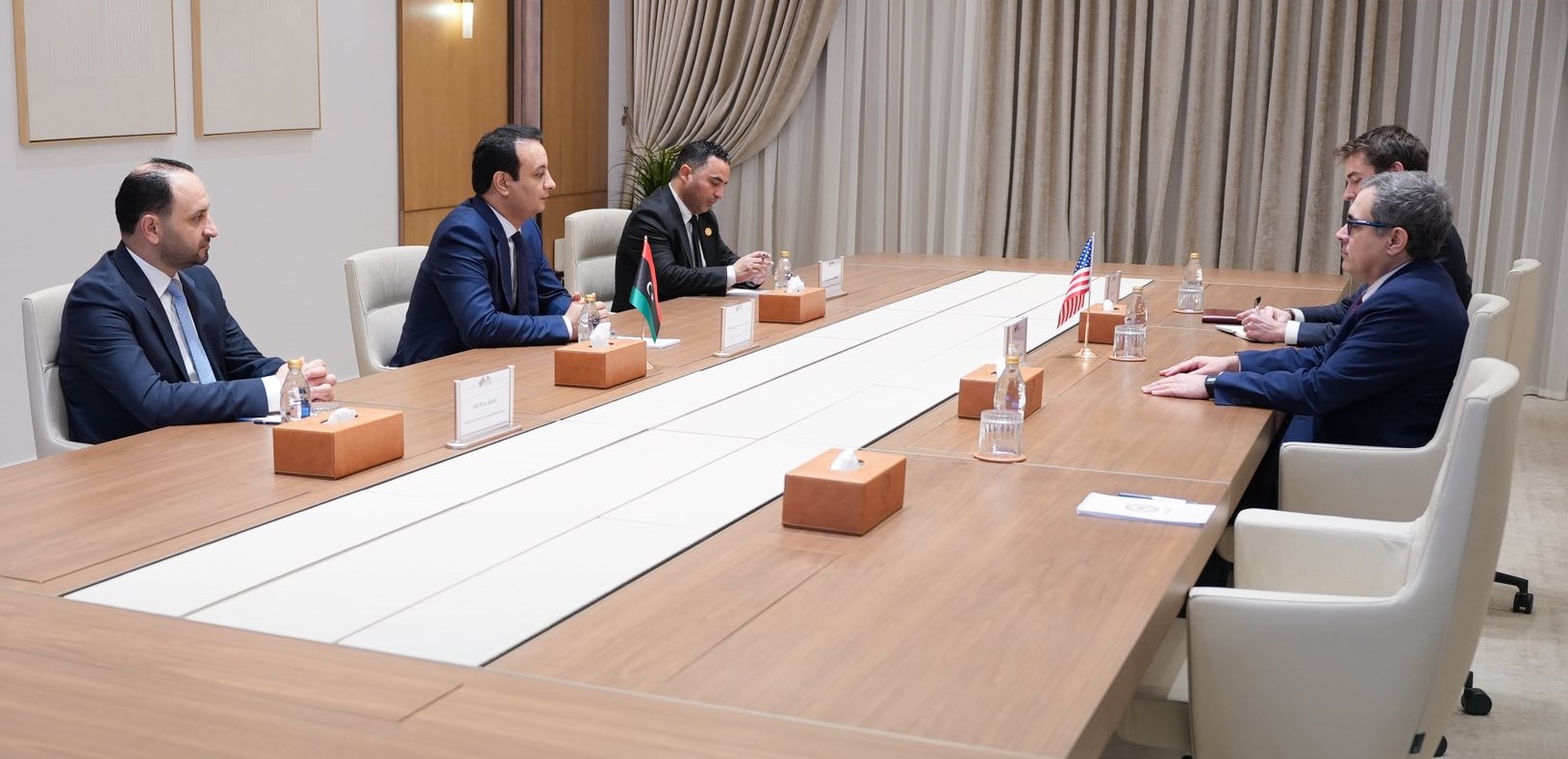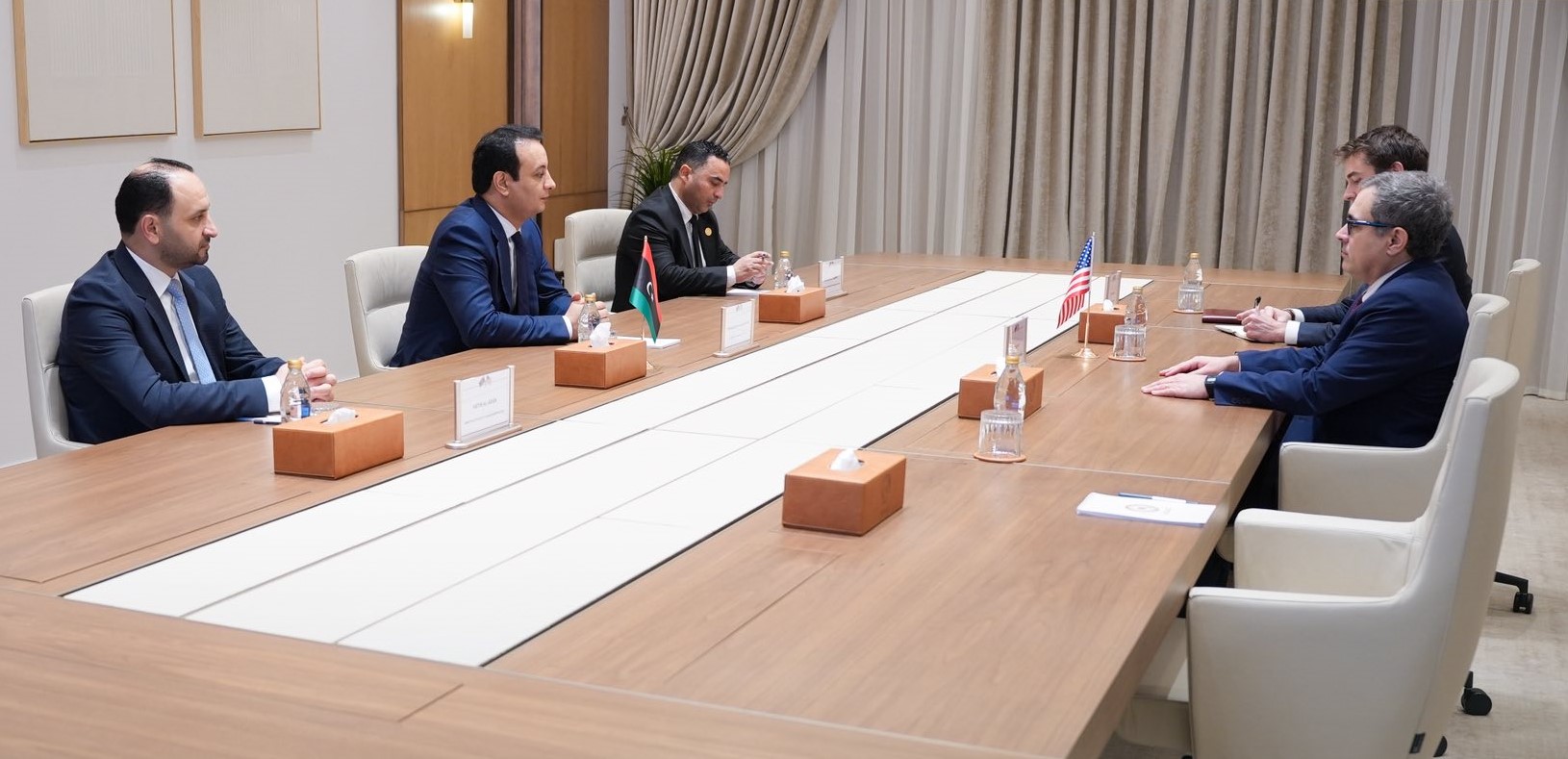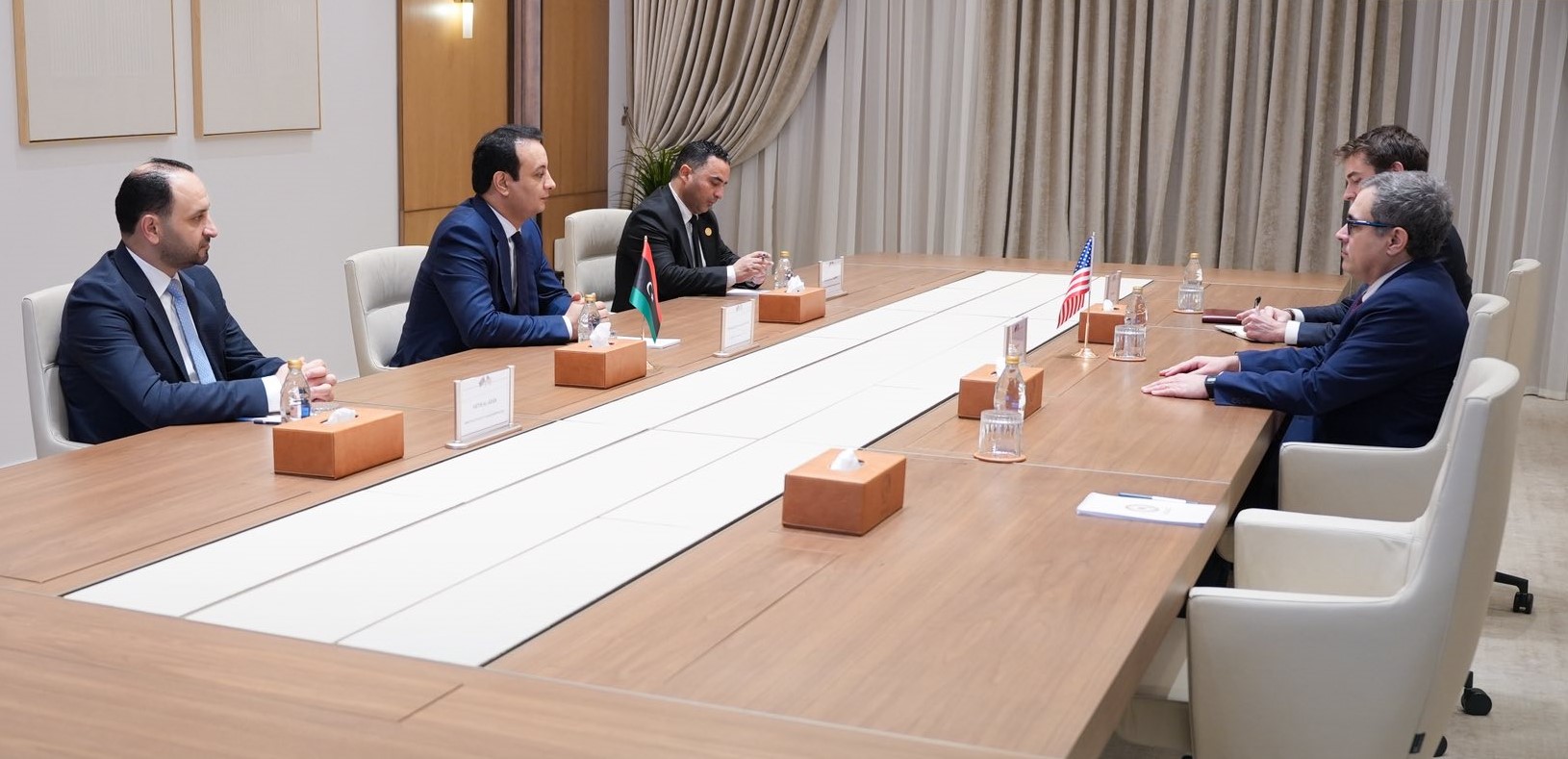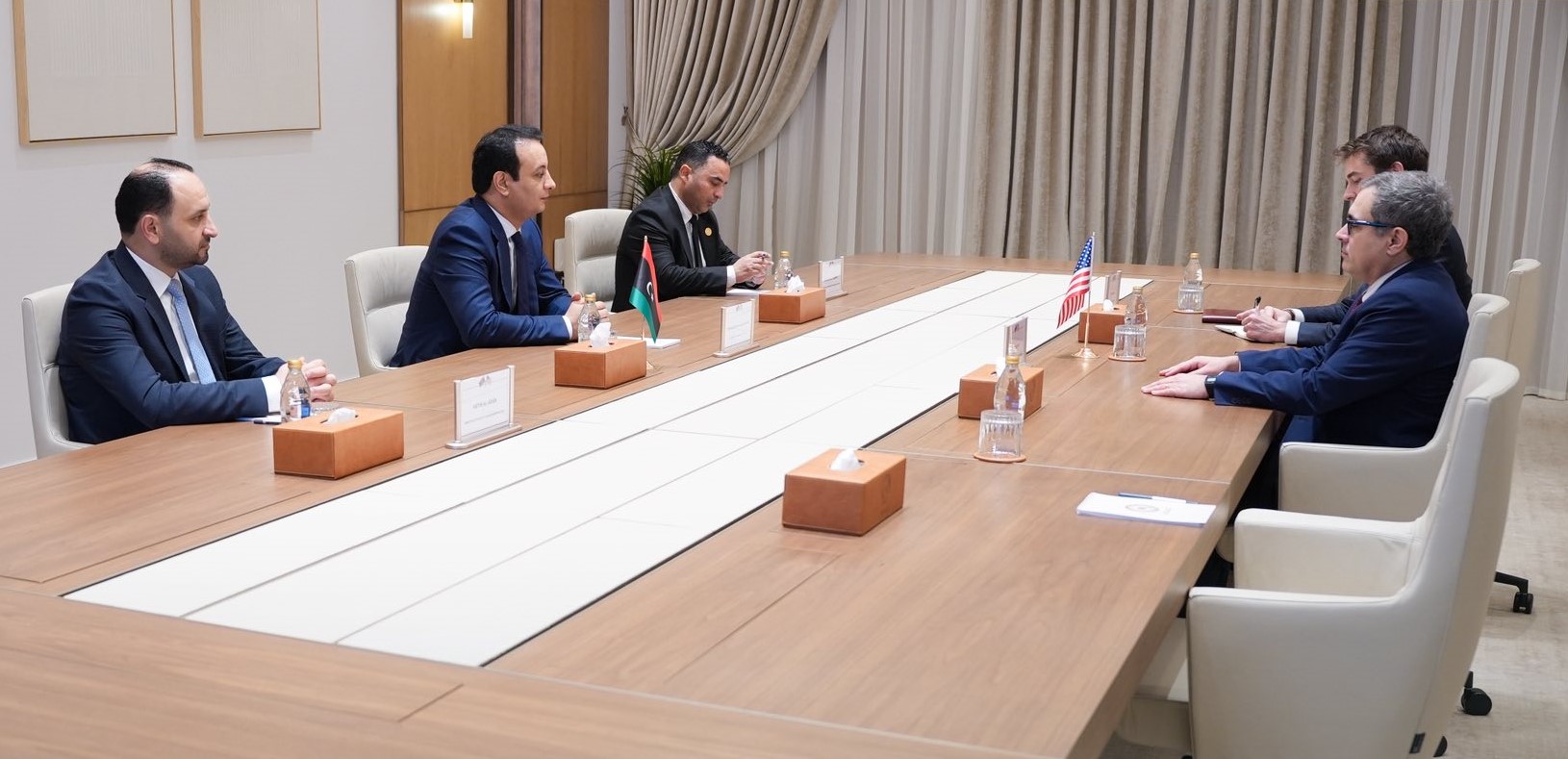
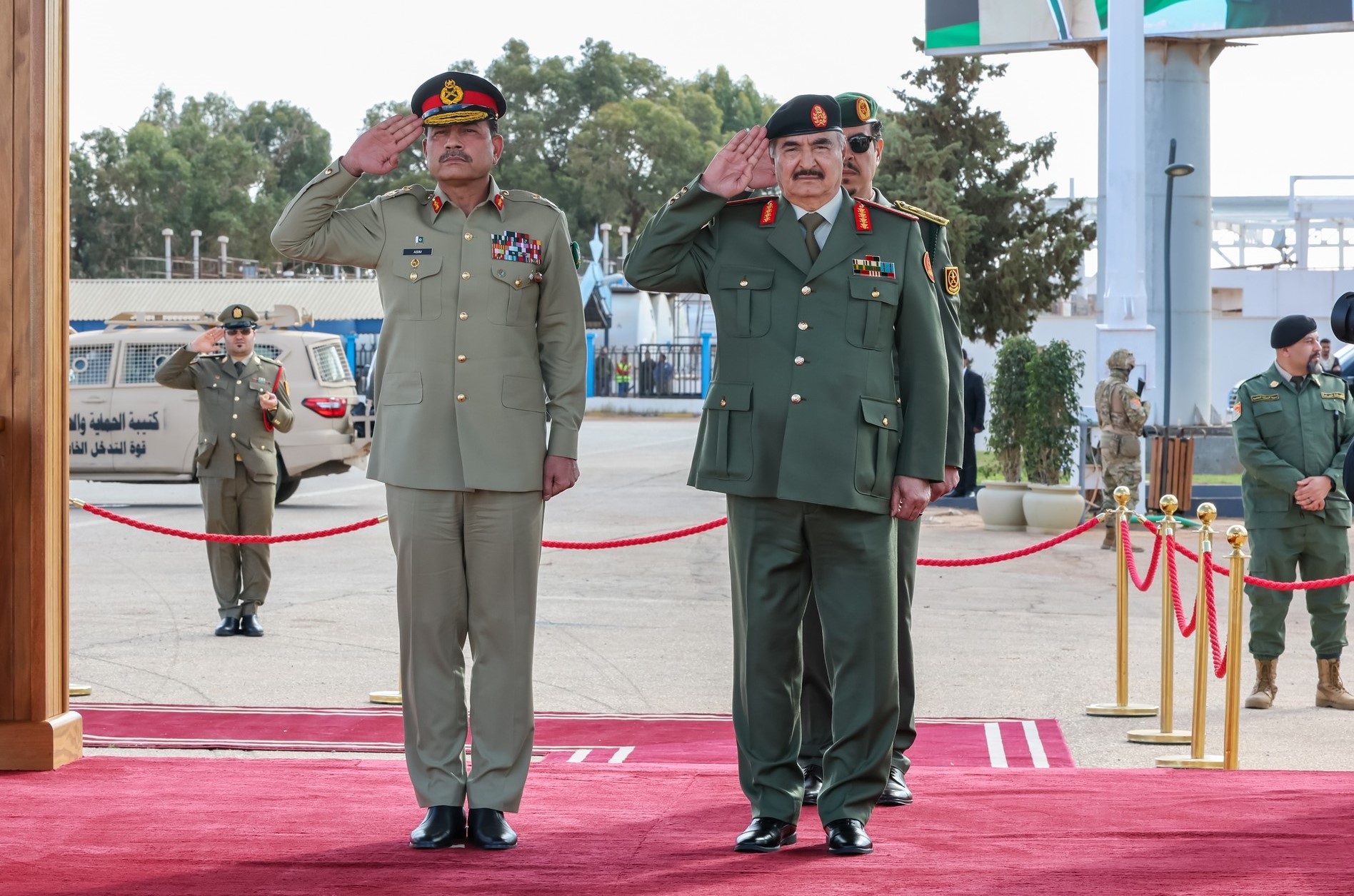
Benghazi, December 17, 2025 – The Commander-in-Chief of the Armed Forces, Field Marshal Khalifa Haftar, received the Commander of the Pakistani Army, Field Marshal Asim Munir, in the city of Benghazi on Wednesday. Munir arrived in Libya leading a high-level military delegation that includes a number of chiefs of staff from the Pakistani Army.
The media office of the General Command of the Armed Forces stated that during the meeting, the two sides affirmed the depth of the historical relations between Libya and Pakistan, and discussed ways to develop and strengthen them in a manner that serves the common interests of the two countries.
The office indicated that the visit of Field Marshal Asim Munir comes within the framework of holding a series of joint meetings, aimed at strengthening bilateral ties and expanding areas of cooperation between the two sides.
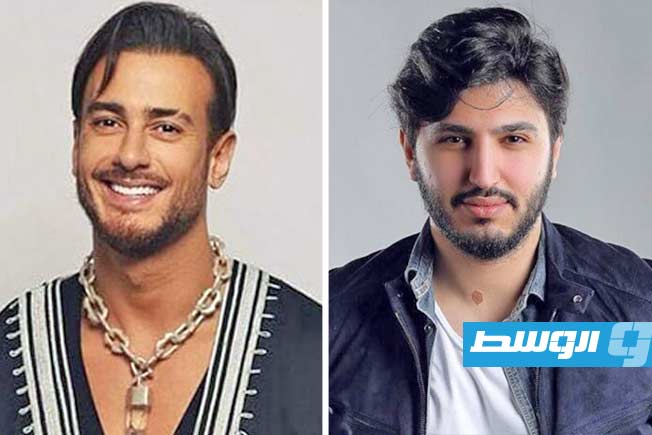
The meeting was attended by the Deputy Commander-in-Chief of the Armed Forces, Lieutenant General “Saddam Haftar”, and the Chief of Staff, Lieutenant General “Khaled Haftar”, along with a number of chiefs of staff from the Armed Forces.
Khalifa Haftar
### **Key Background**
– **Early Career**: Served under Gaddafi but later defected, spending years in exile in the U.S. before returning during the 2011 uprising.
– **Current Role**: Commander of the **Libyan National Army (LNA)**, a major faction based in eastern Libya.
– **Political Alignment**: Opposes the UN-recognized Government of National Accord (GNA) and its successor, the Government of National Unity (GNU). He is aligned with the eastern-based administration, the House of Representatives.
### **Major Actions & Influence**
– Led military campaigns to control territory, including a prolonged siege of Tripoli (2019–2020) that ended in a stalemate.
– Holds significant sway over Libya’s oil-rich eastern and southern regions, often using oil exports as political leverage.
– Supported by foreign actors like Russia (via Wagner Group), Egypt, and the UAE, while his opponents have received backing from Turkey and Qatar.
### **Controversies & Allegations**
– Accused of war crimes and human rights abuses by international organizations.
– Seen by critics as an authoritarian figure undermining Libya’s democratic transition.
– His forces’ blockade of oil facilities has repeatedly triggered economic crises.
### **Recent Developments**
– Despite ceasefire agreements since 2020, Libya remains divided between eastern and western administrations, with Haftar retaining de facto control in the east.
– International efforts (led by the UN) continue to push for elections and unification, but Haftar’s role remains a central, contentious issue.
### **Bottom Line**
Khalifa Haftar is a polarizing warlord whose pursuit of power has deepened Libya’s fragmentation. His influence continues to shape the country’s unstable political and security landscape, complicating peace efforts.
Would you like more details on a specific aspect, such as his foreign support, military campaigns, or Libya’s current political divide?
Asim Munir
Here are some key points about him:
### **Background and Career:**
– **Commissioned:** He joined the Pakistan Army in the **23rd PMA Long Course** in the **Frontier Force Regiment**.
– **Key Appointments:** He has held significant positions, including:
– **Director-General of the Inter-Services Intelligence (ISI)** (2018–2019).
– **Corps Commander Gujranwala** (2020–2022).
– **Quartermaster General** at the General Headquarters (GHQ).
– He is known for his **professionalism, integrity, and low-profile demeanor**.
### **Notable Aspects:**
– **First COAS to have headed both ISI and Military Intelligence (MI):** He served as **DG MI** before becoming DG ISI.
– **Controversy during ISI tenure:** His term as ISI chief was cut short (around 8 months) and he was replaced by Lt. Gen. Faiz Hameed in 2019, which sparked speculation, though official reasons were not publicly disclosed.
– **Appointment as COAS:** His selection by then-Prime Minister Shehbaz Sharif was seen as a departure from tradition, as he was senior to several other candidates and had previously been sidelined.
### **Current Role and Challenges:**
As Army Chief, Asim Munir oversees one of the world’s largest armies and plays a crucial role in:
– **National security and counterterrorism** (especially after the resurgence of militant groups like TTP).
– **Civil-military relations** in Pakistan’s politically charged environment.
– **Economic stability** (the military has historically had influence in economic policy during crises).
– **Foreign relations**, particularly with neighbors like **India, Afghanistan, Iran**, and key partners like **China, the U.S., and the Gulf states**.
### **Public Perception:**
– Widely regarded as a **disciplined and apolitical officer**.
– Seen as focused on **military reform, internal cohesion, and professional development** within the army.
– Maintains a **strict stance against corruption and misconduct**, both within the military and in public governance.
Asim Munir’s tenure comes at a critical time for Pakistan, with challenges ranging from economic instability to regional security threats. His leadership style and decisions are closely watched both domestically and internationally.
Saddam Haftar
It’s possible you might be thinking of:
1. **Saddam Hussein** – The former President of Iraq (1979–2003), executed in 2006.
2. **Khalifa Haftar** – A Libyan military commander and key figure in Libya’s ongoing conflict.
If you combine the two names, it may be a case of confusion or a misstatement. Khalifa Haftar is often in the news due to his role in Libya, while Saddam Hussein is a historical figure from Iraq.
If you meant someone else or have a specific context in mind, please provide more details so I can assist you better.
Khaled Haftar
### **Who is Khalifa Haftar?**
– **Role**: Commander of the **Libyan National Army (LNA)**, a major faction in eastern Libya.
– **Background**: Former officer under Muammar Gaddafi, later turned against him. He spent years in exile in the U.S. before returning to Libya after the 2011 uprising.
– **Influence**: Controls much of eastern and southern Libya, with significant foreign backing (e.g., from Russia, Egypt, and the UAE).
– **Political Stance**: Opposes the UN-recognized Government of National Accord (GNA) based in Tripoli, though there have been intermittent peace talks and ceasefires.
### **Key Context**:
– Haftar has been a central figure in Libya’s conflict since 2014, leading the LNA in a civil war against western-based factions.
– He attempted to capture Tripoli in 2019–2020 but was pushed back.
– Despite international efforts to broker peace, Libya remains divided between his forces in the east and a western administration.
If you meant a different “Khaled Haftar” or have a more specific question, feel free to clarify!