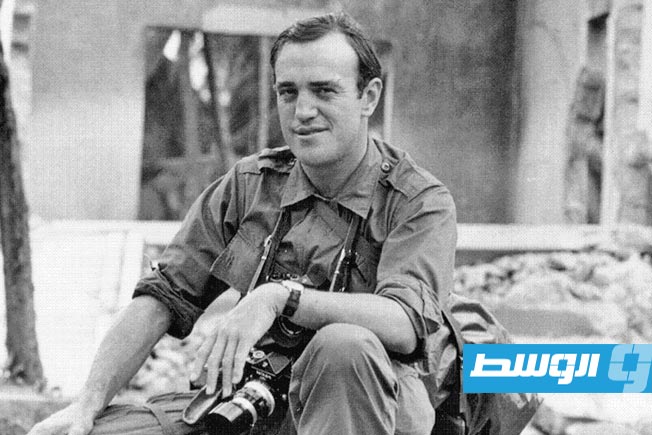
Peter Arnett, a Pulitzer Prize-winning war correspondent considered one of the most famous war reporters, died yesterday, Wednesday, at the age of 91 after suffering from prostate cancer.
Arnett, who won the Pulitzer Prize in 1966 for his coverage of the Vietnam War, was renowned for his war coverage during his decades-long career, from Vietnam to El Salvador and the Gulf Wars.
From Vietnam to Iraq
He rose to global prominence as a field correspondent in Vietnam from 1962 until the end of the war in 1975, accompanying soldiers on their missions. He was among the last reporters to leave Saigon after it fell to communist forces.
Arnett continued his collaboration until 1981, before joining CNN. In 1991, he traveled to Baghdad at the outbreak of the first Gulf War, conducted a famous interview with Saddam Hussein, and gained fame for his live reporting of events, sometimes via his telephone and through live broadcasts from his hotel room.
–
–
He resigned from CNN in 1991 after the network retracted a report he had prepared, which stated that lethal sarin gas was used against American defectors in Laos in 1970 during the Vietnam War. The award-winning correspondent covered the second Gulf War.
He also conducted an interview with Osama bin Laden in March 1997 “somewhere in Afghanistan,” four years before the September 11 attacks. He left the network in 2003 after giving an interview to Iraqi television in which he criticized U.S. military strategy.
Peter Arnett was born on November 13, 1934, in Riverton, New Zealand. He began his career by collaborating with a local newspaper before moving to Thailand to work for an English-language newspaper.
He obtained American citizenship and had resided in Southern California since 2014 with his wife and their two children. In 1995, he published his memoirs titled “Live from the Battlefield: From Vietnam to Baghdad, 35 Years in the World’s War Zones.”
Vietnam
Vietnam is a Southeast Asian country with a rich history shaped by millennia of indigenous cultures, Chinese imperial rule, and French colonization. It is renowned for its diverse cultural heritage, including UNESCO sites like the ancient town of Hoi An and the complex of Huế monuments, as well as its pivotal role in 20th-century global history.
El Salvador
El Salvador is a Central American country known for its Pacific coastline, volcanoes, and rich indigenous heritage, historically dominated by the Pipil people before Spanish colonization in the 16th century. Its modern history has been significantly shaped by a civil war (1980-1992) and its aftermath, leading to contemporary challenges and cultural resilience.
Gulf Wars
The Gulf Wars refer to two major conflicts in the Persian Gulf region, beginning with the 1990-1991 war where a U.S.-led coalition expelled Iraqi forces from Kuwait. The second, the 2003 Iraq War, involved a multinational invasion that toppled Saddam Hussein’s regime and led to a prolonged occupation and insurgency.
Iraq
Iraq, historically known as Mesopotamia, is often called the “Cradle of Civilization” as it was home to ancient Sumerian, Babylonian, and Assyrian empires, which pioneered writing, law, and urban development. Modern Iraq, established in the 20th century, is a nation with a rich cultural heritage but has faced significant conflict and political instability in recent decades. Its landscape is marked by profound archaeological sites, such as Babylon and the ancient city of Ur.
Saigon
Saigon, now officially named Ho Chi Minh City, was originally a Khmer settlement before becoming the capital of French Cochinchina and later the capital of the Republic of Vietnam. It is a major economic and cultural hub of Vietnam, known for its French colonial architecture, vibrant street life, and pivotal role during the Vietnam War.
Baghdad
Baghdad is the capital of Iraq, founded in the 8th century by the Abbasid Caliph Al-Mansur. It became a major center of the Islamic Golden Age, renowned for the House of Wisdom, before suffering significant destruction from invasions and modern conflicts.
Laos
Laos is a landlocked Southeast Asian nation with a rich history as the center of the Lan Xang (“Million Elephants”) Kingdom from the 14th to 18th centuries. Its cultural landscape is deeply influenced by Theravada Buddhism, evident in sites like the Pha That Luang stupa in Vientiane and the ancient temple ruins of Wat Phu. The country experienced French colonial rule and significant conflict during the Vietnam War before the establishment of the Lao People’s Democratic Republic in 1975.
Afghanistan
Afghanistan is a landlocked country in Central and South Asia with a history spanning over 5,000 years, having been a crossroads for numerous empires and trade routes along the Silk Road. It is home to significant cultural heritage sites, including the ancient Minaret of Jam and the Buddhas of Bamiyan, though many have suffered from conflict. The modern nation has experienced periods of monarchy, Soviet invasion, Taliban rule, and recent political upheaval following the 2021 withdrawal of international forces.
Riverton
Riverton is a small coastal town in New Zealand’s Southland region, historically significant as one of the earliest sites of Māori and European interaction. It was a seasonal settlement for Māori, known as Aparima, before becoming a European whaling station in the 1830s. Today, it is known for its heritage museum, scenic estuary, and as a popular spot for fishing and paua (abalone) gathering.
New Zealand
New Zealand is an island country in the southwestern Pacific Ocean, first settled by Polynesian explorers who developed the Māori culture from around 1300 AD. It was later colonized by the British, with the signing of the Treaty of Waitangi in 1840 forming the basis of its modern nationhood. The country is renowned for its diverse landscapes, indigenous Māori heritage, and its history as a bicultural society.
Thailand
Thailand is a Southeast Asian nation with a rich history dating back to ancient kingdoms like Sukhothai and Ayutthaya, which established Theravada Buddhism and distinctive cultural traditions. It is known for its ornate temples, tropical beaches, and vibrant cuisine, and it is the only country in the region never to have been colonized by a European power.
Southern California
Southern California is a diverse region in the southwestern United States, historically inhabited by numerous Indigenous tribes before becoming part of Mexico and later the United States in the mid-19th century. Its modern cultural identity is heavily shaped by the rise of the entertainment industry in Los Angeles, the development of aerospace and technology sectors, and its iconic beach and car-centric lifestyle.