The Egyptian Space Agency announced the successful launch and operation of the Egyptian satellite “SPNEX,” its entry into its designated orbit, and the commencement of its initial signal transmission. The satellite was launched from a space base in the northwest of the People’s Republic of China.
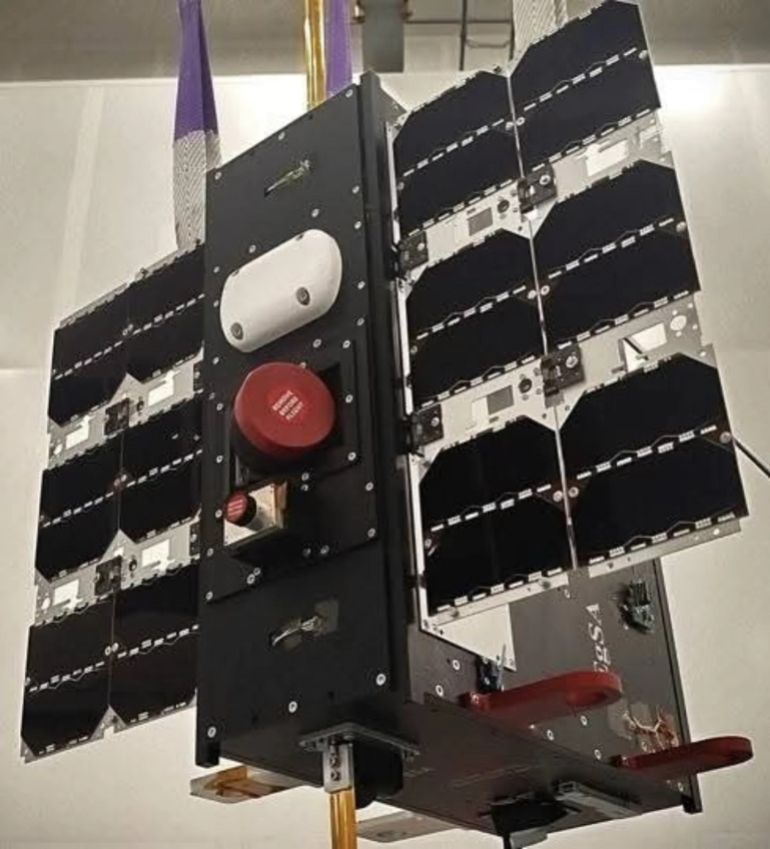
“SPNEX” belongs to the class of nanosatellites, which are small satellites typically weighing less than 10 kilograms.
The Egyptian Space Agency intends to make “SPNEX” data available to researchers at Egyptian universities and research centers, transforming this satellite from a technical project into an open scientific tool that contributes to producing new knowledge and supports research in space physics, atmospheric sciences, and climate, according to an official statement.
The Importance of Nanosatellites
Nanosatellites are characterized by lower development and launch costs compared to traditional satellites. They are used in multiple fields such as scientific research, communications, Earth observation, and remote sensing, making them a popular and growing tool in the modern space industry.
The importance of nanosatellites lies in their greater flexibility and lower cost. They can be launched in large numbers simultaneously, allowing for the execution of large-scale scientific and observational missions.
Furthermore, their small size facilitates maneuvering and updating their equipment, and allows them to be equipped with advanced sensors to collect data that was previously unobtainable.
Compared to traditional satellites, nanosatellites are developed in a relatively short time, often just a few months instead of many years. This allows for the integration of the latest technologies before launch and a rapid response to research or market needs. In contrast, large satellites are more expensive and slower to develop, and their technologies may become obsolete before they even enter service.
A Key Role for “SPNEX”
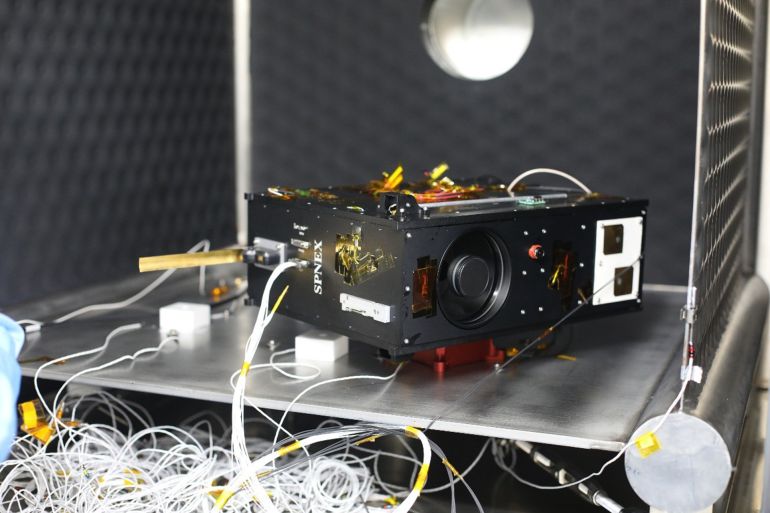
In this context, “SPNEX” was designed to be an in-orbit scientific laboratory specialized in measuring plasma characteristics in the ionosphere layers. This is the upper region of the atmosphere that plays a pivotal role in the propagation of communication waves, determining the accuracy of navigation systems, and interacting with solar activity.
Gases in the ionosphere layers are ionized by ultraviolet and X-rays from the sun, forming free ions and electrons that make this region directly influential on the propagation of radio waves, communications, and navigation.
These measurements are particularly important for understanding solar and magnetic storms that can directly affect satellites, communication networks, and positioning systems, and even power grids on Earth’s surface.
Through the data provided by “SPNEX,” researchers can build more accurate models of ionospheric behavior, contributing to improved space weather forecasting and supporting climate and near-Earth space environment research.
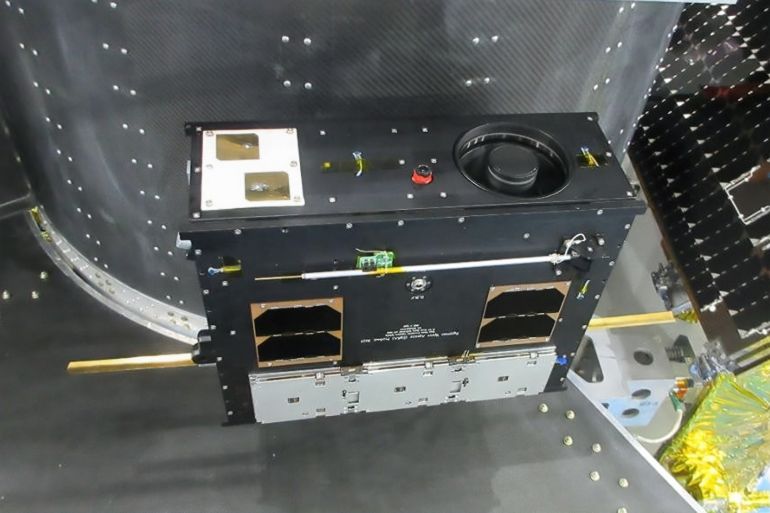
Local Signature
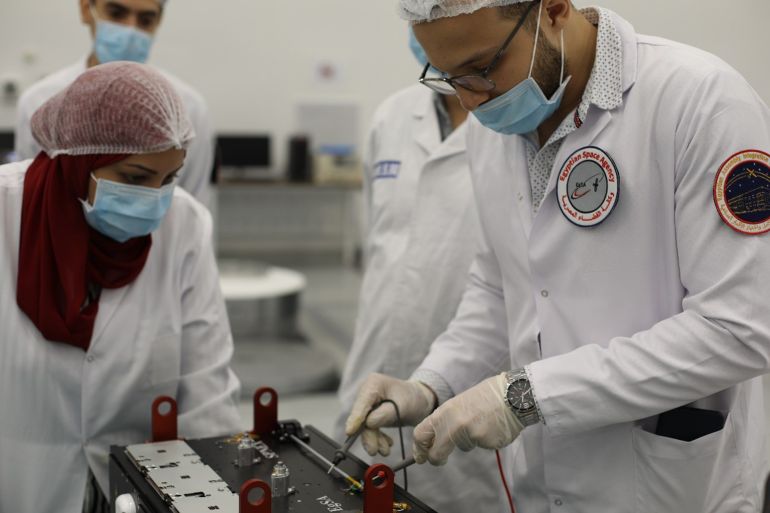
What distinguishes the SPNEX satellite is not only its scientific mission but also its development method. It was designed, manufactured, assembled, and tested entirely within the laboratories of the Egyptian Space Agency since 202
SPNEX
If you’re referring to something specific, such as a company, product, acronym, or code, could you please provide more context? For example:
– Is it related to finance, technology, medicine, or another field?
– Are you asking for its meaning, or do you need information about it?
– Is it possibly a stock ticker, a project name, or an abbreviation?
Once I have a bit more detail, I’ll be glad to help!